For decades, India’s Foreign and Security Policy commentators had bemoaned India’s weak or non-existent strategic culture. But in the last seven years, under the leadership of Prime Minister Narendra Modi, India has defied such belittling depictions. Despite greater power and larger responsibility, Modi did not shy away from taking risks and making sacrifices when the country was confronted with national security crises. The Modi government has shown remarkable strategic consistency and clarity whenever India or Indian security interests have been in jeopardy.
Dr Sreeram Chaulia’s new book titled ‘Crunch Time’ provides an insightful understanding of India’s National Security Policy under the Modi regime. The author recalls the 26/11 Mumbai terror attack and how India as a nation handled or failed to handle the 26/11 terror attack by examining how it responded to attackers sent by the Pakistani establishment and its proxy jihadists suggests that India should diagnose the national security crisis without blinkers, take the battle into Pakistan and raise the costs of its cross border attacks.
One popular assumption among the general public in India has been that India’s so-called ‘remarkable restraint’ after the 26/11 Mumbai terror attack was attributable to its lack of good military options for retaliation against Pakistani targets. However, after more than 13 years of the attack, the evidence that has trickled out over the years implicates not an absence of Indian military capabilities to conduct commensurate countervailing operations inside Pakistan after 26/11 but the dearth of political will on the part of the Indian government to activate them in 2008. Therefore, it is fundamentally a question of leadership and up to the political willpower of the nation to respond and seize such a moment during the crisis and turn the situation around.
Dr Chaulia’s book provides a comparative analysis of India’s political leadership during NDA and UPA tenure and specifically focuses on Indian political leadership under Prime Minister Narendra Modi’s stewardship and makes the case that his assertive management of crises and of Indian politics has set a troubled nation often dismissed
as a ‘soft state’ in the past on a path to self-revitalisation.
Book’s introductory chapter explains how Modi’s national security crisis has not been limited to the perpetual menace of unconventional threats posed by Pakistan. China, which has progressively grown into the foremost strategic challenge in the Modi era, has overshadowed Pakistan and is pushing India to play out of its skin. The chapter concludes that falling for Pakistan’s nuclear blackmail and assuming that Pakistan might counter-retaliate disproportionately using unconventional weapons of mass destruction were logical fallacies.
Although Dr Chaulia’s book should not be looked at as a treatise on Modi’s foreign policy as a whole because the focus of the book is primarily on national security crises, which Modi has had to reckon with in his tenure till now. Modi has crafted a nationalist majority in the country through mass mobilisation around the idea of tough leadership with quick and decisive leadership to tackle any foreign foes. Modi has inspired ordinary Indians to expect that the country’s leader has to stand up to external bullying and aggression through forceful means.
The book covers various facets of how Modi has tried to use crises and threats as stepping stones for integrating the multiple arms of the Indian Military, intelligence and civilian security bodies into a cohesive unit despite having inherited a tradition of strategic restraint, interior, buck-passing and departmental silos from his predecessors.
Dr Chaulia writes that Modi has managed to strive to pursue the dharma of a state and gird India’s loins to resist like a righteous warrior against its two principal external adversaries. The Chapter on 2016 Surgical Strikes explains how the surgical strikes were milestones in India’s quest for counter-constraints because they offered a middle path between all-out war and acquiescing to Pakistan’s brazen terrorist attacks. The Modi government’s arduous planning and execution of the Surgical strike mission had the sharpness of a surgeon’s scalpel. Although cynics tried to downplay the impact of the surgical strike by arguing that the Indian Military had carried out similar raids across the LoC earlier as well and that there was nothing unique or extraordinary about what occurred in September 2016. But the scale, scalps and strategic advertising of the Surgical strikes by the Modi Government placed them way above previous localised initiatives taken by field-based Indian military commanders, as articulated in the Book by the author.
The raids into PoJK were forward-looking steps towards a new era of deterrence driven by Modi’s unique affinity for risk. With surgical strikes in 2016, Prime Minister Narendra Modi scripted history by daringly ordering the Indian Military to cross the LoC on a clinical counter-terrorism mission and thus presented a different India altogether – one willing to call the bluff of its adversaries and use force with precision to achieve clear and limited objectives. Narendra Modi’s India is not keeping quiet. It can call the bluff of State sponsors of terrorism and reclaim its inner strength and power that had been dissipated due to historical memory loss and intervening spells of colonial enslavement.
Chapter 2 of the book focuses on the Doklam crisis, and the author narrates what happened in the summer of 2017 as the product of accumulating conflicts of interest between India and China over regional influence in South Asia and global power realignments. India’s first response to the Doklam crisis was not diplomatic pleading or demarches to China but operations Juniper, authorised by Modi on the night of 17 June 2017, which led to the deployment of about 300 Indian troops with weapons and bulldozers to form the human Wall at Doklam to block China’s PLA from carrying out its construction plans in Doklam. Through his action, Modi gave a dual message in the show of India’s military resolve that India would proactively defend Bhutan even if it meant an escalation with China, particularly if the territorial dispute had direct bearings on India’s own national security. It is absolutely clear that If Modi could stymie China with firmness in Bhutan, it was only due to the phenomenal mass support in India for his fortitude and ‘nation first’ and ‘security first’ principles of his government in dealing with adversaries.
Dr Chaulia, in his book, has given many examples of how Modi has consciously strived and planned to avoid war with foreign opponents while escalating against them. Like the 2016 surgical strikes, the Modi Government presented the Balakot Air Surgical attack as a non-military pre-emptive strike.
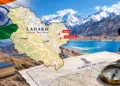
Chapter 4 of the Book deals with the ongoing conflict situation with China in Ladakh. The Modi government’s initial response to the Chinese encroachment in Eastern Ladakh was again a characteristic dual approach – resist them by dispatching more Indian military units and divisions to the friction points close to the PLA positions and simultaneously start negotiations with the Chinese at the diplomatic as well as ground commander levels. Prime Minister Narendra Modi’s free hand to the Military had achieved noteworthy success. The mirror deployments of armed forces by India in Ladakh blocked the path for China to intrude any further at the Line of Actual Control (LAC) or launch a full-scale invasion because Xi understood only one language, that is force.
In his book, Dr Chaulia has extensively elaborated on the trademark principles and methods that Modi has adopted in responding to national security crises and the reformative mindset with which Modi has pursued the structural transformation of India’s national security apparatus.
The book concludes that Prime Minister Narendra Modi has brought India a long way, and his government has led a decisive response to India’s national security crises audaciously and skillfully, ensuring that India overcomes the tag of a ‘soft state’.
(The writer is a Senior Research Fellow at India Foundation)