Pakistan once again sees the risk of military intervention
July 15, 2026
  • Read Ecopy
  • Circulation
  • Advertise
  • Careers
  • About Us
  • Contact Us
Android AppiPhone AppArattai
Organiser
  • ‌
  • Bharat
    • Assam
    • Bihar
    • Chhattisgarh
    • Jharkhand
    • Maharashtra
    • View All States
  • World
    • Asia
    • Europe
    • North America
    • South America
    • Africa
    • Australia
  • Editorial
  • International
  • Opinion
  • RSS @ 100
  • More
    • Op Sindoor
    • Analysis
    • Sports
    • Defence
    • Politics
    • Business
    • Economy
    • Culture
    • Special Report
    • Sci & Tech
    • Entertainment
    • G20
    • Azadi Ka Amrit Mahotsav
    • Vocal4Local
    • Web Stories
    • Education
    • Employment
    • Books
    • Interviews
    • Travel
    • Law
    • Health
    • Obituary
  • Subscribe
    • Subscribe Print Edition
    • Subscribe Ecopy
    • Read Ecopy
  • ‌
  • Bharat
    • Assam
    • Bihar
    • Chhattisgarh
    • Jharkhand
    • Maharashtra
    • View All States
  • World
    • Asia
    • Europe
    • North America
    • South America
    • Africa
    • Australia
  • Editorial
  • International
  • Opinion
  • RSS @ 100
  • More
    • Op Sindoor
    • Analysis
    • Sports
    • Defence
    • Politics
    • Business
    • Economy
    • Culture
    • Special Report
    • Sci & Tech
    • Entertainment
    • G20
    • Azadi Ka Amrit Mahotsav
    • Vocal4Local
    • Web Stories
    • Education
    • Employment
    • Books
    • Interviews
    • Travel
    • Law
    • Health
    • Obituary
  • Subscribe
    • Subscribe Print Edition
    • Subscribe Ecopy
    • Read Ecopy
Organiser
  • Home
  • Bharat
  • World
  • Operation Sindoor
  • Editorial
  • Analysis
  • Opinion
  • Culture
  • Defence
  • International Edition
  • RSS @ 100
  • Magazine
  • Read Ecopy
Home Opinion

Pakistan once again sees the risk of military intervention

Pakistan’s military has directly ruled Pakistan for more than half of its 75-year history, overthrowing successive democratically elected governments. For the remainder of that time, it has indirectly manipulated elected governments from the sidelines.

Salah Uddin Shoaib ChoudhurySalah Uddin Shoaib Choudhury
Apr 4, 2022, 09:58 am IST
in Opinion
Follow on Google News
With the ongoing turmoil and possible military intervention, Pakistan poses a much bigger threat to regional and global security

With the ongoing turmoil and possible military intervention, Pakistan poses a much bigger threat to regional and global security

FacebookTwitterWhatsAppTelegramEmail

Although Pakistan’s Prime Minister Imran Khan has somehow sidestepped the risk of being voted out of power, the country has entered into a serious political turmoil that may ultimately result in military intervention, thus pushing the ongoing economic crisis of the failed state towards a further catastrophic condition.

Pro-jihadist and pro-radical Islam Imran Khan’s leadership style has often been criticized as confrontational and controversial. Under the current political turmoil, Khan said he would seek early elections after sidestepping a no-confidence challenge and alleging that a conspiracy to topple his government had failed.

At the instruction of Imran Khan, the deputy speaker of Pakistan’s Parliament threw out the opposition parties’ no-confidence resolution and abruptly ended the session. Minutes later, Khan went on national television and said he would ask Pakistan’s president to dissolve Parliament and call early elections.

The developments came after Information Minister Fawad Chaudhry accused the opposition of conspiring with a “foreign power” to stage a “regime change”.

The opposition, which said it would stage a protest sit-in in Parliament, called the deputy speaker’s ruling of throwing out the no-confidence vote illegal and vowed to go to Pakistan’s Supreme Court.

The opposition arrived in Parliament ready to vote Khan out of power. They needed a simple majority of 172 votes in Pakistan’s 342-seat Parliament to unseat Khan, a cricket star turned conservative Islamic politician. Khan’s small but key coalition partners and 17 of his own party members joined the opposition to oust him.

The no-confidence vote had been expected sometime after Parliament convened Sunday, but parliamentary rules allow for three to seven days of debate. The opposition said it had the numbers for an immediate vote.

Giant metal containers blocked roads and entrances to the capital’s diplomatic enclave, Parliament and other sensitive government installations. A defiant Khan called for supporters to stage demonstrations countrywide to protest the vote.

Accusing the US administration as the culprit, Imran Khan accused the opposition of being in cahoots with the United States to unseat him, saying America wants him gone over his foreign policy choices that often favour China and Russia. Khan has also been a strident opponent of America’s war on terror and Pakistan’s partnership in that war with Washington. But in reality, Imran Khan’s alliances with the Taliban, other jihadist forces and his nasty ambition of spreading terror within neighbouring India and Pakistan’s evil practice of sponsoring terrorism are the main reasons the country is cornered by the international community.

According to Associated Press, Imran has circulated a memo that he insists provides proof that Washington conspired with Pakistan’s opposition to unseat him because America wants “me, personally, gone … and everything would be forgiven”.

Residents of Pakistan’s largest province, Punjab, were set to vote on Sunday for a new chief minister. Khan’s choice faced a tough challenge, and his opponents claimed they had enough votes to install their choice.

With 60 per cent of Pakistan’s 220 million people living in Punjab, it is considered the most powerful of the country’s four provinces. Also, on Sunday, the government announced the dismissal of the provincial governor, whose role is largely ceremonial and is chosen by the federal government. But it further deepened the political turmoil in Pakistan.

Pakistan’s main opposition parties, whose ideologies span the spectrum from left to right to radically religious, have been rallying for Khan’s ouster ever since he was elected in 2018. Khan’s win was mired in controversy amid widespread accusations that Pakistan’s mighty army and its spy agency Inter Service Intelligence (ISI) helped his Pakistan Tehreek Insaf (Justice) Party to victory.

According to analysts, the Pakistan military’s involvement in the 2018 polls undermined Khan’s legitimacy from the outset.

“The movement against Imran Khan’s government is inseparable from his controversial rise to power in the 2018 election, which was manipulated by the army to push Khan over the line. That really undermined the legitimacy of the electoral exercise and created the grounds for the current turmoil,” analysts said.

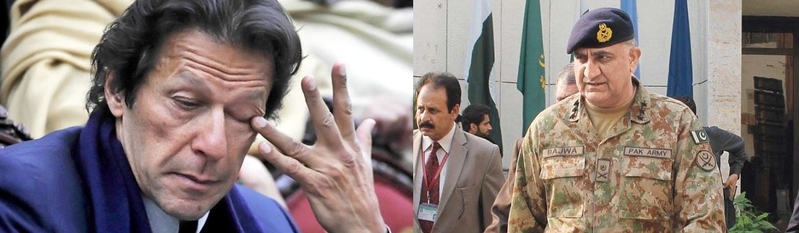
It may be mentioned here that Pakistan’s military has directly ruled Pakistan for more than half of its 75-year history, overthrowing successive democratically elected governments. For the remainder of that time, it has indirectly manipulated elected governments from the sidelines.

The opposition has also accused Khan of economic mismanagement, blaming him for rising prices and high inflation. Still, Khan’s government is credited with maintaining a foreign reserve account of US$18 billion and bringing in a record US$29 billion last year from overseas Pakistanis.

With Pakistan now heading towards an early election and Imran Khan’s falling popularity and anticipation of military intervention in the country, this failed state may now pose a much bigger threat to regional and global security with the track record of the Pakistani government and military’s deeper relations with the Taliban in Afghanistan as well as other jihadist forces.

The writer is an internationally acclaimed multi-award-winning anti-militancy journalist, writer, research scholar, counterterrorism specialist and editor of Weekly Blitz. Follow him on Twitter @Salah_Shoaib


Topics: PakistanImran KhanPTIISIIslamistsTaliban
Salah Uddin Shoaib Choudhury
The writer is an internationally acclaimed multi-award-winning anti-militancy journalist, writer, research-scholar, counterterrorism specialist and editor of Weekly Blitz. [Read more]
Share1TweetSendShareSend
✮ Subscribe Organiser YouTube Channel. ✮
✮ Join Organiser's WhatsApp channel for Nationalist views beyond the news. ✮
Previous News

Exports cross 418 billion dollar mark, India to fill wheat granaries depleted by Ukraine war

Next News

Sri Lankan Ministers resign en masse, new cabinet likely to sworn in

Related News

Representative Image

Pakistan: IED blast targets APC Vehicle on patrol; Two policemen killed, 2 injured

People gather in large numbers during an anti-Pakistan protest, in Muzaffarabad, Pakistan-occupied Jammu and Kashmir

POJK: Tumbling template of terroristan

Representative Image

PoJK protests hit White House as Kashmiri diaspora shouts anti-Pakistan slogans; Muzaffarabad rises against abuse

The people in Pakistan-occupied Jammu Kashmir (PoJK) are rising against Pakistan's brutality

POJK Unrest: Azad or gulam

PoJK Freedom Struggle: Uprising against illegal occupation

The Fragile Truce: Why the US-Iran peace deal mediated by puppet Pakistan is primed for collapse

Load More

Latest News

Shikshit Uttar Pradesh 2047: “Education is the basic requirement for development”, says Pilot Rakesh Tyagi

Semicon 2.0 to Urea Self-Reliance: Union Cabinet unveils Rs 2.19L crore projects to propel economic prosperity of India

Tamil Nadu: Madras HC cancels registration of Rs 100 crore Palani Murugan Temple land in private individuals’ names

Keralam: ‘Tipu’s Nemesis’, AI-powered cinematic tribute recreates Travancore’s historic resistance against Tipu Sultan

Madhya Pradesh Chief Minister Mohan Yadav speaks at the inauguration of the 'MP Tech Growth Conclave 3.0: GCC, Data Centre and Semiconductor' event, in Bhopal

From Agrarian State to Technology Powerhouse: MP Tech Growth Conclave 3.0 shapes Madhya Pradesh’s high-tech future

Telangana: Hindu auto driver threatened by police over Sanatana Dharma quotes in Hyderabad; VHP demands action

Bharatbodh reflects Bharat's timeless civilisational consciousness and cultural identity

Bharatbodh Explained: Understanding Bharat’s civilisational consciousness and cultural identity

The MHA has proposed recruitment rules for CEO and Additional CEO posts at I4C, inviting stakeholder feedback till August 14

MHA proposes recruitment rules for CEO, additional CEO posts at I4C; seeks stakeholder feedback till August 14

Odisha Govt signs MoU with Guru Padmasambhava Baudh Mahavihara to boost Buddhist Heritage and spiritual tourism

Fresh findings linking UNRWA employees to Hamas have reignited debate over the agency's role in Gaza and the future of Palestinian refugee assistance

How UN’s Gaza relief agency became a lifeline for Hamas? Allegations of terror infiltration shake UNRWA

Load More
  • Privacy
  • Terms
  • Cookie Policy
  • Refund and Cancellation
  • Delivery and Shipping

© Bharat Prakashan (Delhi) Limited.
Tech-enabled by Ananthapuri Technologies

  • Home
  • Search Organiser
  • Bharat
    • Assam
    • Bihar
    • Chhattisgarh
    • Jharkhand
    • Maharashtra
    • View All States
  • World
    • Asia
    • Africa
    • North America
    • South America
    • Europe
    • Australia
  • Editorial
  • Operation Sindoor
  • Opinion
  • Analysis
  • Defence
  • Culture
  • Sports
  • Business
  • RSS @ 100
  • Entertainment
  • More ..
    • Sci & Tech
    • Vocal4Local
    • Special Report
    • Education
    • Employment
    • Books
    • Interviews
    • Travel
    • Health
    • Politics
    • Law
    • Economy
    • Obituary
  • Subscribe Magazine
  • Read Ecopy
  • Advertise
  • Circulation
  • Careers
  • About Us
  • Contact Us
  • Policies & Terms
    • Privacy Policy
    • Cookie Policy
    • Refund and Cancellation
    • Terms of Use

© Bharat Prakashan (Delhi) Limited.
Tech-enabled by Ananthapuri Technologies