India's Growth in Space Exploration
June 10, 2026
  • Read Ecopy
  • Circulation
  • Advertise
  • Careers
  • About Us
  • Contact Us
Android AppiPhone AppArattai
Organiser
  • ‌
  • Bharat
    • Assam
    • Bihar
    • Chhattisgarh
    • Jharkhand
    • Maharashtra
    • View All States
  • World
    • Asia
    • Europe
    • North America
    • South America
    • Africa
    • Australia
  • Editorial
  • International
  • Opinion
  • RSS @ 100
  • More
    • Op Sindoor
    • Analysis
    • Sports
    • Defence
    • Politics
    • Business
    • Economy
    • Culture
    • Special Report
    • Sci & Tech
    • Entertainment
    • G20
    • Azadi Ka Amrit Mahotsav
    • Vocal4Local
    • Web Stories
    • Education
    • Employment
    • Books
    • Interviews
    • Travel
    • Law
    • Health
    • Obituary
  • Subscribe
    • Subscribe Print Edition
    • Subscribe Ecopy
    • Read Ecopy
  • ‌
  • Bharat
    • Assam
    • Bihar
    • Chhattisgarh
    • Jharkhand
    • Maharashtra
    • View All States
  • World
    • Asia
    • Europe
    • North America
    • South America
    • Africa
    • Australia
  • Editorial
  • International
  • Opinion
  • RSS @ 100
  • More
    • Op Sindoor
    • Analysis
    • Sports
    • Defence
    • Politics
    • Business
    • Economy
    • Culture
    • Special Report
    • Sci & Tech
    • Entertainment
    • G20
    • Azadi Ka Amrit Mahotsav
    • Vocal4Local
    • Web Stories
    • Education
    • Employment
    • Books
    • Interviews
    • Travel
    • Law
    • Health
    • Obituary
  • Subscribe
    • Subscribe Print Edition
    • Subscribe Ecopy
    • Read Ecopy
Organiser
  • Home
  • Bharat
  • World
  • Operation Sindoor
  • Editorial
  • Analysis
  • Opinion
  • Culture
  • Defence
  • International Edition
  • RSS @ 100
  • Magazine
  • Read Ecopy
Home Opinion

India’s Growth in Space Exploration

WEBDESKWEBDESK
Aug 25, 2021, 12:00 am IST
in Opinion
Follow on Google News
ISRO

ISRO

FacebookTwitterWhatsAppTelegramEmail

                                                                                                                                                                                                            Pankaj Jayaswal


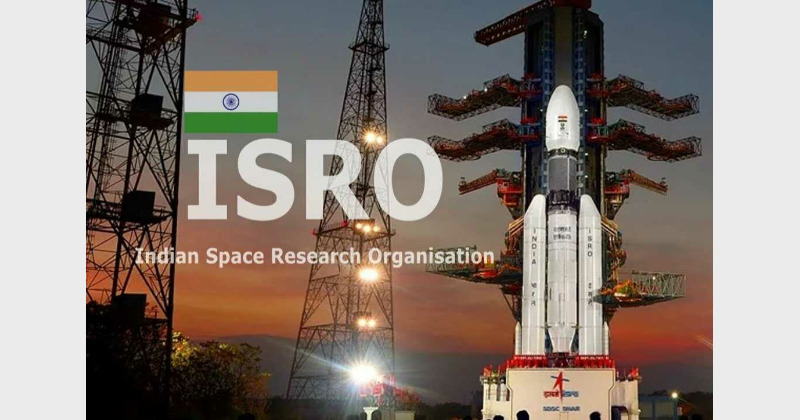
Indian Space Research Organisation (ISRO) has been playing a pivotal role in space exploration, bringing glory to our great nation and helping our defence forces, government, society, and industry.

Humankind is interested to know everything in the universe. The curiosity to know the unknown scientifically resulted in exploring every aspect of space through various space missions by various organisations like ISRO, NASA….The imperceptible longing to explore and challenge the confines of what we know and where we have been has provided benefits to our society for periods.


Benefits, which are ignored by many:


New technologies that can be used in other industries and society (such as the development of communications satellites) Improved knowledge of space and the origin of the universe Cultural benefits.


The advance of artificial satellite technology was an unswerving outcome of space exploration. Since the USSR launched the first artificial satellite (Sputnik 1) on October 4, 1957, thousands of satellites have been positioned into orbit around the Earth by more than 40 nations.


These satellites are used for various applications, including observation (by both military and civilian agencies), communication, navigation, biomedical research, and weather monitoring.


Communications satellites are used for various purposes, including television, telephone, radio, internet, and military applications. Space stations, space telescopes and spacecraft in orbit around the Earth are also regarded as satellites.


How is India faring in space exploration?


Indian Space Research Organisation (ISRO) has been playing a pivotal role in space exploration, bringing glory to our great nation and helping our defence forces, government, society, and industry. In the 1970s, Indian space missions with USSR assistance initiated the launching of the first two satellites.


After assuming office in 2014, the Modi government increased the budget to 6000 crores, 50% more than the 2013-14 budget. Every passing year the budget is being increased; this year’s budget is almost 14000 crore. Significant increase in budget over the last seven years augmented payload capacity with improved reliability, better launch frequency, and many “firsts” in this decade had made the Indian space program far more evident to the world with substantial coverage from global media. The last launch of the decade was marked with the accomplishment of 50 launches of PSLV rocket. In the last seven years, 58 satellites have been launched by ISRO out of total 128 satellites (8 failed) launched in 50 years, the highest ever. The plan is even bigger. Though NASA is far ahead of us in space exploration, it cannot be ignored that a big pool of Indian engineers and scientists contributes to their programs.


While India had to face failure in launching relatively heavier satellites earlier, it ended up launching 27 geosynchronous/geostationary satellites (17 with indigenous and 10 with European launchers). It managed to launch most of its geosynchronous/geostationary satellites efficaciously on its own. This period also saw India enter the elite club of nations capable of launching probes to Mars. ISRO also enhanced upon its student/university outreach by launching multiple pico-, nano- and mini-satellites from various Indian universities. The last few years were also marked by multiple bilateral collaborations with foreign universities and research organisations. We have seen the completion of NAVIC, India’s regional navigation system.


Private players increased subcontracting across the nation enhanced launch frequency by a factor of more than two. India was able to fix glitches and operationalise its Geosynchronous Satellite Launch Vehicle with an indigenous upper stage and operationalise next-generation launch vehicle GSLV Mk III with nearly double payload capacity, enabled the country to launch nearly all of its communication satellites. India launched its delayed Moon mission Chandrayaan-2 in 2019, which, however unsuccessful to conduct a soft landing on the lunar surface. India also established and demonstrated the capability to destroy “enemy” satellites in orbit. Increased application of India’s space capabilities in consolidation to its national security was witnessed.


ISRO aims to conduct 50 launches by 2024. Besides increasing the launch frequency to 12+ a year, a number of extraterrestrial exploration missions including Aditya L1, Chandrayaan-3, Lunar Polar Exploration Mission, Shukrayaan-1 and Mars Orbiter Mission 2 are planned for this decade. A mission to Jupiter after Shukrayaan and a mission to explore beyond Solar System have also been proposed. PSLV is expected to undergo its 100th flight mission in the middle of the decade. India’s new low-cost Small Satellite Launch Vehicle is expected to make its maiden flight by the end of 2021, while SCE-200, which is expected to be the powerplant of India’s upcoming heavy and super-heavy launch systems, is expected to make first flight sometimes in the middle of the decade. Conducting a human orbital spaceflight before August 2022 is the highest priority for the agency, while the long-term goals of the programme include manned space stations and crewed lunar landing. (Source: List of Indian Satellites, Wikipedia).


Let’s wish for the entire team of ISRO and related agencies for the success of upcoming space missions. Let our programs unite nations for the betterment of society, nation, world and environment.


ShareTweetSendShareSend
✮ Subscribe Organiser YouTube Channel. ✮
✮ Join Organiser's WhatsApp channel for Nationalist views beyond the news. ✮
Previous News

Kerala Model Flops: State Records 3-Month High of 24k Cases, TPR at 18%

Next News

Former Afghan Mayor says Pakistan behind Taliban seizing control in Afghanistan; urges to raise voice against terrorism unitedly

Related News

India Deploys 12 Nuclear Warheads: Heralds doctrinal shift to script strategic deterrence against multi-front threat

J&K: Zojila tunnel clears key hurdle; Signals new era of connectivity for Ladakh

How Cockroach politics is hollowing out Bharatiya democratic culture

RSS centenary year is a time for renewed resolve and greater commitment to nation-building: Dr Mohan Bhagwat

Ex-DMK Minister Senthil Balaji (Right Side-File Photo)

Tamil Nadu: CBI books Rs 397 cr transformer tender scam from ex-DMK Minister Senthil Balaji’s tenure (2021-2023)

Border Security Force (BSF) officials inspect the Single Row Fencing (SRF) at a Border Out Post area (India-Bangladesh border)

Infiltration and Border Management: Saving the Siliguri corridor

Load More

Latest News

India Deploys 12 Nuclear Warheads: Heralds doctrinal shift to script strategic deterrence against multi-front threat

J&K: Zojila tunnel clears key hurdle; Signals new era of connectivity for Ladakh

How Cockroach politics is hollowing out Bharatiya democratic culture

RSS centenary year is a time for renewed resolve and greater commitment to nation-building: Dr Mohan Bhagwat

Ex-DMK Minister Senthil Balaji (Right Side-File Photo)

Tamil Nadu: CBI books Rs 397 cr transformer tender scam from ex-DMK Minister Senthil Balaji’s tenure (2021-2023)

Border Security Force (BSF) officials inspect the Single Row Fencing (SRF) at a Border Out Post area (India-Bangladesh border)

Infiltration and Border Management: Saving the Siliguri corridor

External Affairs Ministry spokesperson Randhir Jaiswal, slams Pakistan over the recent killings in POJK

‘Hope Pakistan is held accountable’: India reacts after 20 killed in Pakistan Occupied Jammu & Kashmir

China’s anti-BLA offensive hits snag as UN members demand proof

UN Setback for China and Pakistan: US and allies stall move to ban Baloch Liberation Army

West Asia Conflict: Collective response to energy crisis

Atul Limaye Ji Sah Sarkaryavah, Rashtriya Swayamsevak Sangh while addressing a Pramukh Jan Gosthi Rashtriya at Raipur, Chhattisgarh

Chhattisgarh: Society must lead its own transformation through collective initiative: Atul Limaye

Load More
  • Privacy
  • Terms
  • Cookie Policy
  • Refund and Cancellation
  • Delivery and Shipping

© Bharat Prakashan (Delhi) Limited.
Tech-enabled by Ananthapuri Technologies

  • Home
  • Search Organiser
  • Bharat
    • Assam
    • Bihar
    • Chhattisgarh
    • Jharkhand
    • Maharashtra
    • View All States
  • World
    • Asia
    • Africa
    • North America
    • South America
    • Europe
    • Australia
  • Editorial
  • Operation Sindoor
  • Opinion
  • Analysis
  • Defence
  • Culture
  • Sports
  • Business
  • RSS @ 100
  • Entertainment
  • More ..
    • Sci & Tech
    • Vocal4Local
    • Special Report
    • Education
    • Employment
    • Books
    • Interviews
    • Travel
    • Health
    • Politics
    • Law
    • Economy
    • Obituary
  • Subscribe Magazine
  • Read Ecopy
  • Advertise
  • Circulation
  • Careers
  • About Us
  • Contact Us
  • Policies & Terms
    • Privacy Policy
    • Cookie Policy
    • Refund and Cancellation
    • Terms of Use

© Bharat Prakashan (Delhi) Limited.
Tech-enabled by Ananthapuri Technologies