Researchers study the egg-laying behaviour of wasps for designing specific pest control measures
July 30, 2026
  • Read Ecopy
  • Circulation
  • Advertise
  • Careers
  • About Us
  • Contact Us
Android AppiPhone AppArattai
Organiser
  • ‌
  • Bharat
    • Assam
    • Bihar
    • Chhattisgarh
    • Jharkhand
    • Maharashtra
    • View All States
  • World
    • Asia
    • Europe
    • North America
    • South America
    • Africa
    • Australia
  • Editorial
  • International
  • Opinion
  • RSS @ 100
  • More
    • Op Sindoor
    • Analysis
    • Sports
    • Defence
    • Politics
    • Business
    • Economy
    • Culture
    • Special Report
    • Sci & Tech
    • Entertainment
    • G20
    • Azadi Ka Amrit Mahotsav
    • Vocal4Local
    • Web Stories
    • Education
    • Employment
    • Books
    • Interviews
    • Travel
    • Law
    • Health
    • Obituary
  • Subscribe
    • Subscribe Print Edition
    • Subscribe Ecopy
    • Read Ecopy
  • ‌
  • Bharat
    • Assam
    • Bihar
    • Chhattisgarh
    • Jharkhand
    • Maharashtra
    • View All States
  • World
    • Asia
    • Europe
    • North America
    • South America
    • Africa
    • Australia
  • Editorial
  • International
  • Opinion
  • RSS @ 100
  • More
    • Op Sindoor
    • Analysis
    • Sports
    • Defence
    • Politics
    • Business
    • Economy
    • Culture
    • Special Report
    • Sci & Tech
    • Entertainment
    • G20
    • Azadi Ka Amrit Mahotsav
    • Vocal4Local
    • Web Stories
    • Education
    • Employment
    • Books
    • Interviews
    • Travel
    • Law
    • Health
    • Obituary
  • Subscribe
    • Subscribe Print Edition
    • Subscribe Ecopy
    • Read Ecopy
Organiser
  • Home
  • Bharat
  • World
  • Operation Sindoor
  • Editorial
  • Analysis
  • Opinion
  • Culture
  • Defence
  • International Edition
  • RSS @ 100
  • Magazine
  • Read Ecopy
Home Bharat

Researchers study the egg-laying behaviour of wasps for designing specific pest control measures

WEBDESKWEBDESK
Jul 27, 2021, 11:48 am IST
in Bharat
Follow on Google News
FacebookTwitterWhatsAppTelegramEmail

A new study conducted by Indian researchers will help understand the egg-laying behaviour of certain pests and therefore help in designing specific control measures.


New Delhi: Herbivores organisms belonging to the same species (Conspecifics) use herbivore-induced plant volatiles (HIPVs) as cues while selecting an optimal site for oviposition. This is to ascertain the availability of nourishment for their progeny to get the best chance at survival.


A new study conducted by Indian researchers will help understand the egg-laying behaviour of certain pests and therefore help in designing specific control measures. This study has been conducted by the researchers at the Indian Council of Agricultural Research (ICAR)’s Bengaluru based laboratory Indian Institute of Horticultural Research. They have published their study in the science journal Current Science.


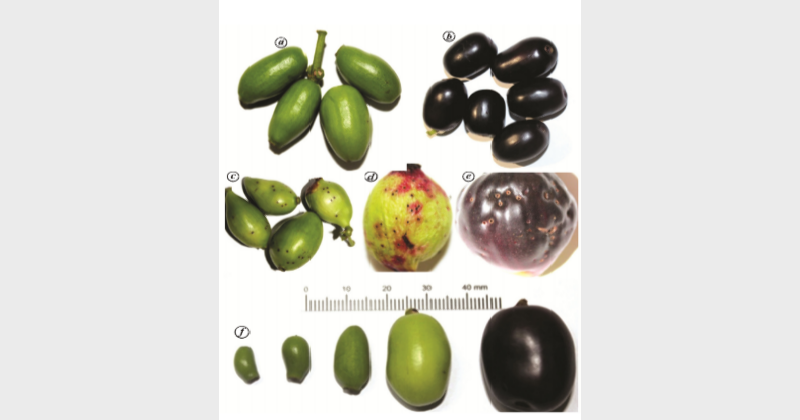
“This study highlights the fact that herbivores are able to assess the HIPVs from a different stage of the fruits. In this case, the female wasps, A.kerrichi prefers immature fruits that are already infested for egg-laying. The chemical cues from immature fruits, provide a sense of resource quality and the probability of better progeny fitness. Hence the females choose such sites”, Says Dr P.D. Kamala Jayanthi, Principal Scientist & ICAR National Fellow, Department of Entomology and Nematology, Indian Institute of Horticultural Research, Bengaluru.


“We found that A.kerrichi was attracted to immature fruit volatiles. Certain specific chemical cues were different in the mature and immature fruits. The ones identified in the gas chromatography-electennogramdetection (GC-EAD) were used in synthetic blends for further analysis. The same blends were tested in the field to test their attractive potential”, Dr Jayanthi added.


Plants, upon being attacked by herbivores, emit many distinct volatiles, often known as herbivore-induced plant volatiles (HIPVs), that have multiple functions at different trophic levels. From the plant’s perspective, these HIPVs act as communication signals to attract natural enemies and alert various parts of the same plant or neighbouring plants, thereby serving as a direct and indirect plant defence.


The role of HIPVs was studied in detail against a handful of insect pests from the point of view of herbivores. However, the ecological function of HIPVs to conspecifics was found to be variable depending upon the herbivore species, thus making the community interactions quite complex. This emphasizes the need to understand and study the utilization of HIPVs by conspecifics on a case-by-case basis.


Headspace samples of wasp-infested immature and mature Jamun fruits were collected by a scientific method called air entrainment. The fruit traits, namely size, colour, the softness of berries, were considered to assess fruit maturity. The eulophid wasp-infested fruits were collected from the field in ICAR-Indian Institute of Horticultural Research, Bengaluru, during March 2019 and placed in plastic containers for wasp emergence. The emerged insects were allowed to mate and collected in separate plastic vials for performing both olfactometer assays as well as coupled gas chromatography-electro-antenno-detection (GC-EAD) studies.


The male and female insects were differentiated based on abdomen size.


The attraction of female A. kerrichi to synthetic HIPVs in the lab and field conditions ascertains the scope of using them as Integrated Pest Management (IPM) tools for sustainable management of this phytophagous eulophid seed borer, said Dr Jayanthi.


Courtesy: India Science Wire

ShareTweetSendShareSend
✮ Subscribe Organiser YouTube Channel. ✮
✮ Join Organiser's WhatsApp channel for Nationalist views beyond the news. ✮
Previous News

Indian students hold tricolour aloft in the global arena

Next News

Shastri?s Tibetan Plan Cut Short

Related News

Tamil Nadu: Temple activist seeks criminal action against HR&CE officials in Arunachaleswarar Temple property dispute

Kerala: CPI(M)’s post-poll outreach to win back Hindu voters begins with Kasaragod temple committees

Madurai Meenakshi Amman Temple

Tamil Nadu: Madurai police book 19 over illegal registration of Meenakshi temple Trust Properties

Kejriwal’s E20 claims fail before Maruti, Toyota, & Hero’s real-world evidence involving crores of vehicles

Bharat’s natural farming mission is reviving traditional agriculture, restoring soil health, cutting costs and promoting sustainable farming

Natural Farming: How Bharat’s return to traditional agriculture could shape the future of global food systems

BMS National Working Committee Concludes in Ranchi

Jharkhand: BMS National Working Committee meeting concludes; Calls for EPS pension hike & amendments to labour codes

Load More

Latest News

Tamil Nadu: Temple activist seeks criminal action against HR&CE officials in Arunachaleswarar Temple property dispute

Kerala: CPI(M)’s post-poll outreach to win back Hindu voters begins with Kasaragod temple committees

Madurai Meenakshi Amman Temple

Tamil Nadu: Madurai police book 19 over illegal registration of Meenakshi temple Trust Properties

Kejriwal’s E20 claims fail before Maruti, Toyota, & Hero’s real-world evidence involving crores of vehicles

Bharat’s natural farming mission is reviving traditional agriculture, restoring soil health, cutting costs and promoting sustainable farming

Natural Farming: How Bharat’s return to traditional agriculture could shape the future of global food systems

BMS National Working Committee Concludes in Ranchi

Jharkhand: BMS National Working Committee meeting concludes; Calls for EPS pension hike & amendments to labour codes

Rajabhoj Memorial Lecture Series Committee, Dhar, hosted a lecture on “Bhojshala: India’s Cultural Renaissance” at Milan Mahal

Rajabhoj Memorial Lecture Series: Bhojshala -A powerful symbol of India’s cultural renaissance

Sindhu River: The inseparable bond

Representative Image

Empty reservoir! What if one claim drains your family floater health insurance?

Bharat’s diverse languages have historically served as bridges of cultural unity, connecting people through a shared civilisational ethos (AI-generated image)

World Hindu Congress 2026: Why Bharatiya languages are the soul of India’s unity

Load More
  • Privacy
  • Terms
  • Cookie Policy
  • Refund and Cancellation
  • Delivery and Shipping

© Bharat Prakashan (Delhi) Limited.
Tech-enabled by Ananthapuri Technologies

  • Home
  • Search Organiser
  • Bharat
    • Assam
    • Bihar
    • Chhattisgarh
    • Jharkhand
    • Maharashtra
    • View All States
  • World
    • Asia
    • Africa
    • North America
    • South America
    • Europe
    • Australia
  • Editorial
  • Operation Sindoor
  • Opinion
  • Analysis
  • Defence
  • Culture
  • Sports
  • Business
  • RSS @ 100
  • Entertainment
  • More ..
    • Sci & Tech
    • Vocal4Local
    • Special Report
    • Education
    • Employment
    • Books
    • Interviews
    • Travel
    • Health
    • Politics
    • Law
    • Economy
    • Obituary
  • Subscribe Magazine
  • Read Ecopy
  • Advertise
  • Circulation
  • Careers
  • About Us
  • Contact Us
  • Policies & Terms
    • Privacy Policy
    • Cookie Policy
    • Refund and Cancellation
    • Terms of Use

© Bharat Prakashan (Delhi) Limited.
Tech-enabled by Ananthapuri Technologies