'New China' dream: Xi Jinping has 'Soviet Union collapse' syndrome
June 10, 2026
  • Read Ecopy
  • Circulation
  • Advertise
  • Careers
  • About Us
  • Contact Us
Android AppiPhone AppArattai
Organiser
  • ‌
  • Bharat
    • Assam
    • Bihar
    • Chhattisgarh
    • Jharkhand
    • Maharashtra
    • View All States
  • World
    • Asia
    • Europe
    • North America
    • South America
    • Africa
    • Australia
  • Editorial
  • International
  • Opinion
  • RSS @ 100
  • More
    • Op Sindoor
    • Analysis
    • Sports
    • Defence
    • Politics
    • Business
    • Economy
    • Culture
    • Special Report
    • Sci & Tech
    • Entertainment
    • G20
    • Azadi Ka Amrit Mahotsav
    • Vocal4Local
    • Web Stories
    • Education
    • Employment
    • Books
    • Interviews
    • Travel
    • Law
    • Health
    • Obituary
  • Subscribe
    • Subscribe Print Edition
    • Subscribe Ecopy
    • Read Ecopy
  • ‌
  • Bharat
    • Assam
    • Bihar
    • Chhattisgarh
    • Jharkhand
    • Maharashtra
    • View All States
  • World
    • Asia
    • Europe
    • North America
    • South America
    • Africa
    • Australia
  • Editorial
  • International
  • Opinion
  • RSS @ 100
  • More
    • Op Sindoor
    • Analysis
    • Sports
    • Defence
    • Politics
    • Business
    • Economy
    • Culture
    • Special Report
    • Sci & Tech
    • Entertainment
    • G20
    • Azadi Ka Amrit Mahotsav
    • Vocal4Local
    • Web Stories
    • Education
    • Employment
    • Books
    • Interviews
    • Travel
    • Law
    • Health
    • Obituary
  • Subscribe
    • Subscribe Print Edition
    • Subscribe Ecopy
    • Read Ecopy
Organiser
  • Home
  • Bharat
  • World
  • Operation Sindoor
  • Editorial
  • Analysis
  • Opinion
  • Culture
  • Defence
  • International Edition
  • RSS @ 100
  • Magazine
  • Read Ecopy
Home Bharat

‘New China’ dream: Xi Jinping has ‘Soviet Union collapse’ syndrome

Chinese President Xi Jinping has asserted himself as the powerful leader since Mao Zedong

Archive ManagerArchive Manager
Jul 2, 2021, 11:29 am IST
in Bharat
Follow on Google News
FacebookTwitterWhatsAppTelegramEmail

New Delhi: Chinese President Xi Jinping has asserted himself as the powerful leader since Mao Zedong.
Xi_1  H x W: 0  

It is estimated that about 60-70 million people in China have died because of the communist party’s policies since it came to power in 1949.

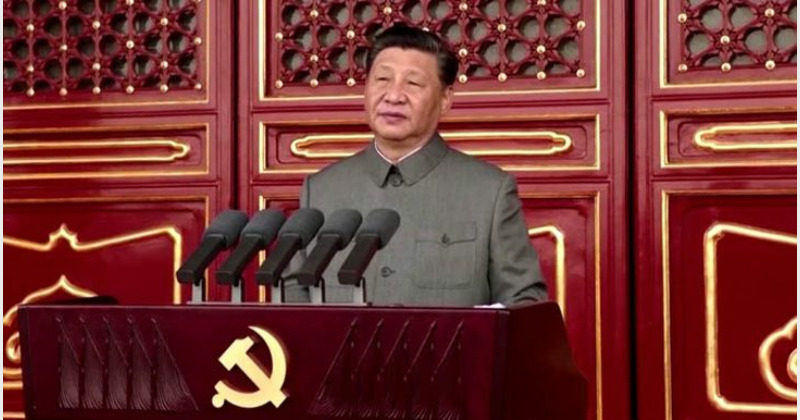
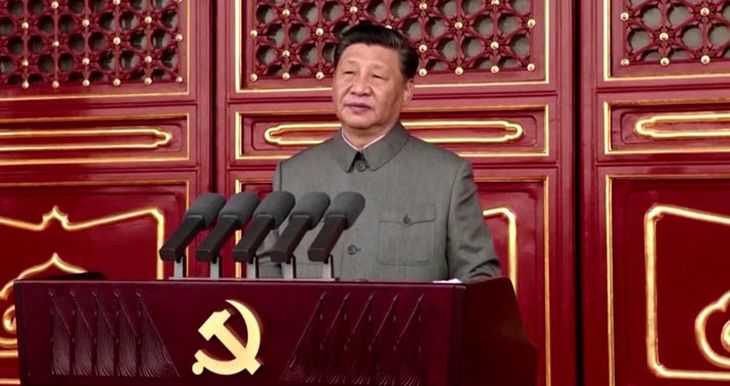
More than what was said in Xi Jinping’s powerful speech on the occasion of 100 years celebration of the Chinese Communists Party (CCP) on July 1, the real message lay in the song sung by the huge crowd – “Without the Communist Party, There Would Be No New China.”
 
Essentially, this shows the confidence of leadership but, also the latent nervousness also stands betrayed.
 
About one million Uyghurs and other minorities in Xinjiang have been allegedly rounded up into internment camps.
And China has repeatedly faced accusations of forced organ harvesting from prisoners.
 
These are crucial issues for analysts globally including, in India, to understand that China has extreme ‘nervousness’ syndrome revolving around the apprehension that would their country also turn ‘susceptible’ to a breakup, as in the erstwhile Soviet Union.
 
Ram Madhav, a senior RSS functionary, says, “Not a single important speech of Xi Jinping ends without reference to the collapse of the Soviet Union.”
 
In his speech on July 1, marking 100 years of the Communists party, Xi Jinping praised his country and people for the “new world” they had created.
 
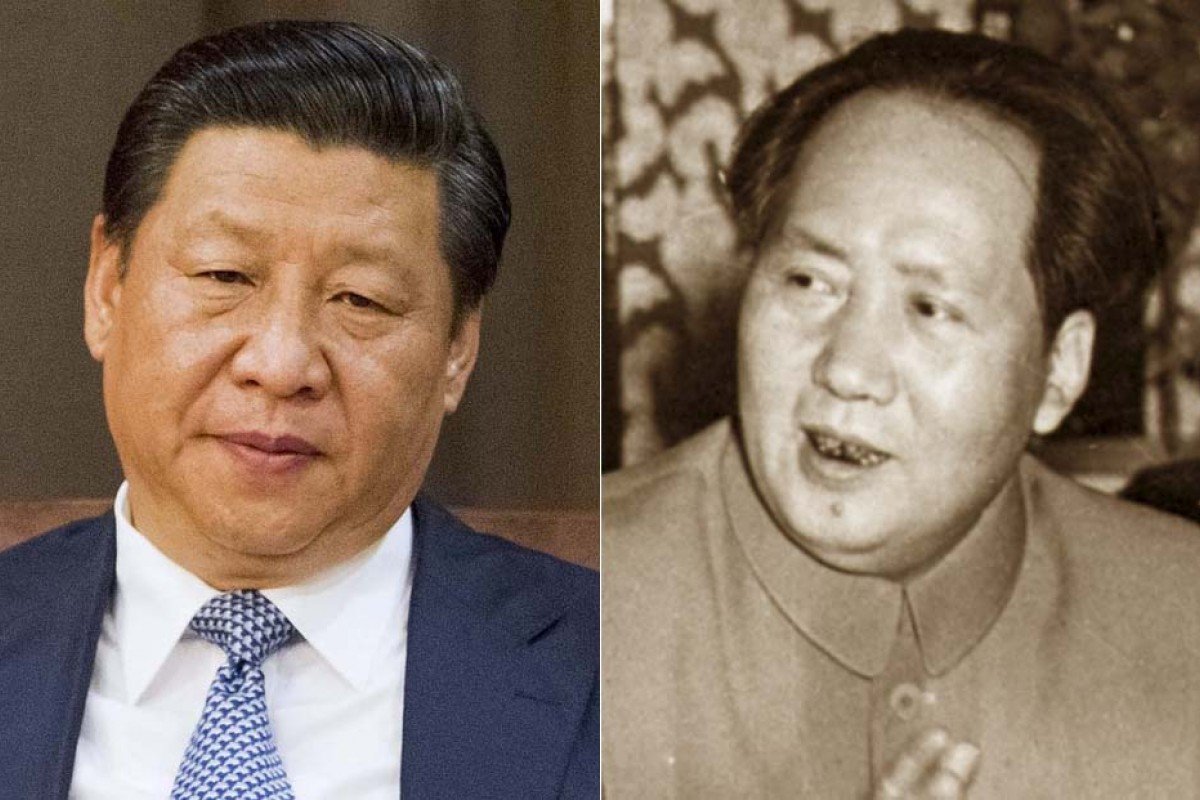
Firstly, Xi is already designated as President for life and is regarded as the most powerful leader since Mao Zedong.
 
China in 2018 approved the ‘removal’ of the two-term limit on the presidency, effectively allowing Xi to remain in power for life. He is 68 years old now.
 
Xi_1  H x W: 0  
 
What is that ‘new world’?
 
A world where the Chinese leadership feels that their ‘debt trap’ mechanism with several countries including, some in Latin America, Africa, and also Pakistan, and a few other India’s neighbors have been successful.
 
Xi has pledged to promote BRI, he has indicated towards continued ‘expansionism’ and, conflicts like Galwan valley with India, he said, “We need more heroes”.
 
Standing at the Gate of Heavenly Peace above a portrait of Mao Zedong, Xi said: “We will not accept sanctimonious preaching from those who feel they have the right to lecture us … Anyone who dares try to do that will have their heads bashed bloody against the Great Wall of Steel forged by over 1.4 billion Chinese people”.
 
He also said: “Only socialism can save China, and only socialism with Chinese characteristics can develop China” perhaps in reference to the system wherein ‘party (Communists) is supreme’ but also an endorsement of a method under which markets economy reforms were embraced.
 
The centenary celebrations of July 1 have been a highly orchestrated affair as an art performance titled ‘The Great Journey’ was staged at the Bird’s Nest stadium in Beijing.
 
The history of the party and country was depicted, but the Cultural Revolution purges, the 1989 Tiananmen Square protests, and the pro-democracy episodes in Hong Kong were missing.
 
Xi asserted China maintains an “unshakeable commitment” to unification with Taiwan and added: “No one should underestimate the resolve, the will and ability of the Chinese people.”
 
Analyst Craig Singleton of FDD Adjunct fellow says: “There was a clear effort to hammer the message that the party (Communists) itself has saved China from poverty and other challenges… and the future is by showing loyalty to the party and loyalty to Xi”.
 
Thus, do we come to believe in today’s world that the so-called ‘Chinese model’ has worked? Techno-authoritarianism is a reality even as individual liberty would be crushed.
 
In this debate, we should not forget the ‘hard working’ generation of Chinese who ensured Chinese industrialization.
 
This scribe has visited China in August 2019 and, in Shenzhen, one would be impressed to see the huge transformation made possible since 1978.
 
A Chinese foreign ministry official had told us with a sense of satisfaction and national pride that – “The development and accomplishment of Shenzhen highly epitomizes and vividly reflects the historical reform and great achievements of China”.
 
However, on the condition of anonymity, many Chinese common citizens in Beijing and Shenzhen admitted that the old generation has been ‘aging’.
 
The problem in China like in India or other parts of the world is the younger lot know only the ‘benefits’ and prosperity.
 
To then, even loyalty to the communists’ party is not out of sheer commitment. The young people are perhaps different. Asked to comment on ‘politics’ of the communists’ party, they were not quite interested to hear or talk only good things; and thus would only shrug their shoulders.
 
Xi’s problems vis-à-vis protest culture and democracy would be to handle this younger lot and the middle class.
 
Numbering about 400 million they want ‘more power’, so there can be a full-blown tension brewing on this score in the future.
 
It is the second-largest political party in the world after the BJP, which has around 180 million members.
 
The party claims 95.1 million members, but a complete list of names is not made public.
 
In 2011 China saw pro-democracy protests in over a dozen cities starting on 20 February inspired by and named after the Jasmine Revolution in Tunisia.
 
The online appeal for the protests through Twitter and website Boxun.com called for protests to take place each weekend arguing that “sustained action” will show the Chinese government that its people expect accountability and transparency that does not exist under the current “one-party system”.


So all that glitters need not be gold or ‘Red’ as the color of communism is.

ShareTweetSendShareSend
✮ Subscribe Organiser YouTube Channel. ✮
✮ Join Organiser's WhatsApp channel for Nationalist views beyond the news. ✮
Previous News

Book Review — Bengal Bleeding ? Amidst `Secular? Silence

Next News

Study links black carbon to premature mortality

Related News

The world recognises unprecedented growth in digital infrastructure during the 12 years of Modi's government

12 Years of Modi Government: How India built one of the world’s largest digital public infrastructure ecosystems

The image of alleged "Kolkotta Bayee" Jewel King living at Pathanamthitta

Keralam: WhatsApp status reveals illegal Bangladeshi who lived in Pathanamthitta for five years as ‘Kolkotta Bayee’

Following TMC’s defeat in 2026 West Bengal Assembly election, speculation grew that its MPs were moving towards the NDA under BJP pressure

Why TMC MPs are looking towards the NDA: Examining the electoral arithmetic behind the political shift

Father dies on the day of daughter's Nikah over dispute over Mehar amount in Uttarakhand

Uttarakhand: Bride’s father dies of heart attack amid pressure and dispute over mehar amount in nikah

India has been transformed by major advances in digital governance, financial inclusion, and global influence under Modi govt

India After 12 Years of Modi: A record, revolution and remaining challenges

Will CM Joseph Vijay preserve Tamil Nadu’s priceless temple heritage as artefacts decay in Egmore museum

Load More

Latest News

The world recognises unprecedented growth in digital infrastructure during the 12 years of Modi's government

12 Years of Modi Government: How India built one of the world’s largest digital public infrastructure ecosystems

The image of alleged "Kolkotta Bayee" Jewel King living at Pathanamthitta

Keralam: WhatsApp status reveals illegal Bangladeshi who lived in Pathanamthitta for five years as ‘Kolkotta Bayee’

Following TMC’s defeat in 2026 West Bengal Assembly election, speculation grew that its MPs were moving towards the NDA under BJP pressure

Why TMC MPs are looking towards the NDA: Examining the electoral arithmetic behind the political shift

Father dies on the day of daughter's Nikah over dispute over Mehar amount in Uttarakhand

Uttarakhand: Bride’s father dies of heart attack amid pressure and dispute over mehar amount in nikah

India has been transformed by major advances in digital governance, financial inclusion, and global influence under Modi govt

India After 12 Years of Modi: A record, revolution and remaining challenges

Will CM Joseph Vijay preserve Tamil Nadu’s priceless temple heritage as artefacts decay in Egmore museum

Book Review | Zubeen Garg: 'The Voice That Bridged Worlds' by Prosenjit Nath

Book Review | Zubeen Garg: ‘The Voice That Bridged Worlds’ by Prosenjit Nath

A representative image generated using AI

“I am Christian, I don’t want any bhagwan”: Nurse booked for placing murtis of Hindu gods on footwear stand in Palghar

Uttar Pradesh CM Yogi Adityanath

Project GANGA: Yogi Adityanath’s ambitious plan to transform rural Uttar Pradesh into network of smart digital villages

(Left) PM Narendra Modi (Right) Former PM Jawaharlal Nehru (This is an AI generated image)

Nehru’s 72-Year Record Falls: Narendra Modi becomes India’s longest-serving elected Prime Minister

Load More
  • Privacy
  • Terms
  • Cookie Policy
  • Refund and Cancellation
  • Delivery and Shipping

© Bharat Prakashan (Delhi) Limited.
Tech-enabled by Ananthapuri Technologies

  • Home
  • Search Organiser
  • Bharat
    • Assam
    • Bihar
    • Chhattisgarh
    • Jharkhand
    • Maharashtra
    • View All States
  • World
    • Asia
    • Africa
    • North America
    • South America
    • Europe
    • Australia
  • Editorial
  • Operation Sindoor
  • Opinion
  • Analysis
  • Defence
  • Culture
  • Sports
  • Business
  • RSS @ 100
  • Entertainment
  • More ..
    • Sci & Tech
    • Vocal4Local
    • Special Report
    • Education
    • Employment
    • Books
    • Interviews
    • Travel
    • Health
    • Politics
    • Law
    • Economy
    • Obituary
  • Subscribe Magazine
  • Read Ecopy
  • Advertise
  • Circulation
  • Careers
  • About Us
  • Contact Us
  • Policies & Terms
    • Privacy Policy
    • Cookie Policy
    • Refund and Cancellation
    • Terms of Use

© Bharat Prakashan (Delhi) Limited.
Tech-enabled by Ananthapuri Technologies