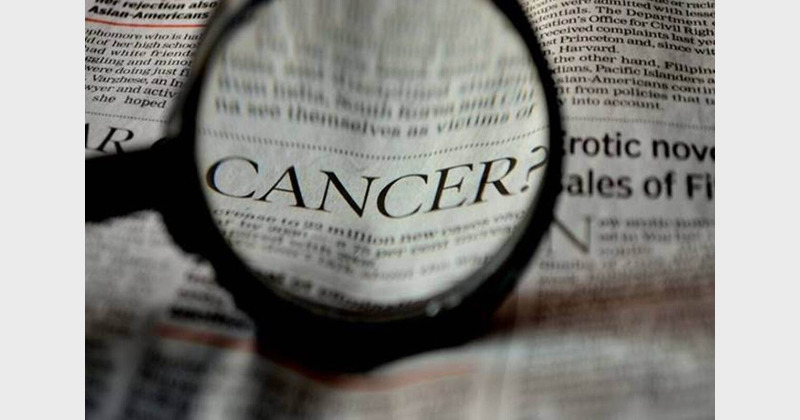
A new automated system to detect colorectal cancer
June 8, 2026
  • Read Ecopy
  • Circulation
  • Advertise
  • Careers
  • About Us
  • Contact Us
Android AppiPhone AppArattai
Organiser
  • ‌
  • Bharat
    • Assam
    • Bihar
    • Chhattisgarh
    • Jharkhand
    • Maharashtra
    • View All States
  • World
    • Asia
    • Europe
    • North America
    • South America
    • Africa
    • Australia
  • Editorial
  • International
  • Opinion
  • RSS @ 100
  • More
    • Op Sindoor
    • Analysis
    • Sports
    • Defence
    • Politics
    • Business
    • Economy
    • Culture
    • Special Report
    • Sci & Tech
    • Entertainment
    • G20
    • Azadi Ka Amrit Mahotsav
    • Vocal4Local
    • Web Stories
    • Education
    • Employment
    • Books
    • Interviews
    • Travel
    • Law
    • Health
    • Obituary
  • Subscribe
    • Subscribe Print Edition
    • Subscribe Ecopy
    • Read Ecopy
  • ‌
  • Bharat
    • Assam
    • Bihar
    • Chhattisgarh
    • Jharkhand
    • Maharashtra
    • View All States
  • World
    • Asia
    • Europe
    • North America
    • South America
    • Africa
    • Australia
  • Editorial
  • International
  • Opinion
  • RSS @ 100
  • More
    • Op Sindoor
    • Analysis
    • Sports
    • Defence
    • Politics
    • Business
    • Economy
    • Culture
    • Special Report
    • Sci & Tech
    • Entertainment
    • G20
    • Azadi Ka Amrit Mahotsav
    • Vocal4Local
    • Web Stories
    • Education
    • Employment
    • Books
    • Interviews
    • Travel
    • Law
    • Health
    • Obituary
  • Subscribe
    • Subscribe Print Edition
    • Subscribe Ecopy
    • Read Ecopy
Organiser
  • Home
  • Bharat
  • World
  • Operation Sindoor
  • Editorial
  • Analysis
  • Opinion
  • Culture
  • Defence
  • International Edition
  • RSS @ 100
  • Magazine
  • Read Ecopy
Home Bharat

A new automated system to detect colorectal cancer

WEBDESKWEBDESK
Mar 6, 2021, 08:37 am IST
in Bharat
Follow on Google News
FacebookTwitterWhatsAppTelegramEmail

New Delhi: A team of researchers from the Indian Institute of Technology Guwahati (IIT-Guwahati) has designed an automated Artificial Intelligence-based system to detect colorectal cancer in collaboration with scientists from research institutions in Japan and the United States of America.
 
Colorectal cancer is the third most common type of cancer among men and women in India. It can be cured if detected early. The commonly used technique to detect colorectal cancer is colonoscopy, in which the medical personnel attending the patient-physician, gastroenterologist or oncologist – visually inspects the image obtained by a camera inserted into the colon of the subject. In the current manual approach for colonoscopy examination, observation bias may sometimes lead to an erroneous diagnosis.
 
The new technique promises to overcome this problem and help the physician to not only accurately but also rapidly detect cancer. It is also based on the analysis of colonoscopy images. The only difference is that the system is based on artificial intelligence and does the analysis automatically.
 
Scientists from the Cotton University, Guwahati, Aichi Medical University, Japan, and Harvard University and University of Texas in USA collaborated with Prof. Manas Kamal Bhuyan, Professor, Dept of Electronics and Electrical Engineering of IIT Guwahati in this project.
 
Assisted by his former postdoctoral student, Dr. Kangkana Bora, who is now an assistant professor at the Cotton University, Prof Bhuyan analysed real colonoscopy images generated by Dr. Kunio Kasugai of Aichi Medical University, to develop the new system. Prof. Zhongming Zhao from the University of Texas, Health Science Centre, Houston, USA, and Dr. Saurav Mallik of Harvard University, USA have also contributed to the study.
 
Presently, during the visual examination, doctors check for the presence of abnormal tissue growths (polyps) and study their features including shape, surface structure and contour to classify them into different categories (neoplastic and non-neoplastic). The multi-institutional team extracted the shape, texture and color components through artificial intelligence algorithms using different filters. The statistical significance in the contribution of different components was then evaluated, followed by feature selection, classifier selection based on six measures, and cross-validation.
“Our extensive experiments show that the proposed method outperforms the existing feature-based (conventional) approaches for colonic polyp detection,” scientists noted in their research paper published in Nature group’s Scientific Reports’.
 
To evaluate the robustness of their system, they compared their work with four classical deep learning models and found theirs to be better than others. “Our AI algorithm can be easily integrated with the current methods of diagnosis, which is a significant USP for this work,” the team said.
 
The research team is excited with their results and believes that their work would have a global impact on the detection of colorectal cancer. They plan to commercialize the technology in the future as the market need is enormous. However, before commercialization, they have laid out an ambitious research plan to fine-tune their system.
 
“The work we have reported only focuses on single frames selected by the doctors. In the future, we will integrate it with video tracking and automatic frame selection”, says Prof. Bhuyan, who led the study. The team also proposes to implement their analytical approach into a computational tool for easy use.
ShareTweetSendShareSend
✮ Subscribe Organiser YouTube Channel. ✮
✮ Join Organiser's WhatsApp channel for Nationalist views beyond the news. ✮
Previous News

Assam forum denounces ULFA (I) for intimidating scribes

Next News

Battlefield Nandigram: “Poll outcome would not favour Mamata,” says Suvendu’s lawmaker father Sisir Adhikari

Related News

Rajasthn | RSS centenary journey embodies dedication to nation-building: Dr Ramesh Agrawal

Decades of illegal infiltration from Bangladesh have driven profound demographic shifts in Assam, fundamentally altering its religious, linguistic, and political landscape

Unnatural demographic change: The termite threat

The Rs 200-crore MAHA Water Mission seeks to boost water security and democratise research funding in India

From Rigveda to Research Labs: How ANRF’s Rs 200 crore water mission is securing India’s future

(Right) Prakhar Shrivastava, Senior Consulting Editor and Anchor at Delhi Doordarshan Kendra at a Narada Jayanti programme in Guwahati (Left) Prakahar Srivastava addressing the gathering

Narada Jayanti by VSK Assam: “Half-truths more dangerous than lies,” says senior journalist Prakhar Shrivastava

Everest Survivor being taken to the hospital on a stretcher

Everest Survivor ICU Interview: BBC under fire for interviewing Sherpa without family’s consent

Phillipines Earthquake: 7.8 magnitude deadly earthquake leaves 15 dead, 200 injured; Rescue operation underway

Load More

Latest News

Rajasthn | RSS centenary journey embodies dedication to nation-building: Dr Ramesh Agrawal

Decades of illegal infiltration from Bangladesh have driven profound demographic shifts in Assam, fundamentally altering its religious, linguistic, and political landscape

Unnatural demographic change: The termite threat

The Rs 200-crore MAHA Water Mission seeks to boost water security and democratise research funding in India

From Rigveda to Research Labs: How ANRF’s Rs 200 crore water mission is securing India’s future

(Right) Prakhar Shrivastava, Senior Consulting Editor and Anchor at Delhi Doordarshan Kendra at a Narada Jayanti programme in Guwahati (Left) Prakahar Srivastava addressing the gathering

Narada Jayanti by VSK Assam: “Half-truths more dangerous than lies,” says senior journalist Prakhar Shrivastava

Everest Survivor being taken to the hospital on a stretcher

Everest Survivor ICU Interview: BBC under fire for interviewing Sherpa without family’s consent

Phillipines Earthquake: 7.8 magnitude deadly earthquake leaves 15 dead, 200 injured; Rescue operation underway

Shamli Conversion Case: 'I studied Islam on YouTube,' says Ayush Malik as family alleges grooming

Shamli Conversion Case: ‘I studied Islam on YouTube,’ says Ayush Malik, now Mohammad Ali, as family alleges grooming

RSS functionaries on the stage at samapan samaroh of Sangh Shiksha Varg and Karyakarta Vikas Varg–Pratham at Sambalpur.

Awakening of Lokshakti is essential for building a glorious Bharat: Dr Gopal Prasad Mahapatra

Saree worn by India's Rocket Woman Nandini Harinath displayed at US Space Museum

From Mangalyaan to USA: ISRO scientist Nandini Harinath’s iconic ‘Mars Mission Saree’ featured at US Space Museum

Thiruparankundram Karthigai Deepam issue: TVK follows DMK line of no lightening at temple, BJP alleges betrayal

Load More
  • Privacy
  • Terms
  • Cookie Policy
  • Refund and Cancellation
  • Delivery and Shipping

© Bharat Prakashan (Delhi) Limited.
Tech-enabled by Ananthapuri Technologies

  • Home
  • Search Organiser
  • Bharat
    • Assam
    • Bihar
    • Chhattisgarh
    • Jharkhand
    • Maharashtra
    • View All States
  • World
    • Asia
    • Africa
    • North America
    • South America
    • Europe
    • Australia
  • Editorial
  • Operation Sindoor
  • Opinion
  • Analysis
  • Defence
  • Culture
  • Sports
  • Business
  • RSS @ 100
  • Entertainment
  • More ..
    • Sci & Tech
    • Vocal4Local
    • Special Report
    • Education
    • Employment
    • Books
    • Interviews
    • Travel
    • Health
    • Politics
    • Law
    • Economy
    • Obituary
  • Subscribe Magazine
  • Read Ecopy
  • Advertise
  • Circulation
  • Careers
  • About Us
  • Contact Us
  • Policies & Terms
    • Privacy Policy
    • Cookie Policy
    • Refund and Cancellation
    • Terms of Use

© Bharat Prakashan (Delhi) Limited.
Tech-enabled by Ananthapuri Technologies