Saiyyad Salar Masud (?Ghazi Miyan?): The Fanatic Who Was Defeated and Killed By Maharaja Suheldev
August 15, 2026
  • Read Ecopy
  • Circulation
  • Advertise
  • Careers
  • About Us
  • Contact Us
Android AppiPhone AppArattai
Organiser
  • ‌
  • Bharat
    • Assam
    • Bihar
    • Chhattisgarh
    • Jharkhand
    • Maharashtra
    • View All States
  • World
    • Asia
    • Europe
    • North America
    • South America
    • Africa
    • Australia
  • Editorial
  • International
  • Opinion
  • RSS @ 100
  • More
    • Op Sindoor
    • Analysis
    • Sports
    • Defence
    • Politics
    • Business
    • Economy
    • Culture
    • Special Report
    • Sci & Tech
    • Entertainment
    • G20
    • Azadi Ka Amrit Mahotsav
    • Vocal4Local
    • Web Stories
    • Education
    • Employment
    • Books
    • Interviews
    • Travel
    • Law
    • Health
    • Obituary
  • Subscribe
    • Subscribe Print Edition
    • Subscribe Ecopy
    • Read Ecopy
  • ‌
  • Bharat
    • Assam
    • Bihar
    • Chhattisgarh
    • Jharkhand
    • Maharashtra
    • View All States
  • World
    • Asia
    • Europe
    • North America
    • South America
    • Africa
    • Australia
  • Editorial
  • International
  • Opinion
  • RSS @ 100
  • More
    • Op Sindoor
    • Analysis
    • Sports
    • Defence
    • Politics
    • Business
    • Economy
    • Culture
    • Special Report
    • Sci & Tech
    • Entertainment
    • G20
    • Azadi Ka Amrit Mahotsav
    • Vocal4Local
    • Web Stories
    • Education
    • Employment
    • Books
    • Interviews
    • Travel
    • Law
    • Health
    • Obituary
  • Subscribe
    • Subscribe Print Edition
    • Subscribe Ecopy
    • Read Ecopy
Organiser
  • Home
  • Bharat
  • World
  • Operation Sindoor
  • Editorial
  • Analysis
  • Opinion
  • Culture
  • Defence
  • International Edition
  • RSS @ 100
  • Magazine
  • Read Ecopy
Home Bharat

Saiyyad Salar Masud (?Ghazi Miyan?): The Fanatic Who Was Defeated and Killed By Maharaja Suheldev

The city of Bahraich contains majar of Saiyyad Salar Masud, a semi-legendary figure who died fighting there in the name of Islam. He is the anti-hero in Amish Tripathi?s 2020 novel Legend of Suheldev: The King Who Saved India.

Archive ManagerArchive Manager
Feb 17, 2021, 12:15 pm IST
inBharat
Follow on Google News
Facebook
Twitter
WhatsAppTelegramEmail

 
a_1  H x W: 0 x


The city of Bahraich contains majar of Saiyyad Salar Masud, a semi-legendary figure who died fighting there in the name of Islam. He is the anti-hero in Amish Tripathi’s 2020 novel Legend of Suheldev: The King Who Saved India. Islamic devotional literature eulogize Masud as Ghazi (martyr) who died fighting kafirs (infidels), and thus secured, as Muslims believe, a ticket to heaven and a rendezvous with 72 virgins. He is part of the legend of ‘Panchon Pir’ (five saints) venerated across religious divides in the North India.

The main source of information on Masud is his later 17th century hagiography Mirat-i-Masudi, penned by one Abdur Rahim Chishti. In this biography, Saiyyad Salar Masud is glorified as a nephew of the 11th century Ghaznavid invader Mahmud. Tutored by Mahmud Ghazni in the art of temple-breaking, book-burning, mass conversion and rampant killings, Masud went on to lead many such expeditions on his own as well, including destruction of temple and sacred suraj kund at Bahraich.

Sultan Firoz Shah Tughlaq, the hardcore Islamic zealot, considered himself to be Masud’s spiritual disciple. As testified by the historian Shams Siraj ‘Afif, Salar Masud appeared in the Sultan’s dream, told him to adopt a tougher policy with respect to the followers of other religions and to propagate Islam more persistently, as he will be held accountable on the day of the Judgement.

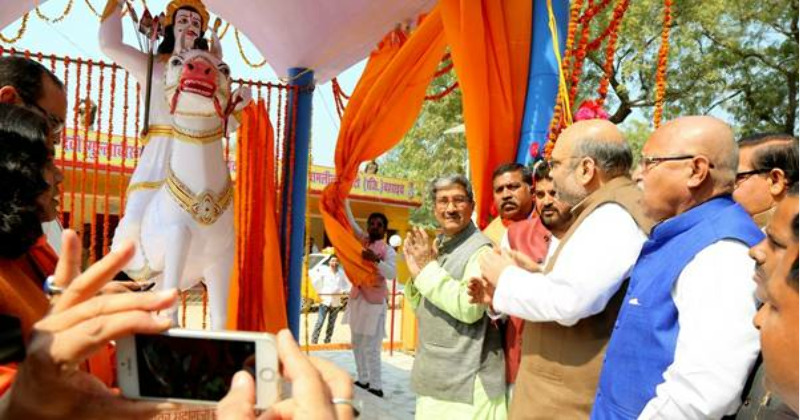
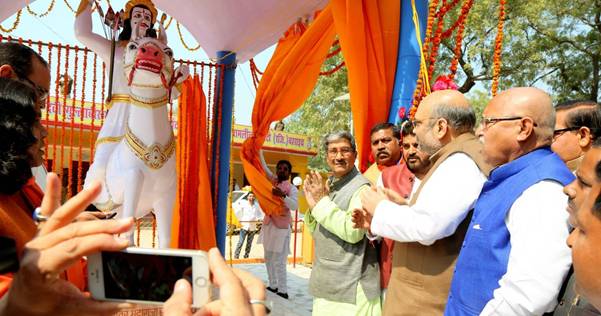
The legend goes that a local confederation of Hindu rajas led by Raja Suheldev finally defeated and killed this Turkic invader.

Masud as Described in his Urdu Biography

The definitive modern account of Masud in Urdu language has been sketched by a certain Inayat Husain “yielding a picture of innate Muslim valour and timeless Hindu cowardice.” It presents Masud’s exploits as a tale of ‘Hindu defeat’ at the hands of the forces of Islam in India, and the eventual martyrdom of this Islamic hero. Sample these lines from Masud’s Urdu biography which depicts condition of “coward” Hindus in a battle scene:

Haarne ke shagun par har-har karte aaye,
lashkar-i-Islam ko dekh kar kaleja tharraaye.
Kisi ke dil mein khauf sama gaya, kisi ko ghush aa gaya
Koi chillaya hamein bin khaaye raat bhar dast aaye,
dhoti kharaab hai, jaari peshaab hai,
yahaan hum kya banaate hain,
jhaare-jangal hokar bistar par jaate hain.

(Hindus came in zeal while their destined defeat was pre-written.

But, they started shivering at the very sight of army of Islam.

They all started giving many excuses like they were suffering from loose motion, etc. and they started showing their backs to the brave Muslims).

Yet, for generations, Masud was made out as a saint. Yet, he is venerated across religious divides. Yet, he is a martyr. Yet, this is our written and taught history!

Balladeer’s version

Local Muslim folklore, performed as ballads, accompanied by musical instrument dafali further concocts the legend of “Ghazi Miyan”. It says that a childless Yashoda (or Jaswa) who was married to Nand was infertile. But with the grace of Allah—mediated through Masud’s intercession—she was blessed with a child named Kanhaiya. Thus, a Hindu lord (Kanhaiya=Krishna) was made subservient to a Mohammadan fanatic ghazi (the meaning of “gazi”, Islamic martyr, itself is abusive for non-Muslims).

Sample one more couplet from balladeers (dafali-wallas):

Khule bhaagy Bahraich kay, jab basey Gaji Peer

bhaage yahaan se dev-daanav,

kaanpe sakal jameen / ki murat kalma sab parhin.

(The fate smiles on Bahraich because Ghazi got martyred here. The traces of deity and demons [Hinduism] fade, the earth trembles as the non-believers’ idols themselves recite the Islamic credo.)

Such a noble soul of Masud ultimately is killed treacherously by a Hindu raja:

Hum to lubhaavan byaah mein, aapne lagaaya ghaat!

(“When I was busy in preparation of my marriage, they deceived and ambushed me”)

To seal the version of balladeers’, secularist Akbar Illahabadi advocated,

“Saiyed ki sarguzasht ko H?li se p?chiye,

Ghazi Miyan ka haal Dafali se puchhiye”

(As Sir Syed can be described by his biographer Hali, similarly the authenticity of Gazi’s story can be asserted by balladeer’s tradition).

This is how the Islamic invaders were secularized and their majars became loci of inter-faith congregation.

 

The cult of Warrior-Saints


Muzaffar Alam in The Languages of Political Islam argues that glorification of such saints was often fabricated. Such a fabricated account was a political necessity to over-compensate for a founding head’s politically incorrect dealings with kings, or to launch him as an Indian prophet (Nabi-yi-Hind). Since, the post of prophet-ship was closed with Muhammad’s declaration of himself as the final prophet, therefore, these warrior-saints aspired at least as Indian prophet.
 
The cult of ghazi or warrior-saints, observes Anna Suvorova, was particularly developed in medieval Bengal. Jalaluddin Tabrizi’s proselytizing efforts amongst the Bengalis invariably involved sword of Islam. His proselytizing mission was continued by “Saint” Shah Jalal in East Bengal, who unleashed a major armed Jihad against the local populace. “In Bengal the saint’s army indulged in pillage to such an extent that the riches looted in the course of this expedition were enough to sustain Shah Jalal’s comfortable life for many years,” she observes further. Today Shah Jalal’s majar in Sylhet (Bangladesh) is a place of “pilgrimage”!
 
For generations, an oppressor like Masud was eulogised as a saint by the progeny of the very ancestors who were once terrorised by him. This strange phenomenon bemused the British Resident in Awadh, William Sleeman, who commented, “strange to say, Hindoos as well as Mahommedans make offerings to this shrine, and implore the favours of this military ruffian, whose only recorded merit consists of having sent a great many Hindoos to hell, in a wanton and unprovoked invasion of their territory”

 
The alternative history of Raja Suheldev’s bravery was revived by Arya Samaj and the veneration of Gazi was sought to be put into historical context. It could not meet a total success though. With Amish Tripathi’s 2020 novel Legend of Suheldev: The King Who Saved India, the long-suppressed subaltern’s point of view is there to find audience. 


Share
Tweet
SendShareSend
✮ Subscribe Organiser YouTube Channel. ✮
✮ Join Organiser's WhatsApp channel for Nationalist views beyond the news. ✮
Previous News

Fighting the Multi-Front War

Next News

Dangerous Designs

Related News

Kerala: Halal Fayida Islamic Banking Cooperative Society depositors stranded as crores remain unaccounted for

Abusive language used during recent protest in Delhi cannot be the language of Bharatiya youth. It is time to introspect yourself where are we making mistakes in guiding our future generation

80th Independence Day: Youth and Nation – Change begins with responsibility

The Tiranga embodies India’s freedom, unity and values, inspiring us to turn patriotism into responsible action

From Tiranga in Every Home to Tiranga in Every Heart: Turning national pride into everyday patriotism

Atul Limaye, Sah Sarkaryavah, RSS, while addressing at an Akhil Bharatiya Vidyarthi Parishad (ABVP), the student wing of the RSS, event held in Chhatrapati Sambhajinagar in Maharashtra, on August 2

Independence Day 2026: Youth and Nation – The Anarchic alternative

Keralam: CM Satheeshan omits Vande Mataram on Independence Day at govt offices; BJP events render full version

Decolonisation saw nations across Africa and Southeast Asia reclaim their cultures, languages and identities after independence (This image is generated by AI)

From Colonial Rule to Cultural Revival: How African and Southeast Asian nations shed their colonial legacies

Load More

Latest News

Kerala: Halal Fayida Islamic Banking Cooperative Society depositors stranded as crores remain unaccounted for

Abusive language used during recent protest in Delhi cannot be the language of Bharatiya youth. It is time to introspect yourself where are we making mistakes in guiding our future generation

80th Independence Day: Youth and Nation – Change begins with responsibility

The Tiranga embodies India’s freedom, unity and values, inspiring us to turn patriotism into responsible action

From Tiranga in Every Home to Tiranga in Every Heart: Turning national pride into everyday patriotism

Atul Limaye, Sah Sarkaryavah, RSS, while addressing at an Akhil Bharatiya Vidyarthi Parishad (ABVP), the student wing of the RSS, event held in Chhatrapati Sambhajinagar in Maharashtra, on August 2

Independence Day 2026: Youth and Nation – The Anarchic alternative

Keralam: CM Satheeshan omits Vande Mataram on Independence Day at govt offices; BJP events render full version

Decolonisation saw nations across Africa and Southeast Asia reclaim their cultures, languages and identities after independence (This image is generated by AI)

From Colonial Rule to Cultural Revival: How African and Southeast Asian nations shed their colonial legacies

Rashtriya Swayamsevak Sangh (RSS) Sarsanghchalak Dr Mohan Bhagwat went viral by adopting the Gen Z slang phrase "clock it" and making the corresponding hand gesture during a youth conference in Mumbai on August 6

Independence Day 2026: Anarchy vs Freedom – Revisiting Ambedkar on protest in democracy

The Pakistan-Saudi Arabia-Türkiye defence pact faces an early test amid rising regional tensions and security challenges

Pakistan-Saudi Arabia-Turkiye Defence Pact: A shaky beginning and growing questions over its strategic credibility

India’s journey from Swadhinta to Swatantrata begins with decolonising minds and embracing Bharatiya values (This image is generated by AI)

Decolonising the Mind: How citizens can embrace Bharatiya languages, traditions & values to realise absolute freedom

Two Asian Democracies, One Date: Why 15 August Belongs to India and Korea

Two Asian Democracies, One Date: Why 15 August Belongs to India and Korea

Load More
  • Privacy
  • Terms
  • Cookie Policy
  • Refund and Cancellation
  • Delivery and Shipping

© Bharat Prakashan (Delhi) Limited.
Tech-enabled by Ananthapuri Technologies

  • Home
  • Search Organiser
  • Bharat
    • Assam
    • Bihar
    • Chhattisgarh
    • Jharkhand
    • Maharashtra
    • View All States
  • World
    • Asia
    • Africa
    • North America
    • South America
    • Europe
    • Australia
  • Editorial
  • Operation Sindoor
  • Opinion
  • Analysis
  • Defence
  • Culture
  • Sports
  • Business
  • RSS @ 100
  • Entertainment
  • More ..
    • Sci & Tech
    • Vocal4Local
    • Special Report
    • Education
    • Employment
    • Books
    • Interviews
    • Travel
    • Health
    • Politics
    • Law
    • Economy
    • Obituary
  • Subscribe Magazine
  • Read Ecopy
  • Advertise
  • Circulation
  • Careers
  • About Us
  • Contact Us
  • Policies & Terms
    • Privacy Policy
    • Cookie Policy
    • Refund and Cancellation
    • Terms of Use

© Bharat Prakashan (Delhi) Limited.
Tech-enabled by Ananthapuri Technologies