Whose New Year is it, Anyway?
September 2, 2026
  • Read Ecopy
  • Circulation
  • Advertise
  • Careers
  • About Us
  • Contact Us
Android AppiPhone AppArattai
Organiser
  • ‌
  • Bharat
    • Assam
    • Bihar
    • Chhattisgarh
    • Jharkhand
    • Maharashtra
    • View All States
  • World
    • Asia
    • Europe
    • North America
    • South America
    • Africa
    • Australia
  • Editorial
  • International
  • Opinion
  • RSS @ 100
  • More
    • Op Sindoor
    • Analysis
    • Sports
    • Defence
    • Politics
    • Business
    • Economy
    • Culture
    • Special Report
    • Sci & Tech
    • Entertainment
    • G20
    • Azadi Ka Amrit Mahotsav
    • Vocal4Local
    • Web Stories
    • Education
    • Employment
    • Books
    • Interviews
    • Travel
    • Law
    • Health
    • Obituary
  • Subscribe
    • Subscribe Print Edition
    • Subscribe Ecopy
    • Read Ecopy
  • ‌
  • Bharat
    • Assam
    • Bihar
    • Chhattisgarh
    • Jharkhand
    • Maharashtra
    • View All States
  • World
    • Asia
    • Europe
    • North America
    • South America
    • Africa
    • Australia
  • Editorial
  • International
  • Opinion
  • RSS @ 100
  • More
    • Op Sindoor
    • Analysis
    • Sports
    • Defence
    • Politics
    • Business
    • Economy
    • Culture
    • Special Report
    • Sci & Tech
    • Entertainment
    • G20
    • Azadi Ka Amrit Mahotsav
    • Vocal4Local
    • Web Stories
    • Education
    • Employment
    • Books
    • Interviews
    • Travel
    • Law
    • Health
    • Obituary
  • Subscribe
    • Subscribe Print Edition
    • Subscribe Ecopy
    • Read Ecopy
Organiser
  • Home
  • Bharat
  • World
  • Operation Sindoor
  • Editorial
  • Analysis
  • Opinion
  • Culture
  • Defence
  • International Edition
  • RSS @ 100
  • Magazine
  • Read Ecopy
Home Bharat

Whose New Year is it, Anyway?

  —Agrah Pandit      This is the story of Indian National Calendar The uncle next door tells me that today’s date is Pausha, 11 of year 1942. I insist that it is January 01, 2021—first day of the New Year. He responds that our New Year is still 79 days away. Confused? Well, while I am reckoning the date according to Gregorian calendar, the uncle is reckoning according to our own ‘Indian National Calendar.’ Wait a second…India h

Archive ManagerArchive Manager
Jan 1, 2021, 07:21 am IST
inBharat
Follow on Google News
Facebook
Twitter
WhatsAppTelegramEmail
 
 
—Agrah Pandit 
 
 
a_1  H x W: 0 x


This is the story of Indian National Calendar
 
The uncle next door tells me that today’s date is Pausha, 11 of year 1942. I insist that it is January 01, 2021—first day of the New Year. He responds that our New Year is still 79 days away. Confused? Well, while I am reckoning the date according to Gregorian calendar, the uncle is reckoning according to our own ‘Indian National Calendar.’ Wait a second…India has a National Calendar? Read on.
 
At the time of independence, India had numerous calendars—no fewer than 30. Although the Gregorian calendar introduced by the British retained its pre-eminence, the majority of the country’s Hindus, Buddhists, Sikhs and Jains followed a Hindu calendar (panchang) for observing their festivals. Muslims followed their own Hijri calendar. For secular purposes, Gregorian calendar was used but it too was unscientific, out of sync with solar cycle and India’s diverse culture. To bring uniformity and accuracy to time-reckoning, a calendar reform committee was constituted by the Council of Scientific and Industrial Research under the eminent scientist Meghnad Saha in 1952.
 
Saha, the Man on Calendar Job
 
Saha^, who believed astronomy to be the first of all sciences and the calendar being oldest of the astronomical challenges, was just cut for the job. Saha-led committee would go on developing the world’s most scientifically accurate, all-India National Calendar: Saka calendar.
 
Traditional panchangs were based on rules laid out in the Surya Siddhanta, an astronomical treatise written around 500 AD. The length of a year, as measured by the Surya Siddhanta, was 365.258756 days. However, Saha observed that the actual length of a year was 365.242196 days. This had led to an error accumulating to 24 days over last 1450 years, since Surya Siddhanta. Furthermore, native calendars were geography-centric. For instance, different regions devised their own calendar based upon rising and setting times of the sun, the moon and cycle of seasons which were not necessarily uniform across geographically vast India.
 
Islamic (Hijri) calendar, based upon moon cycle, was much more erroneous. Gregorian calendar fared no better than traditional Indian panchangs when it came to accuracy. The Calendar Reform Committee termed Gregorian calendar as “very unscientific and inconvenient.” The Prime Minister Nehru too found it unsuitable for universal usage: “The mere fact that it is largely used, makes it important. It has many virtues, but even this has certain defects, which make it undesirable for universal use.”
 
The task before the Committee was obviously challenging. Nehru wanted regional calendars to become more scientifically aligned without losing their essential character: “These [local] calendars are the natural results of our past political and cultural history and partly represent past political divisions in the country.” Therefore, Saha-led Committee was expected to do justice to the preservation. Thanks to Committee’s ingenuity that they devised new National Calendar which was very much allied to this system of reckoning time traditionally followed in India.
The two most popular Hindu calendars, Vikram samvat starts from 57 BC and Saka samvat that starts with 78 AD&. Both these calendars combine lunar days and months with solar year. Saha picked up Saka samvat for reference. Thus, year 1 of Saka calendar is equivalent to year 79 (1+78) of Gregorian calendar; and the year 1942/3 of Saka samvat is equivalent to the current year 2021 (1943+78) of Gregorian calendar.
 
The National Saka calendar marks its new year on the Vernal Equinox—when sun is exactly above Equator—which is around March 21. Traditional panchangs had marked its new year around April 14. Aligning the new year to Vernal Equinox is a major tweak in the National calendar from traditional panchang. The months begin with Chaitra and end with Phalguna, each 30 or 31 days long. The weeks* are from Ravivara to Shanivara. The committee also laid down the guidelines which could be used by regional calendar-makers to devise their region-specific decentralised calendars. The committee also compiled a list of important religious festivals under the headings lunar and solar with their criteria, for fixing the dates of their observances.
 
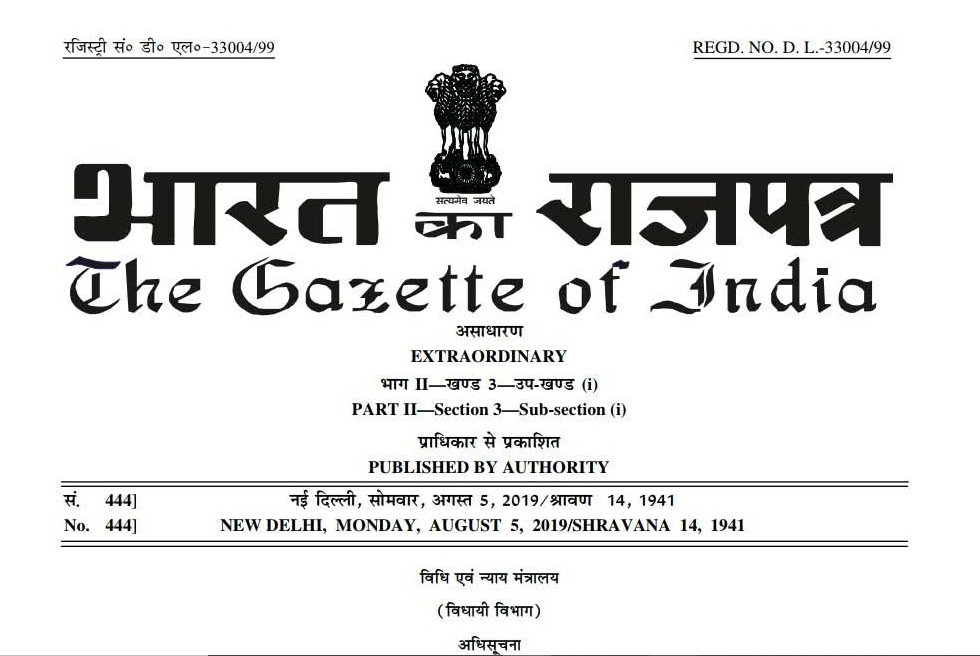
The Government of India officially started using the Indian National Calendar on 1 Chaitra 1879 (i.e. 22 March, 1957), along with scientifically inaccurate yet widespread Gregorian calendar. Well, according to our calendar, we still have few days to celebrate our national Saka New year (~Gregorian 21 March#). However, with Gregorian calendar monopolising the ordinary convention of reckoning time, Saha’s optimistic prophecy that “National Calendar will prove not only a boon but also a great unifying factor in our country” turns out to be dodgy. There are no secular takers for it except The Gazette of India, All India Radio, and communications from Government of India.
 
Happy Gregorian New Year to you, by the way.
 
The Saka era starts with crowning of King Shalivaahan in 78 AD.
 
* Although, The day, the month and the year are related to astronomical phenomena, the cycle of seven days called the week is an entirely artificial construct. There is no mention of weekdays in ancient Hindu scriptures like the Vedas or the classics like the great epic Mahabharata. Accordingly, traditional panchangs do not attach much importance to them. Weekdays incorporated into National Calendar, therefore, are an imitation of the standard convention, at best.
 
# Regional New Years continue to be celebrated from the start of Chaitra Shukla pratipada (~April 13) in most parts of india: Gudi Pahwa, Cheti Chand, Navreh & Ugadi (13 April), Bohag Bihu, Puthandu (April 14), etc.

Share
Tweet
SendShareSend
✮ Subscribe Organiser YouTube Channel. ✮
✮ Join Organiser's WhatsApp channel for Nationalist views beyond the news. ✮
Previous News

Hindu dharma under siege in Andhra; Lord Ram idol desecrated, BJP stages protest

Next News

Attack on minorities rising in Pakistan to divert public attention from the Government?s failures: PoJK activist

Related News

Actor Swara Bhasker (Left) and Rajya Sabha MP Priyanka Chaturvedi (Right)

Swara Bhasker backtracks on Padmaavat Jauhar remarks after backlash; Priyanka Chaturvedi hits back over ‘choice’

Retd Air Marshal Jeetendra Mishra Appointed New CEO of Ram Mandir Trust

From Operation Sindoor to Ayodhya: Retired Air Marshal Jeetendra Mishra to be the new CEO of the Ram Temple Trust

SC Ends NEET Protest FIRs, Allows Fresh Probe Into 2,873

SC quashes NEET protest FIRs, but allows fresh probe into 2,873 persons with alleged serious criminal antecedents

Israel-Greece defence cooperation deepens as the Achilles Shield project emerges alongside the Turkey-Pakistan-Saudi Mecca Pact.

Achilles Shield vs Sunni NATO: Israel signs biggest defence deal with Greece amid Turkey-Pakistan-Saudi-led Mecca pact

Shri Ram Janmbhoomi Teerth Kshetra has completed its rigorous CEO selection process by screening 5,585 applications

Ayodhya Ram Mandir Trust completes CEO selection: 5,585 applicants, 16 finalists, 3 names shortlisted

CPI National secretary Amarjeet Kaur (Left) and Prime Minister Narendra Modi (Right)

‘We Will Finish You Off’: CPI leader Amarjeet Kaur’s open threat to PM Modi exposes left’s political frustration

Load More

Latest News

Actor Swara Bhasker (Left) and Rajya Sabha MP Priyanka Chaturvedi (Right)

Swara Bhasker backtracks on Padmaavat Jauhar remarks after backlash; Priyanka Chaturvedi hits back over ‘choice’

Retd Air Marshal Jeetendra Mishra Appointed New CEO of Ram Mandir Trust

From Operation Sindoor to Ayodhya: Retired Air Marshal Jeetendra Mishra to be the new CEO of the Ram Temple Trust

SC Ends NEET Protest FIRs, Allows Fresh Probe Into 2,873

SC quashes NEET protest FIRs, but allows fresh probe into 2,873 persons with alleged serious criminal antecedents

Israel-Greece defence cooperation deepens as the Achilles Shield project emerges alongside the Turkey-Pakistan-Saudi Mecca Pact.

Achilles Shield vs Sunni NATO: Israel signs biggest defence deal with Greece amid Turkey-Pakistan-Saudi-led Mecca pact

Shri Ram Janmbhoomi Teerth Kshetra has completed its rigorous CEO selection process by screening 5,585 applications

Ayodhya Ram Mandir Trust completes CEO selection: 5,585 applicants, 16 finalists, 3 names shortlisted

CPI National secretary Amarjeet Kaur (Left) and Prime Minister Narendra Modi (Right)

‘We Will Finish You Off’: CPI leader Amarjeet Kaur’s open threat to PM Modi exposes left’s political frustration

“We have Sofia Qureshi”: Kerala Journo Aparna Kurup challenges Kanthapuram’s Misogyny—then goes mute & says sorry- Why?

Tamil Nadu: Madras HC sets aside H Raja’s conviction over Periyar, Kanimozhi remarks, says no disturbance

Tamil Nadu finance minister Marie Wilson

Madras HC asks if Tamil Nadu finance minister Marie Wilson is ‘King of England’ to avoid court appearance

Shree Jagannath Temple in Puri

Odisha: Jagannath Mandir Ratna Bhandar inventory enters 17th day, valuables matched with 1978 list

Load More
  • Privacy
  • Terms
  • Cookie Policy
  • Refund and Cancellation
  • Delivery and Shipping

© Bharat Prakashan (Delhi) Limited.
Tech-enabled by Ananthapuri Technologies

  • Home
  • Search Organiser
  • Bharat
    • Assam
    • Bihar
    • Chhattisgarh
    • Jharkhand
    • Maharashtra
    • View All States
  • World
    • Asia
    • Africa
    • North America
    • South America
    • Europe
    • Australia
  • Editorial
  • Operation Sindoor
  • Opinion
  • Analysis
  • Defence
  • Culture
  • Sports
  • Business
  • RSS @ 100
  • Entertainment
  • More ..
    • Sci & Tech
    • Vocal4Local
    • Special Report
    • Education
    • Employment
    • Books
    • Interviews
    • Travel
    • Health
    • Politics
    • Law
    • Economy
    • Obituary
  • Subscribe Magazine
  • Read Ecopy
  • Advertise
  • Circulation
  • Careers
  • About Us
  • Contact Us
  • Policies & Terms
    • Privacy Policy
    • Cookie Policy
    • Refund and Cancellation
    • Terms of Use

© Bharat Prakashan (Delhi) Limited.
Tech-enabled by Ananthapuri Technologies