A Light in Darkness
September 17, 2026
  • Read Ecopy
  • Circulation
  • Advertise
  • Careers
  • About Us
  • Contact Us
Android AppiPhone AppArattai
Organiser
  • ‌
  • Bharat
    • Assam
    • Bihar
    • Chhattisgarh
    • Jharkhand
    • Maharashtra
    • View All States
  • World
    • Asia
    • Europe
    • North America
    • South America
    • Africa
    • Australia
  • Editorial
  • International
  • Opinion
  • RSS @ 100
  • More
    • World Hindu Congress 2026
    • Op Sindoor
    • Analysis
    • Sports
    • Defence
    • Politics
    • Business
    • Economy
    • Culture
    • Special Report
    • Sci & Tech
    • Entertainment
    • G20
    • Azadi Ka Amrit Mahotsav
    • Vocal4Local
    • Web Stories
    • Education
    • Employment
    • Books
    • Interviews
    • Travel
    • Law
    • Health
    • Obituary
  • Subscribe
    • Subscribe Print Edition
    • Subscribe Ecopy
    • Read Ecopy
  • ‌
  • Bharat
    • Assam
    • Bihar
    • Chhattisgarh
    • Jharkhand
    • Maharashtra
    • View All States
  • World
    • Asia
    • Europe
    • North America
    • South America
    • Africa
    • Australia
  • Editorial
  • International
  • Opinion
  • RSS @ 100
  • More
    • World Hindu Congress 2026
    • Op Sindoor
    • Analysis
    • Sports
    • Defence
    • Politics
    • Business
    • Economy
    • Culture
    • Special Report
    • Sci & Tech
    • Entertainment
    • G20
    • Azadi Ka Amrit Mahotsav
    • Vocal4Local
    • Web Stories
    • Education
    • Employment
    • Books
    • Interviews
    • Travel
    • Law
    • Health
    • Obituary
  • Subscribe
    • Subscribe Print Edition
    • Subscribe Ecopy
    • Read Ecopy
Organiser
  • Home
  • Bharat
  • World
  • Operation Sindoor
  • Editorial
  • Analysis
  • Opinion
  • Culture
  • Defence
  • International Edition
  • RSS @ 100
  • Magazine
  • Read Ecopy
Home Bharat

A Light in Darkness

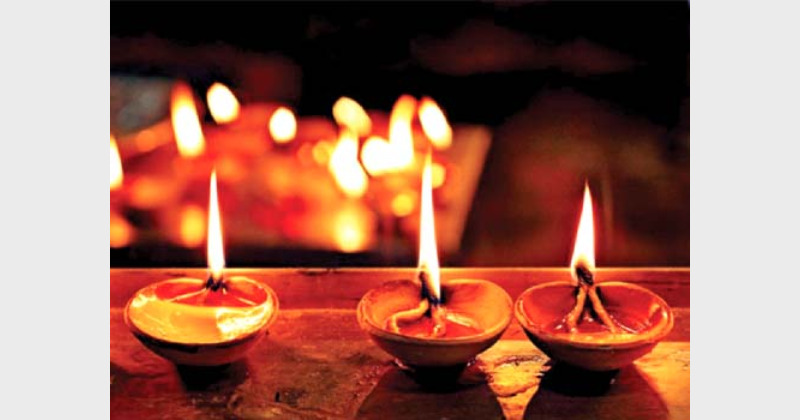
In this Deepavali, let us pledge to light up the world with a positive story of sewa that provided a flicker of hope for our brethren in this transient spell of darkness
Archive ManagerArchive Manager
Nov 17, 2020, 11:29 am IST
inBharat
Follow on Google News
Facebook
Twitter
WhatsAppTelegramEmail
 
In this Deepavali, let us pledge to light up the world with a positive story of sewa that provided a flicker of hope for our brethren in this transient spell of darkness
 
 
a_1  H x W: 0 x
 
 
A a viral video clip, controversial Marxist historian Romila Thapar is seen speaking at an event where she anachronistically suggested that King Yudhishthira (3500-4000 BCE) might have had been inspired by Mauryan Emperor Ashoka’s (268-232 BCE) ideals of renunciation — for ‘renunciation’ is a ‘fundamental discourse in Buddhism’. According to her, Yudhishthira might have had in mind ‘the image of Ashoka when he said I don’t want to be king’.
 
Thapar’s claim cannot be taken as an inadvertent slip by a senile scholar but a deliberate trick taken straight out of the Communist playbook. The sole purpose of such agenda-driven ‘intellectual kite-flying’ is to confuse people and bring discredit on the Hindu Dharma.
 
Another canard that the Left-Liberal cabal has promoted and reinforced by the Bollywood and media — in their enthusiasm to show Hindu Dharma in poor light as an exploitative philosophy — is that the concept of sewa (service) is alien to India and that Hindus borrowed it from the West, Christianity, to be precise. This is exactly the reason why the media always choose to celebrate the charity (though strings were not unattached) done by the likes of Mother Teresa, while ignoring self-less contributions carried out by Hindu Muths, religious institutions and communities. The spirit of self-less sewa is ingrained in the psyche of Hindus. Through countless Puranas and Upanishads, it has been drilled into our minds. A beautiful Sanskrit shloka has captured the sum and substance of Hindu scriptures. It goes like this: ‘In the 80 odd Puranas, what Vyasa has said can be summed up in two sentences – paropakara punyaya (rendering service to all living beings is punya) and papaya para pidanam (hurting others — verbally, physically or emotionally — is a sin).
 
This defines the philosophy and world view of Hindus. This Dharmic ideal has sustained and nourished our civilisation, despite centuries of brutal political and cultural subjugation. All our rituals, festivals and religious ceremonies are a practical expression and manifestation of this ideal.
 
Sewa is an inalienable part of the Dharmic approach. All individuals and communities are encouraged to practice the Upanishadic dictum: tena tyakthena bhunjeedha (consume after giving away). This ideal has permeated across the sections of the society shaped their outlook. That is why we can see that all the public facilities and utilities like Dharma-ashramas in religious places and towns were supported, serviced and sustained for centuries by memebers of the Vaishya community. They were not undertaking it in response to any royal decree – the rulers practically had no say in the conduct of these affairs as the communities moved on as independent, yet interdependent, units — on the contrary, the social Dharmic quotient drove them to take it upon themselves as a moral obligation to the society they were part of. Sewa with a motive, however noble its intentions might be, was considered inferior. As Swami Vivekananda puts it: “In India, a priest that preached for money would lose caste and be spat upon by the people.”
 
Commitment to this ideal with its varied dimensions — Datta, Dayadhvam, Damyata” (give, sympathise, self-control) — has fortified us morally and philosophically and given us strength to soldier on. It is often said that India was never a strong state but a strong society, unlike China, which always boasted of a strong central command but a weak society. A departure from these values which are deeply ingrained in our civilisational consciousness has led to our decline.
 
However, we witnessed that this Hindu phenomenon plays out in strange ways and manifests its myriad forms, both at the organisational and individual level, especially in the face of a crisis. This was quite evident from the Hindu response to the Covid-19 and subsequent lockdown, wherein we literally practised the Upanishadic philosophy of sewa. During the pandemic, when the clouds of darkness engulfed the world, millions of Indians, responding to the call of Prime Minister Narendra Modi to light a lamp in a symbolic gesture to mark the fight against coronavirus, dedicated themselves to light up many lives who suffered during the lockdown. When the Prime Minister gave a call to work for achieving self-reliance – Atmanirbhar Bharat — the country responded in unison, as if the people were waiting for such a call for long. When we look back in the annals of history, we see that such a call had roused our Freedom Fighters to throw themselves into the national movement and sacrifice their lives. Now, it is time to live and work to realise their dream. Thus, Atmanirbhar Bharat is a call to action – a call to free ourselves from the shackles of imported ideologies, imposed upon us, which sought to drain us of our latent civilisational strengths and value systems.
 
The Dharmic ideal of sewa has sustained and nourished our civilisation, despite centuries of brutal political and cultural subjugation. All our rituals, festivals and religious ceremonies are a practical expression and manifestation of this ideal
 
Another myth propagated by the Leftist cabal is that India’s religion was the root cause of its economic misery and impoverishment. This is baseless. Chanakya was a proponent of a more-risk-more-profit policy. In the Arthsastra, he tells the king to provide all facilities to the Vaishya community to operate freely and fearlessly so that the kingdom benefits from the wealth creation. It was the socialist paradigm – brought in by first Prime Minister Nehru who had believed that ‘profit was a dirty word’ — that wreaked havoc on our economy.
 
Atmanirbhar Bharat is much more than a mere economic plan to become self-reliant – it is a call to return to our National Selfhood. To play its civilisational role – krinwanto vishwam aryam (to ennoble the world) – India has to strengthen its economic muscle and sense of empathy for the . India has always been a land of entrepreneurs.
 
This edition of Organiser is dedicated to all those individuals and organisations who through their innovative skills presented a true model of swadeshi and sewa for the society. During this Deepavali, let us light up the world with a positive story of sewa that provided a flicker of hope for our brethren in this transient spell of darkness. 

 
Share
Tweet
SendShareSend
✮ Subscribe Organiser YouTube Channel. ✮
✮ Join Organiser's WhatsApp channel for Nationalist views beyond the news. ✮
Previous News

Second phase of Malabar Exercise begins today in Northern Arabian Sea

Next News

Opting out of RCEP, A Bold and Wise Move

Related News

Akhil Bharatiya Vidyarthi Parishad (ABVP) National Secretary Shravan B. Raj strongly condemned Karnataka Congress President B. K. Hariprasad’s statement describing Umar Khalid as a ‘nationalist’

ABVP slams Congress over Delhi riots 2020 accused Umar Khalid remark, questions ‘Changing’ nationalism narrative

Veteran Kannada Actor Ananth Nag wins Dada Saheb Phalke award

Anant Nag Wins Dadasaheb Phalke Award: PM Modi praises his natural acting, versatility

Pinarayi Vijayan, former CM of Kerala (Left)

Keralam: RTI reveals Pinarayi Vijayan govt spent Rs 245.62 cr on litigations, Kapil Sibal among top beneficiaries

Agatheeswarar temple, Nungambakkam, Chennai

Tamil Nadu: Devotees urge CM Vijay to recover Agatheeswarar temple’s encroached lands in Nungambakkam

Recurring landslides and flash floods highlight the Himalayas’ fragile ecology and risks of unchecked development

Loud and Clear: Recurring himalayan disasters warn against unchecked construction and ecological exploitation

ABVP members injured during a clash with NSUI supporters during DUSU poll campaign

DUSU Elections: ABVP condemns life-threatening attack on its members; alleges Congress-IYC-NSUI resorting to violence

Load More

Latest News

Akhil Bharatiya Vidyarthi Parishad (ABVP) National Secretary Shravan B. Raj strongly condemned Karnataka Congress President B. K. Hariprasad’s statement describing Umar Khalid as a ‘nationalist’

ABVP slams Congress over Delhi riots 2020 accused Umar Khalid remark, questions ‘Changing’ nationalism narrative

Veteran Kannada Actor Ananth Nag wins Dada Saheb Phalke award

Anant Nag Wins Dadasaheb Phalke Award: PM Modi praises his natural acting, versatility

Pinarayi Vijayan, former CM of Kerala (Left)

Keralam: RTI reveals Pinarayi Vijayan govt spent Rs 245.62 cr on litigations, Kapil Sibal among top beneficiaries

Agatheeswarar temple, Nungambakkam, Chennai

Tamil Nadu: Devotees urge CM Vijay to recover Agatheeswarar temple’s encroached lands in Nungambakkam

Recurring landslides and flash floods highlight the Himalayas’ fragile ecology and risks of unchecked development

Loud and Clear: Recurring himalayan disasters warn against unchecked construction and ecological exploitation

ABVP members injured during a clash with NSUI supporters during DUSU poll campaign

DUSU Elections: ABVP condemns life-threatening attack on its members; alleges Congress-IYC-NSUI resorting to violence

Victims of the Jhiram Ghati Maoist attack case

Jhiram Ghati Maoist attack case: NIA Special Court awards death penalty to all 10 convicts

RSS Sarsanghchalak Dr Mohan Bhagwat interacted with students from Class 10 to postgraduate level at a dialogue programme jointly organised by IILM University and Banyan Tree School in New Delhi

Purpose of education is not merely career building, but human development also: Dr Mohan Bhagwat

A Hyderabad jeweller has installed a 24-karat gold-plated Ganesha murti studded with 3,83,800 American diamonds for Ganesh Chaturthi

Hyderabad: Jeweller installs gold-plated Ganesha murti studded with 3.83 lakh American diamonds on Ganesh Chaturthi

India’s steel slag road technology is turning industrial waste into stronger infrastructure while cutting construction costs

Waste to Wealth: How India’s steel slag roads could cut construction costs by 40 per cent and boost durability

Load More
  • Privacy
  • Terms
  • Cookie Policy
  • Refund and Cancellation
  • Delivery and Shipping

© Bharat Prakashan (Delhi) Limited.
Tech-enabled by Ananthapuri Technologies

  • Home
  • Search Organiser
  • Bharat
    • Assam
    • Bihar
    • Chhattisgarh
    • Jharkhand
    • Maharashtra
    • View All States
  • World
    • Asia
    • Africa
    • North America
    • South America
    • Europe
    • Australia
  • Editorial
  • Operation Sindoor
  • Opinion
  • Analysis
  • Defence
  • Culture
  • Sports
  • Business
  • RSS @ 100
  • Entertainment
  • More ..
    • Sci & Tech
    • Vocal4Local
    • Special Report
    • Education
    • Employment
    • Books
    • Interviews
    • Travel
    • Health
    • Politics
    • Law
    • Economy
    • Obituary
  • Subscribe Magazine
  • Read Ecopy
  • Advertise
  • Circulation
  • Careers
  • About Us
  • Contact Us
  • Policies & Terms
    • Privacy Policy
    • Cookie Policy
    • Refund and Cancellation
    • Terms of Use

© Bharat Prakashan (Delhi) Limited.
Tech-enabled by Ananthapuri Technologies