Researchers find a way to cheaper solar energy
June 10, 2026
  • Read Ecopy
  • Circulation
  • Advertise
  • Careers
  • About Us
  • Contact Us
Android AppiPhone AppArattai
Organiser
  • ‌
  • Bharat
    • Assam
    • Bihar
    • Chhattisgarh
    • Jharkhand
    • Maharashtra
    • View All States
  • World
    • Asia
    • Europe
    • North America
    • South America
    • Africa
    • Australia
  • Editorial
  • International
  • Opinion
  • RSS @ 100
  • More
    • Op Sindoor
    • Analysis
    • Sports
    • Defence
    • Politics
    • Business
    • Economy
    • Culture
    • Special Report
    • Sci & Tech
    • Entertainment
    • G20
    • Azadi Ka Amrit Mahotsav
    • Vocal4Local
    • Web Stories
    • Education
    • Employment
    • Books
    • Interviews
    • Travel
    • Law
    • Health
    • Obituary
  • Subscribe
    • Subscribe Print Edition
    • Subscribe Ecopy
    • Read Ecopy
  • ‌
  • Bharat
    • Assam
    • Bihar
    • Chhattisgarh
    • Jharkhand
    • Maharashtra
    • View All States
  • World
    • Asia
    • Europe
    • North America
    • South America
    • Africa
    • Australia
  • Editorial
  • International
  • Opinion
  • RSS @ 100
  • More
    • Op Sindoor
    • Analysis
    • Sports
    • Defence
    • Politics
    • Business
    • Economy
    • Culture
    • Special Report
    • Sci & Tech
    • Entertainment
    • G20
    • Azadi Ka Amrit Mahotsav
    • Vocal4Local
    • Web Stories
    • Education
    • Employment
    • Books
    • Interviews
    • Travel
    • Law
    • Health
    • Obituary
  • Subscribe
    • Subscribe Print Edition
    • Subscribe Ecopy
    • Read Ecopy
Organiser
  • Home
  • Bharat
  • World
  • Operation Sindoor
  • Editorial
  • Analysis
  • Opinion
  • Culture
  • Defence
  • International Edition
  • RSS @ 100
  • Magazine
  • Read Ecopy
Home Bharat

Researchers find a way to cheaper solar energy

The world will need significantly increased clean energy supply in the future. Solar energy is a viable solution, but there are certain limitations. Solar energy conversion to electricity and its storage at a low cost is an integral part of renewable energy research. Indian Institute of Technology Madras (IIT Madras) researchers have discovered a new material to split water into Hydrogen and Oxygen using solar power effectively. This research is expected to create a renewed interest in Solar fuels? domain,

Archive ManagerArchive Manager
Aug 22, 2020, 10:00 am IST
in Bharat
Follow on Google News
FacebookTwitterWhatsAppTelegramEmail
 

-Dr Aravind Kumar Chandiran and Muhammed Hamdan
 
a_1 H x W: 0 x
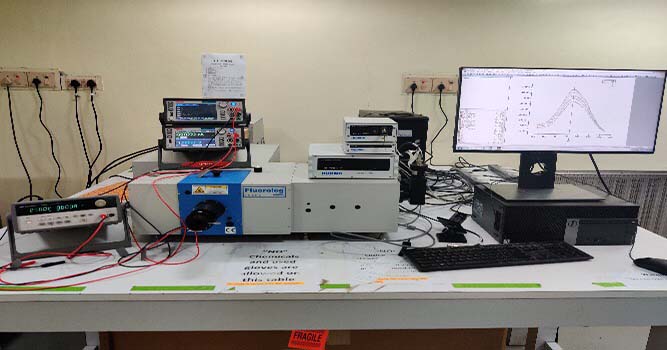
One of the laboratory equipment used by Solar Energy Research Group
 
India Science Wire: The world will need significantly increased clean energy supply in the future. Solar energy is a viable solution, but there are certain limitations. Solar energy conversion to electricity and its storage at a low cost is an integral part of renewable energy research. Indian Institute of Technology Madras (IIT Madras) researchers have discovered a new material to split water into Hydrogen and Oxygen using solar power effectively. This research is expected to create a renewed interest in Solar fuels’ domain, for its scope of conversion and storage in a single system. The method can significantly reduce the cost per kilowatt-hour (kWh) of solar energy.
 
Touching upon the applied aspects of the research, Dr Aravind Kumar Chandiran, Assistant Professor, Department of Chemical Engineering, IIT Madras said, “Storing solar energy in batteries is an expensive business for large scale implementation. A single photoelectrochemical (PEC) system that can harness and store solar energy in the form of chemical fuels can potentially reduce the cost per kWh of energy. Ideally, seawater splitting using PEC to generate clean hydrogen should be serious research, if India should remain committed to green energy and avoid potential consequences of continued carbon emission. In our recent work, we attempted to make a first successful demonstration of water splitting using the best photovoltaic material.”
 
In 2009, research community employed a new class of semiconducting materials, called ‘halide perovskites’ with formula CH3NH3PbI3, for solution processible solar cells. In less than a decade, the efficiency of these devices improved from 3% to over 25%. For comparison, the conventional silicon-based solar cells took nearly three decades to reach 25%, since the establishment of certification standards by National Renewable Energy Laboratory.
 
This fast growth of the perovskite-based solar cells, however, is significantly limited for commercial scale-up due to the presence of the toxic lead and instability of these devices in ambient conditions. The entire device fabrication has to be carried out in the inert atmosphere, literally under zero oxygen and water to avoid degradation, and they have to be encapsulated to prevent ambient exposure.
 
To take this technology up for commercialisation, efforts from research groups across the world have been focused on non-lead and ambient stable halide perovskite absorbers. Several hundreds of research papers have been published on improving the robustness of this material in oxygen and humid conditions, by selectively tuning the constituent atoms. However, only partial ambient stability is achieved, and these state-of-the-art materials still decompose instantly when they come in contact with water.
 
Another team member of the research group Muhammed Hamdan, while investigating materials for solar cells, discovered a ‘halide perovskite’ (Cs2PtI6), which completely absorbs the entire visible light and remains extremely stable in ambient. This material is also found to be stable in strong acids and bases.
 
Mr Hamdan combined solar energy conversion and storage in the form of chemical fuels by utilising this material’s record stability. Using sunlight, and with a photoelectrochemical device made with Cs2PtI6, the team was able to split water into hydrogen and oxygen successfully.
 
The generation of solar fuels is not only restricted to water splitting to generate hydrogen fuel, but the perovskite semiconductors can also be used in carbon dioxide conversion to get useful hydrocarbon fuels. In the long run, the design principles of this material, platinum in Cs2PtI6, can be replaced with other low-cost transition elements to reduce the costs further.
 
Dr Chandiran observed, “To date, in the world of halide perovskites, this is the only material that shows such extraordinary stability in a harsh environment.”


 

ShareTweetSendShareSend
✮ Subscribe Organiser YouTube Channel. ✮
✮ Join Organiser's WhatsApp channel for Nationalist views beyond the news. ✮
Previous News

Making India QuTech-friendly

Next News

Atrocities of the Church on Janjatis of India

Related News

India Deploys 12 Nuclear Warheads: Heralds doctrinal shift to script strategic deterrence against multi-front threat

J&K: Zojila tunnel clears key hurdle; Signals new era of connectivity for Ladakh

How Cockroach politics is hollowing out Bharatiya democratic culture

RSS centenary year is a time for renewed resolve and greater commitment to nation-building: Dr Mohan Bhagwat

Ex-DMK Minister Senthil Balaji (Right Side-File Photo)

Tamil Nadu: CBI books Rs 397 cr transformer tender scam from ex-DMK Minister Senthil Balaji’s tenure (2021-2023)

Border Security Force (BSF) officials inspect the Single Row Fencing (SRF) at a Border Out Post area (India-Bangladesh border)

Infiltration and Border Management: Saving the Siliguri corridor

Load More

Latest News

India Deploys 12 Nuclear Warheads: Heralds doctrinal shift to script strategic deterrence against multi-front threat

J&K: Zojila tunnel clears key hurdle; Signals new era of connectivity for Ladakh

How Cockroach politics is hollowing out Bharatiya democratic culture

RSS centenary year is a time for renewed resolve and greater commitment to nation-building: Dr Mohan Bhagwat

Ex-DMK Minister Senthil Balaji (Right Side-File Photo)

Tamil Nadu: CBI books Rs 397 cr transformer tender scam from ex-DMK Minister Senthil Balaji’s tenure (2021-2023)

Border Security Force (BSF) officials inspect the Single Row Fencing (SRF) at a Border Out Post area (India-Bangladesh border)

Infiltration and Border Management: Saving the Siliguri corridor

External Affairs Ministry spokesperson Randhir Jaiswal, slams Pakistan over the recent killings in POJK

‘Hope Pakistan is held accountable’: India reacts after 20 killed in Pakistan Occupied Jammu & Kashmir

China’s anti-BLA offensive hits snag as UN members demand proof

UN Setback for China and Pakistan: US and allies stall move to ban Baloch Liberation Army

West Asia Conflict: Collective response to energy crisis

Atul Limaye Ji Sah Sarkaryavah, Rashtriya Swayamsevak Sangh while addressing a Pramukh Jan Gosthi Rashtriya at Raipur, Chhattisgarh

Chhattisgarh: Society must lead its own transformation through collective initiative: Atul Limaye

Load More
  • Privacy
  • Terms
  • Cookie Policy
  • Refund and Cancellation
  • Delivery and Shipping

© Bharat Prakashan (Delhi) Limited.
Tech-enabled by Ananthapuri Technologies

  • Home
  • Search Organiser
  • Bharat
    • Assam
    • Bihar
    • Chhattisgarh
    • Jharkhand
    • Maharashtra
    • View All States
  • World
    • Asia
    • Africa
    • North America
    • South America
    • Europe
    • Australia
  • Editorial
  • Operation Sindoor
  • Opinion
  • Analysis
  • Defence
  • Culture
  • Sports
  • Business
  • RSS @ 100
  • Entertainment
  • More ..
    • Sci & Tech
    • Vocal4Local
    • Special Report
    • Education
    • Employment
    • Books
    • Interviews
    • Travel
    • Health
    • Politics
    • Law
    • Economy
    • Obituary
  • Subscribe Magazine
  • Read Ecopy
  • Advertise
  • Circulation
  • Careers
  • About Us
  • Contact Us
  • Policies & Terms
    • Privacy Policy
    • Cookie Policy
    • Refund and Cancellation
    • Terms of Use

© Bharat Prakashan (Delhi) Limited.
Tech-enabled by Ananthapuri Technologies