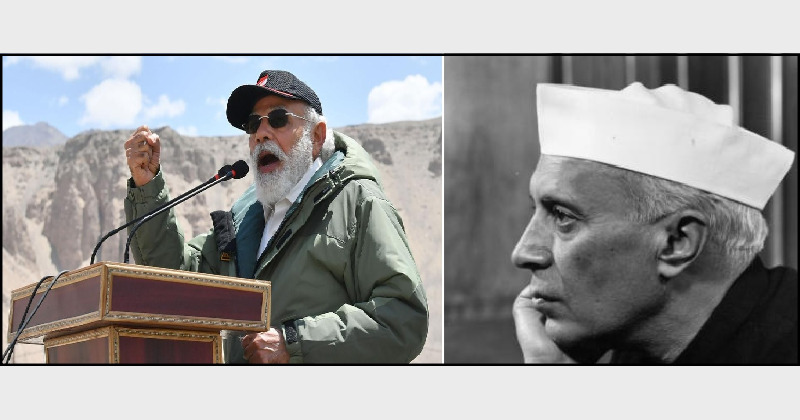
When Tsepon Shakabpa offered to make Tibet a self-reliant nation, PM Nehru turned down the offer. But, a few days ago, when China killed our soldiers in Galvan Valley, PM Modi started and encouraging to take steps towards making India a self-reliant country.
– Devesh Khandelwal
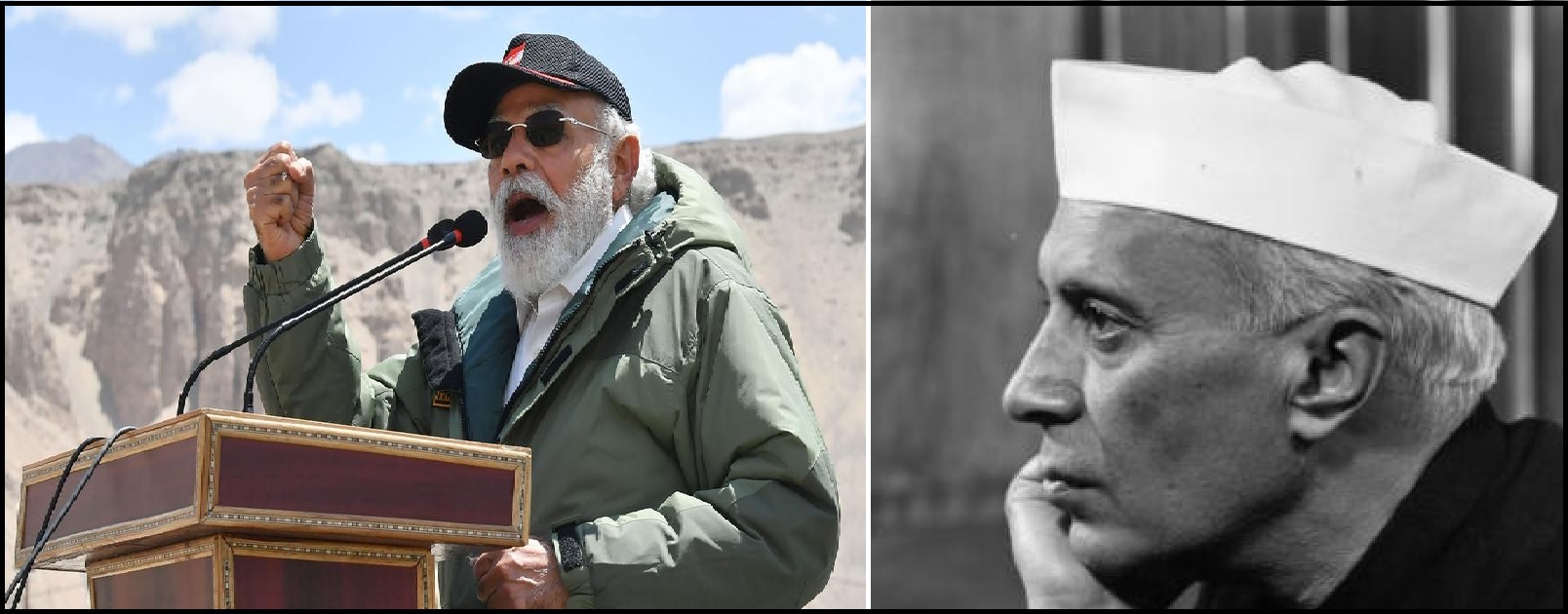
When PM Nehru had no option left except war against China, the President of India Sarvepalli Radhakrishnan declared an emergency on 26 October 1962. During the middle of the war, in the Lok Sabha, PM Nehru delivered a speech on 12 November and admitted that ‘for five years we have been the victims of Chinese aggression across our frontiers in the north’.
While comparing the China with eighteen and nineteenth century’s imperialist European countries, PM Nehru said, “That imperialism has abated now, and many of the colonies of European countries have been freed and are independent countries. But, curiously the very champions of anti-imperialism, that is, the People’s Government of China, are now following the course of aggression and imperialist expansion.”
On that day he was proposing a resolution against China for initiating a massive invasion on India. At least, for the first time in his life, especially on China, PM Nehru was speaking the truth to the nation. Since he was dealing with China from 1948 and the foundation stone of India-China bilateral relationship was laid by him, therefore it is necessary to analyse the foreign policy of India and unilateral love towards China, which has not only damaged India’s interests but also their effects are still visible.
It might be a coincidence that after independence, the word ‘China’ was first used by PM Nehru in the Constituent Assembly (Legislative) of India. The matter was related to the annual expenses of Indian embassies abroad. The Indian Government had allocated the second-highest amount of 723,400 rupees after the US to the embassy of India in China, which included the purchase of land and construction of a building.
This was the first step to establish India’s foreign relations with China. Two years later – on 1 October 1949 Prime Minister & Foreign Minister Chou En-Lai initiated diplomatic relations with other foreign countries including India, through their embassies in China.
Leaders such as Home Minister Sardar Patel and Governor-General C. Rajagopalachari were of the opinion that India should go slow in the matter. In contrast, Prime Minister Nehru officially recognised China on 30 December 1949 on the advice of a communist and Indian Ambassador to China K.M. Panikkar. It is not a hidden fact that Panikkar has an affection towards Chou En-Lai and Mao Tso-Tung which he already disclosed in his autobiography titled, ‘Two Chinas – Memoirs of a Diplomat’.
However, India becomes the first non-socialist nation to recognise Communist China. This decision of the Nehru government was also approved by the session of All India Congress Committee in February 1950.
In the same year on 22 March, both Governments of India and the Chinese Government agreed to establish full diplomatic relations. From then PM Nehru began to support the demands to grant China representation in international bodies, the United Nations above all. He tried to convince the Western countries including the United Kingdom and the United States of America. In a radio address at Commonwealth Prime Ministers’ Conference in London, he described China as a great nation and emphasised on the reborn of China with new strength.
Meanwhile, in December 1948 the administration of Tibet wanted to build trade relations with other countries including India. In reality, through these delegations, they were seeking an independent and sovereign status. They visited the United Kingdom, United States, India, and China for woolen factories, export relaxation, and secure machinery for agriculture.
The Chinese authorities were not in favour of this mission, so Chinese ambassador in India Lo Chio-Luen wrote a letter to PM Nehru and expressed his concern over the Tibetan trade mission’s proposed visit to India to discuss the trade matters, which could ‘raise some points affecting the sovereignty and administrative integrity of China’. He wished Indian government to discourage and refuse such a discussion.
PM Nehru took a complete silence against the imperialist China. When we turned back and look at these chapters of history – we will see that in the last seven decades India lost a lot such as the martyrdom of our thousands of soldiers, encroachment on our territories, and defeat of the war.
Despite China’s opposition, PM Nehru received the Tibet mission led by Tsepon Shakabpa in New Delhi at his residence on 8 January 1949. Tsepon made two requests – (1) grant of two million dollars to Tibet for the purchase of gold, and (2) free transit facilities through India for Tibetan exports and imports. He also described the deteriorating economic condition of Tibet and sought help from the Government of India. Instead of giving some concrete help, PM Nehru sent him back to Tibet with baseless advice and false assurances.
This time it was not a coincidence but a deliberate step under the pressure of China. The Prime Minister of India had an opportunity on that day when he could stand with the cause of Tibet and stop the emerging threats from China.
This was not the first and last time when Nehru had a great opportunity to write history. Soon, in July 1949, the Tibetan authority expelled the Kuomintang mission from Lhasa and proclaimed the independence of Tibet. It is not hard to believe that China for which Nehru sought a melodic relations, had declared India as responsible for the incident in Tibet. This matter did not end here and China crossed her limit in September 1949 while saying that ‘we want the British, American and Indian aggressors promptly to cease all plots for encroaching on Tibet. They will receive due punishment if they dare to give provocation on Tibetan territory’.
Here we need to think once whether he was the same Jawaharlal Nehru who fought against British imperialism for the freedom of India and when Tibet wanted freedom from Chinese imperialism, he was so terrified in the single threat of China and started mobilising international support for China as its ambassador.
On the other hand, the British declared that if China attempted to force her rule in Tibet, Tibet could seek British intervention. A few weeks later, American radio commentator, Lowell Thomas arrived at Lhasa with a letter for Dalai Lama from US President Harry S. Truman. The contents of the letter were never published. According to the newspapers including The New York Times, the State Department discussed the recognition of the independence of and military aid for Tibet.
At the same time, PM Nehru took a complete silence against the imperialist China. The well-known biographer of PM Nehru and journalist, Frank Moras described this loss in a clear manner in his book, ‘The Revolt in Tibet’, “No reasonable person or government expected India to go to war with China over Tibet in 1950 or in 1959. But by refraining from recognising Tibet as a sovereign, independent state between 1947 and 1949, at a time when neither the Chinese communists nor the nationalists could have effectively intervened, India lost the opportunity of bringing Tibet into the forum of independent nations and simultaneously ensuring the existence of a buffer state between herself and China.” (p. 118)
When we turned back and look at these chapters of history – we will see that in the last seven decades India lost a lot such as the martyrdom of our thousands of soldiers, encroachment on our territories, and defeat of the war.
What we have lost may not come back, except occupied territories, but today we have an opportunity which can shape a better future. In present, China is suffering through the same period as it was between 1948 and 1951. The rebellious tones of Tibet have started to rise along with Hong Kong and Taiwan which are among the biggest trading and manufacturing hub of China. And with the isolation of China at the global level during the Covid-19 period, Chinese citizens have also lost confidence in their government.
War is not the absolute solution but statesmanship can achieve everything. When Tsepon Shakabpa offered to make Tibet a self-reliant nation, PM Nehru turned down the offer. But, a few days ago, when China killed our soldiers in Galvan Valley, PM Modi started and encouraging to take steps towards making India a self-reliant country. Actually, this is the best possible way, which was once thought by Tibet, and today we can achieve it by our strength and leadership. With this, the imperialistic reality of China can be turned into a myth that will be beneficial for the whole world along with Tibet.