Frightened with the huge gathering of devotees turning to Shri Ram Navami celebrations in West Bengal for some times the ruling Trinamool questioned it as being the festival of Bengal and alleged that it is RSS-BJP conspiracy to import Ram from North India. But, the fact is that Shri Ram is deeply rooted in the life of Bengalese since centuries
Ajoy Chatterjee
The incumbent Trinamool, as lately the party has shed the remnant of ‘Congress’ tag off their name and logo, has been vocal with acute shrill that Ram (Vaishnavite) is not Bengal’s deity, Durga (Shakti) is; Ram Navami, hence is not a festival of Bengal and it is an RSS-BJP conspiracy to import the Ram culture from the dehat of Northern Bharat’s cow belt. Many of their front line sympathisers have cascaded this falsehood everywhere. As if they do not know who He was to invoke Bengal’s Durga untimely in Autumn (Akaal Bodhan), the usual time Bengalis worship Her. Then again, why would they incline to Trinamool, had they read texts and honoured reasons?
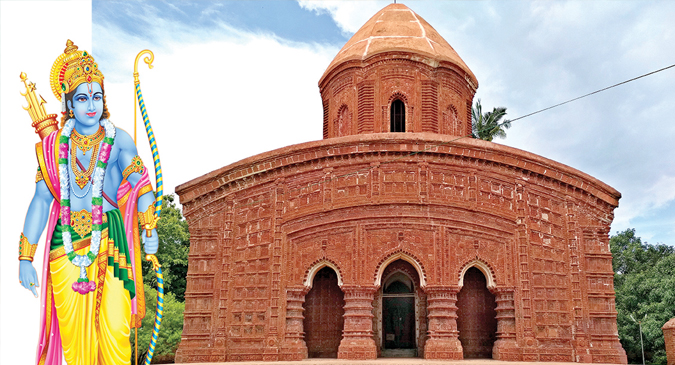
Before Bengal embraced Tantric Shaktism, it was the bedrock of Vaishnavism, for ages, perhaps immediately after Adi Sankara. The Madhava’s school of Dvaita (dual) Vaishnavism gained primary prominence during 13th century and spread from Udupi, across the Vijayanagara kingdom, through shores of Neelachala (Puri, Odisha) to Bengal, as the popular Vaishnavite seers of East, Madhavendra Puri, Ishvara Tirtha and Sri Chaitanya were the central figures. Before this wave of Madhavacharyan thoughts, South Gangetic and Rahr Bengal under the Malla kingdom in circa 9th century were already practising Vaishnavism.
Now, let us explore the ‘Bengal before RSS’, how Shri Ram was revered then and the Bengali Hindu traditions of celebrating Ram Navami.
Ram Navami Fair and Baul Assemblage of Sonamukhi (Bankura)
Ram Navami fair of Sonamukhi, a small town in the district of Bankura, is a traditional event. On this day, an assemblage of bauls, the roaming poets and singers of Bengal, and seers take place here. This is also known as a miniature of the Jaydev Kenduli Mela. This is accompanied by fair, joyrides and shops. The Ram Navami fair of Sonamukhi is a unique amalgamation of age-old Bengali Vaishnavite stream with the Santhali and Rajwari culture that have only enriched the event.
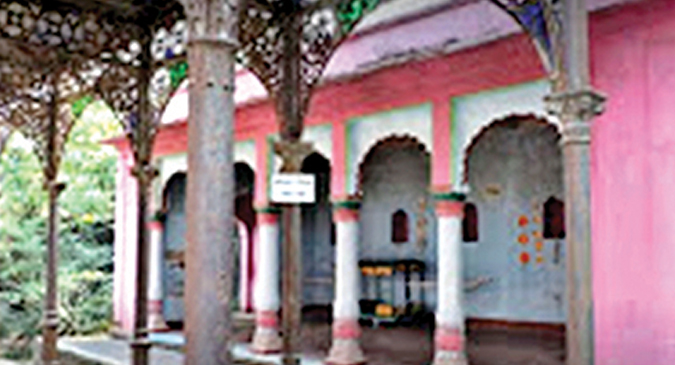
Ram Chandra Temple of Guptipara (Hooghly)
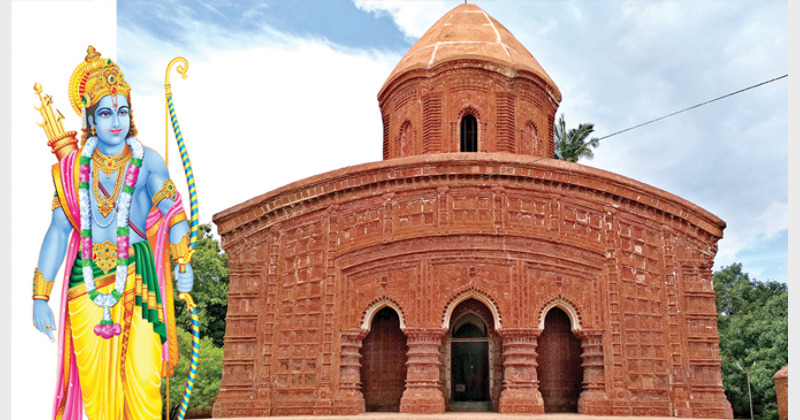
This 18th century ‘single pinnacle over char-chala’ (four sloped roof) temple stands specimen to the widespread practice of worshipping Shri Ram during the East India Co. days, not too far from their barracks and quarters in Kolkata. This terracotta temple complex also houses a Krishna Chandra, a Vrindavan Chandra and a Chaitanya temple. Though each of these four temples were built at different periods, the Ram Chandra Mandir was built by Raja Harish Chandra Roy of Sheoraphuli.
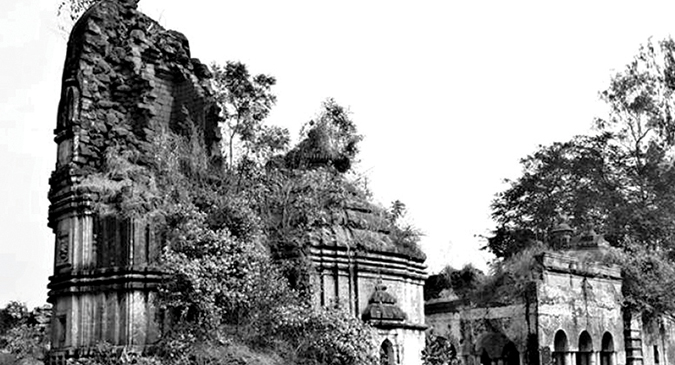
Raghunath Mandir of Chandrakona (Medinipur)
Chandrakona, a small town established by King Chandraketu, of Rajput origin, hosts multiple bricks built old temples, dedicated to Raghunath ji (Ram), Mallyanath and Lal ji (both house Lord Krishna). It is said that these temples were built in the early 17th century by Raja Krit Chand of Bardhaman, who might have overthrown the later heirs of Chandraketu. The Raghunath Mandir is an Odishan deul structure, approx. 52 ft. tall but in ruins now.
Ram Mandir and Ram Navami Fair of Ramrajatala (Howrah)
Another interesting Ram shrine, after which the Howrah town in Ramrajatala got its name, is an 18th century one, amidst a complex of two other temples built for Vamana avatar and Savitri-Satyavan. A four-month long festival kicks off during the Ram Navami and continues thru the month of Shravana. Around 250 years ago, zamindar Ayodhya Ram Chowdhury erected this Ram temple complex on his personal land. Art work depicting different episodes of the Ramayana and the Mahabharata are carved on the walls of the temple. Since then, Ram Navami celebrations and the Ramrajatala fair are centuries old and draws a big crowd and local businesses.
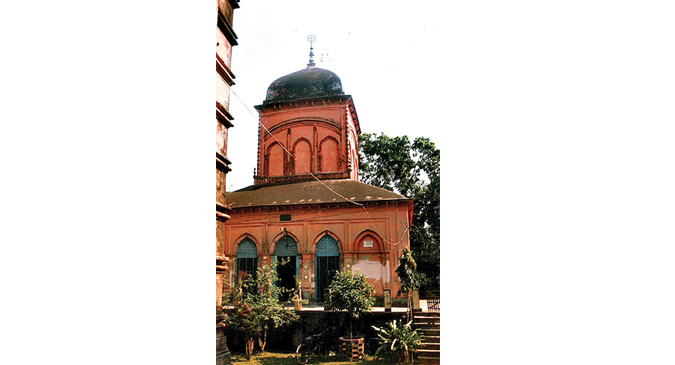
Ram Sita Mandir of Krishnaganj (Nadia)
And yet again, 18th century red brick and mortar gem from Krishnaganj, Nadia, believed to be built in 1762, as part of the triplet complex of Shivniwas, namely, Ram Sita Mandir, Rajarajeshwar Shiv Mandir and Ragnishwar Shiv Mandir. This shrine is a char-chala (four sloped roofs) architecture with a single ratna (pinnacle) on the top. It is an active centre of daily worshipping of Maryada Purushottam Ram. Town of Krishnaganj was built as a temporary capital of Raja Krishna Chandra, as he shifted it from Krishnanagar, to protect from attacks of the Bargis. The temple houses stone and ashtadhatu (eight metals) idols of Sri Ram and Sita devi, respectively.
Ramjiu Deul of Tamluk and Sita-Ram Mandir of Ghatal (Medinipur)
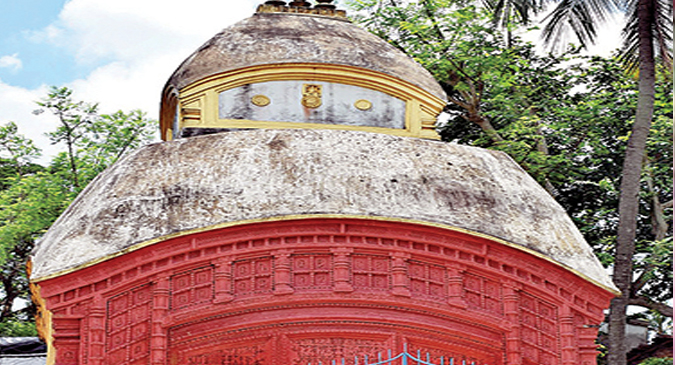
At Harir Bazar area of the town of Tamluk (old name, Tamralipta) in Medinipur stands the Odishan deul structured Ramjiu, built somewhere around the 18th century, by Tamluk rajas. It is a char-chala styled brick and mortar deul.In Ghatals’ Kharar area, Sita Ram deul, is another splendour of terracotta architecture. But specialty of this temple is its 13 ratnas (pinnacles). This shrine was built in 1865 by Maji zamindars.
Ramachandra Mandir of Chirulia (Medinipur)
Also, popularly known as ‘Baro Chala’ Mandir, i.e. temple with 12 chalas (12 sloped roof) is a Ram Mandir was built on terracotta structure, in 1843. This is one of the only four 12-chala temples in Bengal.
Raghunathji Mandir of Nashipur Akhara (Murshidabad)
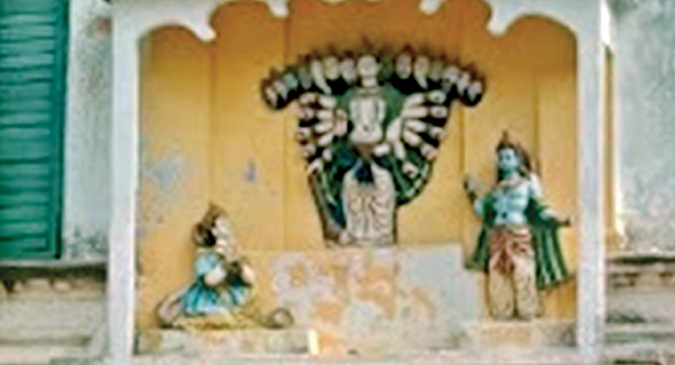
Nashipur is a village under Bhagawangola block in Murshidabad district. The Rajbari (royal palace) of Nashipur is a prominent travel destination. This was originally built by Raja Debi Singha of Nashipur royal family and later reconstructed by Raja Kirti Singh Bahadur in 1865. The Akhara is close to the Nashipur Rajbari complex, in Jafargunj, that also draws a lot of tourists. The Akhara houses the Raghunath ji temple which is still an active place of worship.
Sita Ramjiu Mandir of Rautara (Medinipur)
Built in 1700 CE, Sita Ram jiu Mandir of Rautara at Ghoshpara is a traditional aat-chala (8 sloped roof) temple with terracotta and brickworks. This Sita-Ram temple was built by the zamindar family Ghosh’s for daily worship. Medinipur has an abundance of Ram Mandirs in many other places too, like the tero-ratna (thirteen pinnacles) Sita Ram mandir at Majipara or the Sita Ram jiu deul of Janardanpur.
Matiari Ram Sita Mandir and Rural Ram Navami Celebrations (Nadia)
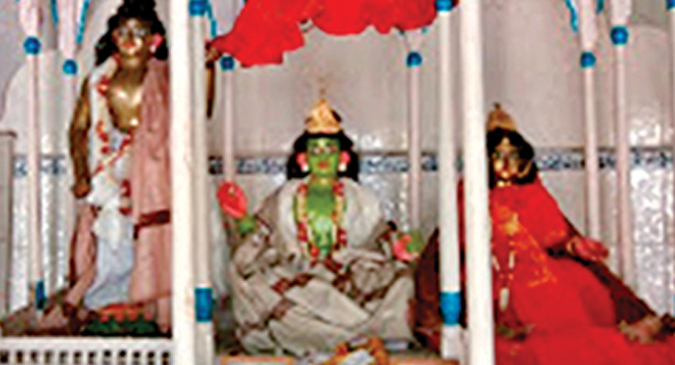
Matiari is a tiny hamlet across Dainhata Bazar, off the Ganges. Part of Matirari zamindari administrative complex, Matiari Ram Sita Mandir has its own appeal to the people of Katwa-Dainhata-Majhergram area and this place has legendary prominence among the locals.
The historic Ram Navami celebration and fair draws thousands from villages and small towns of this belt. The temple has the murtis of Lord Ram, Sita devi and Lakshman ji.
Garh Panchakot – Ruins of Ram Temple (Purulia)
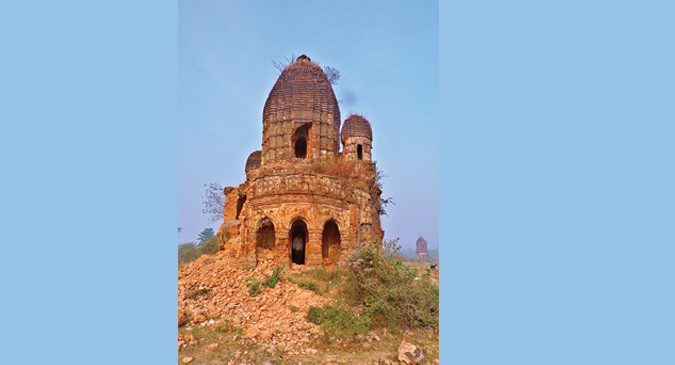
Damodar Sekhar of Rajput clan founded the Singh Deo dynasty in Purulia in circa 90 CE. He amalgamated five feudal chiefs of this locality and hence, the place eventually came to be known as Panchakot. It is from the Panchakot, the local Panchet dam is named after. It is believed that the Panchakot kingdom was submerged under the Damodar water once. Panchakot kingdom might have fallen at the hands of Malla kings of Bishnupur in around 16th century and later faced ‘Bargi’ attacks. During Malla occupation, Panchakot king built a number of temples, among which the Pancharatna temple, a Krishna temple and a stone carved Ram temple are mention worthy. Even though most of the temples, the palace and the fort are in their ruins now.
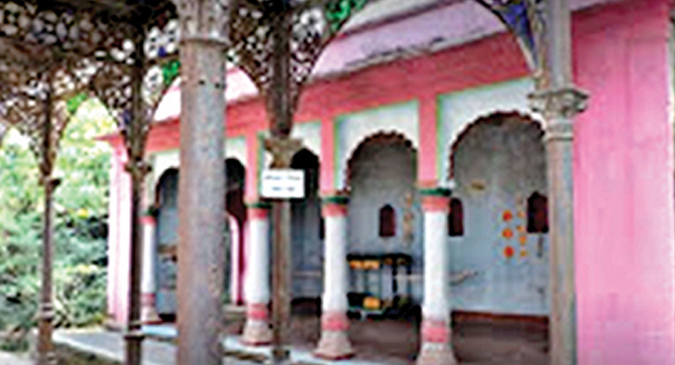
Ramchandra Mandir and Ram Navami of Narajole Royal Palace (Medinipur)
The practice of worshipping King Lord Ram in old Bengal was highly popular among Kshatriyas, royals and feudal lords; and districts of Medinipur and Nadia perhaps stand tall in terms of holding the most number of vintage Ram shrines in Bengal.
Narajole Rajbari, around 25 km from Ghatal, which is 600 years old palace of the Narajole royals houses the Ramchandra and Sita Devi shrine and a Ram Manch, a stage for Ramdhun and pala plays (a Bengali traditional form of competitive poetry). In 1819, Narajole King Mohanlal Khan, spent 1 lakh rupees to bring stone from Ayodhya Ramjanmabhoomi and build this Ram temple.
It is believed that the king who did not have an heir, was blessed with a son after this. He also started the Ram rath yatra on Ram Navami, the chariot of which is still preserved in the premises.
Most of the ancient Hindu temples in Bengal have been destroyed. One can hardly find temples built before the 17th century still standing due to the onslaught of Muslim rulers, from Bakhtiyar Khalji to the Nabobate. Many of us have heard of the gruesome stories of mass destruction of Hindu temples, at the hands of converts like Kalapahad.
There are many newer Ram Mandirs in Bengal built post-Independence that are highly popular destinations for devotees. Birla Ram Mandir of Kolkata, Ram Temple of Durgapur are to name some of them. And a few more, still standing, built in the period since late 16th century until the birth of RSS, like that of Pila near Patuli, Purba Bardhaman or those in old Malda and Murshidabad that I shall spend more time to explore.
(The writer is a founding analyst at sacrir.org) Photo Credit: Wikimedia Commons, historyofbengal.com, sthapatyakala.in, various other sources and personal collection