Crop residue burning in North affecting rest of India too: Study
July 25, 2026
  • Read Ecopy
  • Circulation
  • Advertise
  • Careers
  • About Us
  • Contact Us
Android AppiPhone AppArattai
Organiser
  • ‌
  • Bharat
    • Assam
    • Bihar
    • Chhattisgarh
    • Jharkhand
    • Maharashtra
    • View All States
  • World
    • Asia
    • Europe
    • North America
    • South America
    • Africa
    • Australia
  • Editorial
  • International
  • Opinion
  • RSS @ 100
  • More
    • Op Sindoor
    • Analysis
    • Sports
    • Defence
    • Politics
    • Business
    • Economy
    • Culture
    • Special Report
    • Sci & Tech
    • Entertainment
    • G20
    • Azadi Ka Amrit Mahotsav
    • Vocal4Local
    • Web Stories
    • Education
    • Employment
    • Books
    • Interviews
    • Travel
    • Law
    • Health
    • Obituary
  • Subscribe
    • Subscribe Print Edition
    • Subscribe Ecopy
    • Read Ecopy
  • ‌
  • Bharat
    • Assam
    • Bihar
    • Chhattisgarh
    • Jharkhand
    • Maharashtra
    • View All States
  • World
    • Asia
    • Europe
    • North America
    • South America
    • Africa
    • Australia
  • Editorial
  • International
  • Opinion
  • RSS @ 100
  • More
    • Op Sindoor
    • Analysis
    • Sports
    • Defence
    • Politics
    • Business
    • Economy
    • Culture
    • Special Report
    • Sci & Tech
    • Entertainment
    • G20
    • Azadi Ka Amrit Mahotsav
    • Vocal4Local
    • Web Stories
    • Education
    • Employment
    • Books
    • Interviews
    • Travel
    • Law
    • Health
    • Obituary
  • Subscribe
    • Subscribe Print Edition
    • Subscribe Ecopy
    • Read Ecopy
Organiser
  • Home
  • Bharat
  • World
  • Operation Sindoor
  • Editorial
  • Analysis
  • Opinion
  • Culture
  • Defence
  • International Edition
  • RSS @ 100
  • Magazine
  • Read Ecopy
Home Bharat

Crop residue burning in North affecting rest of India too: Study

Now a new study by scientists working in the US and India has found that impact of crop residue burning in the Northwest region can spread as far as central and southern states - Maharashtra, Madhya Pradesh, Telangana, Chattisgarh and even parts of Odisha

Archive ManagerArchive Manager
Jun 27, 2018, 05:22 pm IST
in Bharat
Follow on Google News
FacebookTwitterWhatsAppTelegramEmail

Now a new study by scientists working in the US and India has found that impact of crop residue burning in the Northwest region can spread as far as central and southern states – Maharashtra, Madhya Pradesh, Telangana, Chattisgarh and even parts of Odisha
 
Dinesh C Sharma


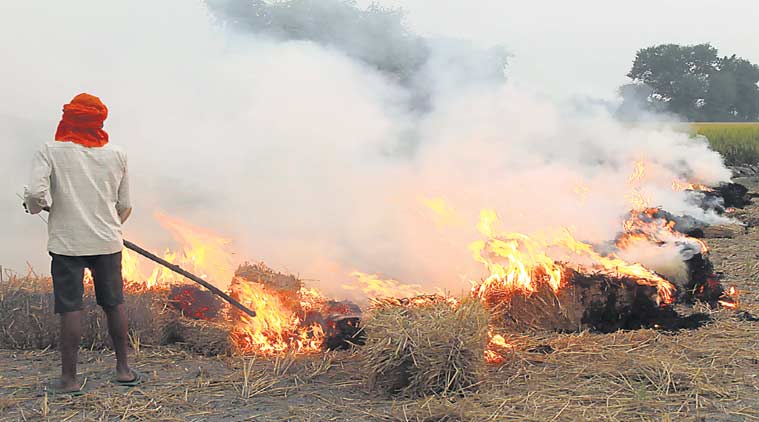
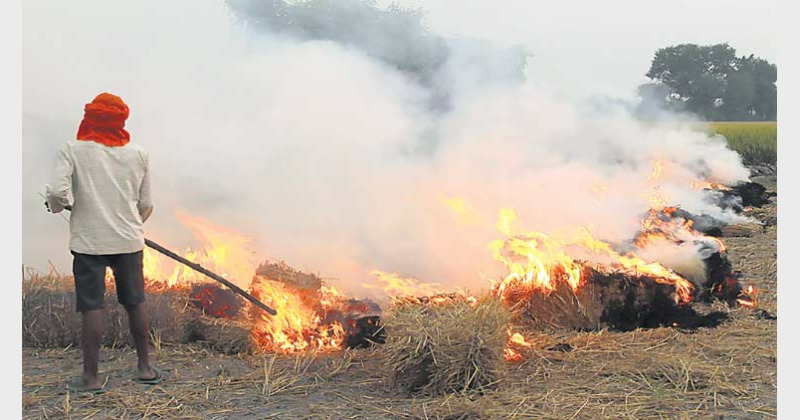
New Delhi, June 27 (India Science Wire): Crop residue burning in Punjab and Haryana is often blamed for worsening air quality in the Delhi National Capital Region. Now a new study by scientists working in the US and India has found that impact of crop residue burning in the Northwest region can spread as far as central and southern states – Maharashtra, Madhya Pradesh, Telangana, Chattisgarh and even parts of Odisha.
 
Delhi and surrounding areas experience dense haze, fog and smog every year during the crop residue burning season spanning from mid-October to mid- November, along with worsening air quality. In 2016, when the crop residue burning season coincided with Diwali, the region suffered foggy days for about a week disrupting vehicular traffic and normal life.
 
Analysis from multiple sources of information and data shows that emissions resulting from crop stubble burning in Punjab, Haryana and western Uttar Pradesh are increasingly spreading towards central and southern states and eastern fringes of the Indo-Gangetic Basin (Bihar and West Bengal) through long-range transport mechanisms, mainly due to prevailing wind pattern.
 
The increasing trend of finer black carbon particles and greenhouse gases has accelerated since 2010 due to growing mechanized harvesting that leaves more residues in the form of stalks, stubbles and straws.
 
The black carbon increase has been confirmed by observation of multi wavelength dependent aerosol properties. “Our study shows an increased risk to ambient air quality and an increased spatiotemporal extent of pollutants in recent years from crop residue burning, which could be a severe health threat to the population living in these regions,” says the study published in Journal of Geophysical Research-Atmosphere.
 
The study is co-authored by Dr. Sudipta Sarkar (NASA Goddard Space Flight Centre), Dr Ramesh P Singh (Chapman University, California) and Ph.D. student, Akshansha Chauhan from Sharda University, Greater Noida.
The study used active fire data in post-monsoon season from NASA’s MODIS (Moderate Resolution Imaging Spectroradiometer) satellite. The multi-wavelength single-scattering albedo data was obtained from the Ozone Monitoring Instrument onboard NASA’s EOS Aura space platform. Since methane is a byproduct of crop residue burning, researchers traced changes in methane mixing ratios to estimate impact of residue burning. Data relating to vertical distribution of methane, across different pressure levels, was obtained from the Atmospheric InfraRed Sounder (AIRS) onboard the EOS platform. In addition, the study used ground-based AERONET (Aerosol Robotic Network) data from IIT Kanpur and Gandhi College, Ballia.
 
While dust aerosols are largely confined to their source regions of western and northwestern India, the increase in black carbon is more evident along the eastern Indo-Gangetic Plain and central India, conforming to the northwesterly wind direction in the post-monsoon period. The month-wise trend of black carbon shows pronounced increase in November in the eastern and central-south regions at the time of crop residue burning in the northwestern parts.
 
“The most widespread increase in black carbon over the eastern and central-south regions is seen in the post-monsoon and winter periods, thus confirming the greater role of transport of black carbon from northwesterly source regions in during this time,” the study has concluded.
 
An earlier study had also attributed the wintertime peak in black carbon in Hyderabad to crop residue and biomass burning in the northwestern regions, and not to local sources. In the new study, researchers took into account emissions from various sources locally in central and south India – including local crop residue burning – and then calculated the increase in black carbon.
 
“Some amount of crop residue burning takes place in central and southern states as well, but it happens mostly in late February to May. We are finding maximum increase in carbonaceous burnt residues (black carbon) or PM 2.5 during the November timeframe. So this increase has to come from crop residue burning source areas located in northern states,” explained Dr Sudipta Sarkar while speaking to India Science Wire.
 
In addition, Dr Ramesh Singh pointed out “the wind direction during November is primarily northerly to north-westerly. In recent years, mainly from 2010, pollutants during crop residue burning season, reach central parts of the Indo-Gangetic plains and beyond. There is strong evidence that any increase in PM 2.5 and fine particulate matters in central and southern states during November, is happening because of crop residue burning in north Indian states.” This has been validated in the study by looking at PM 2.5 data from a number of weather stations located in regions like Nagpur, Aurangabad and Hyderabad.
 
Dr Singh said any local source like vehicular pollution or household combustion sources or industrial emissions cannot explain the sudden spike seen in the winters.
 
“The findings of this study are not surprising in terms of causes and impacts but highlight the importance of regulation for crop residue burning. Regulation on groundwater use and electricity subsidy can also be important measures as they will reduce the rice planted area. The problem of air quality is also linked with rapid depletion of groundwater in the northwest India and is among the most unsustainable nexus of water-energy-food-air quality,” commented Dr Vimal Mishra, head of the Water and Climate Lab at IIT Gandhinagar, who was not connected with the study.
 
The new findings have serious implications for human health. The deterioration of air quality is of great concern, particularly over the eastern Indo-Gangetic Plains which is already riddled with pollution from various coal mining, fossil fuel combustion, industrial sources and vehicular traffic. (India Science Wire)

 
ShareTweetSendShareSend
✮ Subscribe Organiser YouTube Channel. ✮
✮ Join Organiser's WhatsApp channel for Nationalist views beyond the news. ✮
Previous News

Indic Perspective: Celebrating Man-Woman Equality

Next News

Treasure Trove: Ancient Arts of Bharat ? II

Related News

Heritopia Inspires Young Minds Through Heritage at Tiruppur

Heritopia Heritage Carnival inspires 125 students in Tiruppur through India’s civilisational legacy

US Senate probe examines whether China-linked insiders helped secure preferential treatment for Amazon sellers

Amazon faces US Senate probe over China-linked marketplace corruption, transparency concerns deepen

“Sabotaged the exam, disgraced the Nation”: Delhi Court denies bail to doctor in NEET-UG 2026 paper leak

President Droupadi Murmu was conferred with an Honorary Doctorate by the Bucharest University of Economic Studies, Romania

President Murmu receives honorary doctorate in Romania; Hails the power of classroom in transforming communities

Three divine chariots before the Singha Dwar(Lion Gate) of Shree Mandir Puri

Rath Yatra 2026: World witnesses divine leela; Mahaprabhu Jagannath returns to the Singhadwara amid ocean of devotees

Fact Check: Piyush Goyal debunks AI Deepfake video misrepresenting his parliament remarks; FIR filed

Load More

Latest News

Heritopia Inspires Young Minds Through Heritage at Tiruppur

Heritopia Heritage Carnival inspires 125 students in Tiruppur through India’s civilisational legacy

US Senate probe examines whether China-linked insiders helped secure preferential treatment for Amazon sellers

Amazon faces US Senate probe over China-linked marketplace corruption, transparency concerns deepen

“Sabotaged the exam, disgraced the Nation”: Delhi Court denies bail to doctor in NEET-UG 2026 paper leak

President Droupadi Murmu was conferred with an Honorary Doctorate by the Bucharest University of Economic Studies, Romania

President Murmu receives honorary doctorate in Romania; Hails the power of classroom in transforming communities

Three divine chariots before the Singha Dwar(Lion Gate) of Shree Mandir Puri

Rath Yatra 2026: World witnesses divine leela; Mahaprabhu Jagannath returns to the Singhadwara amid ocean of devotees

Fact Check: Piyush Goyal debunks AI Deepfake video misrepresenting his parliament remarks; FIR filed

Keralam: ABVP slams VC of Central University of Kerala after exams disrupted by SFI agitation

Karnataka receives Rs 2.08 lakh crore in central MSME support, raising questions over discrimination claims

Central chairman of the Baloch Students Organisation (BSO), Jihand Baloch

BSO Chief Jihand Baloch detained again; Rights Groups claim fresh wave of enforced disappearances by Pakistsan

RSS Pracharak V Bhagayya Ji Addressing the ‘Yuva Samvad’ programme in Ranchi

Jharkhand: RSS aims to foster social unity, social harmony and national spirit: V Bhagayya Ji

Load More
  • Privacy
  • Terms
  • Cookie Policy
  • Refund and Cancellation
  • Delivery and Shipping

© Bharat Prakashan (Delhi) Limited.
Tech-enabled by Ananthapuri Technologies

  • Home
  • Search Organiser
  • Bharat
    • Assam
    • Bihar
    • Chhattisgarh
    • Jharkhand
    • Maharashtra
    • View All States
  • World
    • Asia
    • Africa
    • North America
    • South America
    • Europe
    • Australia
  • Editorial
  • Operation Sindoor
  • Opinion
  • Analysis
  • Defence
  • Culture
  • Sports
  • Business
  • RSS @ 100
  • Entertainment
  • More ..
    • Sci & Tech
    • Vocal4Local
    • Special Report
    • Education
    • Employment
    • Books
    • Interviews
    • Travel
    • Health
    • Politics
    • Law
    • Economy
    • Obituary
  • Subscribe Magazine
  • Read Ecopy
  • Advertise
  • Circulation
  • Careers
  • About Us
  • Contact Us
  • Policies & Terms
    • Privacy Policy
    • Cookie Policy
    • Refund and Cancellation
    • Terms of Use

© Bharat Prakashan (Delhi) Limited.
Tech-enabled by Ananthapuri Technologies