A policy-based and result oriented de-radicalisation plan is needed to combat the growing menace of radicalisation in Jammu and Kashmir
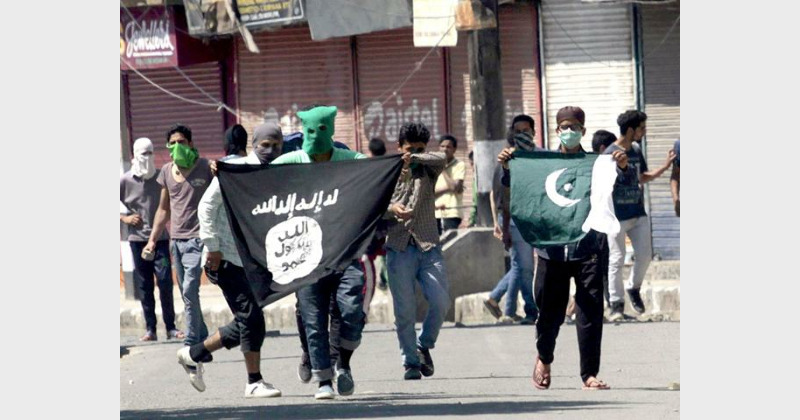
Certain occurrences in the recent past in Kashmir, do not augur well for the future of the youth. A number of instances wherein highly educated youth, including technical graduates and a research scholar, have joined the ranks of the terrorists. The latest report of a soldier of the Indian army, who had deserted his unit, joining the Hizbul Mujahideen (HM), is a wakeup call for the nation. There are also reports of youth from UP, Telangana and lately Bihar joining the terrorist outfits in Kashmir to fight for their cause lured by the appeal of Universal Jihad. Not only that some of the youth has joined, the suicide terror squads loosely referred to as ‘Fidayeen’, a domain which so far was with Pakistani terrorists. Heavy stone-pelting and crowd convergence at the site of counter-terror operations to interfere with operations and facilitate the escape of hard-core terrorists is another worrying phenomenon, though not very new. With a youth from Assam, working as a garment shop owner, joining the militant ranks, a doubt has been cast on other migrants as well who come from other parts of the country to seek the livelihood. There is growing appeal and support for ISIS ideology as is evident from the beheadings and brutal killings of the local Kashmiris by the terrorists. There are reports to suggest that pro-ISIS women group Daulatul Islam is taking roots in Kashmir.
Undoubtedly, the Kashmir of today is much different from the period when the gun surfaced for the first time in the valley. The educated, tech-savvy, well to do youth is leaving his comfort zone behind to swell the terrorist ranks. The youth from other parts of the country are transgressing geographical barriers to join their Kashmiri brethren spurred by ideological confluence. The number of local youth joining militancy has outnumbered the Pak sponsored jihadists. Girls and women are openly coming on the streets as stone-pelters and even joining the terrorist outfits. The situation is fast becoming scary and gloomy. If the nation does not act fast and swift to address the root cause which is spreading like cancer, a very major surgery will be needed to avoid amputation of the affected part. The security forces (SF) have been battling all odds to eliminate terrorism from the valley and have been successful to a great extent. But the trend of youth joining the terrorist ranks has not declined. What is driving the youth towards extremism? The causes are many; socio-economic, socio-political and politico-religious. The latest trend indicates that radicalisation is the causa principal. Therefore, to prevent the state from steering into a gloomy future, there is an urgent need to address the issue of de-radicalisation.
The Two-Pronged Approach
This new trend among the youth is the manifestation of a new breed of jihadists who are brainwashed through social media and by firebrand clerics on the plea that their religion is in danger, the concept of Universal Jihad. They are brainwashed to believe that the only way out is to establish the law of Sharia. They are made to believe that the concepts like a nation-state or democracy are a hoax and a way to suppress the Muslim. Through mischievous literature and abuse of social media, they are motivated to believe that Jihad is the way for the introduction of Sharia. To put it simply, the youth is being radicalised. The seeds of ‘communalism’ and ‘religious intolerance’ are also being sowed to radicalise the youth. However, the Kashmiri speaking members of the civil society in Kashmir refuse to accept that radicalisation is a religious issue but insist on it being driven by political issues.
De-radicalisation is like detoxification and is not a simple process. There is no single solution to detox a radicalised mind. It would need a herculean and sustained effort by all to include, the administration, politicians, clergy and the civil society
They may be right to some extent because political mismanagement ever since 1948, mainly in form of false assurances and broken promises has definitely impacted the local youth and hurt their psyche. They are unwilling to be used as pawns any more by the power brokers on the chessboard of power play purely to save their own political fortunes, whether in or out of power. Their technique of becoming venomous against the nation and pro-Azadi sympathisers when out of power and complete mellowing down the moment they sit on the powerful chair has now become a matter of hatred and further disillusionment among the youth. A tweet from Dr Syed Rizwan Ahmed, a socio-political analyst reads, “#1 Terror has religion; or else dump bodies of terrorist in Jhelum for fishes. #2 Pseudo-secular parties did not hold terror bull by horn decades back n refrained from calling spade a spade which precipitated things so far.” He reinforces the argument of politico-religious issues being the cause of radicalisation. De-radicalisation, therefore, is the crying need of the hour.
De-radicalisation is like detoxification and is not a simple process. There is no single solution to detox a radicalised mind. It would need a herculean and sustained effort by all to include, the administration, politicians, clergy and the civil society. Since, the actions of military and central police forces are perceived to be the contributory cause of the radicalisation, it would be advisable to not use their services to de-radicalise because it may turn out to be counterproductive. Deradicalisation requires two-pronged approach: #1 to prevent radicalisation of young gullible individuals, #2 rehabilitation of those who have already embraced radical ideology. The administration has to take lead by establishing de-radicalisation clinics and modernising the education system in Madrassas. The Madrassas have to be converted as centres of excellence producing future religious scholars rather than to be perceived as a nursery of extremists. All Madrassas should be brought under the control of the state and closely monitored and controlled by a Madrassa Education Board comprising eminent administrators and scholars as well as eminent members of the society. Fiscal reforms also need to form part of the modernisation of Madrassas. Another, problem facing Kashmir is lack of a visible youth icon and due to the absence of icons, terrorist like Burhan Wani has emerged as a role model for many disenchanted youth. There is no dearth of achievers in Kashmir but the government/administration has failed to project them to the extent that the other youth gets attracted to them. Kashmir badly needs youth icons to motivate them. Apart from achievers, one can straightway think of MaqboolSherwani of yesteryears and Lt UmmerFayaz, Dy SP Pandit and Inspector Feroz Dar among the present generation.
From the ‘Pen to the Gun’
The growing belief among the youth that “gun is mightier than the pen” and their gradual flight from the ‘pen to the gun’ demands a serious introspection as far as the political class is concerned. In order to strengthen the narrative that Kashmir is a political issue, it has been turned into a quagmire of abrasive politics of religion. Every initiative to resolve the issues in Kashmir is viewed through the prism of religion. Youth has been indoctrinated with alien Wahabbi- Salafi ideology which has gradually sidelined the prevalent Sufi ideology. Political leadership has to give up the image of power brokers and opportunistic and be ready to don the mantle of social reformers with civil society in toe. “Empty mind is Devil’s Workshop,” they have to ensure that these ‘empty young minds’ are diverted to creative activities. They need to be saved from the clutches of foreign ideology that has poisoned their minds.
The youth is not only seeking political space but also looking for avenues to harness its talent. Cricket and football have been the passion of Kashmiri youth. They want to play but frequent calls of Bandh, forced closure of schools and lure of stone-pelting prevents them from doing that. Revival of Sufi music, holding of musical concerts and ‘mushairas’, reopening of cinemas, revival of folk arts, ‘ nukkad’ plays, opening of well- equipped libraries, coffee houses, debates and declamations to promote the idea of democracy, nation-state and secularism, permission to form student unions, opportunities for political growth are a few measures that can be started immediately as a short-term measure.
The clerics also have to play a major role. Misuse of mosques and other religious places to fan communal hatred and anti-national propaganda has to be stopped. Even revered Mirwaiz Umar Farooq has asked the clerics to not to preach hate from mosque pulpits. He tweeted, “those who use the pulpit of mosques to divide & preach hate among Muslims along sectarian lines will not be tolerated and should be boycotted.” There are many learned clerics and Maulvis who are willing to help in this noble cause of getting the misguided youth back to the mainstream. The clerics-politicians combine has a major role to play in the de-radicalisation campaign. They also have to become resource persons in de-radicalisation clinics. In the meanwhile, using the powerful tool of social media they need to appeal to the youth to not be misled and present the correct interpretation of Holy Scriptures as well as address their political grievances.The Religious Institutions (Prevention of Misuse) ACT, 1988, should be made applicable to J&K as well.
Without the active participation of civil society, the process of de-radicalisation will not get the necessary boost it needs. Youth in any society is a very precious commodity. The society has to decide the path youth must follow. Society needs to give direction and create an environment for the holistic growth of its youth because today’s youth is the leadership of tomorrow. There is need to promote indigenous identity& culture which is much older than the alien Arabic Muslim identity &culture. De-radicalisation is not J&K specific but a national cause. There is a need to have a policy-based, result oriented plan rather than a patchwork like approach.
(The author is a Jammu-based political commentator, columnist, security and strategic analyst. The views expressed in this article are entirely personal. He can be contacted at [email protected].)