Contrary to film Padmavat, which thematically hurt the national pride, banning films and books in Bharat has been largely driven by the whims of the Gandhi family.
The controversy pertaining to Sanjay Leela Bhansali’s Padmavat had been turned into an instrument by the media and pseudo-intellectuals to strike or whip the Modi government and BJP in the name of freedom of expression. To them, the banning of cinema and books is a new phenomenon of the day. Let us look at the chronology of banning of books, cinemas, dramas, etc.
The first ban of the book noted in the history was during the colonial period. Since then, more than twelve books were banned in India. None, however, during the BJP’s regime.
Subramania Bharati’s ‘Aaril Oru Pangu’ (1910), the first short story of Tamil Language, was the first ill-fated work to be banned during the British period. Subsequently, during British period several books, including that of V. D. Savarkar’s, were banned. The first book banned in Independent India was Nikos Kazantzakis’s historical novel ‘The Last Temptation of Christ’ (1960). It was to appease the Christian community in India. It was interesting to see that there was no demand from the Christians for banning the book. But it ushered in a new era of banning books for the protection of communal interest.
 ‘Nehru: A Political Biography’ by Michael Edwards, (1975) was banned purportedly as it contained grievous factual errors. But it was not so. Keeping alive the broad political ambitions of the Nehru dynasty was the main reason behind the ban. M. O. Mathai, the private secretary of Jawaharlal Nehru from 1947 to 1959, wrote a book on Nehru in 1978 titled ‘Reminiscences of Nehru Age’, which had 49 chapters. It was the second book banned for keeping the dignity of the Nehru family. The title of chapter 29 was ‘She’. As a compromise, the author suppressed the chapter 29 titled ‘She’. Why did Nehru family fear chapter 29?
‘The Heart of India’ (1958) by Alexander Campbell was the other book banned under the Congress regime for the reason that it is hideous. This book cannot be imported into India. Published in 1958, it was about India”s economic policies and politics. For whom it was banned?
Salman Rushdie’s book ‘The Moor”s Last Sigh’ (1995) was unofficially banned by then Prime Minister P. V. Narasimha Rao under the pressure from the Nehru family loyalist Congress members, mainly for the reason that the book contained a dog named, Jawaharlal. Was it a camouflaged ban? The Prime Minister forced its Indian distributor to abstain from selling the book. They approached the Supreme Court and the court disposed of the case in February 1996 by declaring “the ban is unconstitutional”.
Another book which was banned, ‘The Red Sari’ (2010), authored by Javier Moro, a Spaniard. The book was originally published in October 2010 in Spanish. Later it was translated into English. It was a novel allegedly based on Sonia Gandhi’s life. Javier Moro claimed that Congress lawyers and spokesperson Abhishek Singhvi had written a letter to his publisher demanding the removal of the book from shops. Then he claimed that the book violated a person”s privacy for monetary gain. The book was finally released in India in January 2015.
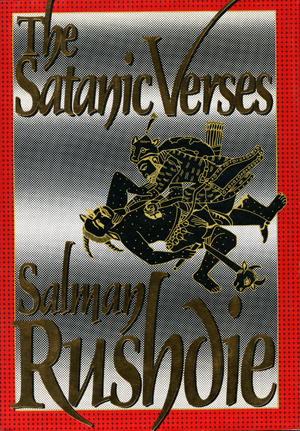
All the above said books faced a ban for respecting a family’s hegemony in the Indian political scenario. Salman Rushdie’s ‘The Satanic Verses’ (1988) was banned in order to please Muslim vote banks. It was like the earlier showpiece of sabotaging Supreme Court verdict in Shah Bano Begum case, by Rajiv Gandhi. India was far ahead of Sayyid Ruhollah Musavi Khomeini alias Ayatollah Khomeini of Iran in banning ‘The Satanic Verses’ and secured the credit of being the first country to ban this book.
Yet another model for the Congress governments’ fundamentalist Muslim appeasement was the Ram Swarup’s book ‘Understanding Islam Through Hadis’ (1982). It was first published in the United States in 1982. It is a study, based on the English translation by Abdul Hamid Siddiqi. Ram Swarup is quoted extensively and authentically from this translation. Even Muslim countries had no contention with Siddiqi’s English translation. But it was banned in India. For what purpose it was? The answer is the same. Ram Swarup is a Hindu, (Kafir), thus he has no right to touch Koran. Then what about Taslima Nasreen? Her novel ‘Lajja’ (1993) dealing with naked realities about Hindus living in Bangladesh. The argument of Nehru Dynasty is that novel hurting Muslim sentiments. These are some instances of book ban in India, for which the BJP is not responsible.
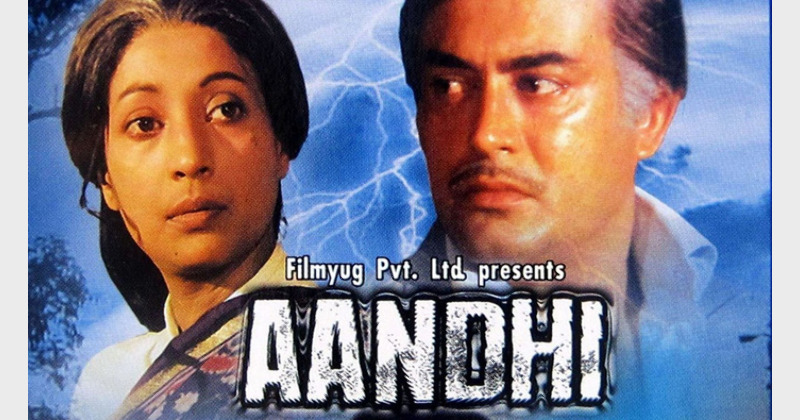
Next comes the banning of films. For whose sake films were banned? In 1975 film Andhi (Storm) was banned. It was debarred during Emergency by Indira Gandhi on the doubt that the film was based on her family life. In fact, it was not so. Time has proved when in 1977 Janata Party government granted permission for the release of the same. Another ill-fated film was Kissa Kursi Ka (Tale of Throne), a 1977 political parody which ridiculed the Emergency. The film was banned by the Congress government under Indira Gandhi. It is believed that the master prints and all copies were lifted from the Censor Board Office with the knowledge of Sanjay Gandhi and burned by the party cadres. The movie was later remade with a different cast.
Another film, ‘Amu’, directed by Shonali Bose and the story was based on the 1984 anti-Sikh riots ushered in by the Congress Party all over India in the name of the assassination of Indira Gandhi. Earlier Censor Board denied the permission to ‘Amu’ but later gave A Certificate after several audio-cuts. Pithavinum Puthranum (Father, Son and Holy Ghost) a Malayalam movie completed in 2012 is awaiting approval from the Censor Board. The story of the film based on a book of Sister Jesme, who renounced her nun-hood and left the convent because of malicious life of priests and nuns in the Catholic Church, and the murder of Sister Abhaya in the convent, a victim of the licentious life of the Indian Catholicism.