Special Story : Restoring Traditional Glory to Textiles
June 14, 2026
  • Read Ecopy
  • Circulation
  • Advertise
  • Careers
  • About Us
  • Contact Us
Android AppiPhone AppArattai
Organiser
  • ‌
  • Bharat
    • Assam
    • Bihar
    • Chhattisgarh
    • Jharkhand
    • Maharashtra
    • View All States
  • World
    • Asia
    • Europe
    • North America
    • South America
    • Africa
    • Australia
  • Editorial
  • International
  • Opinion
  • RSS @ 100
  • More
    • Op Sindoor
    • Analysis
    • Sports
    • Defence
    • Politics
    • Business
    • Economy
    • Culture
    • Special Report
    • Sci & Tech
    • Entertainment
    • G20
    • Azadi Ka Amrit Mahotsav
    • Vocal4Local
    • Web Stories
    • Education
    • Employment
    • Books
    • Interviews
    • Travel
    • Law
    • Health
    • Obituary
  • Subscribe
    • Subscribe Print Edition
    • Subscribe Ecopy
    • Read Ecopy
  • ‌
  • Bharat
    • Assam
    • Bihar
    • Chhattisgarh
    • Jharkhand
    • Maharashtra
    • View All States
  • World
    • Asia
    • Europe
    • North America
    • South America
    • Africa
    • Australia
  • Editorial
  • International
  • Opinion
  • RSS @ 100
  • More
    • Op Sindoor
    • Analysis
    • Sports
    • Defence
    • Politics
    • Business
    • Economy
    • Culture
    • Special Report
    • Sci & Tech
    • Entertainment
    • G20
    • Azadi Ka Amrit Mahotsav
    • Vocal4Local
    • Web Stories
    • Education
    • Employment
    • Books
    • Interviews
    • Travel
    • Law
    • Health
    • Obituary
  • Subscribe
    • Subscribe Print Edition
    • Subscribe Ecopy
    • Read Ecopy
Organiser
  • Home
  • Bharat
  • World
  • Operation Sindoor
  • Editorial
  • Analysis
  • Opinion
  • Culture
  • Defence
  • International Edition
  • RSS @ 100
  • Magazine
  • Read Ecopy
Home Bharat

Special Story : Restoring Traditional Glory to Textiles

Bharat?s textile industry has come a long way. Three main items - handicrafts, textiles and traditional items ? have been India?s forte for centuries. In fact, cotton textiles are what attracted the European

Archive ManagerArchive Manager
Dec 25, 2017, 01:10 pm IST
in Bharat
Follow on Google News
FacebookTwitterWhatsAppTelegramEmail


Textiles and handicrafts have been traditional cornerstones of our heritage which were popular across the globe. Bharat needs to rediscover the past glory despite the biting competition from mechanised forms of production and multiple pressures of  MNC-driven globalisation

SN  Aiyer

Bharat’s textile industry has come a long way.        Three main items – handicrafts, textiles and traditional items – have been India’s forte for centuries. In fact, cotton textiles are what attracted the European to Bharat with Marco Polo having praised our textiles in his travelogues by writing about its high quality. Since time immemorial, the variety of products such as embroidered bedspreads, wall hangings and quilts of wild silk on cotton or jute from India had been popular in China, South-East Asia and Europe.

From Little Acorns Grow Mighty Oaks

The entire textile policy can be  re-worked to fit in with the new ideas of the PM. No major financial  incentives are required but sector–wise treatment is advisable to
generate more earnings. C.P.Radhakrishnan, Chairman Central Coir Board, himself a top entrepreneur based in India’s textile hub Tiruppur (Tamil Nadu) shares his mind on the Make in India initiative of the NDA government.
What is your appraisal of the Make in India Scheme?
Basically, it is a very good initiative. It shows exemplary vision on the PM’s part. The Indian textile industry is second to none globally. We only need encouragement from the Centre. Attention must be given at the Micro, Small and Medium Enterprise (MSME) levels. The reason is each entrepreneur may go big,but the start-up is usually a “chhota” investment. We ought to keep in mind – from small acorns, do big oaks grow! So, this is the crucial aspect.
How is the scheme impacting the artisans/workers?
In my opinion, it is going to be a huge impact. The reason is that this area (handicrafts, textiles and traditional items) is potentially India’s industrial job provider No.1. No other industry can generate as much employment for the given investment. Moreover, the entire produce has several downstream benefits too. Also, this is an area where “Brand India” is universally recognised, and in marketing, we have many USPs which we are not leveraging at all. Which are the skills to maximise the benefits for the country here?
How to make it a success ?
Our emphasis must be on total modernisation. Today, buyers are all cost-conscious, so we must be cost-effective, no mistaking this. See China. How they compete globally with cut-throat rates. We must also study the global buying patterns, likes and dislikes of top buyers and adapt to the market quickly. No point in sticking to old designs if no one wants them. If Ludhiana has the wherewithal to do what it can best, it must get all support rather than we re-invent the wheel elsewhere!
Are there problem areas for focus in the “Make in India” Scheme?
In the global textile market, India’s strength is in spinning. Weaving too is picking up but we have major problems in dyeing and printing. China is far ahead. You should see their plants to believe it! We can catch up but the real issues are the effluent treatment plants required which are very costly. So, we need to think of creating clusters or  common facilities for this. Again, this solution needs to come from within the country for which we have engineers.                                    n

Presently, with the industry employing around six crore people, it is the second-largest employment generating sector after agriculture.
Huge Potential
Bharat is the largest cotton and jute producer in the world and second largest  textile fibre producer in the world with about 10 million tonnes of fibre production in 2015-16; it has the 2nd largest textile manufacturing capacity globally and has  5% share in global textiles and apparel trade.
Thanks to the recent initiatives, today major global garment and apparel brands have started their operations in Bharat. Besides, one area which is receiving enormous attention from all sides is of “technical textiles”, which involves making  products such as synthetic  geo-textiles, polyolefin woven sacks, architectural membranes, artificial turfs, medical gloves etc.
 Under the Make in India scheme, the Government of India has now launched components like- Scheme for Integrated Textile Parks (SITP), Integrated Processing Development Scheme (IPDS), Integrated Skill Development Scheme (ISDS)- of a bold and dynamic strategy to strengthen textile production and encourage this industry to cater to the domestic and international markets efficiently.
 New Opportunities
As a result of these initiatives, new opportunities are anticipated owing to fresh changes in consumer preferences in which mainly the consumption of man-made fibre is poised to grow much more in future. Bharat has good scope to take advantage of this trend as it already has the second largest installed spindle capacity in the world with more than 50 million spindles in 2014-15. Besides, experts feel that country’s spinning sector is highly advanced and competent globally in terms of price, quality and standards.
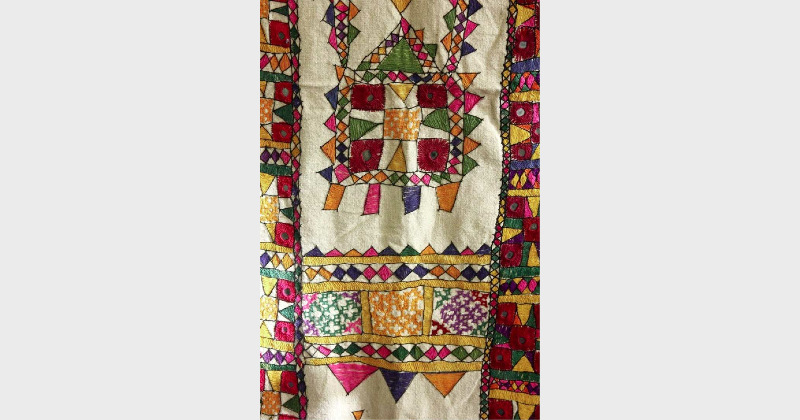
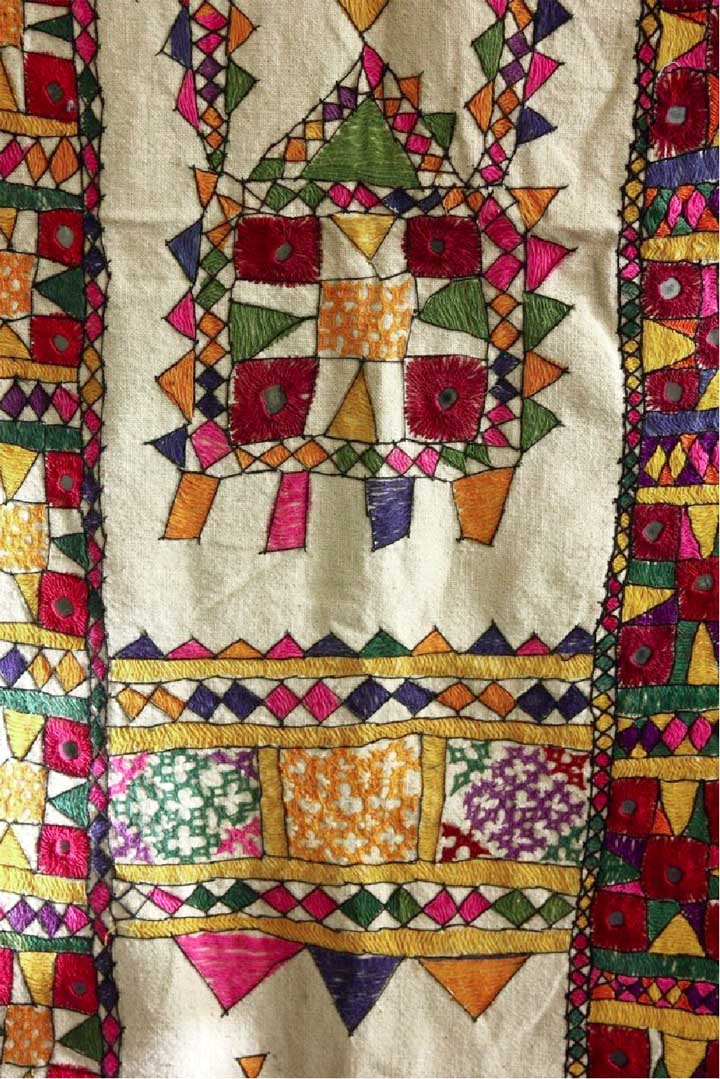
However, the main emphasis under Make in India, some feel, should be to reinvigorate the traditional items where Indian craftsmen & skilled weavers who had no match anywhere in the world. Be it silk from Kanchipuram, Mysore or Varanasi or the handlooms from Bengal, Gujarat or other parts – the global market has been benign in compliments to the Master artisans. Even though Bharat has the world”s highest installed weaving capacity with more than 4.9 million looms (including 2.4 million handlooms) in 2014-15, yet, this part of the industry continues to languish over the past several years.
Proud Heritage
Here too, it is expected that the Make in India programme will bring about a difference as now efforts are being made, as per Ministry sources, to “restore the past glory” of the cottage-based traditional sectors like handlooms and handicrafts through “an integrated approach covering the entire value chain”.  Handicrafts are where Bharat has excelled and continues to retain a clear edge in the world market, with its crafts persons widely recognised for their immense skills. The crafts of Bharat are diverse, rich in history and have long been seen as a means of relating to the rich sources of Hindu religion. The craft of each state in Bharat reflect the extensive hold of the religious faith of its people despite the influence of different empires.
Then there are numerous varieties of homemade jewellery. The one big advantage of handcrafted jewellery is that the customer gets to sit with the jeweller to decide upon the design and pattern of the jewellery. Different popular styles are the reputed Kundan Jewellery  or the Jadau Jewellery in Gujarat and Rajasthan or the more commonly seen gold jewellery. Gold jewellery never goes out of fashion and is user-friendly and adds to the beauty of the wearer. Some buyers prefer the Pachchikam jewellery, a very old form of jewellery, which needs immense creativity. This
jewellery originated in Gujarat and Kutch.
Truly, Make in India could secure wonderful results for the millions of workers and millions of others who depend on them for their daily livelihood by attracting global attention to the richness in such crafts and traditional items as well.  Preserving and rebuilding this form of art and cultural heritage of Bharat, despite the biting competition from mechanised forms of production and multiple pressures of an MNC-driven globalisation.
(The writer is a Delhi-based columnist)


ShareTweetSendShareSend
✮ Subscribe Organiser YouTube Channel. ✮
✮ Join Organiser's WhatsApp channel for Nationalist views beyond the news. ✮
Previous News

Channapatna Toys : Incredible World of Toys

Next News

Make In India : Mining New Gains in ??Infrastructure

Related News

Kolkata airport to relocate 136-year-old Bankra Mosque near runway, expansion and safety upgrades to follow

West Bengal: Kolkata airport to relocate 136-year-old Bankra Mosque as runway safety, expansion plans move forward

Bharat Innovates: PM Modi pitches India as global problem-solver; President Macron vows stronger Indo-French tech ties

America’s Friend, Pakistan’s Burden: The hidden cost of Washington’s Iran strategy

The historic gathering at the Red Fort witnessed participation from nearly 1.5 lakh representatives from Janjati communities across Bharat, celebrating their cultural identity, traditions, faith and rich civilisational heritage

Janajati Samagam, delisting, and the civilizational conscience of Bharat

Census 2027: A nation must know itself before it can transform

Multan Sun Temple

Multan Sun Temple: The forgotten mandir that once illuminated the Indian subcontinent

Load More

Latest News

Kolkata airport to relocate 136-year-old Bankra Mosque near runway, expansion and safety upgrades to follow

West Bengal: Kolkata airport to relocate 136-year-old Bankra Mosque as runway safety, expansion plans move forward

Bharat Innovates: PM Modi pitches India as global problem-solver; President Macron vows stronger Indo-French tech ties

America’s Friend, Pakistan’s Burden: The hidden cost of Washington’s Iran strategy

The historic gathering at the Red Fort witnessed participation from nearly 1.5 lakh representatives from Janjati communities across Bharat, celebrating their cultural identity, traditions, faith and rich civilisational heritage

Janajati Samagam, delisting, and the civilizational conscience of Bharat

Census 2027: A nation must know itself before it can transform

Multan Sun Temple

Multan Sun Temple: The forgotten mandir that once illuminated the Indian subcontinent

Book Review: Khandavalli Satyadeva Prasad’s ‘Interrogating Macaulay’ dismantles British colonial agenda

Representative Image

Panch Parivartan and its relevance in social work education

West Bengal Needs Truth and Reconciliation Commission for Political Violence Victims, Demands Mahesh Jethmalani

West Bengal needs truth and reconciliation commission for victims of political violence, says Mahesh Jethmalani

Chhattisgarh Anti-Conversion Law: Balancing religious freedom and protection from exploitation

Load More
  • Privacy
  • Terms
  • Cookie Policy
  • Refund and Cancellation
  • Delivery and Shipping

© Bharat Prakashan (Delhi) Limited.
Tech-enabled by Ananthapuri Technologies

  • Home
  • Search Organiser
  • Bharat
    • Assam
    • Bihar
    • Chhattisgarh
    • Jharkhand
    • Maharashtra
    • View All States
  • World
    • Asia
    • Africa
    • North America
    • South America
    • Europe
    • Australia
  • Editorial
  • Operation Sindoor
  • Opinion
  • Analysis
  • Defence
  • Culture
  • Sports
  • Business
  • RSS @ 100
  • Entertainment
  • More ..
    • Sci & Tech
    • Vocal4Local
    • Special Report
    • Education
    • Employment
    • Books
    • Interviews
    • Travel
    • Health
    • Politics
    • Law
    • Economy
    • Obituary
  • Subscribe Magazine
  • Read Ecopy
  • Advertise
  • Circulation
  • Careers
  • About Us
  • Contact Us
  • Policies & Terms
    • Privacy Policy
    • Cookie Policy
    • Refund and Cancellation
    • Terms of Use

© Bharat Prakashan (Delhi) Limited.
Tech-enabled by Ananthapuri Technologies