 Radicalisation among Indian Muslims has been going on for a long time, even though the community would deny it time and again
Sultan Shahin
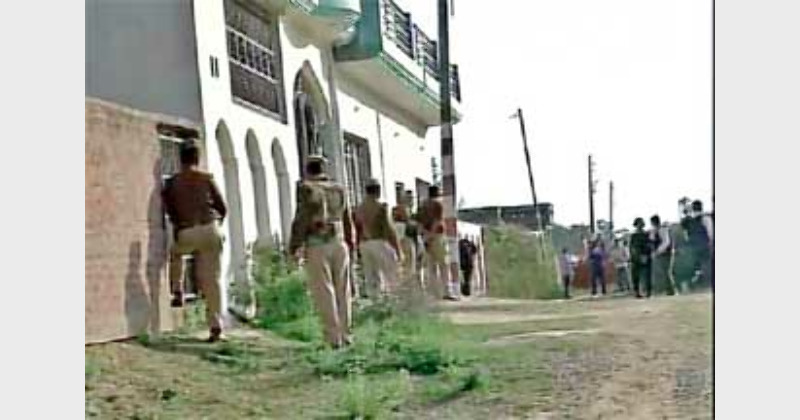
With a young radicalised Muslim Saifullah killed in Lucknow, preferring what he called “martyrdom” to life, despite hours long pleadings of his brother, a cleric and other elders, it’s high time we Muslims went into an
introspection mode. Investigations are still on and we will know for sure in the near future if he had joined the Khurasan module of the so-called Islamic State or was self-motivated. But if this was indeed the IS module at work, it is particularly worrying.
Radicalisation among Indian Muslims has been going on for a long time, even though the community would deny it.
The country has been by and large safe from large-scale acts of terrorism so far. The reason is that there was no catalyst present to provide organisational structure and other logistics of terrorism to the radicalised people.
Of course, the phenomenon of what are called “lone wolves” is not unknown and could strike us here in India too, but the IS’s organisational help would further precipitate
radicalisation.
All the more so, as hardly any systematic counterterrorism or deradicalisation efforts are being made at any level of the society.
Union Home Minister Rajnath Singh praised the reaction of Saifulla’s father, who not only called his son ‘anti-national’, but even disowned him and refused to have anything to do with his own flesh and blood, by saying, ‘Wo jo desh ka na ho saka, woh mera kya hoga’. Singh also quoted Sartaj having said, “I don’t want to see even his dead face” (uska mara hua muh bhi nahi dekhna).
This is the reaction of an ordinary average Muslim to the horror of terrorism. Sartaj and his family have not only accepted the police story and cooperated with them in trying to get their kin to surrender.
But among the Indian Muslim intelligentsia and Press, the reaction is entirely different. The apparent links of the group with Islamic State have been debunked.
One would have thought that with the world media in the last decades having been saturated with stories of brutality perpetrated by some Muslim groups, we would have become inured to the idea of some Muslims being capable of extreme and senseless violence. But no. ‘We are just victims; the world is out to get us’ continues to be the dominant narrative in the Indian Muslim media.
We Muslims are not even willing to recall our gory history. Some of the best of our Khalifas (successors to Prophet Mohammad PBUH), called Khulafa-e-Rashedeen, were killed. The fourth Caliph Hazrat Ali had to fight a civil war. Some of his followers turned against him and
massacred their erstwhile colleagues in the Khalifa’s army. Then, in the 48th year of the Prophet’s death, the Muslim ruler Yazid massacred the Prophet’s grand children and other members of his family, while
torturing them with hunger and thirst first, all the while claiming to be Muslim and a follower of Prophet Mohammad (PBUH). The notorious Indian televangelist Zakir Naik sends God’s blessings on the killer Yazid by adding to his name rahmatullillah, and yet continues to have millions of Muslim followers worldwide. He clearly plays an important role in
radicalisation of our youth, despite his reverence for the killer of Prophet’s family members.
Indeed Arab Muslims of that era not only killed prophet’s family members but also allowed his teachings of complete equality of all human beings to be subverted. Second and third generation of Muslms, known as the Salaf, not only accepted his family’s killer to remain his khalifa (successor) but also allowed him to set up a dynasty in compete violation of Islam’s basic teaching of complete equality of all human beings. Moreover, Islam called for rule by consultation, which is what today we call democracy. We Muslims also allowed the monarchy thus created to create a new institution of clergy, the present-day Mullahs, Maulvis and Maulanas. Another institution created to distance Muslims from Quran was Hadith, the so-called Sayings of the Prophet. Both these institutions were created to justify their un-Islamic, imperialist rule as they could not change the teachings of Quran that was written down as revealed by God. Terror ideologues like the Taliban mostly quote the Hadith and rulings of some theologians to justify terror.
Why is the narration of all this
history relevant today? Well, it shows we Muslims are capable of great self-delusion. Most of us genuinely believe we are Muslims, while following the religious system created by the rulers who subverted Islam to create an expansionist, imperialist monarchy.
This has made us capable of the greatest self-delusion. This attitude permeates all that we do or think. We just won’t accept facts. In the present case it is a fact that a section of Indian Muslims has for quite some time been radicalised enough to want to create an Islamic Khilafat in India and the world. This started with Maulana Abul Ala Maudoodi, the founder-ideologue of Jamaat-e-Islami in the 1940s. So this madness has been going on for well over half a century. It first infected mostly elderly people but has now travelled down to the young, largely following the fashion in the West and financed by Wahhabi petrodollars coming from Saudi Arabia in unlimited quantities since the mid 1970s. Any particular young Muslim has been engaged in terrorism or not we cannot say until evidence against him is presented in the courts of law and a verdict is delivered. But the fact, that a section of our youth, particularly the educated ones, have been thinking and expressing radical thoughts cannot be denied.
Let us , we the Muslims, come out of our stupor and accept that there is a possibility that some of our youths have been radicalised, partly out of Islamic fundamentalist propaganda and partly because elders in the Muslim society, the intelligentsia and the leadership, have not apprised them of the facts of life in India. We turned the demolition of a disused mosque in 1992, for instance, into an issue of our identity. We reacted as if our very religious freedom was at stake. We failed to see and recognise and tell our youth that tens of thousands of mosques, madrasas and dargahs are functioning perfectly well and indeed we are opening new madrasas and building new mosques regularly. We behaved as if we were worshippers of the bricks and mortar the Babri mosque was built of. We forgot that Muslims could pray in the
wilderness, in the sea, in air, in moving trains,
everywhere, for the God we worship is a universal
energy, a universal intelligence, supreme wisdom, an abstract, not confined to space and time. We could have gifted the site to those who consider it the
birth-place of Shri Ramchandra, and moved on. But we have continued to dispute this faith and get our madrasa children to sing songs like, “masjid wahin banayenge” (we will build the mosque at the Babri site only).
Having accepted this trend of growing radicalism as a real threat for the country, we need to evolve a
systematic approach to counter
radicalisation and deradicalise those who are already infected with the virus. Our ulema will have to
understand that their statements meant for countering radicalisation have not worked. Radicalisation has been growing. When strategies fail, people have to ask why and change their strategies. If madrasa kids sing songs like “zindagi shuru hoti hai qabr mein” (Life begins in the grave), should we be surprised if a youth like Saifullah wanted to become
a “martyr?”
I have pointed out elsewhere that the peaceful statements made by ulema do not appear to be honest and this is one reason why it doesn’t have an impact. For instance, they quote verses from Quran that preach peace and pluralism, and yet teach in madrasas books like Tafsir-e-Jalalain which say that these verses have been abrogated by war-time verses that came to guide the Prophet in fighting a war that had been imposed on him.
(The writer is the Founding Editor of a Delhi-based progressive Islamic website NewAgeIslam.com. He can be reached at: [email protected])