 As India faces formidable threats to its external security, it urgently needs to streamline apex intelligence management without waiting for the next crisis to happen
Lt Gen ( retd) Kamal Davar
To be fore-warned is to be fore-armed—is a universally accepted truism. But, regrettably and statistically speaking, intelligence agencies the world over do appear to be under far more stress than hithertofore, reactive than being proactive as recurring terrorist acts and major security failures have unmistakably shown. Even in threatened, otherwise technologically advanced nations, known for their prowess in counter intelligence and counter terrorist
operations, intelligence failures are more common place than generally accepted.
In the last year terror acts in Paris, US, Afghanistan, Israel, Turkey, Thailand and Pakistan have proven that how despite the terror threat being omnipresent, yet violent acts directed against innocents, have an uncanny propensity to occur ! As regards Pakistan itself, it is now paying the price of being the incubator of terrorism with some of its own trained terrorists now targeting their Pakistani mentors.
India, situated easily in one of the most violent expanses of the world and with two of its major neighbours, China and Pakistan, congenitally anti India, make the tasks for the security organs of the state, especially India’s intelligence agencies, more than formidable and exacting. Are India’s intelligence institutions equal to these myriad security challenges to the nation, needs periodic and serious introspection. Dishearteningly, the history of evolution of India’s intelligence institutions clearly displays that its growth has been more crisis- driven than future challenges-oriented.
The 1962 debacle against the Chinese had led to the creation of the Directorate General of Security (DGS) within the Intelligence Bureau (IB). Following the abysmal performance of the IB in the 1965 operations against Pakistan, the government decided on the establishment of a new agency, the Research and Analysis Wing ( R&AW) , exclusively for external intelligence gathering and linked the DGS and its Aviation Research Centre (ARC) with it. Subsequently, the gross intelligence failures in 1999, across the board, when our security agencies failed to detect major Pakistani intrusions across the Line of Control (LC) in the Kargil sector led to a major review of India’s higher defence management and all its security institutions.
The Kargil Review Committee (KRC), formed subsequent to the Indian Army, assisted by the Indian Air Force, threw out the Pakistani intruders from the Kargil heights, indeed did a sterling job in making major recommendations regarding higher defence management in India. The KRC, led by the highly regarded security analyst, the late K Subramanyam, made major recommendations regarding reforms for defence and its suggestions, after vetting by a high powered Group of Ministers (GOM) formed by the then Vajpayee government, were accepted. Among many reforms, mandated by the government on streamlining higher defence management in the nation and creation of newer structures, the most notable ones were the establishment of the tri-services Defence Intelligence Agency (DIA) for coordinating the functioning of the existing service intelligence directorates and controlling the strategic intelligence assets of the three services in satellite imagery and communications intelligence. Besides, the National Technical Facilities Organisation (NTFO) was to be raised and earmarked as the premier TECHINT agency the latter was rechristened as the National Technical Research Organisation (NTRO). The NTRO’s mandate did create some furore between it and its earlier avatar, the ARC and the R&AW as some of the assigned responsibilities overlapped.
It was again, as an aftermath of the gruesome Pakistan- sponsored Mumbai terrorist attack in November 2008 that additional restructuring to the nation’s intelligence apparatus was carried out. The IB was designated as the premier counter terror institution and tasked to establish a Multi Agency Centre (MAC) at Delhi and Subsidiary Multi Agency Centres (SMACs) at the state level to collate and process intelligence inputs from various sources. The proposal for National Counter Terrorism Centre (NCTC), failed to take off owing to differences in its charter and
responsibilities between the Centre and the states. India’s internal security environment confronts a number of challenges. From continuing serious cross border terrorism, on-off- on indigenous insurgencies in some North East states, an escalating Maoist insurgency afflicting nearly one third of India, latent Islamic extremism
including from the emerging ISIS terror outfit, communal and sectarian violence, illegal immigration, human and drug trafficking from some of our neighbouring nations and money laundering are the diverse threats to India’s internal security.
Regrettably, Pakistan continues with its self destructive policies to foment unrest and stoke the fires of
secessionism in J&K and now, once again, trying to revive the Khalistani movement in Punjab. The impending state elections in Punjab and other states accords a window of opportunity to Pak sponsored terrorists to indulge in mischief from across and within. India also faces formidable threats to its external security from China whose exponential growth, economically and militarily, has made it increasingly assertive both along India’s disputed land borders with it as also in the Asia Pacific maritime domain. India’s maritime surveillance capability, in its diverse forms of intelligence gathering needs further sharpening with
synergetic effort by the Indian Navy, the Coast Guard and the maritime surveillance units with the coastal states. A terror driven, nuclear armed Pakistan, individually or in collusion with China, makes India’s external intelligence gathering and analysis capabilities put under severe stress. The nuclear programmes of both the nations and their collusive nuclear endeavours need to be effectively monitored.
The Central government, with its overwhelming and a clear mandate, has a unique opportunity to streamline India’s apex intelligence management without waiting for the next crisis to happen. A few reforms are the need of the hour to enable our vast intelligence apparatus becoming adequately responsive to thwart the diverse security challenges confronting the nation. There are 14 intelligence agencies, civil and military, servicing the intelligence needs of the nation. First and foremost, the apex level intelligence management is virtually handled by the National Security Adviser (NSA) through the National Intelligence Board and the Joint Intelligence Committee (JIC). It is the considered opinion of many security experts that, apart from tasking and coordinating intelligence work at the macro level, there is far too much on the NSA’s plate and thus India needs, on the lines of the US, an exclusive intelligence head who could be designated as the National Intelligence Coordinator. The latter would be able to provide comprehensive integrated intelligence assessments to the Cabinet Committee on Security and the NSA and leave the latter to concentrate on the larger and macro issues concerning strategic matters afflicting the nation.
TECHINT constituting signals cum communications intelligence, satellite imagery, cyber security et al are a
function of resources and the nation’s technological advancements and we are doing well in this sphere. However, India’s intelligence agencies suffer from inadequacy in HUMINT resources and the government must take necessary steps to attract the right human resources for this important and onerous task including recruiting
personnel, including from the academia, civil establishments and also with IT and linguistic skills of the
languages obtaining in our neighbourhood. The DIA must also gear up for achieving expertise in HUMINT across the world albeit in military aspects.
The absence of the much awaited Chief of Defence Staff has ensured sub-optimal utilisation of this prestigious institution.
The DIA has to be adequately prepared for intelligence gathering and analysis as regards activities by powers, inimical to India’s interests not only in the Indian Ocean/Pacific Ocean etc, as mentioned earlier, but to
monitor China’s aggressive designs and development of infrastructure in the peripheries of our border regions. Importantly, the Services HQ must impress upon the CCS/MOD to speedily authorise the establishment of the tri services Cyber Command and ensure adequate
capabilities in both the offensive and defensive aspects of cyber warfare. China’s growth in all nuances of Information Warfare has been phenomenonal and Indian
intelligence agencies, especially the NTRO and DIA need to factor in their planning and coordination.
The Centre must speedily implement the many sound recommendations of various Police Reforms Commissions, gathering dust, which will strengthen policing and intelligence gathering at the grassroots level especially in areas afflicted by Left Wing Extremism and indigenous insurgencies. Importantly, the central government may wish to consider bringing all its intelligence agencies under some form of parliamentary
oversight to make them better accountable. Amazingly, till now, only the National Investigative Agency (NIA) has been legally mandated by an Act of Parliament! Intelligence agencies, the world over, have a history of internecine turf battles, ‘one-upmanship’, apart from lack of coordination with each other. This malaise could be tided over by enlightened leadership of various heads of intelligence outfits in the larger interests of the nation. Additionally, Indian intelligence agencies must reach out to the intelligence agencies of friendly foreign countries and share information on terrorist outfits which pose common threats. Global problems require global solutions and thus intelligence agencies will have to work towards synergising their resources bearing in mind, off course, their own national interests and how much can be shared. Interpol represents a good example of intelligence sharing among the investigative agencies across the world.
India, today, stands on the threshold of becoming a reckonable global player—the art and science of Intelligence will have a major role to play in the attainment of India’s future goals and thwarting challenges to its security. It will be solely in India’s interest to develop and exploit Intelligence as an effective force
multiplier and a suitable weapon for India’s statecraft in our increasingly troubled region and the world.
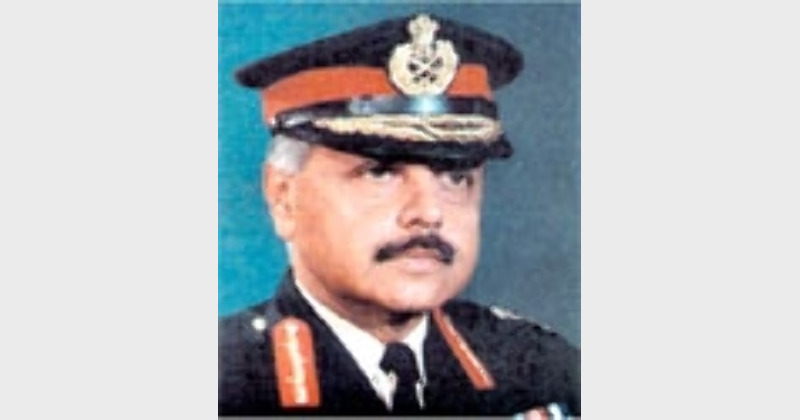
(The writer is a Deputy Chief of the Integrated Defence Staff and was the first Chief of the DIA raised after KRC report was implemented)