 Considering the emphasis on all-encompassing
habitation, streets and roads in natural surroundings, Indraprastha has been the first truly progressive and planned city of the NCR, and perhaps the North India
Neera Misra
The Udyog Parva of Mahabharata narrates the making of Indraprastha, the City State carved out of half of Kuru Kingdom. As is well known, Dhritarashtra’s attempt was to ensure power to his own son Duryodhana, and broke peace between him and his Pandu cousins. “Indraprastha came into being as a political decision and thus its foundation was a political conception,” notes RE Frykenberg in Delhi Through The Ages, 1986.
Udyog Parva also provides the vivid description of its planning by Maya, unparalleled beauty, and the significance of Pandav’s Empire. Frykenberg also describes the city: “Situated on the banks of a river named Yamuna, …the City was fortified with ramparts, having towers, and was surrounded by a moat. The city was served by streets and was linked by roads to other contemporary cities of note like Varanasi. It had gardens, ponds, public monuments and recreation centers (chitrasal) and was inhabited by specialists such as learned Brahmans, wealth-seeking merchants, and skilled craftsmen. There were market-towns and other satellite townships not far from the chief city of Indraprastha. These were so well known that the Buddha could select them for preaching some of the most important of his discourses.” Prof BB Lal’s list of rulers lists Udayan, the descendant of Pandus as contemporary of Buddha.
“When the city was built, there came, numerous Brahmanas
well-acquainted with all the Vedas and conversant with every language, wishing to dwell there.” (Mahabharata)
Obvious conclusion is that Indraprastha was a well conceived and methodically planned city. The rulers aimed at strengthening not just their political power, but also enhancing its commercial, social and knowledge base. Significantly, due attention was paid to restoring flora and fauna, water bodies and natural environment. Considering the emphasis on all—encompassing habitation, streets and roads in natural surroundings, one can conclude that Indraprastha was the first truly progressive and planned city of the present NCR, and perhaps North India.
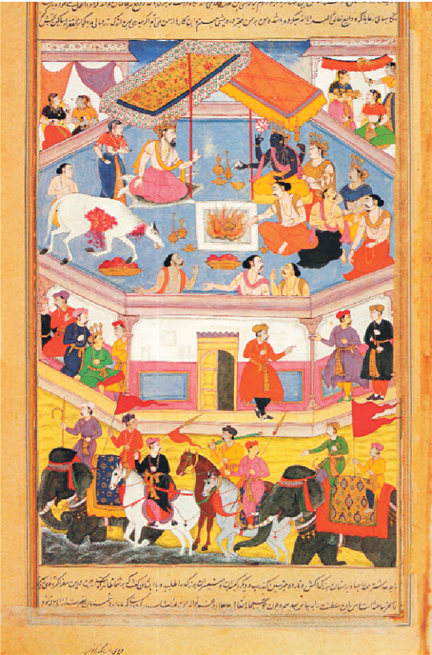
Significance: The coronation of Yudhisthira was attended by the ‘who’s who’ of those times, the leading Rajas and Yuvrajas of Aryavarta, which in today’s context would include region of at least Asia and South East Asia, if not more. This gives proof of the supremacy of Yudhisthira’s worldly power. We agree with Carr Stephen that “Indraprastha was Yudisthira capital, was also the second city of the early Pandu dynasty, along with Hastinapura, and ‘subsequently became the capital of Northern India.’ The city of Indraprastha retained its importance throughout the ancient period as it has been referred to as the scene of many important events.
As per the Buddhist texts the region of presnet-day Delhi formed part of the Kuru Rattha, one of the 16 Mahajanapadas. This kingdom was known to have had many towns and villages. The most important of them was Indapatta. This was the place from where king Dhananjaya Korabya, who belonged to the Yudhitthila gotta (scion), ruled over his kingdom.
‘The town of Indapatta was seven leagues in extent. It was noted as one of the three chief cities of the contemporary Jambudipa (the geo-cultural ‘India’ of Buddhist tradition), as per RE Frykenberg, in his Delhi Through The Ages. He continues “…moreover, it was well connected by roads to other cities—e.g., to Banaras.” The city was so famous that, in a later Buddhist tradition, as preserved in Buddhavamsa, the Buddha’s razor and needle are supposed to have been enshrined at Indapatta.
Indraprastha seems to have been one of the important cities of India during the Jataka periods. Surchi Jataka (No. 489) takes note of Indapatta and Mithila. The name Indraprastha survives in the later Puranas and in Tantrik works. Indraprastha was still remembered in the 17th century text of the Saktisangama Tantra as one of the five divisions of India, from Tantrik point of view.
In later Jain Pattavalis, instead of Indraprastha we find Yoginipura
mentioned. Indraprastha being about 7 leagues, it’s about 35 km in length, which places Yoginipura within Indraprastha, alongwith Lal Kot at Mehrauli.
According to Bhagavat Purana, Yudhisthira reigned long and gloriously at Indraprastha and was succeeded by 30 generations of the descendants of his brother Arjuna. The last king in the line was Kshemaka, who was deposed by his minister, Visarwa, who usurped the throne. Visarwa’s descendants held power for 500 years. They were
succeeded by a dynasty of 15 Gautamas or Gotamavaras. They were followed by the famous dynasty of the Mauryas. It is noteworthy that Tomars/Rajputs came from Kanauj area, which was part of ancient Panchala Janapada, the home of Pandava’s Queen Draupadi.
Ptolemy, the celebrated Alexandrine geographer, who visited India during the 2nd Century AD, has marked in his map of India the Mahabharata period cities of Indrabara (Indrapath) Madurai or Mathura and Batan Kaisara or Sthaneswara (Thaneswar).
“Not only in India and to the Hindus is the Indraprasta a name of reverence; for, away in distant Cambodia, the
people believe that they are descended from colonists who immigrated into the southern peninsula from the far-off banks of the Jumna, and the stupendous remains of Angkor and Battambang, near the great lake of Toule-sap, point
unmistakably to Hindu and Buddhist origin, and bear silent witness to the existence, in the remote past, of a powerful and flourishing kingdom of Indian origin.” (Ramayana & Mahabharata – 1894, John Campbell Oman)
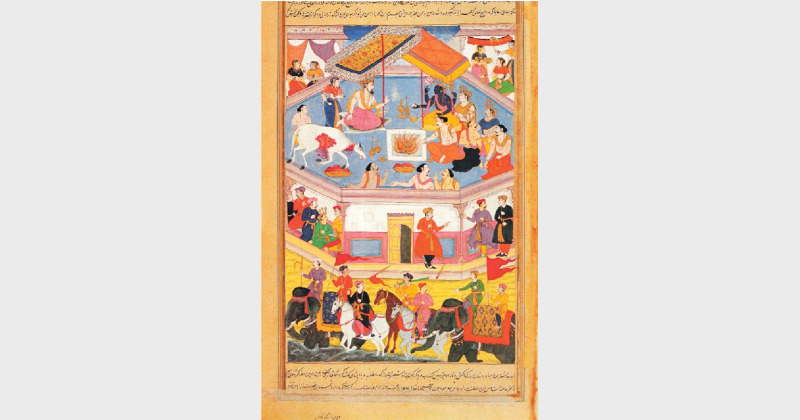
The power and glory of the Pandava rulers, and their capital city Indraprastha have left its indelible footprints on the history of Bharat, becoming the most coveted capital to be acquired by later rulers and conquered by invaders, who fought battles to establish their supremacy over Pandav legacy, as late as the 16th century fights between Humayun and Sher Shah. “Humayun, son of Babar, determined to make Delhi his residence, found it necessary to build or restore the fort of Purana Kila or Indrapat, on the side of the ancient Indraprastha.” (Gazetteer of the Delhi District (1883-4) Pg. No.194). The personal interest Akbar later took in getting the Mahabharata translated into Persian Text and Miniatures also shows how keen every king was not just to learn about the Pandav glory, but to acquire it too.
It is said that Delhi survived many attacks of loot and destruction. No, it is not Delhi but Indraprastha that has braved attempts to deprive it of its wealth, historical treasures, antiquity and even identity. Every conqueror post the Pandava Dynasty, wanted to own Indrapat Quila, and make their new forts within the Indraprastha periphery, or even inside. The last Hindu ruler at Indraat Quila was Hemu, who defeated Akbar’s army in 1556 and coronated himself at Indrapat Quila, as it was then known. Of course he was soon defeated, beheaded and most inhumanly treated by Akbar. (He lost the battle and was then beheaded by Bairam Khan. Hemu”s head was sent to Kabul, while his body was gibbeted on a gate Purana Qila in Delhi).
“The city of Indraprastha was under continuous habitation up to the Medieval Period and down to the
present. The city witnessed all the major political vicissitudes and cultural phases through which northern India generally, and the Indo-Gangetic divide
specifically, is known to have passed. Now commonly known by its “pet name ‘Delhi’, yet first upon this list of cities stands the name of Indraprastha,” Gazetteer of the Delhi District (1883-4. It is time originality gets precedence.
(The writer is chairperson of Draupadi Dream Trust)