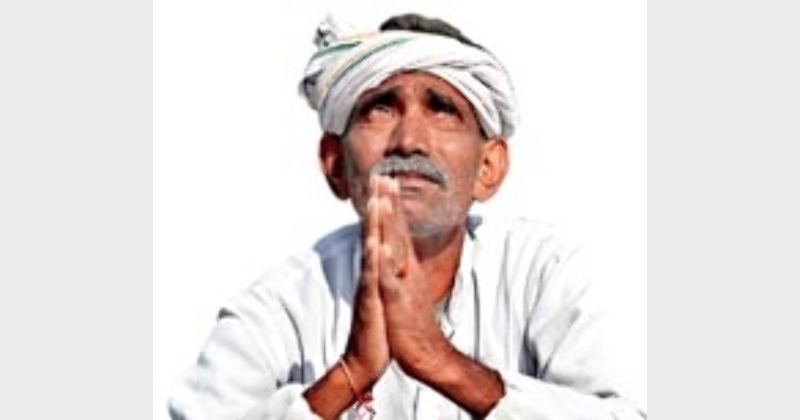
Intro: Agriculture has become a loss proposition today because the price of agricultural produce is deliberately kept low. The farmer’s situation is like that of a loss-making company that takes loans, is unable to repay them and ultimately goes bankrupt. Modi Government plans to implement a scheme of providing subsidy to the farmers to help them pay premium of crop insurance.
Modi Government plans to implement a scheme of providing subsidy to the farmers to help them pay premium of crop insurance. Farmers take huge loans. When they are unable to pay these in the event of the crops getting damaged due to a drought or hailstorm they commit suicide. Crop insurance will protect them from such an eventuality. The insurance company will pay compensation for the loss of crop and the farmer would be able to repay the loan.
About two-thirds of farmers of the country own less than a hectare of land. Farmers at my village in Uttarakhand told me that about 50 quintals of wheat valued at about Rs 75,000 is produced in a good year. The crop insurance premium at the rate of two per cent would be about Rs 1,500. The Government already has a scheme to provide 10 per cent subsidy on the premium to the small farmers. I expect Modi Government to increase this to, say, 20 or 30 per cent. Let us say the government is kind and provides a hefty 50 per cent subsidy. The farmer would then get a relief of Rs 750 in a crop. I am certain this will still not attract the farmer because premium constitutes only a small fraction of the cost of insurance. Much bigger expense is incurred in navigating through the insurance bureaucracy.
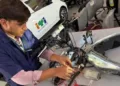
I had purchased comprehensive insurance for my Alto car. There was a small accident. I lodged a claim of Rs 14,000. First I had to take the car to a workshop and get an estimate made. Then the surveyor came after three days. Again the surveyor took three days to check that the repairs had been done. The total process took about 15 days. I would have got the car repaired in five days had I got the work done on my own. I was left without a car for ten additional days and incurred an additional expenditure of Rs 7,000 on taxi during the period. However, I did not get claim from the Insurance Company even after the process had been completed. On inquiry I was told that the surveyor had not sent his report. I contacted the surveyor. He wanted some additional documents and was sitting on the report till then. Perhaps he was expecting some commission from me. On perusal he did send the report. Still I did not get the cheque from the Company. On inquiry I was told that the amount had already been transferred in my account! I told them it had not been credited in my account. This continued for two weeks. The money was transferred only when I threatened them. In the end I got a claim of Rs 7,000 only. Insurance turned out to be a huge loss proposition if the premium, taxi charges, time spent in pursuing the surveyor, etc. are added up. How will the poor farmer deal with these type of corrupt bureaucrats? I now take only a Third Party Insurance. Indeed, the situation would be different in a bigger loan. But that is not relevant for the small farmer who only takes small loans.
Burden of the proposed scheme will ultimately be borne by the urban taxpayer. Increased tax will be collected from him and used for paying subsidy on the premium. Why not, then, pay the money to the farmers directly? Say, the Government pays Rs 5,000 crore as subsidy on the premium. Why not pay Rs 250 in cash to each of the 20 crore farmer households instead? At least the farmer will be saved from spending his time and money making rounds of the insurance company. Even better, why not increase the price of wheat by 10 paise and transfer this amount directly from the taxpayer to the farmer?
The “Government” must beware of the danger of being hijacked to serve the interests of the Government Servants. Bureaucrats are mighty interested in obtaining cheap food grains. They make policies such that price of the agricultural produce is kept low so that the urban middle class is happy. Recently, for example, the bureaucrats decided to import Urad Dal so that domestic prices did not shoot up. Pray! Why? The farmer bears the brunt when the prices are low. Why not allow him to make profits when the prices are high?
The alleged purpose of the proposed insurance scheme is to provide protection to the farmer from the debt collector. But the Government itself has mired the farmer into this debt. I was undertaking evaluation of an NGO in Rajasthan. The NGO said they had made a Self Help Group, linked it with the bank, arranged loan from the bank, farmers bought buffaloes from the loan and were now more prosperous. I asked what was the number of buffaloes in the village five years ago and at present? People said the numbers remained the same! This meant that the loan had not been used for buying the buffaloes as alleged. Actually loan had been taken on the buffaloes already owned by the farmers. Previously the farmer was earning Rs 10,000 and keeping all of it for his use. Now the farmer was earning the same Rs 10,000 but paying Rs 1,000 interest and was left with only Rs 9,000. He had actually become poorer, courtesy loans. The situation would be different if the loan had been used for some productive purpose such as setting up a flour mill. But there are precious few such opportunities in the village.
Agriculture has become a loss proposition today because the price of agricultural produce is deliberately kept low. The farmer’s situation is like that of a loss-making company that takes loans, is unable to repay them and ultimately goes bankrupt. This was a well planned strategy of Congress government under Manmohan Singh to keep the farmer impoverished so that the bureaucracy is happy. Danger in the present proposal is that the farmer may wind up getting tied in yet stronger chains. The farmer may get ensnarled in the web of insurance bureaucracy and spend his time and energy running after insurance companies instead of cultivating his lands.
Dr Bharat Jhunjhunwala (The writer is former Professor of Economics at IIM Bengaluru)