Intro : The alleged role of top military leadership in sheltering and then killing Osama bin Laden, highlights the highly corruptible and fragile nature of Pakistan state where everything and anything can be on sale.
In the late 1990’s I was doing research in Pakistan about controversies in historiography. In June 1997, I read an article on the front page of The News, a Pakistan’s daily, about Aimal Kansi’s abduction by American CIA agents. Aimal Kansi was accused in a shooting spree in front of the CIA headquarters in Washington, DC.
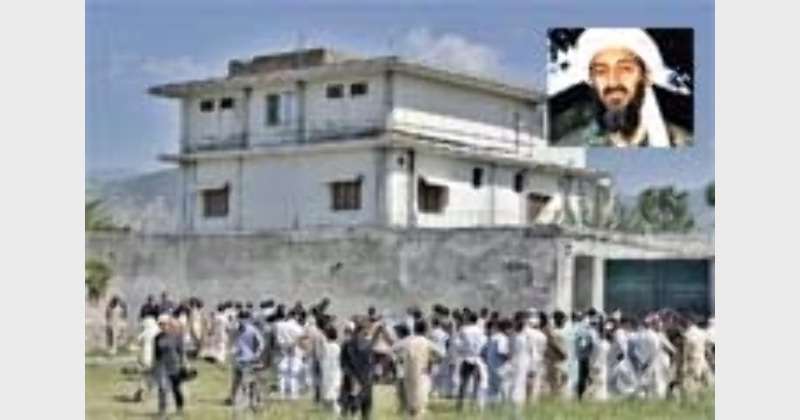
The day before my arrival, the CIA had flown out of the country with Kansi, a Pakistani national whom they had nabbed in a remote area, seemingly without any objections from the Pakistani government. This complicity of the ISI and the CIA was repeated fifteen years later with the killing of Osama bin Laden in Abbottabad, where according to the Seymour Hersh’s investigative efforts, Osama had been under house arrest for several years, unknown to the US. Osama was guarded by an ISI contingent living in a house near the compound where he was staying.
As I landed in Lahore, I recalled the Iranian hostage crisis and the attack on the American Embassy in Islamabad in 1979 that was stormed again, a decade later, during the first Gulf War. I was also aware that the ISI had created the Taliban at a madrasas in Rawalpindi and sent it to Afghanistan in 1993, to put an end to the civil war fought with American arms. By 1995, the Taliban had taken Kabul and was implementing strict Islamic laws, executing women in the soccer stadium for not observing total purdah. I had also heard of Osama bin Ladin, as had most Americans. I knew that he had fought against the Russians and that he had been supported by American funds funneled through the military dictator General Zia-ul-Haq and the Pakistani intelligence agency. By 1997, Osama had been labelled as a terrorist.
By 1998, Bill Clinton ordered air strikes against Laden’s camp in Afghanistan. Clinton didn’t send the missiles until he had notified Islamabad, because the US didn’t want the Pakistanis to think that the missiles were coming from India. I was quite aware of the CIA’s legacy—famous for destabilising democratically elected governments and supporting right wing military dictators such as Zia. All these elements have made US citizens somewhat suspect in Pakistan and other predominantly Islamic countries.
During my first few weeks in Pakistan, the Aimal Kansi affair, reading more like a spy adventure than hardcopy, filled the newspapers. According to reports, a US plane was parked on the tarmac in Islamabad for over a week while CIA operatives searched the countryside for the accused murderer. After distributing a “million dollars of bribe money” to the locals, they apprehended the suspect. According to The News, when Kansi was brought to the waiting CIA jet, the pilot could not secure permission to take off until the then Secretary of State, Madeleine Albright “personally made a call to Nawaz Sharif” and the Prime Minister’s office notified the control tower. Obviously, Aimal Kansi’s abduction was not a back door job. And almost two decades later, according to Seymour Hersh, the assassination of Laden was also allowed and even assisted by the Pakistani Government, in exchange for promising those long denied F-16’s, and other American monetary largess. Indeed, according to Hersh, a Pakistani General had surrendered the information about Osama in exchange for the $25 million award. Afterward, the General was spirited away to the US for his own protection. Given these high profile examples, I continue to wonder at the acquiescence of the Pakistani Government, which allowed the CIA in 1997, and the Navy Seals in 2010, to operate unencumbered, yet in violation of its laws and sovereignty. It is inconceivable that the CIA would fly into New Delhi, spend over a week travelling around the country distributing large bribes, arrest an Indian national, and circumventing extradition laws, with the full knowledge of the Indian Prime Minister, fly away home. It is not even a possibility. It would not happen in China or Israel or Mexico. Where else but Pakistan?
At the same time, no leader in Pakistan can afford to be seen as an American lackey if they want to maintain any vestiges of respect in the popular Urdu press that is vehemently anti-American. The worst insult for a politician or government official is calling him an “American stooge”. Since my first extended visit to Pakistan the year before, these questions intrigued me; I often asked people how they felt about the USA. “Americans have always used Pakistan,” I was told more than once, “The U2 spy plane shot down over Russia in 1962 flew out of Peshawar; Kissinger first flew to China on a PIA jet; Pakistan was the staging area for the USA backed Mujahideen fighting the communists in Afghanistan.” In the late nineties, the USSR was gone; as were the Americans, but the automatic weapons and heroin trade remained as did the rhetoric of jihad and the militant madrasas that continued to mushroom across the Pakistani landscape. Meanwhile in the years following 9/11, the jihadi/opium nexus has accelerated. Now, former freedom fighters, once supported by American dollars are labeled terrorists. In fact, by 2001, they had become part of the fabric of the Pakistani Government and the ISI.
But, in 1997, the dollars had dried up. Pakistanis felt betrayed by the USA. “We loved America! You abandoned us.” More than once, with eyes full of sorrow, a bureaucrat or government servant with whom I was speaking in the office of an educational institution would lean forward earnestly and ask, Please, Madame, give us back our F-16s. It was easy enough for them to understand that as a mere scholar I had no clout in Washington with either Brown or Pressler, nor had I brought an official chit about the missing F-16s in my briefcase. Since those naïve days in 1997, a now post-nuclear, post-9/11 Pakistan believed that they would never get those F-16s. I was told by many Pakistanis that they will never receive a refund for their money, since the US Department of State informed Islamabad in August 2000 that they “had deducted $60 million for the wheat supplied to Pakistan”. Ironically, Pakistanis thought that the “400,000 tons of wheat supplied in 1999” had been donated under an “aid programme”. However, according to Hersh’s investigations, a decade later, in 2011, the US again promised those long lost F-16s in exchange for Pakistan’s assistance in capturing Osama.
Now in retrospect, the 1997 dispute seems simple, considering the US’s post-9/11 relationship with Pakistan, especially when Osama was found living in Abbottabad, just north of the capital city of Islamabad. Not to mention the on-going problems in Waziristan including drones in the Hindu Kush border areas and unrest in Balochistan… the withholding of the F-16’s seems like a dinner date gone bad, compared to an internationally tension charged series of murderous gruesome incidents, such as beheadings in the desert of the West Asia. In the nineties, Pakistan became alienated from and felt victimised by the USA, as the American Government continued to move away from its Cold War pro-Pakistani stance, viewing Islamabad with diminishing strategic interest in a changing global equation, until 9/11 brought a demanding and indignant US presence right back to Islamabad’s front door, which the victimised groups in Pakistan abhorred all the more.
From my visit to Pakistan in 1996 to my most recent in April 2004, resentful feelings towards America and towards India have increased dramatically. Not only the Urdu press, but official government textbooks are critical of Western cultural influences and flatly dismissive but also jealous of India.
It is certainly easier for the fundamentalists to denounce all association with the USA than it is for middle class Pakistanis–people with Western educations and secular democratic outlooks. Obviously, the fundamentalists are critical about other so-called decadent American influences in Pakistani society, also forgetting their original US benefactors against whom they now issue fatwas. They call for the death of America, proclaiming America’s modern cultural hegemony as anti-Islamic and a tool of Satan- the great Satan, who had earlier given them support when they were fledgling groups fighting the Soviets. Now they have grown in power and stature and control many institutions and neighbourhoods in Pakistan.
In Pakistan, leaders of a younger more religiously conservative generation, tutored during the Zia decade, have little fondness for the USA. America is often blamed for Pakistan’s problems both domestic and international. Pakistan’s coddled cold war relationship with the US ended well before September 11, 2001, though the precedents of that patron-client understanding are still strikingly evident. According to Hersh, the Pakistani military and ISI felt betrayed by President Obama for announcing that bin Laden had been shot in Abbottabad and not killed by a drone on the Afghani side of the border, as was planned in return for Pakistan’s help in locating him. According to Hersh, “a carefully constructed cover story (was to be) be issued: Obama would announce that DNA analysis confirmed that Laden had been killed in a drone raid in the Hindu Kush, on Afghanistan’s side of the border.” According to the story, though Osama had been guarded since 2006, by a contingent of ISI, conveniently, none were at the compound on the night of the raid.
At the dawn of the twenty-first century, Pakistan has been left in the ideological deep freeze. From where, there is only China, seen as a long time ally and supplier of arms, roads, and ports. Between the poles of militarism and fundamentalism for more than two decades, Pakistanis have found themselves afloat in an international hot spot, fueled by the rise of religiously inspired militancy that could thaw the diplomatic freeze to the boiling point. The moral and institutional bankruptcy in the name of Islam is a much bigger concern. If the revelations made Hersh are true, then it shows the deep rotten systemic corruption in the Pakistani state, where from Osama to Sovereignty, everything is on sale. In all this commotion, there has been very little space for dispassionate discussions on international diplomacy or the contents of educational initiatives.
Yvette C Rosser (The writer also known as Ram Rani is an American Scholar who writes on Hinduism)