Intro: In return for India’s ‘One China Policy’-an affirmation by India of One-China principle, which recogonises Tibet and Taiwan as part of China, what India is getting is not a ‘One India’ policy but a balkanised version of a ‘Many India’ policy, which insults India almost on a daily basis through repeated border incursions in the north and northeast.
History will always be cruel to those who refuse to learn from history, as George Santayana, the Spanish born American philosopher and writer, said. But this is what has been practised by the successive ruling dispensations in New Delhi vis-à-vis dealing with Beijing.
From the time of signing the futile Panchsheel Agreement in 1954 and even after Beijing’s infamous 1962 perfidy, as well as uncountable numbers of border incursions, India still takes 'pride' over its “unequivocal commitment” to the “One China Policy”.
Mutual reciprocity with mutual benefits, the government would like us to believe, are “key principles” in running great diplomacy with any nation across the globe.
Agreed, but then why have these two “key principles” remained elusive vis-à-vis India’s China policy? Keeping aside “mutual benefits” for a while, let all Indian citizens ask this question to our foreign policy makers – First, where is China’s “mutual reciprocity” with regard to India’s six-decade long commitment to the One China policy?
What India is getting in return from China is not a ‘One India’ policy but a balkanised version of a ‘Many India’ policy, which insults India almost on a daily basis through repeated border incursions in the north and northeast. In addition to issuing stapled visas to the Indian resident citizens of states claimed by China.
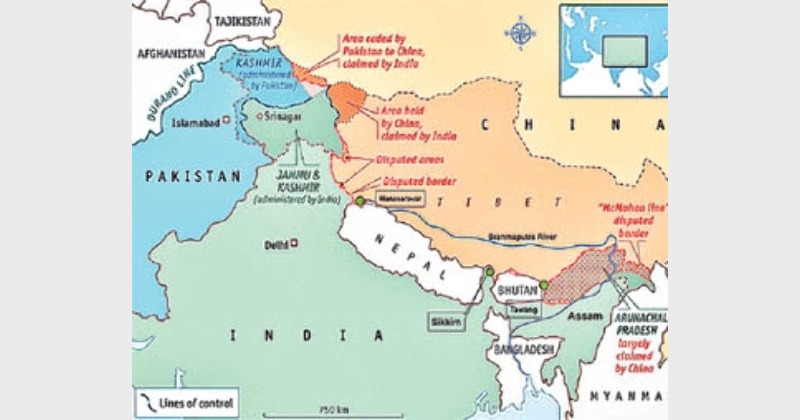
While China is engaged in many infrastructure development projects in occupied Kashmir, disregarding India’s strong objections, it has refused to recognise Indian sovereignty over Arunachal Pradesh, which it calls Southern Tibet and shows as a Chinese province in official maps.
While China is illegally occupying India’s Aksai Chin in Jammu and Kashmir (J&K), it has also taken possession of territories in the northern Karakoram Range with help from Pakistan since 1963, and has now started building a highway linking Gwadar port in Pakistan with Xinjiang, in northwest China.
Prior to 2003, China also questioned India’s sovereignty over Sikkim, colouring it as a “separate nation” in its official maps, which China agreed to drop only after extracting a written commitment from India to recognise occupied Tibet Autonomous Region (TAR) as an ‘integral part’ of China.
India failed to extract a quid pro quo ‘One India’ written commitment from China, and instead New Delhi successfully blessed China’s wish instantly. Was it a sagacious decision sans mutual reciprocity or virtual surrender to Beijing scripted by India’s foreign ministry?
There is no denying the fact that ‘mutual disagreements’ between India and China exist regarding border demarcations in the north, west and eastern sector along the international border. But in spite of over 30 rounds of talks since 1981 till date, this protracted issue has been tactically delayed or prevented by Beijing showing its unwillingness to expedite resolving the “key problematic issue area”.
Ironically, China which borders the largest number of countries along its international border, has resolved demarcating land border issues with all of its neighbours, except India. Interestingly, China which fought bloody border skirmishes with the erstwhile Soviet Russia over the contested border, has also resolved it in recent years. Then, why delay the border settlement ONLY with India?
India must understand that it’s futile to resolve the perennial Sino-Indian border demarcation issue, because China wants to use this as a ‘trump card’ in waging a psychological war (border incursions, issuing anti-India statements, helping Pakistan’s nuclear programme, etc) against India.The idea is to sabotage India’s rise as a great power which could rival China.
China fears India as a regional challenge to its ‘Middle Kingdom’ dream of becoming a numero uno great power. But unlike China, India being a practitioner of Vasudhaiva Kutumbakam- the Hindu philosophy of eternal world peace – reiterates that the world is big enough to accommodate the rising nations.
That’s the only reason why Beijing always tries to de-link the border issue from its overall bilateral ties with New Delhi, and instead tries to focus on enhanced trade to reap unilateral benefits for itself. Today, Beijing would say to New Delhi – let’s forget the ‘complex’ ‘unproductive’ border issue; it can be settled later. Now let’s focus and build ‘bilateral mutual trust’ via trade, pushing track 2 diplomacy, issuing mutual panegyrics trumpeting ‘great civilisational Indo-China ties’ etc, etc.
| In view of deliberate border incursions by the People's Liberation Army (PLA) of the People’s Republic of China along the Line of Actual Control (LAC) and along the International border in many decades in past, and especially during the most recent visit of China’s President Xi Jinping to India, his very first visit after India elected its new Government headed by Prime Minister Narendra Modi, has acted as a catalyst towards writing this piece. |
While, on the contrary the fact is that until the border demarcation issue is settled to the mutual satisfaction of both sides, only mutual distrust will rise and remain eternally engraved in ties in the foreseeable future. How long can India-China ties be sustained by the economics of interdependence alone, and let the bitter politics of un-demarcated border face-offs to continue?
Hence, the issues of border settlement, border incursions, stapled visas, China’s support to insurgency in India, China’s support to Pakistan against India etc, must take centre stage in India’s ongoing China diplomacy, and not just peripheral issues of trade, track 2 diplomacy, etc. Will Communist China relent?
Therefore, if the top brass of the Chinese Government officials visiting willingly or wilfully insist on issuing stapled visas to residents of Arunachal Pradesh and Kashmir as a “good will gesture”, then New Delhi must also reciprocate this ‘generous’ gesture to the residents of Tibet, Macau, Hong Kong and Xinjiang and establish full diplomatic ties with Taiwan!
But, if China continue pursuing its ‘no One India policy’ unapologetically (even aggressively), then India too must stop carrying the diplomatic baggage of ‘One China’ policy of a bygone Nehruvian era, till Beijing too reciprocates it with a ‘One India’ policy.
Sourabh Jyoti Sharma (The writer is a Strategic Analyst with specialisation in International Relations and working as a Research Associate at the Centre for Air Power Studies (CAPS), New Delhi)