Child Right: The Right Not to Be Hit, is also a child?s right?
July 23, 2026
  • Read Ecopy
  • Circulation
  • Advertise
  • Careers
  • About Us
  • Contact Us
Android AppiPhone AppArattai
Organiser
  • ‌
  • Bharat
    • Assam
    • Bihar
    • Chhattisgarh
    • Jharkhand
    • Maharashtra
    • View All States
  • World
    • Asia
    • Europe
    • North America
    • South America
    • Africa
    • Australia
  • Editorial
  • International
  • Opinion
  • RSS @ 100
  • More
    • Op Sindoor
    • Analysis
    • Sports
    • Defence
    • Politics
    • Business
    • Economy
    • Culture
    • Special Report
    • Sci & Tech
    • Entertainment
    • G20
    • Azadi Ka Amrit Mahotsav
    • Vocal4Local
    • Web Stories
    • Education
    • Employment
    • Books
    • Interviews
    • Travel
    • Law
    • Health
    • Obituary
  • Subscribe
    • Subscribe Print Edition
    • Subscribe Ecopy
    • Read Ecopy
  • ‌
  • Bharat
    • Assam
    • Bihar
    • Chhattisgarh
    • Jharkhand
    • Maharashtra
    • View All States
  • World
    • Asia
    • Europe
    • North America
    • South America
    • Africa
    • Australia
  • Editorial
  • International
  • Opinion
  • RSS @ 100
  • More
    • Op Sindoor
    • Analysis
    • Sports
    • Defence
    • Politics
    • Business
    • Economy
    • Culture
    • Special Report
    • Sci & Tech
    • Entertainment
    • G20
    • Azadi Ka Amrit Mahotsav
    • Vocal4Local
    • Web Stories
    • Education
    • Employment
    • Books
    • Interviews
    • Travel
    • Law
    • Health
    • Obituary
  • Subscribe
    • Subscribe Print Edition
    • Subscribe Ecopy
    • Read Ecopy
Organiser
  • Home
  • Bharat
  • World
  • Operation Sindoor
  • Editorial
  • Analysis
  • Opinion
  • Culture
  • Defence
  • International Edition
  • RSS @ 100
  • Magazine
  • Read Ecopy
Home Bharat

Child Right: The Right Not to Be Hit, is also a child?s right?

Children are physically punished in almost all societies even when it is known that, physical violence against children

Archive ManagerArchive Manager
May 24, 2014, 02:15 pm IST
in Bharat
Follow on Google News
FacebookTwitterWhatsAppTelegramEmail

Children are physically punished in almost all societies even when it is known that, physical violence against children and the concept of punishment in response to wrongdoing can be damaging to children’s development. Research studies reveals that parents and teachers equate discipline with punishment and couple this with violence even when they know the results can be quite catastrophic for the children.
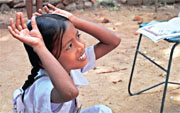
$img_title“Spare the rod and spoil the child” is still a popular quote among teachers and parents alike in many parts of the country. A survey of university students found that 91 per cent of males and 86 per cent of females in India had been physically punished as children.

Ways suggested to end corporal punishment are as follows-

1. Make corporal punishment free environment a condition for recognition of a school

2. Issues of not adhering to time and routine, cleanliness, academic performance and inattentiveness can be handled by a teacher

3. Schools should develop standard protocol to deal with children with aggressive behaviour who can affect others.

4. Drop boxes for complaints and a mechanism to address them:Setting up bal sabhas to know about the problems children are facing in schools.

5. Teachers should be asked to submit a written undertaking that they will not engage in corporal punishment before they are appointed.?

In a bid to oppose the imposition of any kind of corporal punishment in schools, the Directorate of Education (DoE ) , Delhi has published a set of detailed guidelines to eliminate corporal punishment from schools. These were issued by ministry of Human Resource Development on March 26, 2014. In addition to physical punishment, the guidelines include “mental harassment” and “discrimination” in the definition of corporal punishment and have broadly listed the different forms of it under three categories: –
n Physical punishment includes– Physical harm, forcing children to assume uncomfortable positions, forced ingestion, detention in classrooms or any other closed space.
n Mental harassment inlcudes – Sarcasm, derogatory remarks, ridiculing, and labeling a child as difficult.
n Discrimination – Belittling remarks, commenting on academic ability based on caste/community prejudices, deliberate neglect, denying midday meal, and access to library etc.
Kushal Singh who is chairperson of National Commission for Protection of Child Rights which originally drew up the guidelines several years ago remarked that, “We worked within the wider framework of child abuse and considered any form of harassment a child may be put through. Since discrimination is a major form of abuse, within the guidelines, discrimination “Is understood as prejudiced views and behaviour towards any child because of his caste/gender, occupation and region or non-payment of fees or for being a student admitted under the 25% reservation to disadvantagegroups or weaker sections of society under the RTE Act 2009.” The guidelines are laid down to encourage school authorities and teachers to “try and understand what could be causing the behaviour” and even “ignore minor incidents or lapses”. It states that if teachers politely handle children, they can be motivated to act in a disciplined manner and this is exactly the right course of action to follow for children. Yet, Kushal Singh laments that, “People are still not sensitive. There are many who still feel corporal punishment is required.”
According to the study titled “Child Abuse in India-2007” commissioned by the Ministry of Women and Child Development, Government of India, “Every two out of three school children reported facing corporal punishment.” Hence, if this landmark move is implemented in letter and spirit in all the states, it will protect children from corporal punishment and ensure they grow without fear of stick, and develop rational approach to contribute to society in a meaningful manner.

-Sanjeev Sirohi ? (The writer is an advocate)
?

ShareTweetSendShareSend
✮ Subscribe Organiser YouTube Channel. ✮
✮ Join Organiser's WhatsApp channel for Nationalist views beyond the news. ✮
Previous News

Editorial: Missing the Message

Next News

News Round-up

Related News

RSS leader Sreenivasan (File Photo)

Murder case of RSS karyakarta Sreenivasan: Key absconder PFI leader Muhammadali KP arrested on arrival from Riyadh

Hindu marriage is a sacred sacrament, not a contract; loss of interest is no ground for divorce: Karnataka High Court

CJP violence in Delhi should be probed by CBI: Bharatiya Vichara Kendram

India's new MPMS aims to make the country a global mobile manufacturing leader by combining incentives, localisation and innovation

How Indian Mobile Phone Manufacturing Scheme positions New Delhi to outcompete the world’s rival manufacturing models

Chai-Pakoda Mornings to Biryani Nights: What’s Real Cost of One ‘Cockroach Protester’ & Who Funds the Feast Each Day?

Chai-Pakoda Mornings to Biriyani Nights: What’s Real Cost of One ‘Cockroach Protester’ & Who Funds the Feast Each Day?

The Ahoms developed an elaborate administrative hierarchies extending from the royal court to the village, the hill polities evolved equally sophisticated systems in which chiefs governed alongside councils and assemblies

Pre-colonial northeast | Ashtalakshmi: Where stability meets continuity

Load More

Latest News

RSS leader Sreenivasan (File Photo)

Murder case of RSS karyakarta Sreenivasan: Key absconder PFI leader Muhammadali KP arrested on arrival from Riyadh

Hindu marriage is a sacred sacrament, not a contract; loss of interest is no ground for divorce: Karnataka High Court

CJP violence in Delhi should be probed by CBI: Bharatiya Vichara Kendram

India's new MPMS aims to make the country a global mobile manufacturing leader by combining incentives, localisation and innovation

How Indian Mobile Phone Manufacturing Scheme positions New Delhi to outcompete the world’s rival manufacturing models

Chai-Pakoda Mornings to Biryani Nights: What’s Real Cost of One ‘Cockroach Protester’ & Who Funds the Feast Each Day?

Chai-Pakoda Mornings to Biriyani Nights: What’s Real Cost of One ‘Cockroach Protester’ & Who Funds the Feast Each Day?

The Ahoms developed an elaborate administrative hierarchies extending from the royal court to the village, the hill polities evolved equally sophisticated systems in which chiefs governed alongside councils and assemblies

Pre-colonial northeast | Ashtalakshmi: Where stability meets continuity

From Thumba's humble beginnings to private rocket launches, Atmanirbhar Bharat has transformed ISRO-led reforms into a thriving space ecosystem

From Thumba to the Space Economy: How Atmanirbhar Bharat is powering ISRO’s private space revolution

Vice-President CP Radhakrishnan addressing audience at IIAS virtually

Sardar Patel’s vision for unification meets reverence for motherland

Punjab must learn the lessons from its tragic past

Judge, his guard killed by Baloch armed rebels in Mastung area

Balochistan Erupts Again: Judge killed as rebel attacks intensify across Pakistan

Load More
  • Privacy
  • Terms
  • Cookie Policy
  • Refund and Cancellation
  • Delivery and Shipping

© Bharat Prakashan (Delhi) Limited.
Tech-enabled by Ananthapuri Technologies

  • Home
  • Search Organiser
  • Bharat
    • Assam
    • Bihar
    • Chhattisgarh
    • Jharkhand
    • Maharashtra
    • View All States
  • World
    • Asia
    • Africa
    • North America
    • South America
    • Europe
    • Australia
  • Editorial
  • Operation Sindoor
  • Opinion
  • Analysis
  • Defence
  • Culture
  • Sports
  • Business
  • RSS @ 100
  • Entertainment
  • More ..
    • Sci & Tech
    • Vocal4Local
    • Special Report
    • Education
    • Employment
    • Books
    • Interviews
    • Travel
    • Health
    • Politics
    • Law
    • Economy
    • Obituary
  • Subscribe Magazine
  • Read Ecopy
  • Advertise
  • Circulation
  • Careers
  • About Us
  • Contact Us
  • Policies & Terms
    • Privacy Policy
    • Cookie Policy
    • Refund and Cancellation
    • Terms of Use

© Bharat Prakashan (Delhi) Limited.
Tech-enabled by Ananthapuri Technologies