Father of the Indian space programme
July 1, 2026
  • Read Ecopy
  • Circulation
  • Advertise
  • Careers
  • About Us
  • Contact Us
Android AppiPhone AppArattai
Organiser
  • ‌
  • Bharat
    • Assam
    • Bihar
    • Chhattisgarh
    • Jharkhand
    • Maharashtra
    • View All States
  • World
    • Asia
    • Europe
    • North America
    • South America
    • Africa
    • Australia
  • Editorial
  • International
  • Opinion
  • RSS @ 100
  • More
    • Op Sindoor
    • Analysis
    • Sports
    • Defence
    • Politics
    • Business
    • Economy
    • Culture
    • Special Report
    • Sci & Tech
    • Entertainment
    • G20
    • Azadi Ka Amrit Mahotsav
    • Vocal4Local
    • Web Stories
    • Education
    • Employment
    • Books
    • Interviews
    • Travel
    • Law
    • Health
    • Obituary
  • Subscribe
    • Subscribe Print Edition
    • Subscribe Ecopy
    • Read Ecopy
  • ‌
  • Bharat
    • Assam
    • Bihar
    • Chhattisgarh
    • Jharkhand
    • Maharashtra
    • View All States
  • World
    • Asia
    • Europe
    • North America
    • South America
    • Africa
    • Australia
  • Editorial
  • International
  • Opinion
  • RSS @ 100
  • More
    • Op Sindoor
    • Analysis
    • Sports
    • Defence
    • Politics
    • Business
    • Economy
    • Culture
    • Special Report
    • Sci & Tech
    • Entertainment
    • G20
    • Azadi Ka Amrit Mahotsav
    • Vocal4Local
    • Web Stories
    • Education
    • Employment
    • Books
    • Interviews
    • Travel
    • Law
    • Health
    • Obituary
  • Subscribe
    • Subscribe Print Edition
    • Subscribe Ecopy
    • Read Ecopy
Organiser
  • Home
  • Bharat
  • World
  • Operation Sindoor
  • Editorial
  • Analysis
  • Opinion
  • Culture
  • Defence
  • International Edition
  • RSS @ 100
  • Magazine
  • Read Ecopy
Home General

Father of the Indian space programme

Archive ManagerArchive Manager
Feb 23, 2013, 12:00 am IST
in General
Follow on Google News
FacebookTwitterWhatsAppTelegramEmail

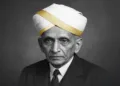
Dr Vikram Ambalal Sarabhai
 
FONDLY referred to as the ‘Father of the Indian space programme’, Vikram Sarabhi was born in Ahmedabad on August 12, 1919 to an affluent family. It was his early years at a private school that shaped his scientific bent of  mind. After studying at the Gujarat College in his home town, in 1937 he left for England to study Physics at St John’s College Cambridge. There, Sarabhai earned an under graduate tripods degree. That was  the  year 1940 and the world was fighting the Second World War. So, Sarabhai returned to India and became a research scholar at the Indian Institute of Science, Bangalore  where he studied the effects  of cosmic rays.

It was at Bangalore, under the direct guidance of Nobel laureate, Dr CV Raman, that he started setting up observatories in Bangalore, Pune and the Himalayas. Soon after the war was over, he returned to UK for a little while. Sarabhai received a Ph.D  from Cambridge University for his path-breaking work.

His real work began in 1947 along with meteorologist, KR Ramanathan, who helped  him establish the Physical Research Laboratory. Initially, it consisted of rooms at the Science Institute of the Ahmedabad Education Society. Analysing and studying cosmic rays and atmospheric physics, the scientists set up two dedicated teams at the site.  Sarabhai’s team realised that evaluating the weather was not enough to comprehend  variations in the cosmic rays; they had to relate it to variations in solar activity. This led them to pioneer solar physics.

With such a big breakthrough in hand Sarabhai soon received financial support from the Indian Council of Scientific and Industrial  Research and the Department of Atomic Energy. And the support did not just end there. He was asked to organise the Indian programme for the International Geophysical Year of 1957. Around this time, the erstwhile Soviet Union launched Sputnik-1. India, not too far behind, decided to set-up the Indian National Committee for Space Research chaired by Dr Sarabhai.

The visionary scientist set up India’s  first rocket launching station, TERLS in Thumba on the  coast of the Arabian Sea on November 21, 1963 with the support of Homi Bhabha from the Atomic Energy Commission. In 1966, Sarabhai was appointed Chairman of the Indian Atomic Energy Commission following Bhabha’s untimely demise. Sarabhai’s greatest achievement was  the establishment of the Indian Space Research  Organisation (ISRO). He died in his sleep at the age of 52 on December 31, 1971.

The pioneering work on space science and research done by Dr. Vikram Sarabhai earned him Shanti Swarup Bhatnagar medal in 1962 and Padma Bhushan in 1966.
ShareTweetSendShareSend
✮ Subscribe Organiser YouTube Channel. ✮
✮ Join Organiser's WhatsApp channel for Nationalist views beyond the news. ✮
Previous News

Hanuman and the Sanjivani herb

Next News

Is India a nation of rapists and killers?

Related News

Alang's Comeback: How Modi Government Strengthened India's Maritime Economy

Congress’ assault on Alang China sponsored? How Modi’s vision saved India’s maritime lifeline

Ancient Hindu temples break through watery graves to reclaim Sanatan Dharma’s indestructible legacy

Representative Image

Radical Islamist drivers weaponise public transit to target and exploit Hindu women

Central Sanskrit University launches India's First AI engineering Programme

Central Sanskrit University launches India’s 1st AICTE-approved AI engineering programme with Indian knowledge systems

General Dhiraj Seth assumes charge as the 31st Chief of the Indian Army; Succeeds General Upendra Dwivedi

Representative Image

From Aadhaar to UPI: How Digital India’s 11 year journey rewired governance, welfare and economy

Load More

Latest News

Alang's Comeback: How Modi Government Strengthened India's Maritime Economy

Congress’ assault on Alang China sponsored? How Modi’s vision saved India’s maritime lifeline

Ancient Hindu temples break through watery graves to reclaim Sanatan Dharma’s indestructible legacy

Representative Image

Radical Islamist drivers weaponise public transit to target and exploit Hindu women

Central Sanskrit University launches India's First AI engineering Programme

Central Sanskrit University launches India’s 1st AICTE-approved AI engineering programme with Indian knowledge systems

General Dhiraj Seth assumes charge as the 31st Chief of the Indian Army; Succeeds General Upendra Dwivedi

Representative Image

From Aadhaar to UPI: How Digital India’s 11 year journey rewired governance, welfare and economy

Delhi-NCR Fight Against Vehicular Pollution: How Rs. 9,585cr central govt. scheme aims to improve city’s air quality

US President Trump signs the US–Iran Peace Agreement at Versailles, France

West Asia Conflict: The deal out of exhaustion

FCRA: Enforcement, not harassment

Born on July 6, 1901, in Kolkata, Dr Syama Prasad Mookerjee is remembered as a visionary leader, an educationist, and the founder of the Bharatiya Jana Sangh, who sacrificed his life for the unity & integrity of the nation

Dr Syama Prasad Mookerjee: Symbol of conviction, courage and commitment

Load More
  • Privacy
  • Terms
  • Cookie Policy
  • Refund and Cancellation
  • Delivery and Shipping

© Bharat Prakashan (Delhi) Limited.
Tech-enabled by Ananthapuri Technologies

  • Home
  • Search Organiser
  • Bharat
    • Assam
    • Bihar
    • Chhattisgarh
    • Jharkhand
    • Maharashtra
    • View All States
  • World
    • Asia
    • Africa
    • North America
    • South America
    • Europe
    • Australia
  • Editorial
  • Operation Sindoor
  • Opinion
  • Analysis
  • Defence
  • Culture
  • Sports
  • Business
  • RSS @ 100
  • Entertainment
  • More ..
    • Sci & Tech
    • Vocal4Local
    • Special Report
    • Education
    • Employment
    • Books
    • Interviews
    • Travel
    • Health
    • Politics
    • Law
    • Economy
    • Obituary
  • Subscribe Magazine
  • Read Ecopy
  • Advertise
  • Circulation
  • Careers
  • About Us
  • Contact Us
  • Policies & Terms
    • Privacy Policy
    • Cookie Policy
    • Refund and Cancellation
    • Terms of Use

© Bharat Prakashan (Delhi) Limited.
Tech-enabled by Ananthapuri Technologies