IT as a medium of social change
September 10, 2026
  • Read Ecopy
  • Circulation
  • Advertise
  • Careers
  • About Us
  • Contact Us
Android AppiPhone AppArattai
Organiser
  • ‌
  • Bharat
    • Assam
    • Bihar
    • Chhattisgarh
    • Jharkhand
    • Maharashtra
    • View All States
  • World
    • Asia
    • Europe
    • North America
    • South America
    • Africa
    • Australia
  • Editorial
  • International
  • Opinion
  • RSS @ 100
  • More
    • World Hindu Congress 2026
    • Op Sindoor
    • Analysis
    • Sports
    • Defence
    • Politics
    • Business
    • Economy
    • Culture
    • Special Report
    • Sci & Tech
    • Entertainment
    • G20
    • Azadi Ka Amrit Mahotsav
    • Vocal4Local
    • Web Stories
    • Education
    • Employment
    • Books
    • Interviews
    • Travel
    • Law
    • Health
    • Obituary
  • Subscribe
    • Subscribe Print Edition
    • Subscribe Ecopy
    • Read Ecopy
  • ‌
  • Bharat
    • Assam
    • Bihar
    • Chhattisgarh
    • Jharkhand
    • Maharashtra
    • View All States
  • World
    • Asia
    • Europe
    • North America
    • South America
    • Africa
    • Australia
  • Editorial
  • International
  • Opinion
  • RSS @ 100
  • More
    • World Hindu Congress 2026
    • Op Sindoor
    • Analysis
    • Sports
    • Defence
    • Politics
    • Business
    • Economy
    • Culture
    • Special Report
    • Sci & Tech
    • Entertainment
    • G20
    • Azadi Ka Amrit Mahotsav
    • Vocal4Local
    • Web Stories
    • Education
    • Employment
    • Books
    • Interviews
    • Travel
    • Law
    • Health
    • Obituary
  • Subscribe
    • Subscribe Print Edition
    • Subscribe Ecopy
    • Read Ecopy
Organiser
  • Home
  • Bharat
  • World
  • Operation Sindoor
  • Editorial
  • Analysis
  • Opinion
  • Culture
  • Defence
  • International Edition
  • RSS @ 100
  • Magazine
  • Read Ecopy
Home Bharat

IT as a medium of social change

PRADIP Ninan Thomas, Associate Professor at the University of Queensland, Australia, says that the full impact of the information revolution on our society and in our lives has not yet been witnessed, though the ?viral imprint of the digital is shaping both the formal and informal section in India.?

Archive ManagerArchive Manager
Dec 15, 2012, 02:02 pm IST
inBharat
Follow on Google News
Facebook
Twitter
WhatsAppTelegramEmail

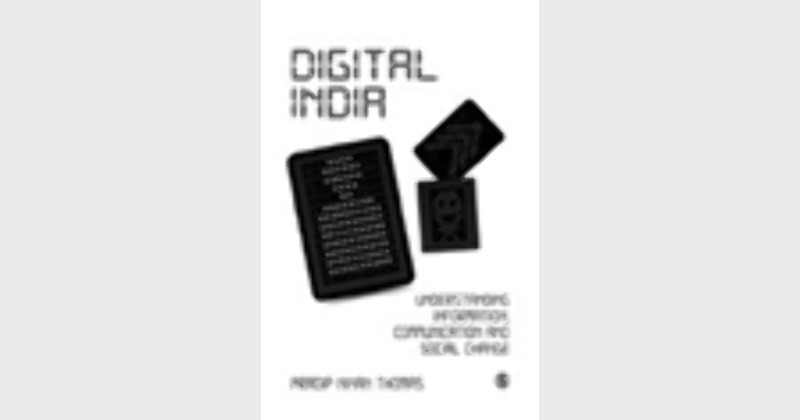
Digital India: Understanding Information Communication and Social Change, Pradip Ninan Thomas, SAGE Publications India Pvt Ltd, Pp 206, Rs 650.00
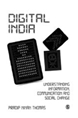
$img_titlePRADIP Ninan Thomas, Associate Professor at the University of Queensland, Australia, says that the full impact of the information revolution on our society and in our lives has not yet been witnessed, though the “viral imprint of the digital is shaping both the formal and informal section in India.”

Besides deepening the engagement with the digital and exploring a range of issues related to India’s informational futures, this volume highlights the relationship between the digital and social change, the role played by structures, policies and products such as the mobile phone in the change processes, the gaps between principle and practice; the many contested contexts of the digital in India and the reasons behind why a key “actor – the State – in the context of both external and internal pressures aimed at privileging the market as the key arbiter of access and growth in matters related to new technologies, is investing in public sector digital initiatives.

In India what makes the digital fascinating is that it is both structure and anti-structure, meaning that the ‘dominant’ digital in India is complemented with a multitude of subversive digitalities – from counterfeit mobile phones to pirated software. And it is this broad spectrum of digital practices in India that make it an increasing subject of study.

The author emphasises the specific instances in which the story of the digital relates the story of India as it grapples with the ‘new’ in the context of the tenacity and persistence of the ‘old’ in all its variety. While the mobile phone is breaking the barrier in agricultural India between the agricultural and informational mode of productivity, it also remains a tantalising symbol of the gaps that currently exist in Indian society.

In a more detailed description, the chapters in this volume are divided into sections. The first section ‘Information Technology in a Liberalised Economy’ includes chapters on software and mobile phone revolutions in India. The second section of government and Information Technology includes two chapters on the challenges faced by government that is caught between delivering on its public sector promises on information access and supporting the IT market within a liberalised economy. Telecommunications is the archetypical example of government, though it is clear that the mobile phone revolution has to some extent made inroads into the Government’s hold over this sector. The third section on government and Information Technology includes three chapters that highlight a more proactive approach taken by the government on its IT commitments in the public sector. However, the Government’s role reveals multiple tendencies of a Janus-faced government that is involved in an elaborate dance, directed towards satisfying its partners and their competing interests, especially as seen in the government’s response to software patenting.

The digital exists in myriad forms, as product and process and is the common language for multiple projects across numerous productive sectors – in education as much as in agriculture and manufacturing. The book offers insights into some of the highs and lows of the digital moment in India and the gaps between principle and practice. It also provides a window to assess the ambivalent role of the state in India – the enemy of the masses in India, but also ironically, the hope for India’s many poor through projects such as the RTI, the Mahatma Gandhi National Rural Employment Guarantee Act (MGNREGA), public sector software and other projects. This complexity points to the fact that the State in India cannot be conceived as a monolithic entity but requires to be seen as a reflection of society, constantly shaped by multiple pressures, trends, claims and counter-claims.

This is a very technical book meant for specific subject readers.
(SAGE Publications India Pvt Ltd, BI/I-1, Mohan Cooperative Industrial Area, Mathura Road, New Delhi-110 044; www.sagepub.in)

 

Share
Tweet
SendShareSend
✮ Subscribe Organiser YouTube Channel. ✮
✮ Join Organiser's WhatsApp channel for Nationalist views beyond the news. ✮
Previous News

Genesis and a sense of reality

Next News

Scholar father, sportsman son

Related News

Image courtesy- @BJP4Telangana

‘Why does Rahul Gandhi not hear our goonj?’ BJP Telangana chief Ramchander Rao’s letter on students’ Rs 15,000cr dues

UP Chief Minister at Anganwadi Honorarium Programme in Ayodhya

UP: Yogi govt raises Anganwadi honorarium to Rs 12,000, announces Rs 5 lakh cashless health cover for workers & helpers

(AI-generated Image)

India’s New Industrial Revolution: Jefferies sees a new era of industrial growth under PM Modi

Madurai Meenakshi Temple Tamil mantras row: What the Madras High Court held and why it refused to intervene

Keralam madrasa teacher Imbichikoya surrenders before Kollam court in POCSO case

Keralam madrasa teacher Imbichikoya surrenders before court after two POCSO cases registered over students’ complaints

(Left to Right): PM Modi with Russian President Vladimir Putin and PM Modi with Chinese President Xi Jinping(File Photo)

BRICS Summit 2026: PM Modi-Putin eyes BrahMos, S-400 push; Talks with Xi Jinping to stabilise India-China relations

Load More

Latest News

Image courtesy- @BJP4Telangana

‘Why does Rahul Gandhi not hear our goonj?’ BJP Telangana chief Ramchander Rao’s letter on students’ Rs 15,000cr dues

UP Chief Minister at Anganwadi Honorarium Programme in Ayodhya

UP: Yogi govt raises Anganwadi honorarium to Rs 12,000, announces Rs 5 lakh cashless health cover for workers & helpers

(AI-generated Image)

India’s New Industrial Revolution: Jefferies sees a new era of industrial growth under PM Modi

Madurai Meenakshi Temple Tamil mantras row: What the Madras High Court held and why it refused to intervene

Keralam madrasa teacher Imbichikoya surrenders before Kollam court in POCSO case

Keralam madrasa teacher Imbichikoya surrenders before court after two POCSO cases registered over students’ complaints

(Left to Right): PM Modi with Russian President Vladimir Putin and PM Modi with Chinese President Xi Jinping(File Photo)

BRICS Summit 2026: PM Modi-Putin eyes BrahMos, S-400 push; Talks with Xi Jinping to stabilise India-China relations

Bangladesh: Chinmoy Krishna Das’s mother dies; Last wish to meet jailed son unfulfilled as govt denied parole plea

Cabinet approves Rs 20,804 crore railway projects to expand line capacity, reduce congestion and improve connectivity

Cabinet approves 8 railway projects worth Rs 20,804 crore to boost rail capacity and ease congestion across key routes

Russia’s UAC advances SJ-100 production plans as Lockheed Martin offers next-generation Javelin co-development

Russia’s UAC nears deal with India’s HAL to make SJ-100 jets; US Lockheed Martin offers next-gen Javelin co-development

BRICS Summit 2026: Expected world leaders, schedule & New Delhi Declaration as India leads aspirations of Global South

Load More
  • Privacy
  • Terms
  • Cookie Policy
  • Refund and Cancellation
  • Delivery and Shipping

© Bharat Prakashan (Delhi) Limited.
Tech-enabled by Ananthapuri Technologies

  • Home
  • Search Organiser
  • Bharat
    • Assam
    • Bihar
    • Chhattisgarh
    • Jharkhand
    • Maharashtra
    • View All States
  • World
    • Asia
    • Africa
    • North America
    • South America
    • Europe
    • Australia
  • Editorial
  • Operation Sindoor
  • Opinion
  • Analysis
  • Defence
  • Culture
  • Sports
  • Business
  • RSS @ 100
  • Entertainment
  • More ..
    • Sci & Tech
    • Vocal4Local
    • Special Report
    • Education
    • Employment
    • Books
    • Interviews
    • Travel
    • Health
    • Politics
    • Law
    • Economy
    • Obituary
  • Subscribe Magazine
  • Read Ecopy
  • Advertise
  • Circulation
  • Careers
  • About Us
  • Contact Us
  • Policies & Terms
    • Privacy Policy
    • Cookie Policy
    • Refund and Cancellation
    • Terms of Use

© Bharat Prakashan (Delhi) Limited.
Tech-enabled by Ananthapuri Technologies