Parliamentary system perpetuating what British conceived
August 3, 2026
  • Read Ecopy
  • Circulation
  • Advertise
  • Careers
  • About Us
  • Contact Us
Android AppiPhone AppArattai
Organiser
  • ‌
  • Bharat
    • Assam
    • Bihar
    • Chhattisgarh
    • Jharkhand
    • Maharashtra
    • View All States
  • World
    • Asia
    • Europe
    • North America
    • South America
    • Africa
    • Australia
  • Editorial
  • International
  • Opinion
  • RSS @ 100
  • More
    • Op Sindoor
    • Analysis
    • Sports
    • Defence
    • Politics
    • Business
    • Economy
    • Culture
    • Special Report
    • Sci & Tech
    • Entertainment
    • G20
    • Azadi Ka Amrit Mahotsav
    • Vocal4Local
    • Web Stories
    • Education
    • Employment
    • Books
    • Interviews
    • Travel
    • Law
    • Health
    • Obituary
  • Subscribe
    • Subscribe Print Edition
    • Subscribe Ecopy
    • Read Ecopy
  • ‌
  • Bharat
    • Assam
    • Bihar
    • Chhattisgarh
    • Jharkhand
    • Maharashtra
    • View All States
  • World
    • Asia
    • Europe
    • North America
    • South America
    • Africa
    • Australia
  • Editorial
  • International
  • Opinion
  • RSS @ 100
  • More
    • Op Sindoor
    • Analysis
    • Sports
    • Defence
    • Politics
    • Business
    • Economy
    • Culture
    • Special Report
    • Sci & Tech
    • Entertainment
    • G20
    • Azadi Ka Amrit Mahotsav
    • Vocal4Local
    • Web Stories
    • Education
    • Employment
    • Books
    • Interviews
    • Travel
    • Law
    • Health
    • Obituary
  • Subscribe
    • Subscribe Print Edition
    • Subscribe Ecopy
    • Read Ecopy
Organiser
  • Home
  • Bharat
  • World
  • Operation Sindoor
  • Editorial
  • Analysis
  • Opinion
  • Culture
  • Defence
  • International Edition
  • RSS @ 100
  • Magazine
  • Read Ecopy
Home Bharat

Parliamentary system perpetuating what British conceived

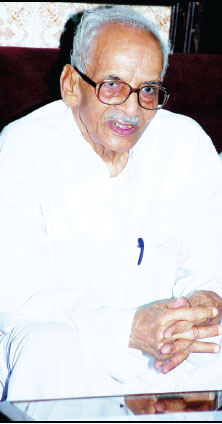
Lecture series by Devendra SwarupNOTED thinker Shri Devendra Swarup has started a series of lectures on ?Constitutional Framework and Structures of Governance in India: A Historical Perspective?. The series began on June 30 in New Delhi. Till now five lectures have been delivered and sixth will be delivered on August 4. Shri Lakshmi Niwas Jhujhunwala chaired the first discussion. Former Governor Shri TN Chaturvedi and many other distinguished persons were also present on the occasion.

Archive ManagerArchive Manager
Aug 5, 2012, 12:32 pm IST
in Bharat
Follow on Google News
FacebookTwitterWhatsAppTelegramEmail

$img_titleNOTED thinker Shri Devendra Swarup has started a series of lectures on ‘Constitutional Framework and Structures of Governance in India: A Historical Perspective’. The series began on June 30 in New Delhi. Till now five lectures have been delivered and sixth will be delivered on August 4. Shri Lakshmi Niwas Jhujhunwala chaired the first discussion. Former Governor Shri TN Chaturvedi and many other distinguished persons were also present on the occasion.
The first lecture raised the core issues and questions that force people to rethink about the Constitutional framework and the structures of governance that India has evolved during the British times. Shri Swarup began the talk by raising the question whether the India that we see today, three generations after Independence, was the free India for which our forefathers had fought and sacrificed so much. Is this the India that our forefathers had seen as a beacon for the world? Is this the India the vision of which had inspired many generations? Why have we failed to realise that vision?
Part of the reason, he said, perhaps lies in the fact that the new Constitution that we adopted for ourselves after Independence preserved, more or less intact, the entire structure of public institutions that the British had evolved for ruling India. The Constitution failed to bestow and we have over the last six decades failed to evolve any new institutions of our own. We have persisted with the institutions of the colonial state, and have kept merely multiplying these institutions in geometric progression.
In the second lecture delivered on July 7 and chaired by Shri Brij Kishore Sharma, he described the processes of formation of the Constituent Assembly and the making of the Constitution. He brought out in poignant detail how despite the long-standing demand of Mahatma Gandhi and the Congress for a Constituent Assembly based on adult franchise, the British imposed upon India an indirectly selected Assembly that at best represented the extremely limited franchise granted in the Government of India Act, 1935. The Assembly that was thus formed comprised of a large number of lawyers trained in the Western legal-constitutional framework. And, even before the Assembly was constituted, the British appointed Shri BN Rau as the Constitutional Advisor to the future Assembly in July 1946. Shri Rau, an officer of the Indian Civil Service, was among the more Europeanised Indian intellectuals. As the Constitutional Adviser, he produced a Draft Constitution that was largely based on that Act. He also assembled several volumes of precedents from the Western Constitutions to guide the Assembly in its deliberations.
In the third talk, delivered on July 14, he continued with his exploration of the structure and functioning of the Constituent Assembly, emphasising its non-representative character and its failure to take into account any Indian or Gandhian ideas and institutions in its deliberations. He began the talk with a reference to the debates that the Constituent Assembly had on the issue of Panchayati Raj. These debates were compiled by Shri Dharampal in early 1960s. Shri Swarup pointed out that in these debates almost all the stalwarts of the freedom movement present in the Assembly had regretted the shape and the form the Constitution of free India was taking. The members felt that the proposed Constitution hardly represented what they and the country had struggled for. But their speeches also reflect a sense of helplessness; notwithstanding their high stature and strong feelings, they did not seem to be in a position to alter the draft Constitution in any significant manner.
In his fourth talk, delivered on July 21, he began his exploration of the founding of British power in India and the subsequent development of the colonial institutions and structures of governance which, as we have seen in the previous three lectures, were incorporated almost unaltered and nearly in their entirety in the Constitution of India. He pointedly asked: If we wanted only to perpetuate what the British had established, why did we seek Independence? How would the Indian public life have been different, had the British stayed on? What has stopped us from changing the institutions established by the British?
In the fifth lecture, delivered on July 28, Shri Devendra Swarup concentrated on the political developments in the 18th century, which ultimately led to the establishment and consolidation of British rule in India. The main thrust of his talk was to show that the main fight of the British in India was with the Marathas. The British conquered India from the Marathas after a long military struggle. The British rule in India was securely established only after the final defeat of Marathas in the war of 1818. After that the British began to create the structures of administration, law, governance and education, which remain with us till today. These were the structures that we ended up incorporating into our Constitution. It is difficult to understand the gravity of what happened without understanding the events of eighteenth century.
To a large extent, it is to be attributed to the destiny of the Indian nation that they were defeated by the British. But it should be remembered that this defeat did not come easily, and the fight for both the British was long and difficult. In the next lecture to be delivered on August 4, Shri Devendra Swarup will speak about the consolidation of the British Empire in India and the process of setting up the various structures of governance that we have inherited from them.             
(FOC)
ShareTweetSendShareSend
✮ Subscribe Organiser YouTube Channel. ✮
✮ Join Organiser's WhatsApp channel for Nationalist views beyond the news. ✮
Previous News

West resisting lifestyle change

Next News

Is someone stealing your WiFi?

Related News

Site of Suicide bombing attack in which 14 people were killed in in Swat district of Khyber Pakhtunkhwa province in Pakistan

Pakistan: 8 policemen among 14 killed in suicide bombing at Kabal police station in Swat district, 22 injured

(Left) Bilawal Bhutto (Right) Pakistan PM Shehbaz Sharif

PoJK Polls: Bilawal accuses PML-N of robbing votes through bullets & batons; warns of withdrawing support to PM Sharif

Minister Vanni Arasu, CM Vijay Joseph (Left to right) (File Photo)

Tamil Nadu: VCK Minister Vanni Arasu mistakes NCC’s ‘jai hind, sriman’ for ‘jai shri Ram’, BJP hits back

Protesters affiliated to Cockroach Janta Party confronting a policeman on duty at Jantar Mantar protest sight

Cockroach Janta Party: Scientific dissection of cockroaches

Dr Suresh Hanagavadi conferred with Padmashri

Dr Suresh Hanagavadi: The remarkable journey of a doctor who revolutionised haemophilia care & patient advocacy

A discussion on anti-paper leak in Parliament

Public Examinations (Prevention of Unfair Means) Amendment Bill, 2026: Passing the trust test

Load More

Latest News

Site of Suicide bombing attack in which 14 people were killed in in Swat district of Khyber Pakhtunkhwa province in Pakistan

Pakistan: 8 policemen among 14 killed in suicide bombing at Kabal police station in Swat district, 22 injured

(Left) Bilawal Bhutto (Right) Pakistan PM Shehbaz Sharif

PoJK Polls: Bilawal accuses PML-N of robbing votes through bullets & batons; warns of withdrawing support to PM Sharif

Minister Vanni Arasu, CM Vijay Joseph (Left to right) (File Photo)

Tamil Nadu: VCK Minister Vanni Arasu mistakes NCC’s ‘jai hind, sriman’ for ‘jai shri Ram’, BJP hits back

Protesters affiliated to Cockroach Janta Party confronting a policeman on duty at Jantar Mantar protest sight

Cockroach Janta Party: Scientific dissection of cockroaches

Dr Suresh Hanagavadi conferred with Padmashri

Dr Suresh Hanagavadi: The remarkable journey of a doctor who revolutionised haemophilia care & patient advocacy

A discussion on anti-paper leak in Parliament

Public Examinations (Prevention of Unfair Means) Amendment Bill, 2026: Passing the trust test

(Left) Sanket Upadhyay (Right) Veteran BBC journalist Rehan Fazal

Veteran Journalist Rehan Fazal claims BBC India blocked RSS coverage, raising questions over editorial neutrality

Kanwar Yatra

When Faith Walks the Highways: A journey through the Kanwar yatra and the living soul of India

Bhojshala Campus

Bhojshala: The legacy of  a scholarly king

Boxer Lovlina protests against incorrect India map at a Glasgow restaurant

CWG silver medalist Lovlina flags incorrect India map in Glasgow restaurant; Protests missing Northeast & Kashmir

Load More
  • Privacy
  • Terms
  • Cookie Policy
  • Refund and Cancellation
  • Delivery and Shipping

© Bharat Prakashan (Delhi) Limited.
Tech-enabled by Ananthapuri Technologies

  • Home
  • Search Organiser
  • Bharat
    • Assam
    • Bihar
    • Chhattisgarh
    • Jharkhand
    • Maharashtra
    • View All States
  • World
    • Asia
    • Africa
    • North America
    • South America
    • Europe
    • Australia
  • Editorial
  • Operation Sindoor
  • Opinion
  • Analysis
  • Defence
  • Culture
  • Sports
  • Business
  • RSS @ 100
  • Entertainment
  • More ..
    • Sci & Tech
    • Vocal4Local
    • Special Report
    • Education
    • Employment
    • Books
    • Interviews
    • Travel
    • Health
    • Politics
    • Law
    • Economy
    • Obituary
  • Subscribe Magazine
  • Read Ecopy
  • Advertise
  • Circulation
  • Careers
  • About Us
  • Contact Us
  • Policies & Terms
    • Privacy Policy
    • Cookie Policy
    • Refund and Cancellation
    • Terms of Use

© Bharat Prakashan (Delhi) Limited.
Tech-enabled by Ananthapuri Technologies