Water Management and Policy in India: A review
June 18, 2026
  • Read Ecopy
  • Circulation
  • Advertise
  • Careers
  • About Us
  • Contact Us
Android AppiPhone AppArattai
Organiser
  • ‌
  • Bharat
    • Assam
    • Bihar
    • Chhattisgarh
    • Jharkhand
    • Maharashtra
    • View All States
  • World
    • Asia
    • Europe
    • North America
    • South America
    • Africa
    • Australia
  • Editorial
  • International
  • Opinion
  • RSS @ 100
  • More
    • Op Sindoor
    • Analysis
    • Sports
    • Defence
    • Politics
    • Business
    • Economy
    • Culture
    • Special Report
    • Sci & Tech
    • Entertainment
    • G20
    • Azadi Ka Amrit Mahotsav
    • Vocal4Local
    • Web Stories
    • Education
    • Employment
    • Books
    • Interviews
    • Travel
    • Law
    • Health
    • Obituary
  • Subscribe
    • Subscribe Print Edition
    • Subscribe Ecopy
    • Read Ecopy
  • ‌
  • Bharat
    • Assam
    • Bihar
    • Chhattisgarh
    • Jharkhand
    • Maharashtra
    • View All States
  • World
    • Asia
    • Europe
    • North America
    • South America
    • Africa
    • Australia
  • Editorial
  • International
  • Opinion
  • RSS @ 100
  • More
    • Op Sindoor
    • Analysis
    • Sports
    • Defence
    • Politics
    • Business
    • Economy
    • Culture
    • Special Report
    • Sci & Tech
    • Entertainment
    • G20
    • Azadi Ka Amrit Mahotsav
    • Vocal4Local
    • Web Stories
    • Education
    • Employment
    • Books
    • Interviews
    • Travel
    • Law
    • Health
    • Obituary
  • Subscribe
    • Subscribe Print Edition
    • Subscribe Ecopy
    • Read Ecopy
Organiser
  • Home
  • Bharat
  • World
  • Operation Sindoor
  • Editorial
  • Analysis
  • Opinion
  • Culture
  • Defence
  • International Edition
  • RSS @ 100
  • Magazine
  • Read Ecopy
Home Bharat

Water Management and Policy in India: A review

Water Management and Policy in India: A review: Government of India has recently brought out a Draft National Policy (2012) Document. The Document is ostensibly aimed at formulating a water policy for enhancing the efficiency of utilisation and disposal of water in the country.

Archive ManagerArchive Manager
Jun 17, 2012, 06:49 pm IST
in Bharat
Follow on Google News
FacebookTwitterWhatsAppTelegramEmail

Atul Sehgal

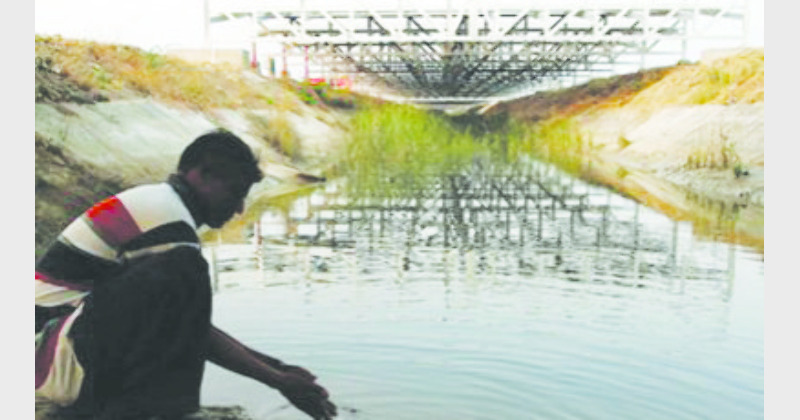
$img_titleGovernment of India has recently brought out a Draft National Policy (2012) Document. The Document is ostensibly aimed at formulating a water policy for enhancing the efficiency of utilisation and disposal of water in the country. But it addresses certain issues in a manner inconsistent with best water management practices.
Water is a basic resource endowed by mother Nature. To meet the needs of living beings including humans scattered all over the globe, the Nature has provided rivers, rivulets, ponds and lakes at various places. Nature has built a system of recycling of water for repeated use by living organisms. For ages, man has been using water in a manner consonant with the natural water recycling mechanism.
With the rise in urbanisation and the resultant paradigm shifts in habitation and living, disposal methods of water have led to heavy pollution of rivers and lakes and depletion of underground water. This has resulted in shortage of potable and even non-potable water in many pockets of human habitation on the earth. Naturally, its unfortunate consequence has been commoditisation and commercialisation of water.
India is home to 17 per cent of global population which is endowed with only 4 per cent of the global fresh water. Through long history, we have managed water resources very sensibly and in tune with water cycles of Nature. The fallout of the industrial revolution resulting in rapid industrialisation of the world has thrown up new problems because most of these industries were environment unfriendly. The pollution of water was a natural concomitant of this industrialisation. This has led to water being viewed and treated as a commodity like any other tradable commodity on profit basis. Today, water scarcity is staring in the face of present generation and water crisis looms large over the future generations. This is clear from the results of a study on global water scenario by international consultancy group, McKinsey, in collaboration with the World Bank affiliate International Finance Corporation. The study reveals that water demand in India will grow annually by 2.8 per cent to reach a whopping 1500 bcm (billion cubic metres) while supply is projected at only about 744 bcm.
Right now, drought like situation prevails in several pockets of Maharashtra with many irrigation projects remaining incomplete. With the summer on, water reservoirs in several states too are fast depleting. It is sad to note that our planners and policymakers appear to be in slumber on this most important issue which has a bearing on our agriculture, industry and in a sweeping sense—basic survival.
The recent Draft National Water Policy, 2012 released by the Government of India does not adequately address the issue of augmentation of water resources. It does not focus on the dire need of usage of water in tune with Nature’s water recycling mechanism. The policy paper talks of water as a community resource but flippantly points at an economically viable cost of water supply based on realistic tariffs.
Water is proposed to be made available on cost plus basis thus covering the entire cost of operating and maintaining the drawl, storage and supply systems. Corporatisation of water supply is going to further reduce the availability of water for the ordinary folks of India.
It is of paramount importance that national water policy be blueprinted on the basis of our age-old, traditional approach and practice which is environment friendly and time tested.  Construction of ponds and natural reservoirs and their proper maintenance could form one component of this policy. We may also consider harnessing the ocean for the needs of our teeming millions as India has a huge sea coastline. Our water policy should be pragmatic, environment-friendly and in tune with the grass roots needs of the consumers. It should contain strong deterrents against water pollution.
In accordance with the fundamental premise of natural resources being available rightfully to all human beings according to their basic physical needs, we need to make new laws and regulations to ensure provision of clean drinking water and need based non potable water for all our citizens directly by the state. This should have no room for traders, hoarders or profiteers.
In the context of proposed privatisation of potable water production and distribution, we should understand that the very core and crux of private industry is profiteering. Water is not a luxury item—it is a basic necessity and every human being ushered into this world is at once entitled by Nature to his quota of water. It is the state’s responsibility to make it available in the best possible manner. Water is neither an item which should be taxed nor a commodity which should be traded. Taxing or trading this item amounts to denigrating mother Nature and this goes against Indian ethos.


ShareTweetSendShareSend
✮ Subscribe Organiser YouTube Channel. ✮
✮ Join Organiser's WhatsApp channel for Nationalist views beyond the news. ✮
Previous News

Dustbin is the place for Kashmir interlocutor?s report

Next News

Look beyond the mono sectors for growth

Related News

Security forces recover huge cache of arms

Manipur: COBRA battalion starts action in the state; security forces gun down suspected militant

Kandhamal Police Recover Large Cache of Maoist Arms and Explosives

Odisha: Kandhamal police recover large cache of Maoist arms and explosives in major anti-naxal operation

India on the path to becoming an Atmanirbhar (Self-Reliant) in defence sector

From Tejas to Vikrant: PM Modi showcases India’s rise as a global defence power

Purvanchal’s industrial rise under the double-engine government reflects growing investment, ODOP exports, factories, and jobs across eastern UP

How UP’s double-engine government transformed Purvanchal from an industrial backwater into a rising economic powerhouse

Years of ABVP-led advocacy and protests have resulted in Keralam moving ahead with the PM SHRI scheme

Keralam moves ahead with PM SHRI scheme; ABVP says long struggle for students has paid off

Karnataka: Dharmasthala defamation conspiracy alleged; Hindu organisations demand probe into Prakash Raj’s role

Load More

Latest News

Security forces recover huge cache of arms

Manipur: COBRA battalion starts action in the state; security forces gun down suspected militant

Kandhamal Police Recover Large Cache of Maoist Arms and Explosives

Odisha: Kandhamal police recover large cache of Maoist arms and explosives in major anti-naxal operation

India on the path to becoming an Atmanirbhar (Self-Reliant) in defence sector

From Tejas to Vikrant: PM Modi showcases India’s rise as a global defence power

Purvanchal’s industrial rise under the double-engine government reflects growing investment, ODOP exports, factories, and jobs across eastern UP

How UP’s double-engine government transformed Purvanchal from an industrial backwater into a rising economic powerhouse

Years of ABVP-led advocacy and protests have resulted in Keralam moving ahead with the PM SHRI scheme

Keralam moves ahead with PM SHRI scheme; ABVP says long struggle for students has paid off

Karnataka: Dharmasthala defamation conspiracy alleged; Hindu organisations demand probe into Prakash Raj’s role

The unrest in Muzaffarabad highlighted growing demands for economic justice, accountable governance, and greater political representation in PoJK

Muzaffarabad’s Revolt Against Islamabad: How PoJK protests exposed the contradictions in Pakistan’s Kashmir narrative

CM announces free bus service for NEET-UG 2026 candidates

Assam: CM announces free bus service for NEET-UG 2026 candidates; Directs robust measures to conduct the examination

The Modi era is presented as a transformative phase in Indian politics, governance, and national identity, reflecting the aspirations of a rapidly evolving India

Modi Yug: How twelve years of governance reshaped India’s aspirations, identity & development trajectory

People around a kund

“Kumbh Mela is a powerful medium for social unity,” stated RSS Sah Sarkaryavah Atul Limaye in Nagpur

Load More
  • Privacy
  • Terms
  • Cookie Policy
  • Refund and Cancellation
  • Delivery and Shipping

© Bharat Prakashan (Delhi) Limited.
Tech-enabled by Ananthapuri Technologies

  • Home
  • Search Organiser
  • Bharat
    • Assam
    • Bihar
    • Chhattisgarh
    • Jharkhand
    • Maharashtra
    • View All States
  • World
    • Asia
    • Africa
    • North America
    • South America
    • Europe
    • Australia
  • Editorial
  • Operation Sindoor
  • Opinion
  • Analysis
  • Defence
  • Culture
  • Sports
  • Business
  • RSS @ 100
  • Entertainment
  • More ..
    • Sci & Tech
    • Vocal4Local
    • Special Report
    • Education
    • Employment
    • Books
    • Interviews
    • Travel
    • Health
    • Politics
    • Law
    • Economy
    • Obituary
  • Subscribe Magazine
  • Read Ecopy
  • Advertise
  • Circulation
  • Careers
  • About Us
  • Contact Us
  • Policies & Terms
    • Privacy Policy
    • Cookie Policy
    • Refund and Cancellation
    • Terms of Use

© Bharat Prakashan (Delhi) Limited.
Tech-enabled by Ananthapuri Technologies