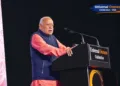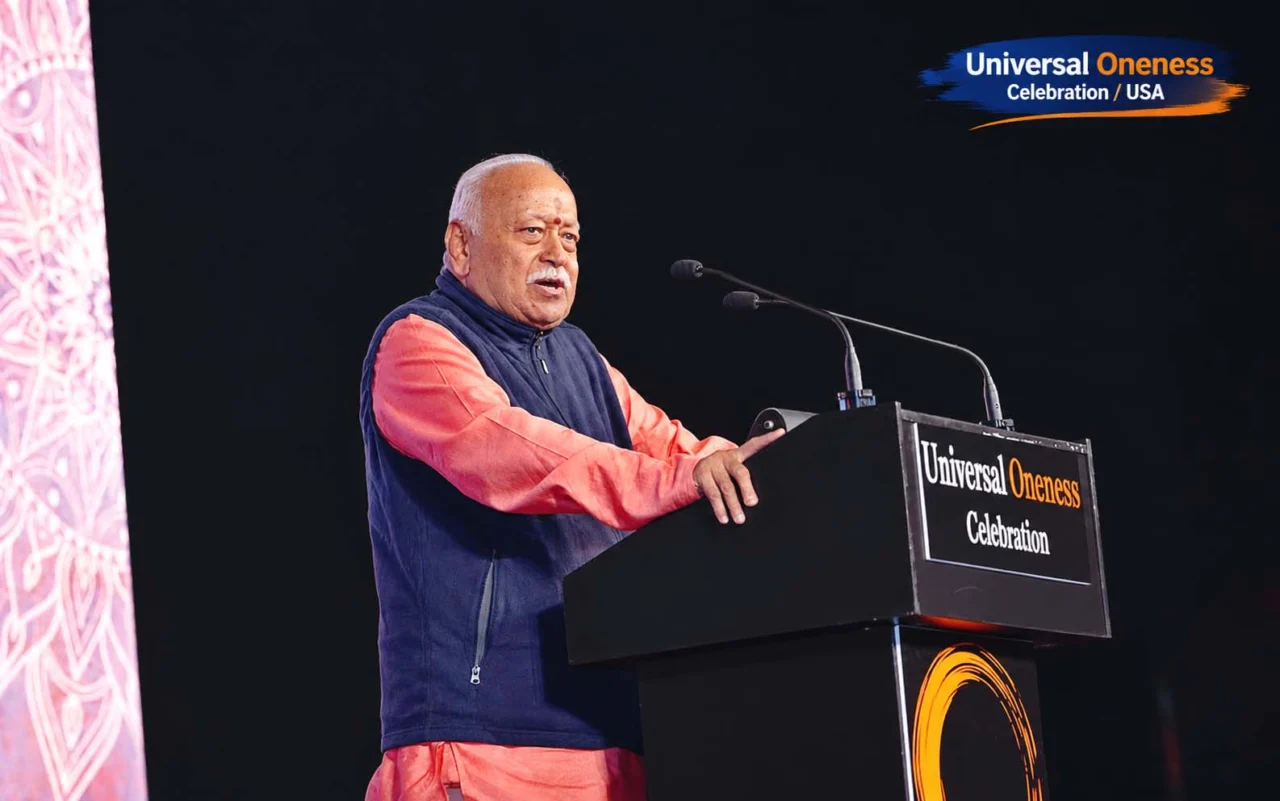
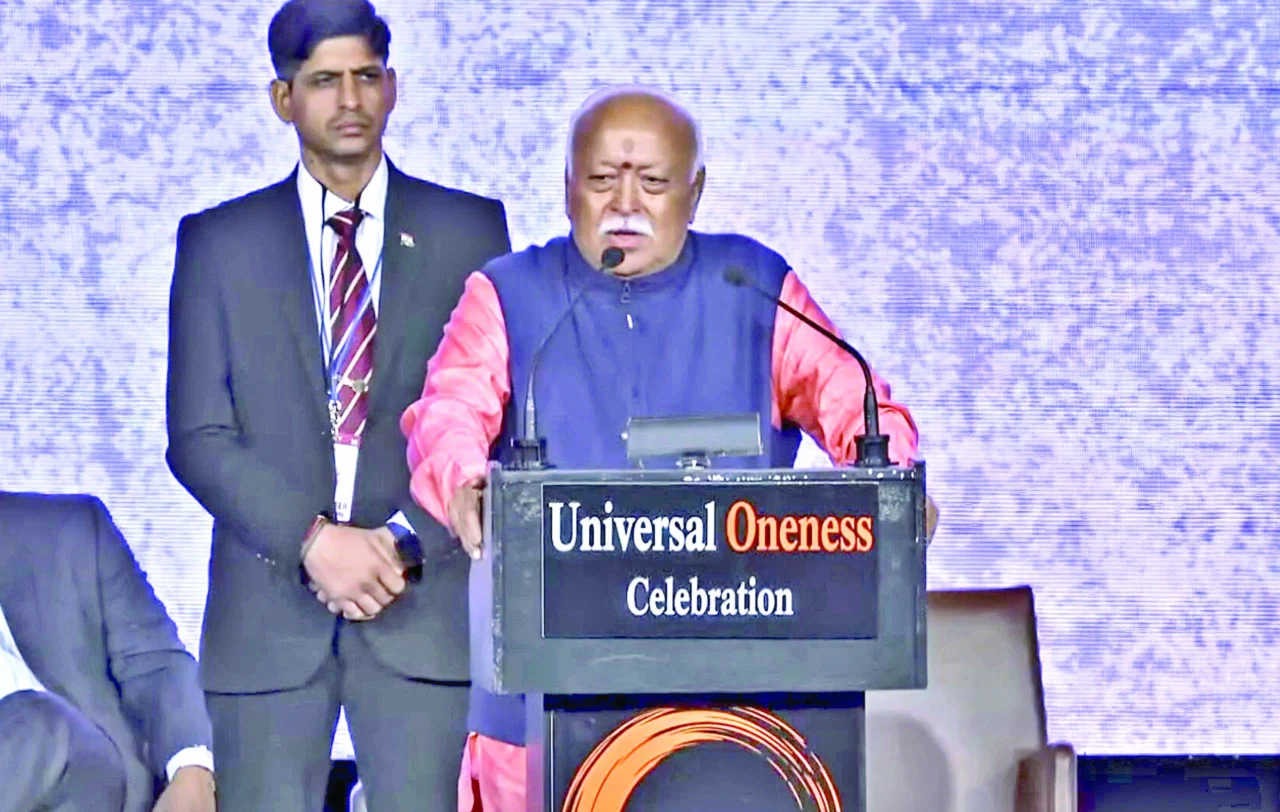
In America, one word is discussed: pluralism. For Bharat, it is unity in diversity, which is in our DNA. Every nation has a destiny to fulfil. What is the destiny given to Bharat? Bharat is there to realise, and from time to time make the world realise, this unity in diversity. We are one, and due to diversity, that oneness is decorated. So, diversity has to be celebrated, has to be respected, has to be accepted. And at the same time, we must keep in mind this feeling of oneness,” said RSS Sarsanghchalak Dr Mohan Bhagwat at the ‘Universal Oneness Celebration’ at Madison Square Garden, New York, on August 29, 2026.
Dr Bhagwat expressed happiness that the gathering was meant to celebrate oneness and described New York as an apt place for the occasion. He said he came all the way from Nagpur in Bharat to share the joy and spirit of the celebration. “Nations are not merely geographical entities. In the design of this universe, nations have to carry out a duty. Swami Vivekananda said, Every nation has a message to deliver, a mission to accomplish, and a destiny to fulfil,” Dr Bhagwat observed.
Dr Bhagwat noted existence of people may question how they could be considered one when they appear different. He pointed out existence of multiple nationalities, languages, religions and styles of living among people. At the same time, he explained that human beings also have individual needs and responsibilities. Each person has to eat separately, earn separately and spend separately, he said.
Universal Oneness Celebration: Key highlights of Dr Mohan Bhagwat’s address
- When we say United States of America, one word that is often discussed is “Pluralism”. And when we say Bharat, another word, another phrase, is discussed, “Unity in diversity”. For Bharat, both unity and diversity are in its DNA.
- Nations are not merely geographical entities. Nations carry out a duty. Swami Vivekananda said that every nation has a message to deliver, a mission to accomplish, and a destiny to fulfil.
- What is the destiny given to Bharat? Bharat is there to realise, and from time to time make the world realise this unity in diversity. We are one, and due to diversity, that oneness is decorated. So, diversity has to be celebrated, has to be respected, has to be accepted. And at the same time, we must keep in mind this feeling of oneness.
- Thinking human beings who know right and wrong have the responsibility for sustaining the entire world.
- In spite of different bodies and everything being different, there’s something within that is same. We belong to each other.
- “Unity of existence” – That is our truth.
- It is our vision to see the world is “one”.
- One tendency was: “Live and let live.” The other tendency was: “Live and let only those live who obey us.” Those who say, “You obey us, and we will protect you,” are Rakshasas.
- Saintly figures of Bharat pray for ending the feeling of enmity from the minds of evil people.
- Bharatiya diaspora in the USA should be loyal to their Karmabhoomi, after doing that obligatory duty if you have urge to do something for your Janmabhoomi, then live with the values that Bharat has imparted to you.
- Our destiny is to give that to the world, and the solid foundation on which this Dharma is perceived is the oneness, the unity of existence. That is our truth.
- From the Himalayas to the sea, we have one duty: to give this knowledge to the world. In Bharat, the duty is to realise the truth.
- Bharat has given you the idea of life.
- The duty of a Bharatiya is to give this message to the world through practice, not through preaching.
- Dharma is the rule through which the universe is sustained. Dharma is the rule through which human beings can manage the quality of life. The middle path is Dharma.
- We are united in oneness and decorated by diversity.
- Diversity is natural and unity is truth.
- We have taken everything from the world, so we have to give back to the world. How much we earn is not important; how much we distribute is important.
Dr Bhagwat remarked that the ability to think is a quality and a blessing for human beings, but stressed that the manner in which people think is important. Human beings, who can distinguish between right and wrong, have the responsibility of sustaining the entire world, he said. “If you think in the right way, you go nearer to Bhagwan. If you think in wrong way, you go nearer to animal kingdom. Nar karni kare to nar ka Narayan ban jaye,” he stated, explaining that when one performs noble deeds, they can become divine.
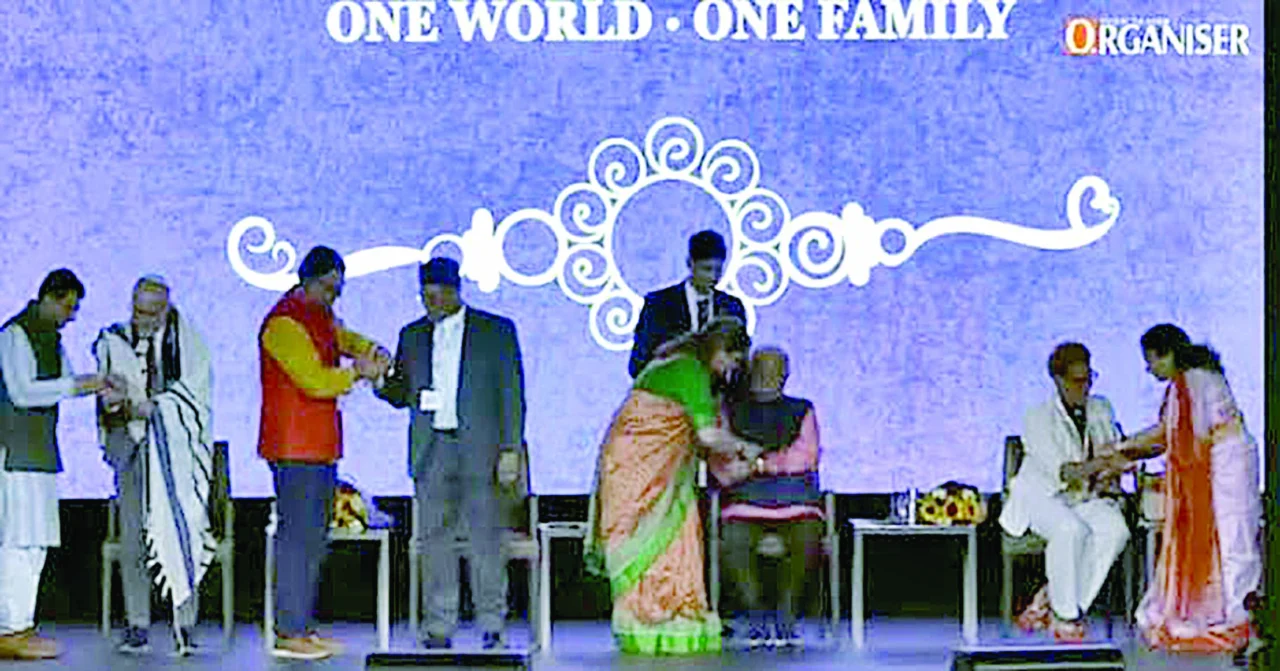
He maintained that the direction in which a person shapes his or her life is important and said that one who lives according to the right direction becomes a responsible citizen of the kingdom of God. Dr Bhagwat identified two tendencies in human society. One, he said, was “live and let live”, while the other was to live and allow only those to live who obey. Referring to those who offer protection only to people who obey them, Dr Bhagwat explained that raksha means protection in Sanskrit and Hindi and termed such people Rakshasas. He contrasted this with those who believe that obedience, agreement, opinion or usefulness are secondary considerations, while the primary fact is that all human beings have to sustain life and therefore live with fraternity. Turning to the concept of the Atman, Dr Bhagwat said, “Atman is the truth that connects us all.” Despite differences in bodies, attire and verses, he said, the Atman exists in everybody and connects everyone, just as beads in a necklace are woven through a single thread. He said that while the body dies, something within a person continues to live permanently. Different traditions may hold different beliefs about what happens after death, he noted, with some believing in Judgement Day and others in cycles of birth. “But something is there inside that lives. That is permanent. That doesn’t get destroyed in the tide of time,” Dr Bhagwat said.
He added that although the world is experienced as a collection of different entities, there is an underlying connection between them. “In them also I live, and they also live inside me. We belong to each other,” he said. Dr Bhagwat stated that human life is meant to impart this knowledge to everyone and to live according to it, both for individual emancipation and for the betterment of the world. He described this as the mission Bharat has to accomplish and said Bharatiyas across the world have to convey this message through their own example rather than through preaching.
“The principle, which unites everything, which upholds everything, which doesn’t cause a rift — let not that happen — and which balances everything, which is the middle path, that is Dharma,” he said. He asserted that Bharat’s destiny was to give this principle to the world and described oneness, or the unity of existence, as the foundation on which Dharma is perceived.
Call For Action Resolution: Tackling Global Issues Collectively
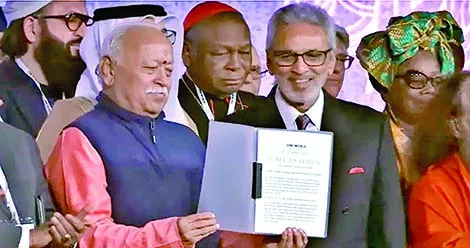
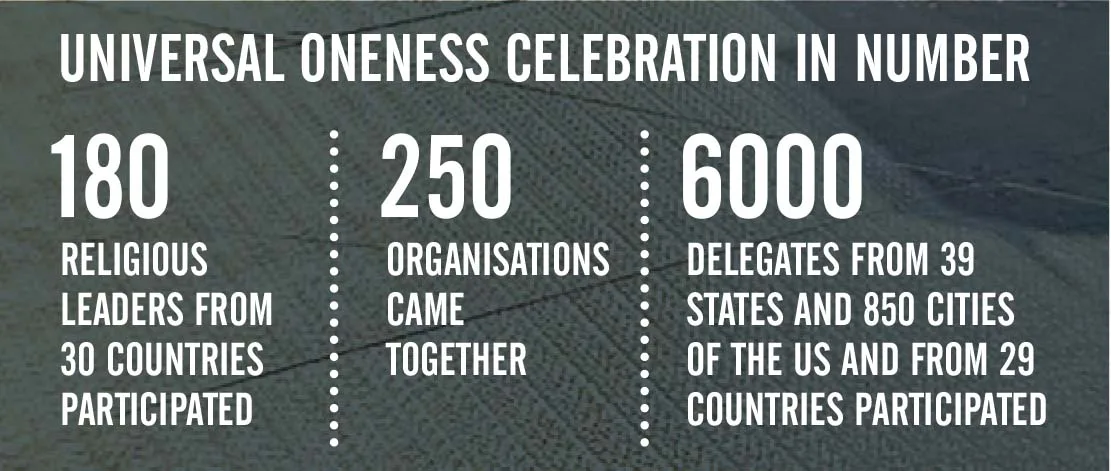
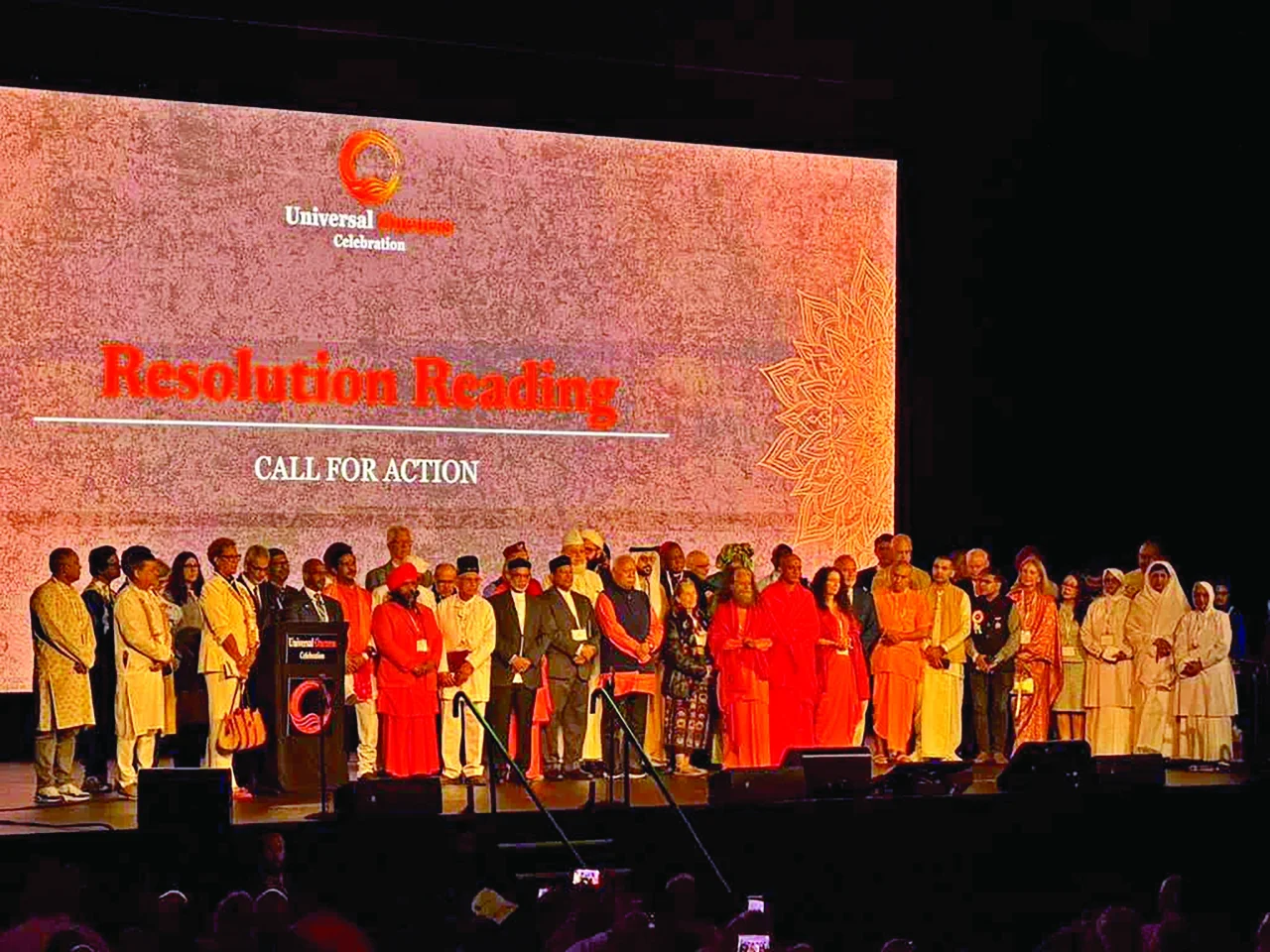
During the Universal Oneness celebration programme, RSS Sarsanghchalak Dr Mohan Bhagwat presented Call for Action resolution of 200 religious leaders. One hundred eighty religious leaders from 30 countries announceed five-point action plan to take responsibility for future. Here are the five points:
1. WE WILL BEGIN WITH OURSELVES
We will examine the words, teachings, institutions, and practices of our own communities first. We will reject the use of religion to justify hatred, humiliation, dehumanisation, or violence — and teach that deep conviction can coexist with respect for those who believe differently. Peace begins with the courage to hold our own communities accountable.
2. WE WILL STAND FOR ONE ANOTHER
When another community is threatened, we will not leave it to stand alone. We will speak when people are dehumanised or targeted — whether they belong to our community or another, whether they are near to us or far away. And when one of us takes a principled stand for the dignity of another community, we will stand beside them.
3. WE WILL BUILD RELATIONSHIPS BEFORE WE NEED THEM
We will bring our communities together across religious and cultural boundaries — especially our young people — not in response to tragedy, but before it. We will listen to those we have misunderstood, and create ways for people who might otherwise meet only as strangers, stereotypes, or adversaries to meet as human beings. The
person we know is harder to hate.
4. WE WILL SERVE TOGETHER
We will turn shared values into shared work. Across traditions and borders, we will serve where suffering is immediate: among the hungry, the sick, the displaced, the persecuted, and the forgotten. We will support courageous work already underway rather than
compete for recognition.
Our cooperation should be visible not only in what we say together, but in what we do together.
5. WE WILL TAKE RESPONSIBILITY FOR THE FUTURE
We will use our moral influence wherever human dignity is at stake—in decisions about war and peace, poverty and opportunity, the care of our shared world, and emerging technologies such as artificial intelligence. We will insist that human progress remain in the service of human beings, and that technology strengthen rather than diminish dignity, truth, freedom, and human connection. A global declaration matters only if it becomes local action.
Addressing the Bharatiya diaspora in the United States, Dr Bhagwat said they should remain loyal to their Karmabhoomi and fulfil their obligatory duties there. If they wished to do something for their Janmabhoomi, he said, they should live by the values imparted by Bharat. “Those who live in America or other countries (Bharatiya diaspora), they will work for the Karma. If they find time, if they find means, they can care for Bharat. But Bharat doesn’t expect that. Bharat expects you to live as Bharat has given you the idea of life,” he said.

Referring to the principle of “Atmano Mokshartham Jagat Hitay Cha” — self-emancipation for the welfare of all, Dr Bhagwat said Bharat expected the diaspora to lead a life in their adopted countries with sustainable values and lifestyle. He referred to the observance of occasions such as Father’s Day and Mother’s Day, saying that such days remind people of their duties towards their parents. He also referred to the duty towards the environment.
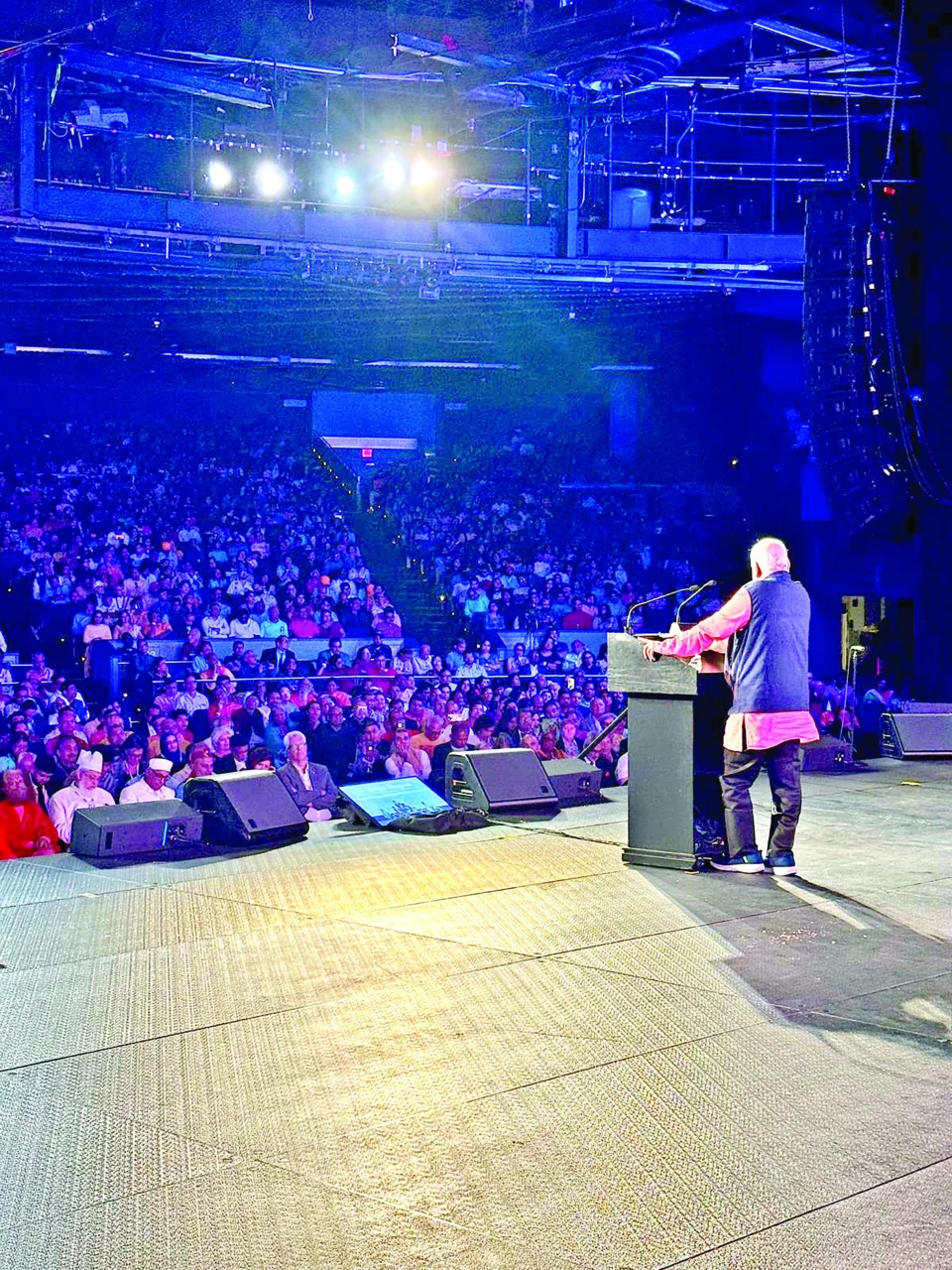
Dr Bhagwat also emphasised the responsibility that people have towards others. “We owe everything to someone else; we have to give back,” he said. He explained that food depends on agriculture and farmers, while clothing depends on mills, labourers and cotton-growing farmers. “We owe everything to someone else. So we need to give back,” he added.
Oneness Celebration
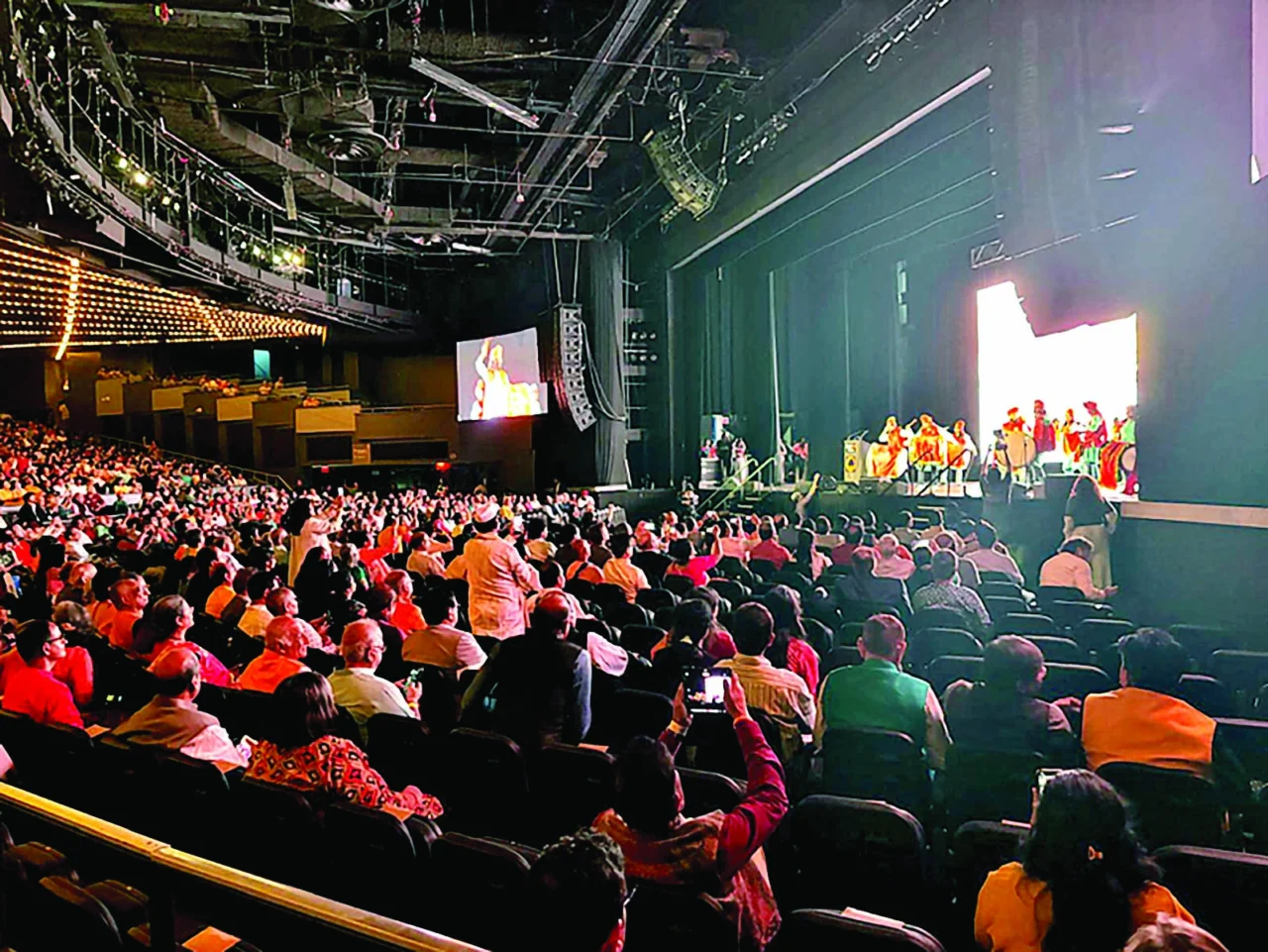
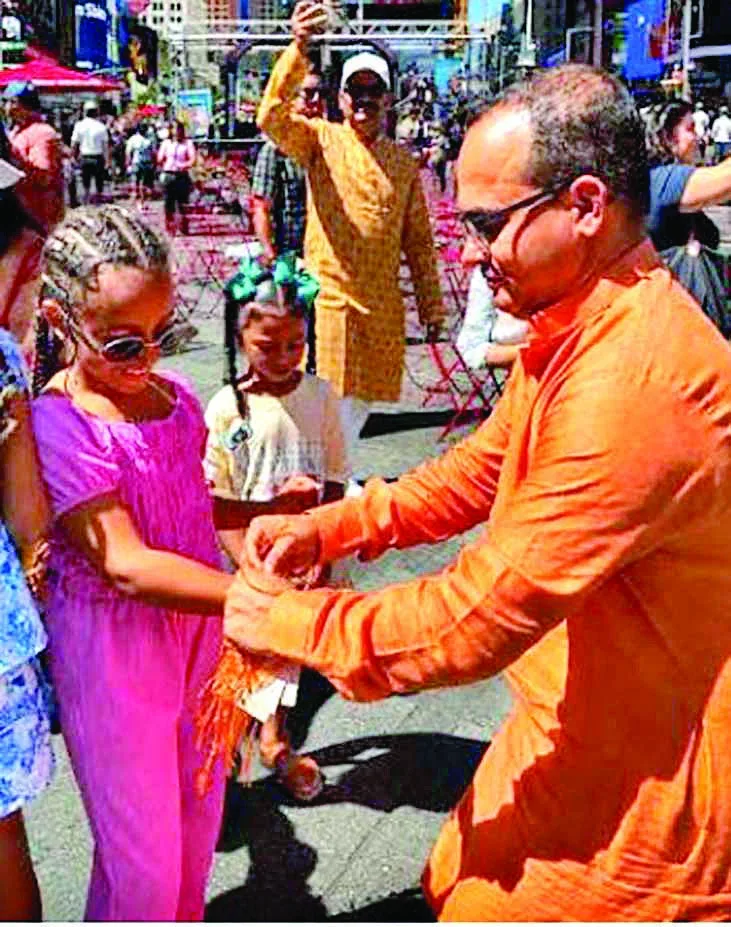
Referring to the teachings of Bharatiya sants about the existence of wicked persons, sinners and enemies, Dr Bhagwat said such people exist as a fact of physical life. However, he noted that the sants do not pray for elimination destruction but for their “evil buddhi”. He explained that this was because even enemies and others are ultimately one with us, while enmity is not permanent. According to him, enmity is man-made or arises from different situations in the world. Linking the message to Raksha Bandhan, Dr Bhagwat said the festival was a reminder of the bond created by tying the rakhi. “What is that binding? It does not limit you. In fact, when you take the responsibility of others, it frees you,” he said. More than 6,000 people from 39 US states and 853 cities, including 250 students from various universities and representatives of 250 organisations, attended the ‘Universal Oneness Celebration’. The gathering brought together participants from 85 cities, with nearly 200 organisations partnering for the programme, according to event organisers. Representatives of Hindu-American organisations, temples, yoga groups and cultural organisations participated in the event. The programme was organised during the RSS centenary year and had the support of 135 Hindu-American organisations, according to organisers.