Iran’s currency has plunged to another historic low as intensifying US sanctions, a continuing naval blockade and shrinking oil revenues deepen the country’s economic crisis, leaving ordinary Iranians struggling with soaring prices and rapidly eroding purchasing power.
While Iranian officials continue to insist that the latest US pressure campaign will fail, households, shopkeepers, workers and students are increasingly blaming the Islamic Regime for its handling of the economy and for policies they say have prioritised military and regional ambitions over domestic welfare.
Iran rial collapse pushes prices higher
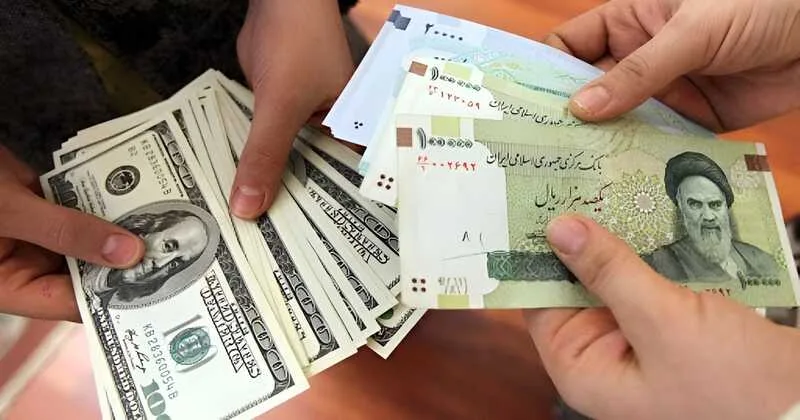
In late August, the US dollar crossed 200,000 tomans on Iran’s open market, equivalent to more than 2 million rials, for the first time. The Iran Rial had weakened by more than seven per cent in less than a week, reflecting mounting anxiety over additional US sanctions, restricted oil revenues and Iran’s declining access to foreign currency.
On September 2, the Iran Rial fell even further, reaching a new record low of about 2.2 million rials to the US dollar. That represents a dramatic collapse from roughly 1 million rials per dollar a year ago, highlighting the speed at which Iran’s currency crisis has intensified.
For ordinary Iranians, the Iran Rial collapse is no longer an abstract financial indicator. Salaries lose purchasing power before they can be spent, savings accumulated over years can evaporate within days, and imported necessities become increasingly expensive. Shopkeepers are also finding it difficult to replenish their inventories because the cost of their next shipment may be substantially higher than the previous one.
“We can’t afford basic necessities anymore; this government is unable to manage the economy,” a housewife from downtown Tehran told The Algemeiner. A butcher shop owner described the impact of the falling Iran Rial in similarly stark terms. “Whenever the dollar goes up, the price of everything goes up; people can’t afford it anymore,” he said.
Families are consequently cutting meat, fruit and other increasingly expensive foods from their diets. Purchases that were once routine are being postponed or abandoned altogether, while some families are delaying medical treatment because of rising costs. “Twenty years ago, we were able to purchase daily necessities, but now the situation is horrible; we can’t even afford bread,” said Amir, a factory worker.
The economic deterioration was already severe before the current conflict with the United States, and the situation is expected to deteriorate further in the coming weeks. The combination of US sanctions, restrictions on international financial transactions and declining oil revenues has placed additional pressure on an economy already struggling with inflation, unemployment and currency depreciation.
US sanctions squeeze Iran’s oil revenues
The latest economic pressure on Iran has intensified as Washington expands its sanctions campaign against Tehran. The United States recently expanded secondary sanctions targeting countries doing business with Iran, increasing pressure on foreign entities that continue to trade with the Islamic Republic.
At the same time, the US naval blockade has continued to restrict Iran’s principal source of revenue, oil and gas exports. According to commodity analytics firm Kpler, Iran loaded approximately 260,000 barrels of crude oil per day for export from its ports last month. That represented a decline of more than 80 per cent from the approximately 1.7 million barrels per day recorded in August 2025.
⚡️ @SecScottBessent says there are only ~30 million barrels of Iranian crude oil remaining that China hasn’t bought…and then the Iran-China oil flow dries up because Iran can no longer export oil due to the US naval blockade. 🦅
No oil = no revenue = economic collapse. pic.twitter.com/4ESLSbfOsW
— Israel War Room (@IsraelWarRoom) September 6, 2026
The sharp decline in oil exports is particularly significant because oil revenue provides Iran with crucial foreign currency. As access to dollars and other foreign currencies becomes more restricted, pressure on the Iran Rial increases, making imports more expensive and worsening inflation throughout the economy.
Iranian President Masoud Pezeshkian said last week that the country’s overall exports and imports had declined by between 25 per cent and 35 per cent, with imports falling even more sharply than exports.
The figures illustrate the wider effect of US sanctions on Iran’s international trade. Restrictions on banking and financial transactions make it harder for Iranian businesses to receive payments, purchase goods and maintain normal international trade relationships.
The US says its sanctions are intended to deprive the Islamic Republic of financial resources used for its nuclear and missile programmes, military operations, regional terrorist proxies and human rights abuses inside Iran. The US Treasury has targeted Iranian oil exports, shadow-banking networks, cryptocurrency channels and vessels allegedly used to evade sanctions. Washington argues that the measures have prevented Tehran from accessing tens of billions of dollars in revenue.
Yet the economic pressure does not remain confined to the Iranian state. In an economy where the government and institutions connected to the Islamic Revolutionary Guard Corps (IRGC) dominate major industries, restrictions affecting state revenues and trade eventually reach businesses and households.
Reduced oil income means less foreign currency entering Iran. Banking restrictions make trade more difficult. Importers face higher costs and pass those costs to retailers, who then pass them on to consumers. Powerful institutions may have connections and resources that allow them to navigate sanctions, but workers paid in Iran Rial have far fewer options for protecting their income.
Inflation hits food, medicine and household budgets
The impact of the Iran Rial crisis is particularly visible in pharmacies, markets and household budgets. Although US sanctions contain formal exemptions for food, pharmaceuticals and medical equipment, humanitarian exemptions do not automatically ensure that functioning payment and transportation channels remain available.
A pharmacy worker in Tehran said patients were increasingly searching for cheaper alternatives or leaving pharmacies without the medicines prescribed by their doctors. “People come in with a doctor’s prescription, but when they hear the price, they ask what they can remove,” she said.
The problem, she explained, was not necessarily that medicines were unavailable. Instead, repeated declines in the Iran Rial had pushed prices beyond what many patients could afford. The same pressure is being felt across Iranian households. In Shiraz, a salaried office employee said his family had stopped buying meat regularly and was postponing repairs to their apartment. “Our income arrives once a month, but prices change every week,” he said.
Iran’s official unemployment rate stands at 9.1 per cent, while the average monthly salary is reportedly well below the level required to meet basic household expenses. The combination of unemployment, falling real wages and rising prices has raised fears of a wider economic collapse.
US Treasury Secretary Scott Bessent, speaking to reporters on Monday, was asked how long it would take for the Iranian economy to collapse. “I think it could be within weeks or months, and the economy doesn’t have to collapse; we just have to have the regime come to their senses,” Bessent said.
For young Iranians, the economic crisis is also affecting education and future employment prospects. A university student in Isfahan said his parents had worked so that he could study and build a better life. Now, he said, they were telling him to find any job available even though they knew his eventual salary would not cover the family’s basic needs.
He also said many young Iranians were considering emigration, while others felt trapped because they could not afford the costs associated with leaving Iran.
Iranians turn anger toward Islamic regime
The collapse of the Iran Rial is increasingly influencing public attitudes toward the Islamic Regime. While US sanctions have clearly intensified the economic pressure, many Iranians interviewed by The Algemeiner said they also blame Tehran for the country’s deteriorating economic conditions.
Many believe the Islamic Regime has sacrificed Iran’s economic future in pursuit of regional ambitions and prolonged ideological confrontation with the United States. According to those interviewed, Tehran could have reduced economic pressure through serious negotiations with Washington but instead continued policies that have contributed to sanctions and international isolation.
This anger extends beyond inflation and the falling Iran Rial. Many Iranians believe resources that should be directed towards employment, healthcare, infrastructure and public welfare are instead being channelled into military programmes, security institutions and conflicts across the Middle East that they consider unnecessary. “I don’t want my country’s money spent on proxy groups and regional conflicts,” a merchant from Isfahan said. “Our government has failed terribly to manage the impact of sanctions and tackle corruption at home”.
Iran supports a wide range of militias and internationally designated terrorist groups across West Asia, including Hamas in Gaza, Hezbollah in Lebanon, the Houthis in Yemen, as well as various militant organisations in Iraq and elsewhere.
For many Iranians, therefore, the Iran Rial’s historic collapse represents more than the direct impact of US sanctions. It has become a symbol of their belief that the Islamic Regime has chosen confrontation and regional influence at the expense of economic stability.
The result is a growing gap between official assurances and everyday economic reality. Iranian officials continue to argue that Washington’s campaign to strangle the economy will ultimately fail. But for families facing weekly price increases, workers watching their wages lose value, patients unable to afford prescriptions and young people contemplating emigration, the economic crisis is already deeply entrenched.
As the Iran Rial continues to fall and access to foreign currency becomes increasingly difficult, living standards are deteriorating across the country. Frustration over food prices, unemployment, medical costs and shrinking purchasing power is increasingly developing into broader political anger, with citizens questioning why they should bear the economic consequences of decisions made by the Islamic Regime and why the country’s resources are being spent on policies from which ordinary Iranians see little benefit.