For students living in the remote parts of Rajasthan’s Baran district, getting access to quality education can often mean travelling long distances or depending on limited local resources. A new initiative called ‘Mission Samarthya-Samarth Yuva’ is trying to change that by bringing modern learning facilities directly to government schools.
The programme is a joint initiative of the Baran district administration and NTPC and has been designed to reduce the need for rural students to migrate to larger towns and cities for better academic support and competitive exam preparation.
Under the initiative, 12 senior secondary government schools across all eight blocks of Baran were selected to be developed as Samarthya Kendras. Of these, 11 centres are currently operational and have been conducting regular interactive classes since August 15.
The idea is simple: instead of asking students to leave their villages and travel to coaching centres, bring good teachers, technology and guidance to the schools where they already study.
One classroom can now reach several schools
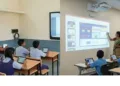
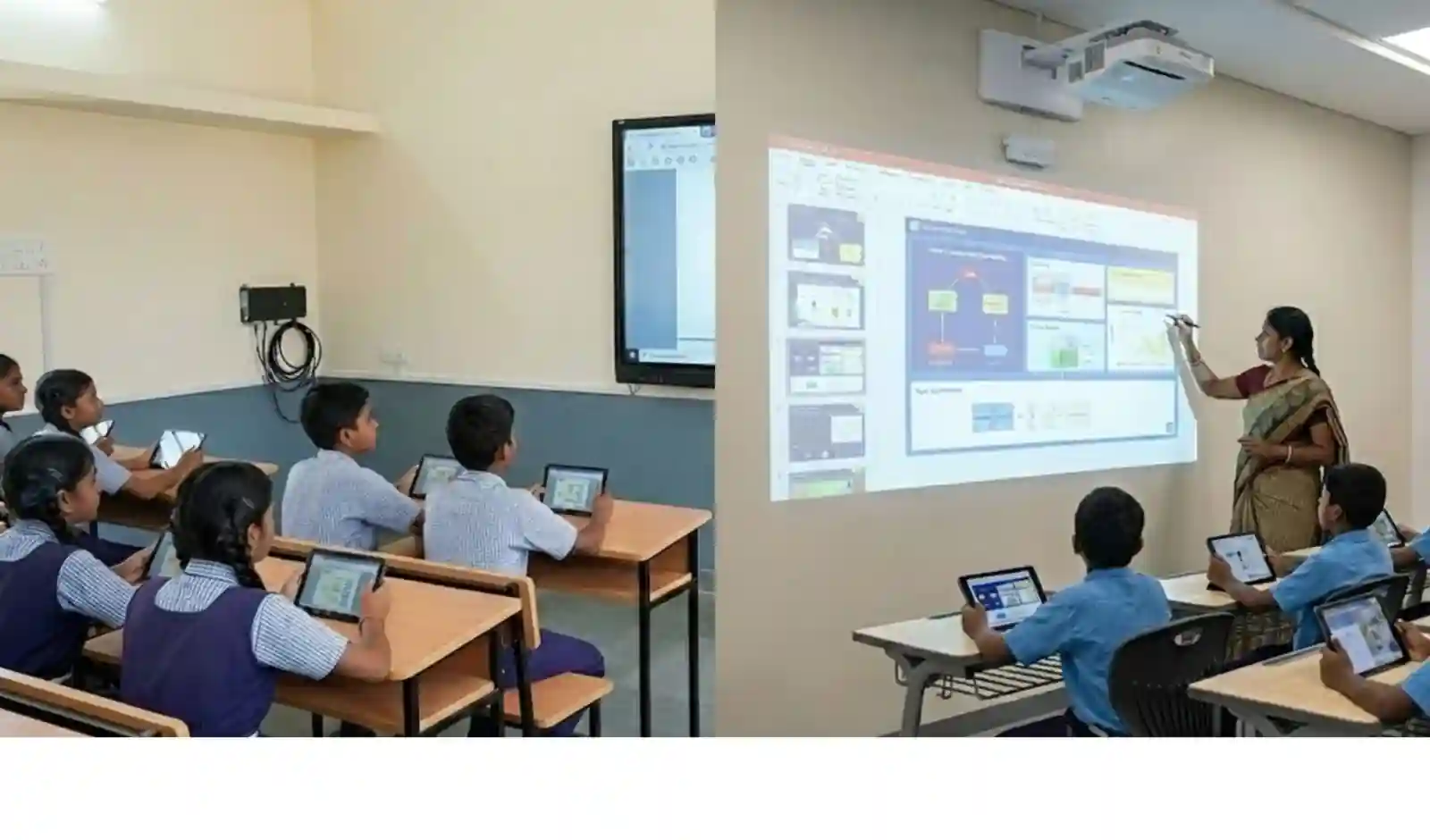
At the heart of the programme is a central control room located at the government girls’ school near Shriram Stadium in Baran’s Old Civil Lines area. Teachers can conduct live classes from this centre, while students sitting in classrooms across the district can participate through an interconnected digital system.
This setup is particularly useful in subjects where rural schools often face a shortage of specialised teachers. Mathematics and science, for example, can require teachers with specific subject expertise, which may not always be available in remote schools.
Through live video-based teaching, one teacher can now reach students in several locations at the same time. This allows schools to make better use of available teaching resources while giving students access to lessons that may otherwise be difficult to arrange locally.
The programme is therefore not only about putting computers or screens inside classrooms. Its larger goal is to connect rural students with teachers and academic support that were traditionally concentrated in urban centres.
NTPC supports the digital infrastructure
NTPC has supported Mission Samarthya through its corporate social responsibility (CSR) programme. The company has helped establish the technology needed to keep the network running across participating schools.
The infrastructure includes high-speed internet connections, uninterrupted power supply units, dedicated lease lines and video-conferencing facilities.
Reliable connectivity and power are particularly important for a programme based on live classes. A digital classroom can only work effectively if students are able to attend lessons without frequent interruptions caused by poor internet connectivity or power cuts.
With the new infrastructure, the participating schools can receive live academic sessions from the central facility, creating a common learning platform for students studying in different parts of Baran.
Around 500 students already enrolled
The initiative has already started reaching a sizeable number of students. According to Baran District Information Officer Poonam Patni, each school was expected to have a minimum batch of 25 students.
At present, around 500 students are enrolled across the 11 operational Samarthya Kendras, with batches generally consisting of around 30 students.
Baran Collector Balmukund Asawa, who has spearheaded the initiative, said the programme currently provides two daily instructional blocks of 45 minutes each. Additional classes can also be arranged when required.
The structure allows the centres to go beyond regular classroom teaching. Along with academic subjects, students are being exposed to areas such as general studies, English speaking, English grammar and career guidance.
This broader approach is important because rural students often need more than textbook lessons when preparing for higher education, government examinations or employment opportunities.
Focus on girls and career opportunities
One of the important aspects of Mission Samarthya is its focus on female students studying in Classes 10 to 12.
These are years when students begin making important decisions about higher education, careers and competitive examinations. By providing access to academic preparation and career guidance within government schools, the programme seeks to ensure that students do not miss opportunities simply because they live far away from coaching centres or specialised institutions.
Collector Asawa said the initiative is intended to provide equal access to competitive preparation and career opportunities for girls as well.
The career counselling component is designed to help students understand the options available to them after school. Guidance on higher education, employment opportunities and vocational training has been included in the programme so that students can make more informed choices about their future.
Reducing the pressure to migrate for education
For many families in rural areas, sending children to larger cities for coaching or specialised education can involve significant financial and practical challenges. Students may have to travel long distances, while families may also have to pay for accommodation, coaching and other expenses.
Mission Samarthya is attempting to address this problem at the local level.
Rather than treating location as a barrier, the programme uses technology to bring specialised teaching into the village and district-level school system. Students can remain in their communities while gaining access to live lessons and additional academic support.
The initiative also reflects a wider change in how digital technology is being used in government education. Instead of replacing teachers, such systems can help bridge gaps where schools have fewer subject specialists or limited access to additional learning resources.
A model with potential beyond Baran
With 11 Samarthya Kendras already functioning, the Baran experiment could offer useful lessons for other districts with similar challenges. Rajasthan has many geographically dispersed communities where students may have limited access to specialised teachers and coaching facilities.
The success of such a model, however, will depend not only on technology but also on the quality and regularity of teaching, student participation, reliable connectivity and continued funding.
For now, Mission Samarthya is giving hundreds of students in Baran a chance to experience a different kind of classroom, one where the teacher may be sitting miles away, but the lesson is available in their own school.
Its larger promise lies in making quality academic support less dependent on where a student lives. If the programme can sustain that access, it could help rural students prepare for higher education and careers without having to leave home simply to find a better classroom.