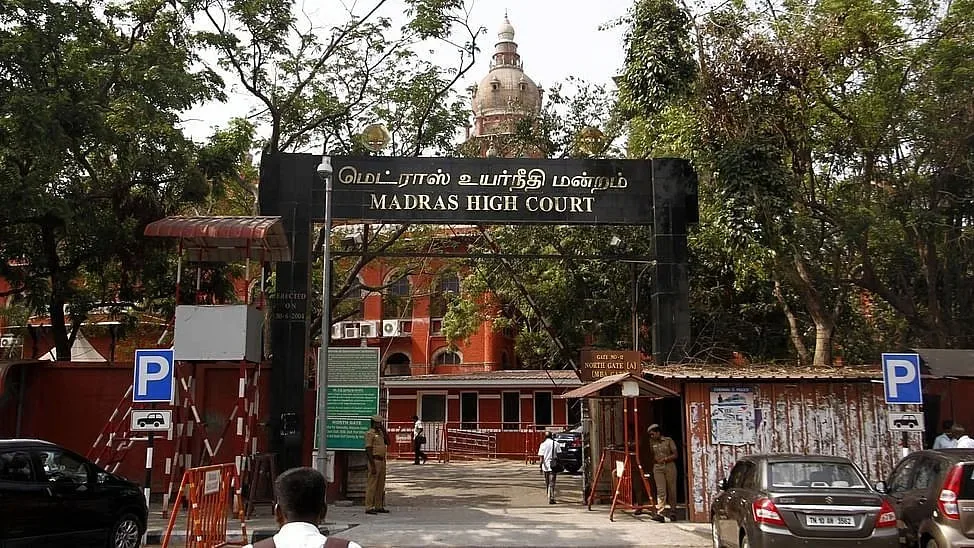
The Madras High Court has reiterated a proposition that should require no debate in Bharat committed to constitutionalism: a person cannot be prevented from entering a Hindu temple merely because of caste.
Justice D. Bharatha Chakravarthy was dealing with a petition concerning participation of members of the Milagu Kattan Adi dravidar community in the Arulmigu Muthu Mariamman Temple chariot festival in Salem district.
The State informed the Court that a peace committee meeting had been held and that everyone would be permitted to participate. On that basis, it argued that the petition had become infructuous. The petitioner nevertheless sought protection against similar exclusion recurring in future.
The Court used the occasion to state the constitutional position clearly. Preventing a person, particularly a member of a Scheduled Caste, from entering a temple on caste grounds would amount to the practice of untouchability and violate Article 17 of the Constitution. A person responsible for such conduct can be prosecuted in accordance with law.
The Court also referred to the Tamil Nadu Temple Entry Authorisation Act, 1947, which prohibits exclusion from temples on caste grounds. At the same time, it preserved the distinction between equal access to worship and disputes concerning rights to conduct a festival or administer temple affairs, observing that parties could approach the competent civil court on such questions.
The petition was ultimately closed after recording the State’s assurance of non-discrimination.
The judgment is significant because Article 17 is not merely a historical statement against a social evil. It is an enforceable fundamental right. Temple entry cannot depend upon the social status assigned to a devotee by another human being.
This constitutional command also finds an important parallel in the continuing debate within Hindu society on social harmony.
RSS Sarsanghchalak Dr Mohan Bhagwat has repeatedly called for caste discrimination to be eradicated. In January this year, he said discrimination would end only when caste was removed from the minds of the people. He has also urged that there should be no discrimination in access to temples, water sources and cremation grounds. In the Sangh’s centenary discussions, he reiterated that untouchability and discrimination based on birth have no place in Hindu Dharma and expressed support for constitutionally valid reservations as long as beneficiaries feel they are needed.
The history predates the present debate. Dr B.R. Ambedkar’s Kalaram Mandir Satyagraha in 1930 placed temple entry at the heart of the struggle for dignity. The Constitution later transformed that moral claim into an absolute prohibition through Article 17.
Courts can enforce the law and prosecute violations. But no judgment by itself can remove caste prejudice from everyday social life. That requires reform from within families, communities and religious institutions as well.
There need not be a contradiction between constitutional enforcement and social reform. The Madras High Court has stated the legal minimum: no Hindu can be excluded from a temple because of caste. The larger task is to make such litigation unnecessary.
A temple ought to be a place where caste distinctions end at the door—not where they are enforced.
Case: V. Sundaram v. District Collector & Ors., W.P. No. 33121 of 2026, Madras High Court.