Tamil Nadu: Mobile ban in temple sparks fury; Devotees question charging Rs 5 fee for depositing phones
September 2, 2026
  • Read Ecopy
  • Circulation
  • Advertise
  • Careers
  • About Us
  • Contact Us
Android AppiPhone AppArattai
Organiser
  • ‌
  • Bharat
    • Assam
    • Bihar
    • Chhattisgarh
    • Jharkhand
    • Maharashtra
    • View All States
  • World
    • Asia
    • Europe
    • North America
    • South America
    • Africa
    • Australia
  • Editorial
  • International
  • Opinion
  • RSS @ 100
  • More
    • Op Sindoor
    • Analysis
    • Sports
    • Defence
    • Politics
    • Business
    • Economy
    • Culture
    • Special Report
    • Sci & Tech
    • Entertainment
    • G20
    • Azadi Ka Amrit Mahotsav
    • Vocal4Local
    • Web Stories
    • Education
    • Employment
    • Books
    • Interviews
    • Travel
    • Law
    • Health
    • Obituary
  • Subscribe
    • Subscribe Print Edition
    • Subscribe Ecopy
    • Read Ecopy
  • ‌
  • Bharat
    • Assam
    • Bihar
    • Chhattisgarh
    • Jharkhand
    • Maharashtra
    • View All States
  • World
    • Asia
    • Europe
    • North America
    • South America
    • Africa
    • Australia
  • Editorial
  • International
  • Opinion
  • RSS @ 100
  • More
    • Op Sindoor
    • Analysis
    • Sports
    • Defence
    • Politics
    • Business
    • Economy
    • Culture
    • Special Report
    • Sci & Tech
    • Entertainment
    • G20
    • Azadi Ka Amrit Mahotsav
    • Vocal4Local
    • Web Stories
    • Education
    • Employment
    • Books
    • Interviews
    • Travel
    • Law
    • Health
    • Obituary
  • Subscribe
    • Subscribe Print Edition
    • Subscribe Ecopy
    • Read Ecopy
Organiser
  • Home
  • Bharat
  • World
  • Operation Sindoor
  • Editorial
  • Analysis
  • Opinion
  • Culture
  • Defence
  • International Edition
  • RSS @ 100
  • Magazine
  • Read Ecopy
Home Bharat

Tamil Nadu: Mobile ban in temple sparks fury; Devotees question charging Rs 5 fee for depositing phones

Tamil Nadu’s new ban on carrying mobile phones inside 52 temples has triggered a political and public backlash, with devotees and Hindu organisations questioning the reported Rs 5 phone-deposit charge and alleging that the move could make temple visits more cumbersome

TS VenkatesanTS Venkatesan
Sep 2, 2026, 11:57 pm IST
inBharat, Culture, Tamil Nadu
Follow on Google News
Temple Mobile Ban: Tamil Nadu Devotees Slam Phone Deposit Fee

Temple Mobile Ban: Tamil Nadu Devotees Slam Phone Deposit Fee

Facebook
Twitter
WhatsAppTelegramEmail

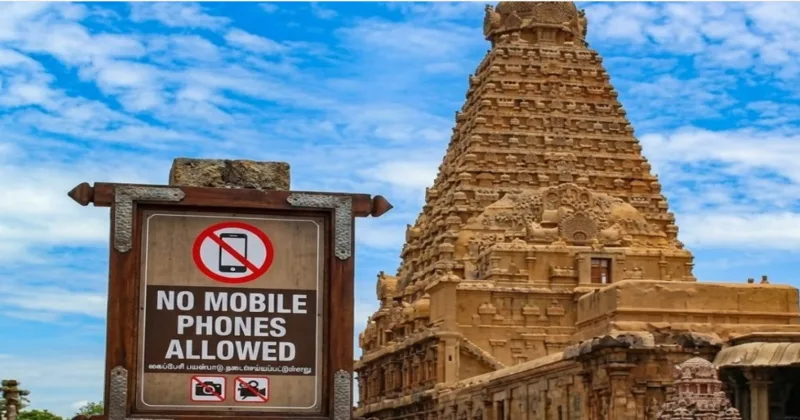
CHENNAI: The Tamil Nadu government’s decision to prohibit devotees from carrying mobile phones inside 52 temples has triggered a sharp backlash, with Hindu organisations, BJP functionaries and several devotees questioning both the restriction and the reported Rs 5 charge for depositing phones.

The mobile phone ban, implemented from September 1 as the first phase of a wider rollout, has also raised concerns over long queues at phone-deposit counters, the safety of expensive devices and the inconvenience caused to elderly devotees and persons with disabilities.

The Tamil Nadu Hindu Religious and Charitable Endowments (HR&CE) Department has said the restriction is aimed at preventing devotees, particularly youngsters, from taking photographs and shooting reels inside temples in violation of temple rules. The government has indicated that the ban will be extended to more temples after adequate arrangements are made for the safe custody of mobile phones.

கேமரா வசதியுள்ள மொபைல் போன் தடை அமலில் உள்ள 52 முதுநிலைத் திருக்கோயில்களின் பட்டியல்.@CMOTamilnadu @RameshOffcl @TNDIPRNEWS #tnhrce #CMJosephVijay‌ #tndipr pic.twitter.com/1MTtHDZq7G

— TN HRCE (@tnhrcedept) September 1, 2026

The first phase covers 52 temples, including prominent Murugan temples at Vadapalani, Tiruttani and Kundrathur. The move follows an announcement in the Tamil Nadu Assembly that restrictions on mobile phones would be introduced in major temples from September 1.

Devotees object to phone deposit queues

The implementation has already led to concerns among devotees over the process of depositing and collecting mobile phones.

At the Arunachaleswarar Temple in Thiruvannamalai, devotees were seen queuing at a designated counter to hand over their phones before entering the temple. After darshan, they had to queue again to retrieve their devices.

Read More: Akbaruddin Owaisi’s remarks on Bhagwan Ram were prima facie ‘planned’ and ‘measured’: Bombay HC refuses to quash plea

Critics argue that mobile phones have become essential devices rather than mere cameras. They point out that phones are now used for digital payments, identification, communication, banking and access to documents, making it difficult for devotees to leave them outside the temple premises.

Some social media users have also questioned whether the system could create additional problems for families who become separated in crowded temple premises when they do not have access to their phones.

One devotee from Keralam described his experience at the Palani temple, saying his family group became separated in the crowd and took considerable time to reunite because mobile phones were not available.

Hindu groups oppose Rs 5 collection

Hindu organisations have objected particularly strongly to the reported Rs 5 charge for the safe custody of mobile phones.

The Hindu Munnani has described the collection as an additional burden on devotees and questioned why people should have to pay for depositing their own phones. The organisation also raised concerns about the amount that could be collected on ordinary days and during major festivals when temple footfall increases sharply.

பகல் கொள்ளையடிக்கும் அறநிலையத்துறை.. கேவலமான செயல்..

செல்போனை பாதுகாக்க கட்டணம் வசூலிப்பது பகல் கொள்ளை..@tnhrcedept @RameshOffcl @CMOTamilnadu #Temples #Mobile #HRCE #TVKGovt #HinduMunnani pic.twitter.com/PzmafkVIOK

— Hindu Munnani (@hindumunnani_tn) September 1, 2026

The controversy has also drawn criticism from sections of the BJP. BJP functionary Ashvathaman questioned whether the HR&CE Department has legal authority to impose a charge for keeping devotees’ phones in custody.

He argued that the department’s responsibility is to administer temple affairs and accounts and questioned whether temple authorities could guarantee the safety of phones ranging from relatively inexpensive devices to high-end smartphones.

கோவில்களி்ல் பக்தர்களின் செல்போனுக்கு அறநிலைய அபகரிப்பு துறை தடை விதித்துள்ளது.

முதலில், பக்தர்களின் செல்போனுக்கு தடை விதிக்கும் அதிகாரம் அறநிலைய அபகரிப்பு துறைக்கு இல்லை. நீங்கள் எங்கள் கோவிலுக்குள் வந்தது கணக்கு வழக்கு பார்ப்பதற்குத்தான். நீங்கள் (மாநில அரசு) எங்கள்… pic.twitter.com/dqwUFUhjDF

— Ashvathaman Allimuthu (@asuvathaman) September 2, 2026

The criticism has extended beyond the fee itself. Questions have been raised about who would be responsible if a phone were lost, damaged or stolen while in temple custody, and whether devotees would receive adequate compensation.

Some critics have gone further, alleging that the restrictions could discourage people, particularly youngsters, from visiting temples and sharing information about temple history, festivals and traditions online.

One social media post described the move as an attempt to restrict the way Hindus document and promote temple culture, while questioning whether the policy could eventually affect temple footfall.

தமிழ்நாட்டு இந்துக்கள் என்ன இளிச்சவாயர்களா?

எதிலும் வசூல்
எங்கும் வசூல் என்பது கொள்ளையடிப்பதற்கு ஒப்பானது.

மசூதி , தேவாலயங்கள் தனித்துவமாக இயங்கும் போது
சைவ ,வைணவ கோவில்களை அரசு கட்டுபாட்டில் வைத்துகொண்டு இதுபோன்று வசூல் நடத்துவதும் ஒருவகை சுரண்டல் தான்.@RameshOffcl… pic.twitter.com/qY50ZirQ3F

— Bhargavan Chozhan (@Vaiyatharayan) August 31, 2026

Another post compared the Rs 5 collection to a tax imposed on devotees and questioned the extent of government control over Hindu temples. Such comparisons and allegations are political criticisms of the policy and have not been established as facts.

Critics have also questioned whether the restriction is being applied uniformly to all categories of people entering temples, including political leaders and government functionaries.

One social media user specifically pointed to a video shared by HR&CE Minister Ramesh showing himself and his family receiving temple honours, asking whether the same mobile restrictions apply to ministers and other functionaries.

கோவிலுக்குள் செல்போன் எடுத்துச் செல்ல தடை இருக்கும்போது, மாதாவரம் எம்.எல்.ஏ விஜய் பிரபு மட்டும் எப்படி சிறுவாபுரி முருகன் கோவிலுக்குள் மனைவியோடு “டிரீம்ஸ்” போஸ் போட்டு புகைப்படம் எடுத்துக்கொண்டார்?

சாதாரண பக்தர்களுக்கு விதி, விஐபி-களுக்கு “விதிவிலக்கு”தானா?
மற்றவர்கள் போனை… pic.twitter.com/kOdC1OdjI5

— ThamiZh (@ThamizhTharmar) September 2, 2026

Bigger question over temple administration

At the heart of the controversy is a larger debate over how Hindu temples in Tamil Nadu should be administered and how far the state-controlled HR&CE system should regulate devotees’ activities.

Supporters of the mobile restriction maintain that temples are places of worship and that unrestricted photography and reel-making can disturb the sanctity of temple premises. Opponents, however, say the government should enforce existing rules against inappropriate photography without imposing a blanket restriction and an additional financial burden on devotees.

For now, the HR&CE Department plans to expand the restriction in phases after establishing infrastructure for secure phone storage. The effectiveness of the policy will depend not only on whether it curbs reel-making inside temples but also on whether authorities can ensure efficient queues, secure custody of devices and a hassle-free experience for devotees.

Topics: Mobile Ban in TemplesTamil Nadu Hindu Religious and Charitable EndowmentsTemple FeesBJPArunachaleswarar temple
Share
Tweet
SendShareSend
✮ Subscribe Organiser YouTube Channel. ✮
✮ Join Organiser's WhatsApp channel for Nationalist views beyond the news. ✮
Previous News

Air Marshal Jeetendra Mishra (Retd): The commander of Operation Sindoor is now the Ram Mandir’s 1st CEO

Related News

CPI National secretary Amarjeet Kaur (Left) and Prime Minister Narendra Modi (Right)

‘We Will Finish You Off’: CPI leader Amarjeet Kaur’s open threat to PM Modi exposes left’s political frustration

Tamil Nadu: Madras HC sets aside H Raja’s conviction over Periyar, Kanimozhi remarks, says no disturbance

Minister B. Nagendra and BJP State President Vijayendra

Karnataka: BJP claims victory after Minister B. Nagendra resigns; Says, sustained protest forced Congress govt to act

Karnataka: Rs 15,429cr irrigation project dues raise questions over pace of development works under Congress government

Bharatiya Janata Party National General Secretary (Organisation) BL Santosh stated that BJP will contest all 117 seats alone in Punjab

Punjab Assembly Polls 2027: BJP to contest 117 seats alone: BL Santosh amid speculation over alliance with Akali Dal

Remembering Arun Jaitley on his death anniversary (This image is generated by AI)

Arun Jaitley Death Anniversary: The lawyer-politician who left a lasting mark on India’s economy

Load More

Latest News

Temple Mobile Ban: Tamil Nadu Devotees Slam Phone Deposit Fee

Tamil Nadu: Mobile ban in temple sparks fury; Devotees question charging Rs 5 fee for depositing phones

Retired Air Marshal Jeetendra Mishra: From Operation Sindoor to Ram Mandir CEO

Air Marshal Jeetendra Mishra (Retd): The commander of Operation Sindoor is now the Ram Mandir’s 1st CEO

Akbaruddin Owaisi’s remarks on Bhagwan Ram were prima facie ‘planned’ and ‘measured’: Bombay HC refuses to quash plea

Agony of Nepal due to floods (This image is generated by AI)

Nepal’s Agony: The Himalayan warning India cannot ignore

Austria’s Chancellor Christian Stocker moves to constitutionally ban political Islam, citing concerns over equality, the rule of law and democratic institutions

Austria moves to constitutionally ban Political Islam, calling it incompatible with democracy and western values

Kanthapuram A.P. Abubaker Musaliyar and Keralam CM VD Satheesan

Keralam CM VD Satheesan rejects Kanthapuram’s remarks on women, calls them ‘19th-century thinking’

Vande Mataram remains an enduring symbol of Bharat’s civilisational heritage, national unity and deep-rooted love for the motherland

Vande Mataram: Reclaiming a civilisational legacy against opposition cynicism

DUSU Elections 2026: ABVP’s 13 Probable Candidates Launch Pre-Campaign Outreach Across Campuses

DUSU Polls Pre-Campaign: ABVP’s 13 probable candidates reach out to students across various Delhi University colleges

India has partnered with UNESCO to develop AI-powered immersive learning tools for more engaging and personalised classrooms

India-UNESCO Partnership: IIT Madras to develop AI-powered immersive learning technology for classrooms worldwide

Congress Parliamentary Party Chairperson Sonia Gandhi and Congress President Mallikarjun Kharge speak with a party worker during the rendition of Vande Mataram at the 80th Independence Day celebrations at Congress headquarters, in New Delhi on August 15. Lok Sabha LoP Rahul Gandhi is also present

Vande Mataram and dirty politics of Congress: Appeasement DNA of ideological unease

Load More
  • Privacy
  • Terms
  • Cookie Policy
  • Refund and Cancellation
  • Delivery and Shipping

© Bharat Prakashan (Delhi) Limited.
Tech-enabled by Ananthapuri Technologies

  • Home
  • Search Organiser
  • Bharat
    • Assam
    • Bihar
    • Chhattisgarh
    • Jharkhand
    • Maharashtra
    • View All States
  • World
    • Asia
    • Africa
    • North America
    • South America
    • Europe
    • Australia
  • Editorial
  • Operation Sindoor
  • Opinion
  • Analysis
  • Defence
  • Culture
  • Sports
  • Business
  • RSS @ 100
  • Entertainment
  • More ..
    • Sci & Tech
    • Vocal4Local
    • Special Report
    • Education
    • Employment
    • Books
    • Interviews
    • Travel
    • Health
    • Politics
    • Law
    • Economy
    • Obituary
  • Subscribe Magazine
  • Read Ecopy
  • Advertise
  • Circulation
  • Careers
  • About Us
  • Contact Us
  • Policies & Terms
    • Privacy Policy
    • Cookie Policy
    • Refund and Cancellation
    • Terms of Use

© Bharat Prakashan (Delhi) Limited.
Tech-enabled by Ananthapuri Technologies