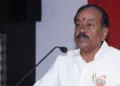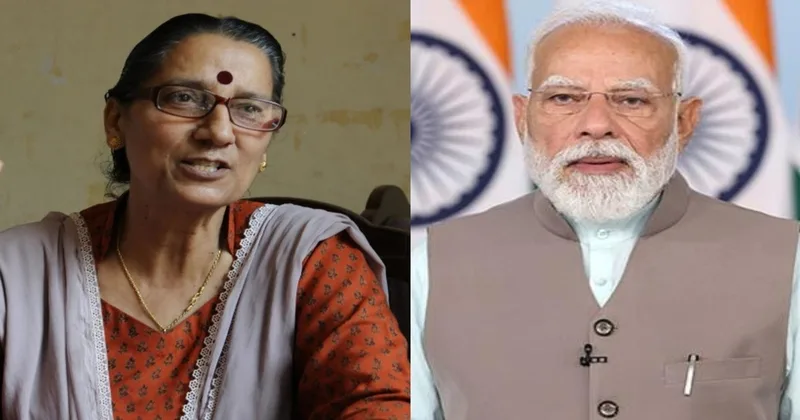
New Delhi: Communist Party of India (CPI) national secretary Amarjeet Kaur triggered a major political controversy after openly threatening Prime Minister Narendra Modi from the stage during a rally at Delhi’s Ramlila Maidan on September 1, declaring, “Tumko nipta dalenge” (we will finish you off).
Communist Party of India's top leader Amarjeet Kaur openly threatens Prime Minister of India from stage during CPI's 'Badlaav Zaroori Hai' rally today at Delhi's Ramlila Maidan:
“Hum Modi Ko Nipta Daalenge”
"Hum Enko Nipta Daalenge" pic.twitter.com/cVmCKbwvSv— Megh Updates 🚨™ (@MeghUpdates) September 1, 2026
Kaur made the statement while addressing party cadres at the culmination of the CPI’s nationwide “Badlaav Zaroori Hai” campaign. Referring to an earlier remark by Prime Minister Modi concerning communists, she claimed that the Prime Minister had described communists and those carrying red flags as dangerous.
“Mr Narendra Modi, we know from the beginning who you want to kill. Today, we have come to say that we will finish you off,” Kaur said from the stage. She subsequently repeated the threatening language, saying, “We will finish them off. This is what we have come to say.”
The language used by a senior national office-bearer of a political party against a sitting Prime Minister is deeply concerning. Political opposition is an essential part of democracy, but threatening an elected constitutional office-holder from a public platform crosses the boundaries of legitimate political criticism. Disagreement with government policies, ideology or political leadership cannot be allowed to become a justification for threats of physical harm.
‘I Will Not Apologise’: Kaur Doubles Down
Rather than withdrawing the remark or expressing regret over the language, Kaur subsequently defended it in an interview. “I stand by what I said, and I will not apologise. If PM can say ‘communist ko nipata do’, then why can’t I?” she said. Her refusal to apologise has intensified the controversy, particularly because the original statement was not made in a private political discussion but publicly before party workers at a major rally in the national capital. The response has also brought sharp criticism from BJP leaders. BJP spokesperson Pradeep Bhandari accused Kaur of displaying a “Naxal mindset” and linked the remark to what he described as public rejection of the Left’s politics.
Political Anger Turning Into Threatening Rhetoric
Kaur’s remarks can also be viewed against the backdrop of the Left’s continuing political decline and its increasingly confrontational rhetoric against the Modi government. The CPI and other Left parties have repeatedly opposed the BJP-led government on ideological, economic and political issues. However, the use of language suggesting that political opponents should be “finished off” represents a dangerous departure from democratic political discourse.
There is an important distinction between saying that a political party should be defeated at the ballot box and suggesting that its leaders should be physically “finished”. In a constitutional democracy, governments and political leaders are changed through elections, public debate and democratic institutions—not threats from political stages.
Prime Minister Modi is not merely the leader of the BJP; he is the democratically elected Prime Minister of India and occupies a constitutional office. Any criticism directed at him must therefore remain within the bounds of democratic political expression.
Left’s Frustration Reflected in Political Rhetoric
The incident also raises questions about the political language increasingly being employed by sections of the Left against the Modi government. Instead of presenting a compelling alternative political programme, the rhetoric at times appears to centre increasingly on attacking the Prime Minister personally. Kaur’s remarks, particularly her decision to repeat the threat and subsequently refuse to apologise, have reinforced the perception that political frustration is spilling over into language that has no place in democratic debate.
The appropriate response to a government or political leader with whom the Left disagrees is to challenge its policies, mobilise public opinion and seek a mandate from voters. Threatening rhetoric does none of these things. It instead risks normalising an atmosphere in which political opponents are portrayed as enemies who must be eliminated rather than competitors who must be defeated democratically.
The phrase “tumko nipta dalenge” cannot simply be dismissed as ordinary political rhetoric when it is directed at the Prime Minister from a public stage. Words spoken by senior political leaders carry weight, particularly when delivered before organised cadres and supporters. Political leaders have a responsibility to lower tensions rather than encourage them. Strong criticism, ideological confrontation and even fierce electoral competition are legitimate. Threats against political opponents are not. Her subsequent refusal to apologise makes the matter even more serious.
The controversy surrounding Kaur’s statement serves as a reminder of a fundamental principle of Indian democracy: political opponents are not enemies. An elected Prime Minister can be challenged at the ballot box. A government can be voted out. A political ideology can be rejected by the electorate. Those are the legitimate ways of “finishing” a political force in a democracy.
For a senior CPI leader to publicly use language that can reasonably be understood as a threat of physically eliminating the Prime Minister, and then refuse to apologise, undermines the standards expected from political leadership.