
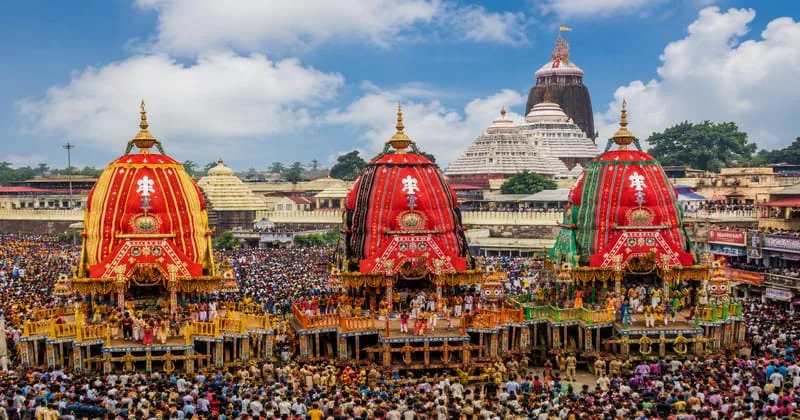
What an ancient tradition teaches us about illness, recovery and renewal. Last month, I stood in Jagannath Puri during the Rath Yatra, and something unexpected pulled my attention away from the spectacle.
There are places you visit as a tourist. And there are places you experience with every sense you have. Puri is the second kind. Conch shells. The chant of Jai Jagannath rolling through the crowd. Chariots towering over the Bada Danda. The fragrance of Mahaprasad drifting through thousands of devotees. For a while, you forget what century you are in. But it wasn’t the grandeur that stayed with me. It was what happens before the chariots move.
For several days, Bhagwan Jagannath Ji is not available for darshan. Tradition says that after the ceremonial bath, He becomes unwell. He rests. Why would a centuries-old tradition portray Bhagwan Jagannath Ji, the Lord of the Universe, as falling ill? Why does this “illness” come with seclusion, care, traditional medicines, recovery, and only then, the great public journey? Was there a deeper understanding of health hidden within this ritual?
When Bhagwan Jagannath Ji Falls Ill
It begins with Snana Purnima. Bhagwan Jagannath Ji, Balabhadra Ji, Subhadra Ji and Sudarshan Ji are brought out and ceremonially bathed with 108 pitchers of water.
Following this, tradition holds that the deities develop Jvara, or fever. They are moved to the Anavasara Ghara, away from public darshan, where they are cared for by traditional servitors for roughly fifteen days.
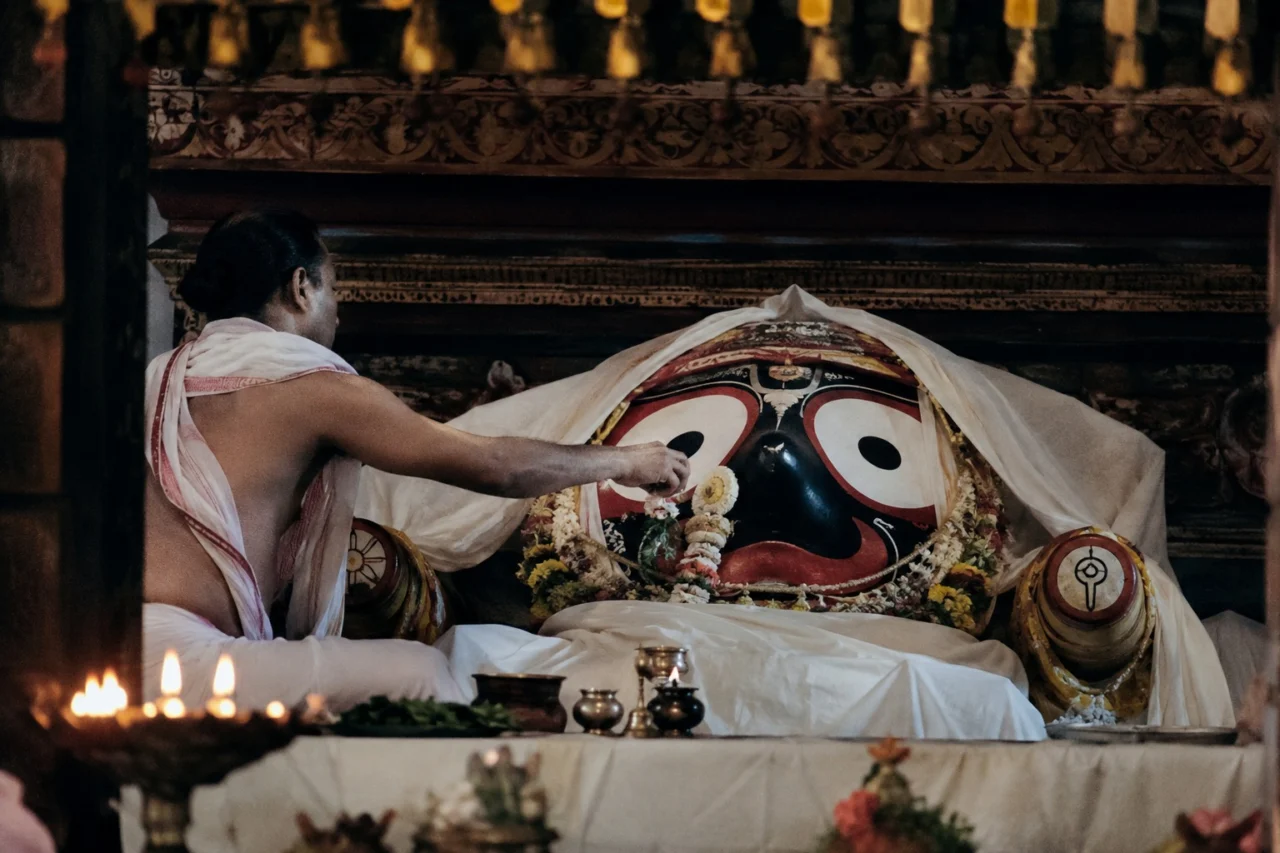
This period is known as Anavasara. There is something deeply moving about it. We usually go to Bhagwan with our illnesses, worries and prayers. In Puri, for these few days, the relationship seems to turn around. The devotees wait. Bhagwan Jagannath Ji is cared for. No darshan. No rushing. No expectation that everything must immediately return to normal. When the body is unwell, perhaps the wisest response is to stop.
Why Does Jagannath Ji Fall Ill After the Bath?
Read literally, the story does not correspond to modern medical understanding. A ceremonial bath does not, by itself, cause fever. Fever can have many causes, including infection and inflammation. But the timing is fascinating.
Snana Purnima falls around the transition into the monsoon, when heat, humidity, water exposure and environmental conditions change considerably. Seasonal patterns also influence the prevalence of certain infections.
Ayurveda has long recognised the importance of such transitions through Ritucharya; the principle of adapting our food, routines and habits to the changing seasons. The underlying idea is simple: we do not remain unchanged while nature changes around us.
Digestion, appetite, sleep, energy and resilience can all shift with the seasons. Modern medicine approaches these questions differently, but also recognises the influence of environment and season on health.
So perhaps the more meaningful question isn’t, “Did the ancients know about viruses?” It is: “Did they understand that changing seasons call for greater attention to the body?” That is where tradition and contemporary health wisdom can meet, without one having to prove the other.
Anavasara: The Wisdom of Stepping Back
This is where the tradition becomes remarkably relevant to modern life. When we are ill, we often continue working from bed, answer messages between bouts of fever, attend meetings and return to packed schedules the moment symptoms ease. Illness becomes an interruption to eliminate rather than a process to move through.
Ayurveda offers a more patient view of recovery. The disappearance of symptoms is not necessarily the restoration of strength. This is where Bala or strength and resilience, becomes important. After illness, the body may need time to rebuild its capacity even when we begin to feel better.
The wisdom of Anavasara can therefore be seen as a simple rhythm:
Illness → rest → care → nourishment → recovery → renewed activity.
Perhaps our own Anavasara does not need to last fifteen days. It may simply mean taking a genuine day off when we are sick, sleeping instead of pushing through, putting the phone away, or returning more gently after an illness. Recovery asks for something we rarely give ourselves: time.
The Ayurvedic Wisdom of Agni
There is an even deeper Ayurvedic layer here: Agni. In Ayurveda, Agni represents the body’s capacity for digestion and transformation. During illness, appetite and digestive capacity can change noticeably. Food that normally feels comforting may suddenly feel heavy or unappealing. Ayurveda therefore does not view nourishment simply as giving the body more. It asks: What can the body digest and assimilate right now?
This is reflected in the classical concepts of Langhana and Samsarjana Krama. When appropriate during illness, Langhana broadly refers to reducing the digestive burden. As appetite and digestive capacity return, Samsarjana Krama describes the gradual progression back towards a normal diet.
The principle is beautifully simple: Nourishment must match capacity. That is why, during recovery, simple, fresh and easily digestible food may sometimes be more appropriate than a heavy meal chosen simply because it is considered nutritious. This is one of Ayurveda’s most valuable reminders: healing is not only about stopping illness. It is also about patiently restoring digestion, strength and vitality.
Bhagwan Jagannath Ji and Traditional Medicines
During Anavasara, Bhagwan Jagannath Ji is traditionally associated with medicinal care, including preparations connected with Dasamula, the well-known Ayurvedic group of ten roots. Accounts also describe offerings such as Dasamula Modak or Dasamula Naivedya within this period.
It is important, however, to distinguish sacred tradition from medical evidence. The presence of an Ayurvedic preparation in a ritual is not scientific proof that it treats fever, infection or any particular disease.
What remains fascinating is the larger philosophy of care. When strength is diminished, the answer is not to demand more from the body. It is to tend to it. To reduce unnecessary burden. Support digestion. Allow rest. Restore nourishment gradually. Give strength time to return.
From Recovery to Renewal
After the period of seclusion comes Naba Yauvana Darshan, the renewed, youthful appearance of the deities. Bhagwan Jagannath Ji has recovered. The doors open. And then comes the Rath Yatra. What strikes me most is the sequence. There is no immediate leap from illness to celebration. There is a pause in between. Rest comes before renewal.
We often want to return to “normal” the moment we feel slightly better. But strength, appetite, sleep and energy may take longer to settle. Our return to activity can follow the same wisdom: gradually, attentively and according to what the body can actually manage. The Jagannath tradition gives us a beautiful rhythm:
Withdraw. Recover. Renew. Then move forward.
The Monsoon Lesson for Modern Life
We often speak about “boosting immunity” as though resilience were something we could switch on with a supplement. It is not. Health is built through ordinary things: adequate sleep, appropriate nutrition, physical activity, stress management, vaccination where appropriate, hygiene and sensible protection from infection.
During the monsoon, prevention can be refreshingly simple:
• Drink safe water.
• Eat freshly prepared food.
• Maintain good hand hygiene.
• Reduce mosquito exposure and avoid stagnant water.
• Pay attention to changes in your health.
• And when you are genuinely ill, stay home and actually rest.
Perhaps this is one practical expression of Ritucharya: learning to live intelligently with the season rather than pretending every season is the same.
What Bhagwan Jagannath Ji Can Teach Us Today
Standing in Puri, watching those enormous chariots move through a sea of devotees, I kept thinking about the quiet days that came before them. The closed doors. The waiting. The care. The recovery. And finally, the journey. Perhaps that is what stayed with me most. We spend so much of our lives trying to keep moving that we forget that pausing is also part of the journey.
The tradition does not ask us to fear illness, nor does it suggest that ritual should replace medicine. It offers something more timeless: an invitation to recognise that the body has rhythms, seasons and limits, and that wisdom lies in respecting them. Perhaps we could all create a little Anavasara in our lives.
A pause before exhaustion becomes burnout. A little more attention to what the body is asking for. A gentler return when we have been unwell. And, perhaps most importantly, the wisdom to recognise that slowing down is not falling behind.
A Few Takeaways from the Jagannath Ji Tradition
Listen to the body: Fatigue, poor appetite, disturbed sleep and weakness can be signals to slow down.
Respect recovery: Feeling better does not always mean strength has fully returned. Eat according to digestive capacity: Ayurveda reminds us that nourishment depends not only on what we consume, but on what the body can digest and assimilate. Live with the seasons: Changing weather is a natural reminder to reassess food, hydration, sleep, hygiene and daily routines.
Return gradually: After illness, allow activity and strength to rebuild step by step.
Do not romanticise fever: Fever is a symptom, not something to ignore. Persistent, high or concerning fever warrants appropriate medical evaluation.
Let tradition and science speak to each other: We can value traditional wisdom while recognising the essential role of modern medicine in diagnosis, treatment and prevention.
Perhaps the most beautiful lesson of Bhagwan Jagannath Ji’s Anavasara is not that even the Divine can fall ill. It is that even the Divine is given permission to rest. And perhaps we need that permission too. Because life’s great journeys are not sustained by movement alone. Sometimes, we have to stop. Sometimes, we have to heal. And sometimes, the wisest thing we can do is simply allow ourselves to rest, until we are ready to begin again. Rest isn’t an interruption in life’s journey. Sometimes, rest is what prepares us for the journey ahead.