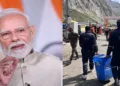
Srinagar: Prime Minister Narendra Modi highlighted the sanitation arrangements and scientific waste management system implemented during the 2026 Amarnath Yatra in the latest episode of his monthly radio programme, ‘Mann Ki Baat’.
The Prime Minister’s remarks came shortly after the Yatra concluded on August 28, recognising the coordinated efforts to maintain sanitation and manage waste across the challenging Himalayan terrain.
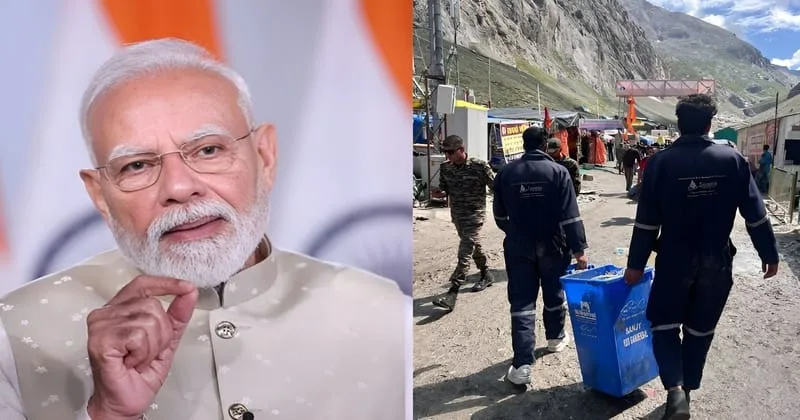
The Directorate of Rural Sanitation under the Department of Rural Development and Panchayati Raj, J&K, implemented a comprehensive sanitation and waste management framework across the Baltal and Pahalgam routes, base camps and key Yatra locations.
According to an official statement issued by the Directorate of Information and Public Relations (DIPR), the system was designed to meet the sanitation requirements of lakhs of pilgrims while keeping cleanliness and environmental protection at the centre of the pilgrimage arrangements.
“With over 8,000 sanitation facilities deployed and 414.46 MT of waste collected and processed, the Yatra has demonstrated how infrastructure, manpower, technology and behavioural change can work together to create a cleaner and more environmentally responsible pilgrimage experience,” said Anoo Malhotra, Director General of Rural Sanitation, J&K.
As part of the sanitation arrangements, more than 8,000 facilities and supporting infrastructure were deployed across the Yatra ecosystem. These included prefabricated sanitation structures, toilets, bathing facilities and pucca bases to provide pilgrims with clean, safe and dignified sanitation facilities.
A scientific solid waste management system was also put in place to handle the large volume of waste generated during the pilgrimage. The system covered the entire waste management chain, including segregation at source, collection, transportation, processing and scientific disposal.
Under the Zero Waste to Landfill approach, a total of 414.46 metric tonnes of waste was collected and scientifically processed during the Yatra. The initiative was particularly significant given the fragile ecological environment of the Himalayan region through which the pilgrimage passes.
Information, Education and Communication (IEC) interventions were also carried out to encourage pilgrims to follow responsible waste management practices, use designated sanitation facilities and contribute to keeping the Yatra routes and surrounding areas clean.
The initiative sought to promote a “Swachh Yatra” culture, emphasising that cleanliness and responsible waste disposal are a shared responsibility involving the administration, sanitation workers, pilgrims, service providers and other stakeholders.