Bengaluru: Karnataka’s four state-run transport corporations are facing mounting financial pressure as the government’s outstanding reimbursement under the Shakti scheme has reached ₹5,650.95 crore, even as the number of free journeys under the scheme continues to rise.
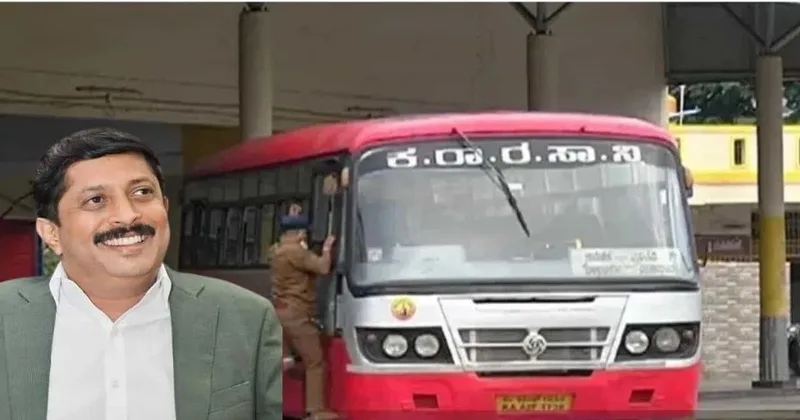
The Shakti scheme, launched on June 11, 2023, provides free bus travel to women across Karnataka on state-run transport services. According to information provided by Transport Minister Byrathi Suresh in a written reply during the recent Legislative Council session, the four transport corporations had incurred ₹20,955.96 crore towards the scheme between June 2023 and July 31, 2026.
Against this expenditure, the government has released ₹15,305.01 crore, leaving ₹5,650.95 crore still pending. The growing gap between expenditure incurred by the transport corporations and reimbursements received from the government has raised concerns over their financial sustainability.
The Transport Department had reportedly requested the Finance Department to release the pending amount. However, the Finance Department is understood to have informed the department that the transport corporations had already received financial assistance under various heads and that funds for the Shakti scheme had also been earmarked in the state budget. As a result, there was no provision for releasing additional funds at present.
The financial pressure comes at a time when the number of passengers using the free travel facility continues to increase. During 2023-24, the four transport corporations recorded 183.06 crore free journeys under the scheme.
The number increased substantially to 244.65 crore journeys during 2024-25. In 2025-26, the corporations recorded another 275.70 crore free journeys. During the first four months of 2026-27 up to July, 93.75 crore free journeys were recorded. Since the launch of the scheme in June 2023, the total number of free journeys recorded by the four corporations had crossed 797.16 crore by July 2026.
The increasing passenger footfall has meant higher operational expenditure for the corporations, while the reimbursement mechanism has become a crucial component of their finances. The four state transport corporations KSRTC, BMTC, NWKRTC and KKRTC have also been receiving government support for several other expenses and obligations. The assistance has covered student bus passes, repayment of loans and interest, construction activities, purchase of new buses and viability gap funding.
The government has also extended support through exemptions from motor vehicle tax and assistance towards outstanding payments related to salaries, diesel, provident fund and leave encashment.
According to the minister’s response, the four corporations received financial assistance totalling ₹18,459.37 crore under various categories over the past three years. Despite this support, the ₹5,650.95 crore outstanding under the Shakti scheme has emerged as a significant concern because the corporations have already spent substantially more than the amount reimbursed by the government.
The issue is particularly important as the Shakti scheme remains one of the flagship welfare initiatives of the Karnataka government. While the scheme has significantly increased access to public transport for women, its financial implications for the state transport system have also grown steadily.
The transport corporations have to meet day-to-day operational expenses irrespective of when reimbursements are received. Fuel, salaries, maintenance, spare parts and other costs have to be paid regularly. Any delay in receiving reimbursement can therefore put additional pressure on their working capital and cash flow.
The rising number of free journeys also indicates the continued dependence of women passengers on the scheme. With nearly 800 crore free journeys recorded since its introduction, the programme has become an important component of Karnataka’s public transport system. However, the widening reimbursement gap could become a challenge if the number of free journeys and associated expenditure continues to rise without corresponding budgetary releases.
The government’s decision on clearing the outstanding amount is therefore likely to have a direct bearing on the financial position of the four transport corporations. At the same time, the issue could trigger a wider debate over the long-term funding model for the Shakti scheme and whether the reimbursement mechanism is keeping pace with the actual cost incurred by the transport corporations.
For the transport corporations, timely reimbursement will be crucial to maintain services, meet operational commitments and invest in fleet expansion and modernisation.