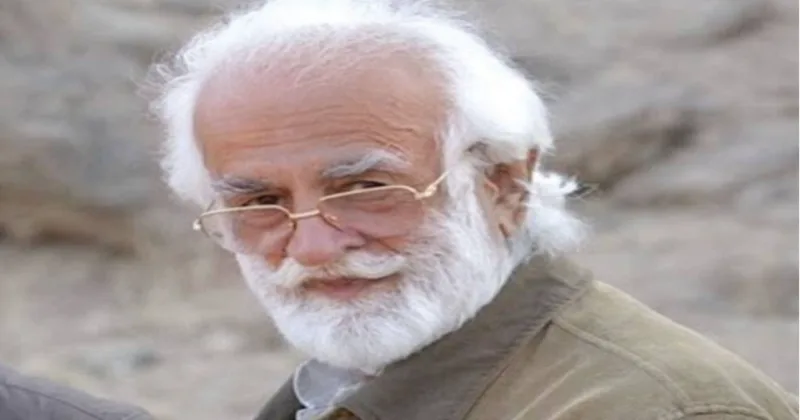
Two decades ago, on August 26, 2006, Nawab Akbar Bugti, who had served at one time as Chief Minister of Balochistan and at another as its Governor, was killed in a military action. He was then 80 years old and hiding in a cave with a loyal band of followers, avoiding President Pervez Musharraf’s armed forces for several months.
Speaking about his identity, Bugti once remarked: “I have been human for millions of years, Baloch for thousands of years and Muslim for only a few hundred.’’ The tribal ethnicity, religion and humanness all being encapsulated in one single sentence was the hallmark of a politician who is bigger today as a martyr than the sum total of all the top positions he held in Pakistan.
Nawab Bugti had raised the banner of revolt against the Pakistani establishment after the rape of a female Doctor named Shazia Khalid in January 2005 in Sui gas field government quarters. The doctor alleged that she was raped by an Army Captain named Hammad and administered sedatives for several days after the incident. Not only this, to cover up the misdeed, it was also declared that she had mental problems and was transferred to a psychiatric hospital in faraway Karachi.
It is not clear as to what proof led him to give a clean chit to the Army Captain, but sitting in Islamabad, President Musharraf made a statement that Captain Hammad was not guilty. This incensed Nawab Akbar Bugti who then picked up arms against the Pakistan government and disrupted natural gas supply from Sui gas fields to mainland Pakistan for several weeks.
An upholder of Baloch national honour
Today, 20 years later, Nawab Akbar Bugti is considered a martyr who gave up his life trying to uphold Baloch national honour. Someone who refused to surrender despite overwhelming odds, knowing fully well that he could not defeat the Pakistan’s powerful armed forces. Yet, he chose to die, in defiance, and not yield before an unjust regime.
This is the main reason that most armed nationalist groups of Baloch nationalists idolise him. Incidentally, the fires of insurgency that were lit by Nawab Akbar Bugti have not died in two decades and this is considered fifth phase of Baloch insurgency. Without a doubt, the first four phases, before the current ongoing round, considered fifth, were far less violent and tamed by the Pakistan government much more easily.
The martyrdom of a political leader changed the politics of Balochistan irrevocably and in Baloch national consciousness, the effects of which remain visible even after two decades. During his lifetime, Nawab Akbar Bugti had occupied significant political positions. After being killed by the Pakistani forces, he transformed into a symbol, a powerful symbol of Baloch resistance, honour and fearlessness. His martyrdom connected people to questions of identity, national rights, political authority and freedom. Interestingly, many commanders of the Baloch resistance movements are highly educated individuals, like late Bugti who was at one time a student in Oxford University.
In Islamabad, there existed a clear perception that removing an influential nationalist Baloch leader would first weaken and then end Baloch resistance. Fear was a factor that any and every Baloch will have to surmount, and think of meeting the fate of Nawab Bugti if he/she ever harboured any notions of rebelling against Pakistan. The past two decades have seriously put many question marks on those perceptions. During this period, there has been a rather acute new political and national consciousness in whole of Balochistan.
Deadly insurgency drains Pakistan security forces
Today, Pakistan security forces are grappling with an ongoing Baloch insurgency and paying a heavy price, in terms of lives of policemen, soldiers and a heavy cost in the face of economic blockade carried out by the Baloch nationalist groups. In his lifetime, Nawab Akbar Bugti had warned successive Pakistani governments of exploiting natural resources of Balochistan without sharing the benefits with the local Baloch. He had opposed surrendering Gwadar port to foreign control and his insistence on local ownership of natural resources are twin beacons for the Baloch rebels.
Pakistan’s failure to address the concerns raised by Bugti, who was open to a negotiated settlement through political dialogue at one time, are a nightmare for it. Instead of political dialogue, the Pakistan government has chosen to use military force but ended up fighting a serious security challenge that shows no signs of ending any time soon. The hard reality in Balochistan today is facing two colonial powers, Pakistan and China, simultaneously. The challenges posed by Pakistani political control and economic exploitation by Chinese companies has only intensified Baloch resistance.
Pakistan, China are both deemed occupiers
The Balochistan Liberation Army (BLA), the Baloch Liberation Front (BLF) and other separatist groups now target both Pakistani security forces and Chinese nationals regularly. They are both viewed as occupying powers propping up one another and providing security to Chinese is a huge challenge consuming resources of the Pakistan Army.
Born in 1926, Nawab Akbar Bugti was all of 21 and in his early days, an enthusiastic supporter of the idea of Pakistan. In 1947, he cast his vote in favor of Balochistan’s accession to Pakistan during the Shahi Jirga in Quetta, a decision that haunted him like an apparition in his later years. Ironical as it may seem now, some of the most ardent admirers of Pakistan felt betrayed in their later days. This is not the story of one person alone as Sindhi leader GM Syed and Ahmedi leader Zafaruallah Khan were also smitten by Pakistan founder Mohammad Ali Jinnah’s oratory!
Political pressure, countless military operations and unbridled use of state power against the ordinary Baloch people have failed to extinguish defiance and dream of independence from Pakistan. The Baloch have accepted enforced disappearances, trials in kangaroo courts and unjust verdicts, taken these in their stride and march on, undeterred.