New Delhi: At least 30 Christians were killed and several others injured after more than 100 Fulani Islamic terrorists, armed with sophisticated weapons, stormed Jwak Maitumbi community in Mangu Local Government Area of Plateau State, Nigeria on August 16. The attackers reportedly opened fire at around 7:30 a.m., when residents were either attending church services or preparing to leave for worship.
According to community resident and youth leader Lonji Zuhumnan, the attack continued for several hours as residents fled for safety while the terrorists fired indiscriminately. More than 50 houses, shops, health centres, churches and food barns were reportedly set ablaze. The attackers also entered surrounding farms and destroyed crops, adding significant damage to the community’s livelihoods.
Zuhumnan told Daily Post on August 17 that residents counted more than 30 bodies after the assault and that several people had sustained injuries. He said the attackers moved through the community while residents were attempting to escape.
The attack also raised serious concerns over the response of security forces. According to Zuhumnan, residents made repeated distress calls to security personnel in Mangu, seeking immediate assistance. However, he said soldiers did not arrive until the attackers had completed their assault and fled towards surrounding bushes and rocky areas.
Morning attack leaves Christian community devastated
The attackers targeted the community at a particularly vulnerable time, arriving at approximately 7:30 a.m. on August 16, when many residents were in churches or preparing to attend morning worship.
Zuhumnan said the terrorists first began shooting, causing residents to scatter in an attempt to escape. Several people were killed during the shooting, while others were injured. The destruction continued as the attackers torched residential buildings, commercial establishments, churches, health centres and food-storage facilities.
The destruction of food barns and crops has added an economic dimension to the attack. Farms were entered and crops destroyed, threatening the livelihoods and food security of families already affected by the violence.
BREAKING
The death toll in yesterday’s attack by Islamist Fulani militias on Nigerian Christians in Mangu in Plateau State has risen to 24
Islamists have been mass-murdering Christians in Nigeria’s Middle Belt for years. Mainstream media doesn’t cover it pic.twitter.com/360uWXh9AS
— Visegrád 24 (@visegrad24) August 18, 2026
The failure of security forces to arrive while the attack was continuing has also become a major concern among residents. According to Zuhumnan, frantic calls for assistance produced no immediate response, with soldiers arriving only after the attackers had withdrawn from the community.
Plateau State is located in Nigeria’s Middle Belt, a region that has experienced repeated attacks on Christian communities. The latest assault adds to a broader pattern of violence that has caused extensive loss of life and displacement.
Plateau violence amid wider Islamist attacks
The scale of the latest violence comes against a wider backdrop of Islamist attacks affecting Christian communities across Nigeria. The Observatory for Religious Freedom in Africa (ORFA) reported that 18,915 Christians were killed by Islamists between October 2019 and September 2025.
According to the ORFA figures cited in the supplied report, Fulani Islamic militia were identified as the biggest perpetrators of anti-Christian violence during the period. Plateau has been among the areas of Nigeria’s Middle Belt most severely affected by such violence.
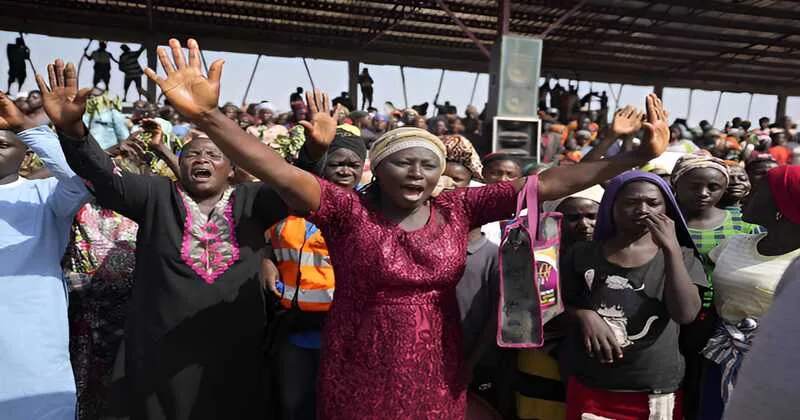
Grieving residents in Nigeria’s Plateau State buried their dead and demanded justice after at least 24 people were killed in an overnight attack on the Bin-Per community.
Police said officers had been deployed to track down those responsible, while Governor Caleb Mutfwang… pic.twitter.com/TyAFAGaLSU
— Global South World (@g_s_world) August 19, 2026
The August 16 attack demonstrates the multiple forms of damage inflicted on affected communities. Alongside the reported killing of more than 30 people and injuries to others, the terrorists destroyed homes, churches, shops, health facilities, food barns and agricultural crops.
The attack also left residents questioning the effectiveness of security arrangements in vulnerable rural communities. The reported delay in the arrival of soldiers meant that the attackers were able to continue their assault for several hours before withdrawing.
For the residents of Jwak Maitumbi, the consequences extend beyond the immediate loss of life. Families have lost relatives, homes and sources of income, while the destruction of crops and food stores threatens the community’s economic stability.
The killings on August 16, therefore, represent not only another deadly assault on a Christian-majority community in Plateau State but also another episode in the continuing violence affecting Nigeria’s Middle Belt, where communities remain vulnerable to armed Islamist attacks.