The Jharkhand government has accepted several major demands raised by students protesting alleged irregularities in recruitment examinations, marking a significant development in an agitation that has continued for weeks in Ranchi.
The government has announced the cancellation of the Jharkhand Staff Selection Commission Combined Graduate Level (JSSC-CGL) examination, the scrapping of examinations and recruitment-related activities conducted by TSR Data Processing Private Limited (TDPL) since 2014, and a wider investigation into alleged irregularities in recruitment examinations conducted in the state.
The government has also decided to examine the recruitment system through a dedicated reforms committee headed by senior IAS officer Amitabh Kaushal.
However, the students have not yet called off their agitation. Their principal outstanding demand is a probe by the Central Bureau of Investigation (CBI).
The developments came on August 17, when the protest had entered its 24th day and amid growing political pressure on the Hemant Soren-led government to address the students’ grievances.
How the Jharkhand student protest began
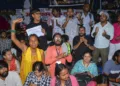
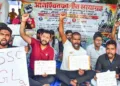
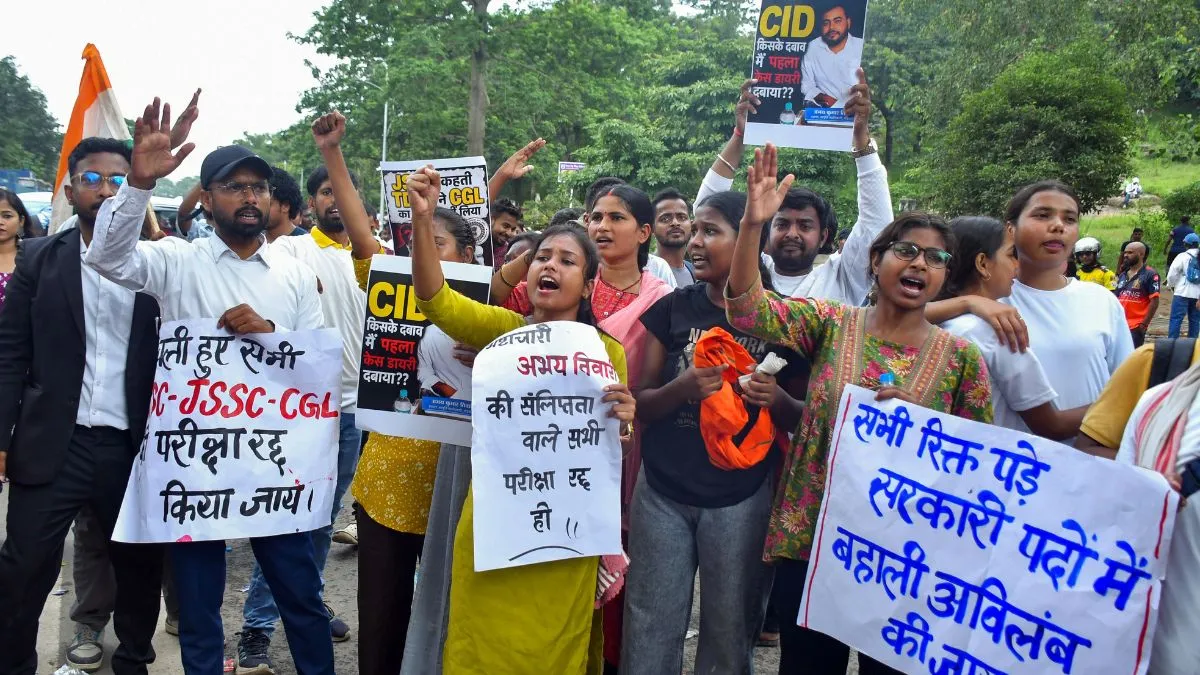
The agitation began on July 25, 2026, in Ranchi, when students and government-job aspirants gathered at Jaipal Singh Munda Stadium to protest alleged paper leaks, corruption and irregularities in recruitment examinations.
The protesters raised concerns over several examinations, including the 14th Jharkhand Public Service Commission (JPSC) Civil Services Examination and the JSSC-CGL examination.
The JSSC-CGL became one of the central issues of the agitation following allegations surrounding the leakage of question papers in 2024.
The students demanded action against those responsible, reforms in the examination system and greater transparency in the recruitment process. Their most important demand was a CBI investigation into the alleged irregularities.
Throughout the agitation, the protesters maintained that their movement was about the future of students and government-job aspirants and should remain independent of political parties and outside organisations.
The protest continued at Jaipal Singh Munda Stadium for several weeks.
Police action during Vidhan Sabha Gherao
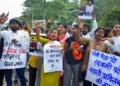
The agitation intensified on August 10, when protesting students organised a Vidhan Sabha Gherao.
Police used lathicharge during the confrontation, leaving several protesters injured.
Despite the police action, the students continued their agitation and maintained their demand for an investigation into alleged irregularities in recruitment examinations.
The confrontation added to pressure on the state government to address the students’ concerns.
The issue subsequently received attention from political leaders, including Congress leader Rahul Gandhi, who urged Chief Minister Hemant Soren to meet representatives of the protesting students and resolve their grievances.
Gandhi described the students’ demands as legitimate and their agitation as peaceful, adding political pressure on the JMM-led government.
Government announces major concessions
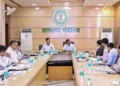
On August 17, the Hemant Soren government announced a series of measures addressing several of the protesters’ key demands.
The government decided to cancel the JSSC-CGL examination.
It also announced that examinations and recruitment-related activities conducted by TSR Data Processing Private Limited (TDPL) since 2014 would be scrapped, including results already declared by the agency.
The state government has also blacklisted TDPL.
Beyond the CGL examination, the government announced a wider investigation into recruitment examinations conducted since 2014.
The Criminal Investigation Department (CID) will investigate alleged irregularities, with the government stating that the probe will cover irregularities regardless of whether they are considered major or minor.
An examination reforms committee headed by senior IAS officer Amitabh Kaushal has also been constituted. The committee has been tasked with recommending changes to make recruitment examinations more transparent and prevent irregularities in the future.
Why students are still protesting
Despite the government’s announcements, the students have refused to end the agitation.
The key reason is their demand for a CBI investigation.
The protesters want an independent central agency to investigate the alleged irregularities surrounding recruitment examinations.
While the state government’s CID investigation and examination reforms committee address some of the concerns raised by the students, the CBI probe remains unresolved.
As a result, the agitation is expected to continue until the government takes a decision on the demand.
The situation has created a new phase in the protest: the government has made several significant concessions, but the students are seeking an additional assurance on the investigation mechanism.
A protest that remained focused on recruitment issues
Another feature of the Jharkhand agitation has been the protesters’ emphasis on keeping the movement centred on recruitment examinations and government jobs.
The students have repeatedly projected their agitation as a movement of job aspirants rather than a political campaign.
Their primary demands have remained connected to alleged examination irregularities, recruitment transparency, accountability and employment opportunities.
The protesters have also resisted attempts by outside political and ideological groups to influence the movement.
This has distinguished the Jharkhand agitation from some other student protests that have expanded into wider political or ideological campaigns.
The Jharkhand students have largely avoided turning the demonstrations into a platform for broader partisan issues, instead maintaining their focus on examinations and recruitment.
No ‘Azaadi’ slogans or attacks on police
The conduct of the Jharkhand protest has also been contrasted with controversial demonstrations elsewhere, particularly protests associated with the group referred to in the source material as the Cockroach Janta Party (CJP) in Delhi.
Unlike the CJP protests described in the source material, the Jharkhand agitation has not been marked by slogans such as “Azaadi” or “Brahmanwad se Azaadi”, nor by anti-Hindu rhetoric.
The Jharkhand protesters have also not been accused in the material of engaging in stone-pelting or attacking police personnel during the agitation.
The comparison has become part of the discussion around the Jharkhand movement because the students have largely kept their messaging tied to recruitment examinations and government jobs rather than broader ideological issues.
The distinction is particularly relevant in the context of student movements, which can sometimes evolve into wider political campaigns once demonstrations continue for an extended period.
In Jharkhand, the protesters have sought to keep the core issue intact: alleged irregularities in examinations and the future of government-job aspirants.
Students reject outside political influence
The students’ approach to political and ideological organisations became particularly visible on August 7, when Neha Bora, national president of the All India Students’ Association (AISA), joined the protest to express solidarity with the students.
Her presence was not welcomed by sections of the protesters.
Bora was reportedly heckled and pushed off the stage while addressing the gathering.
The incident highlighted the protesters’ opposition to outside organisations attempting to take a prominent role in their agitation.
AISA is associated with the Left student movement, but sections of the Jharkhand protesters made it clear that they wanted to control the direction, leadership and messaging of their movement.
The episode also showed that the protesters’ resistance to political intervention was not limited to parties supporting or opposing the Hemant Soren government.
Their stated position was that the movement should remain focused on recruitment examinations and the interests of job aspirants.
A movement built around examination reform
The Jharkhand agitation has now entered a crucial phase.
The government has cancelled the JSSC-CGL examination, scrapped TDPL-linked examinations and recruitment activities dating back to 2014, ordered a CID investigation into alleged irregularities and constituted a committee to recommend examination reforms.
These are substantial measures in response to a student movement that began with demands for transparency and accountability in recruitment.
However, the students’ refusal to withdraw the protest demonstrates that the dispute is no longer limited to whether the government will act, but also over which agency should investigate the alleged irregularities.
The government has opted for a CID investigation, while the protesters continue to demand a CBI probe.
What lies ahead
The next stage of the agitation will depend largely on the government’s response to the CBI demand.
If the government agrees to the demand, the protest could move towards a resolution. If it refuses, students are likely to continue their agitation despite the concessions already announced.
For now, the Jharkhand movement stands out for the extent to which it has remained focused on recruitment examinations, government jobs and examination reforms.
The government has responded with a series of significant decisions, but the students’ central demand for a CBI investigation remains unresolved.
The protest therefore continues, with both sides facing a fresh question: whether the remaining disagreement over the investigating agency can be resolved without prolonging an agitation that has already entered its fourth week.