This is the remarkable story of India in its energy trajectory that marks a fundamental shift from being one of the world’s largest crude oil importer to an emerging global destination for refined oil export. This energy journey of India gains further significance, as Russia, one of the world’s largest oil powerhouses, has recently turned to New Delhi to fulfill its domestic refined oil requirements. Yes, India and its growing oil refining and infrastructural capabilities has pitched the nation as a global hub for export of refined petroleum products.
Amid geopolitical swings and the supply chain disruptions, the world is witnessing a massive fracture for energy security. Energy corridors and critical chokepoints are weaponised, oil refineries and other key infrastructures are bombarded, with energy prices skyrocketing. The more than 4 year-old Russia-Ukraine conflict and even the Israel-US and Iran face-off in West Asia, have paralysed the global energy market and supply chain. Amidst such a precarious juncture, India is emerging as a global destination for oil export. This also reflects India’s growing refining and state-of-the-art infrastructural capabilities.
India supplies refined oil to Russia
As per the reports, Russia recently imported gasoline from India, in a maiden energy venture. This is a significant shift, where India was a net energy importer from Russia, which houses one of the world’s largest proven oil reserves. Now, reversing the supply chain, India is exporting refined oil to Russia. This symbolises India’s growing strategic footprint in the global energy market and its role as a credible destination for refined energy products amid disrupted global supply chain and escalating energy conundrum, as an offshoot of the hard-nosed geopolitical confrontations.
Though Russia is a bulwark for crude oil, the conflict with Ukraine and repeated attack on its refineries has ruptured the infrastructure and has reduced its energy refining abilities. This has deepened the fuel crisis in the domestic energy market. Meanwhile, the West Asia conflict has further derailed Russia’s sources of energy, due to supply chain disruptions. As an impact of this twin trouble in supply from the energy powerhouses of the globe, Russia has turned to India, to fulfill its domestic energy requirements.
As per the reports and data produced by Kpler, in a maiden energy import from India, Moscow has purchased gasoline from New Delhi. First cargo was delivered on August 5, with other shipments expected to follow. Nayara Energy Ltd., is the Indian refiner who has supplied oil to Russia and is backed by Moscow’s largest oil producer Rosneft PJSC. The fuel is said to be supplied via a chain of Russian oil tankers.
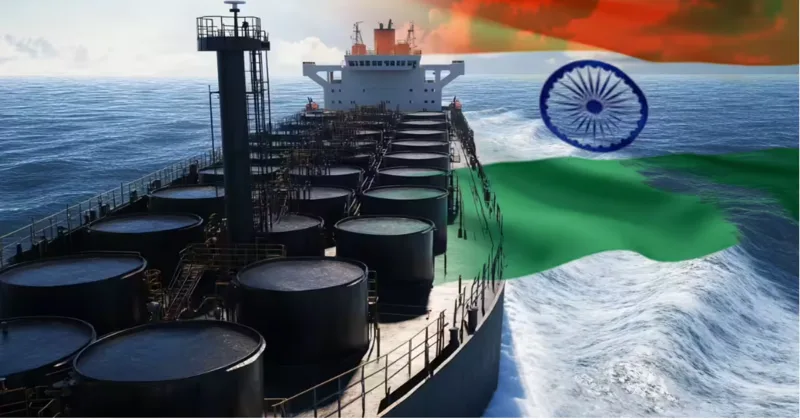
Reports claimed that Russian flagged tanker Cyclone loaded with 42,000 tonnes of oil, left the coast of Gujarat in June. The fuel was then transferred to the Oman-flagged Garnet at Damietta Port, off the Mediterranean coast in Egypt in July. The vessel finally reached Russia in early August. At least two more shipments are expected to reach Russia in the near future. Thus, India which is dependent on Russia for 90 per cent of its crude requirements, is lately consolidating itself as a credible destination for the export of refined products to the hitherto oil bulwarks.
Experts also flagged that the import of oil by Russia from India, reflects the severity of the current domestic gasoline imbalance, due to massive reduction in the Russian refinery runs. As per the analysis, since the outbreak of the Russia-Ukraine conflict and the successive attacks by Ukraine, Russia’s oil processing capacity has reduced to less than 3.6mn barrels per day, which is one-third of its regular capacity. In fact, Ukraine has struck nearly 5-7 Russian refineries in the past few weeks. As per the sources, between January and May, Ukraine has hit 16 Russian refineries and between June and August Kiev has ruptured another 15 oil refineries across Russia, including the one which is just 15kms away from the Kremlin.
The European and US Sanctions on Russia, since the Ukraine conflict has further complicated Russia’s energy trade. Cumulating all these reasons, the Kremlin has turned to India to foster its domestic energy security. Russia, which is the world’s second-largest crude oil exporter and third-largest exporter of refined petroleum products, imposed restrictions on fuel exports to preserve domestic supplies. Moscow also extended its ban on petrol exports through the end of 2026 and has also restricted diesel exports, owing to reduced capacity.
However, Russian per day average energy consumption has peaked in summer, with demand soaring to 1,10,000 tonnes. Thus, no amount of export control and restrictions seems sufficient. This makes Russia turn towards India as a potential solution to fulfill its domestic energy demands. Apart from India, Russia is also importing refined products from Kazakhstan and Belarus via land routes. As per the reports, Belarus has tripled its oil imports to Russia via rail which is approximately 70,000 tonnes.
India’s oil supply: A tool to bridge trade deficit with Russia
India’s supply of refined oil to Russia, also acts as an impetus to bridge the massive trade deficit that New Delhi experiences with Moscow. India-Russia bilateral trade approximately stands at USD 68 billion, with imports to India accounting at USD 63.5 billion, whereas India’s exports to Russia is a meagre USD 4.5 to 5 billion. This massive trade deficit comes due to India’s extensive import bill on significant crude oil, fertilizers and other commodities purchased from Moscow. 85 to 90 per cent of the import bill comprises energy purchases. The latest export of refined oil from Russia, thus can act as a tool to bridge the wide trade deficit to some extent.
The latest India’s refined gasoline export to Russia, thus renders a multifaceted strategic merit to India, in terms of fortifying footprint in the global energy supply chain, gaining equilibrium in the bilateral trade, securing the forex reserves and ultimately, New Delhi emerges as a credible player in the international energy market.