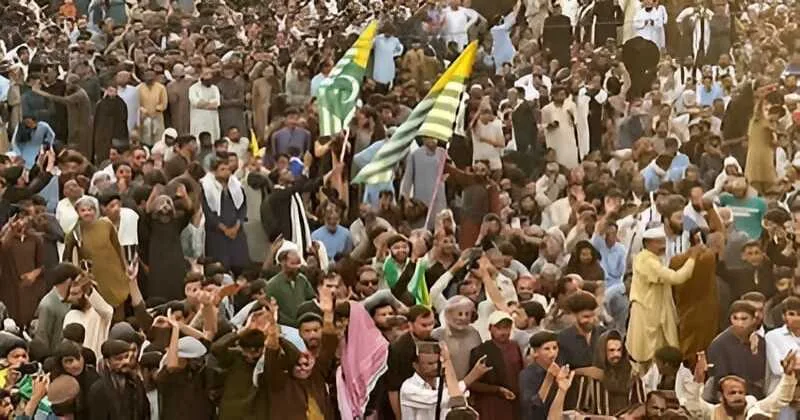
The prolonged unrest in Pakistan-occupied Jammu and Kashmir (PoJK) has evolved beyond a political confrontation into a humanitarian emergency. More than a month after protests erupted across the region, there are no signs of either the demonstrators or the Pakistani establishment backing down. Instead, the situation has steadily deteriorated, with an economic blockade, shortages of essential commodities, restrictions on communication and an increasingly forceful security response raising serious human rights concerns.
Perhaps the clearest indication of the gravity of the crisis is the unprecedented appeal made by sections of the people of Pakistan-Occupied Jammu and Kashmir (PoJK) to the Government of India. The request was not political in nature alone. Protest leaders have appealed for humanitarian assistance, including medicines and essential food supplies, reflecting the scale of deprivation now being reported from the region.
According to reports, acting on the instructions of Field Marshal Asim Munir, the Pakistani establishment has blocked the supply of rations and medicines to several parts of PoJK. Reports indicate that ration supplies have remained suspended for nearly 20 days, with medicines also subsequently blocked, significantly worsening the humanitarian situation. Protest leaders allege that the economic blockade is being used as a tool to compel people to abandon their agitation by depriving them of basic necessities.
Economic blockade deepens humanitarian emergency
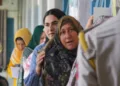
The reported blockade has led to acute shortages of food and medicines across PoJK. Residents claim that injured protesters are being denied essential medical treatment while hospitals face shortages of medicines and critical supplies. Humanitarian concerns have grown as vulnerable families struggle to access daily necessities amid continuing restrictions.
Reports further indicate that many residents are now attempting to flee PoJK and cross into India in search of safety and humanitarian relief. The situation has become so severe that Sardar Aman Khan, leader of the Joint Awami Action Committee (JAAC), has publicly appealed to the Indian government to open the Line of Control (LoC).
Addressing supporters, Aman Khan argued that civilians should be allowed to cross into India if conditions continue to deteriorate. In a widely circulated video on social media, he declared, “We need India’s help. There is a shortage of rations… and we need your help.”
His appeal reflects growing desperation among sections of the local population as shortages continue to intensify. Another official associated with the movement stated that the demand to open the LoC followed reports that the Pakistani military had decided to open fire on protesters if demonstrations failed to subside.
🚨PoK protest leader Sardar Aman Khan appeals to India for humanitarian assistance, saying that Pakistan's crackdown has triggered severe shortages of food and medicines in the region pic.twitter.com/degQc1j8m9
— The Tatva (@thetatvaindia) July 6, 2026
According to protest representatives, a meeting chaired by Asim Munir last month resulted in a decision to halt medicine supplies after ration deliveries had already been suspended.
The reported humanitarian crisis is further compounded by communication restrictions. Emerging reports indicate that the internet services have been shut down while media access remains severely restricted, making independent verification of conditions increasingly difficult and leaving the full extent of the humanitarian situation unclear.
Crackdown, human rights concerns and escalating protests
Alongside the economic blockade, allegations of a severe security crackdown have intensified concerns over human rights in Pakistan-occupied Jammu and Kashmir (PoJK). Protest leaders allege that Pakistani security forces have used excessive force against demonstrators, with dozens reportedly killed during the ongoing unrest.
Some protest representatives have expressed fears that the authorities could adopt even harsher measures if demonstrations continue. While such allegations remain unverified, they argue that serious human rights violations have already taken place over several days.
The protests gained further momentum after Pakistani authorities outlawed the Joint Awami Action Committee (JAAC) on June 5, declaring the grassroots organisation a “terrorist” group. Since then, demonstrations have spread across the occupied territory despite intensified security operations.
Amid mounting tensions, the JAAC has issued the Pakistani government a 48-hour ultimatum, warning that it will launch a decisive new phase of its agitation if its demands are ignored. The organisation has also cautioned protesters to maintain discipline ahead of the July 6 deadline, alleging that security forces could attempt repeated provocations to justify a wider crackdown.
The committee has invited international organisations, including the United Nations and the Organisation of Islamic Cooperation (OIC), to visit PoJK on July 9 to independently assess what it describes as atrocities committed by Pakistani security forces against civilians.
According to the JAAC, people in the region are facing state-sponsored oppression at the hands of the Pakistani establishment. The organisation has appealed to the international community to take note of the situation and raise concerns over the reported humanitarian and human rights crisis.
Political fallout and calls for international attention
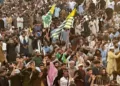
The latest developments also reflect a significant political shift within the movement itself. During a massive gathering at Rawalakot’s Eidgah Ground, Sardar Aman Khan directly asked supporters whether they should move towards the Line of Control. The crowd repeatedly responded, “Move towards it.” He warned that if the authorities continued responding to public demands with bullets, “we also have other paths.”
From London to PoJK: Diaspora Raises Voice Against Repression
Members of the overseas Kashmiri diaspora (PoJK) gathered outside the Pakistan High Commission in London to protest against reports of civilian killings, mass arrests, curfews and communication restrictions in… pic.twitter.com/FFfpoCtq4f
— Centre for Integrated and Holistic Studies (@cihs_india) July 6, 2026
Khan also specifically called for opening the LoC in the Poonch and Doda sectors, arguing that Islamabad’s actions were worsening civilian suffering. The latest protests also witnessed slogans such as “PoJK is not part of Pakistan” and “We want freedom,” suggesting that what initially began as a movement seeking reforms has increasingly evolved into an open demand for independence from Pakistan’s long-standing political control over the occupied region.
Analysts have argued that the present crisis highlights the deep disconnect between the local population and what many describe as a “toothless” regional administration that remains largely subordinate to Islamabad.
They contend that Pakistan’s decision to ban the JAAC and rely on force reflects a broader military-driven strategy to suppress growing political dissent rather than address underlying grievances.
An analysis published by the International Centre for Peace Studies also questioned the nature of political governance in both Pakistan-occupied Jammu and Kashmir (PoJK) and Pakistan-occupied Gilgit-Baltistan (PoGB).
According to the report, the party governing in Islamabad has consistently emerged victorious in elections in both territories, a pattern it argues cannot simply be dismissed as a coincidence.
As the latest ultimatum expires, Indian agencies reportedly believe the Pakistani establishment may intensify its response rather than concede to protesters’ demands.
The continued convergence of economic hardship, humanitarian distress, political mobilisation and allegations of human rights violations has created an increasingly volatile situation with wider regional implications.
The unfolding crisis in Pakistan-occupied Jammu and Kashmir (PoJK) demonstrates how prolonged reliance on coercive administrative measures can deepen humanitarian suffering while further eroding public trust. With allegations of an economic blockade, shortages of food and medicines, restrictions on communication, political repression and growing civilian displacement, the situation increasingly demands sustained international attention.
Ensuring uninterrupted humanitarian access, protecting civilian welfare, independently assessing human rights violations and pursuing peaceful political engagement remain essential to preventing further escalation in one of South Asia’s most sensitive regions.