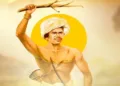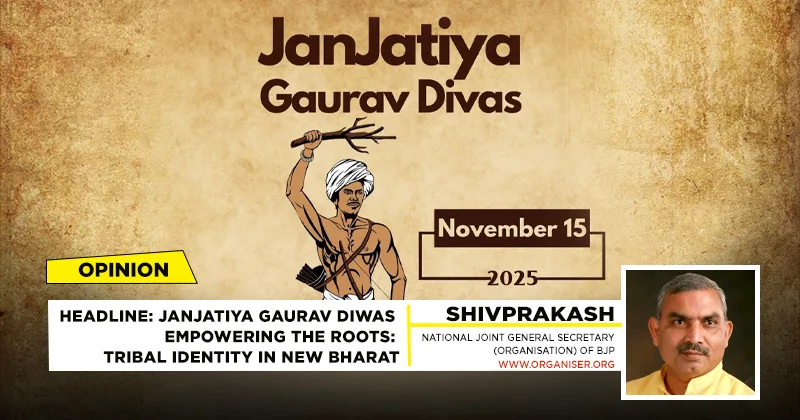
Seeing the threat posed by British rule to their water, forests, land, tribal identity, and freedom, Birsa Munda, who led the “Ulgulan” (Great Tumult) Movement against the exploitative British regime, was honored with the title “Dharti Aaba” (Father of the Earth). This year marks the 150th birth anniversary of Birsa Munda. He was born on November 15, 1875 in Ulihatu village, district Ranchi.
Due to his armed rebellion against the British, he was arrested, and on 9 June 1900, he sacrificed his life in jail. To keep alive his memory of struggle and to inspire the younger generation, Prime Minister Shri Narendra Modi declared 15 November as Janjatiya Gaurav Diwas .
Bhagwan Birsa Munda taught the tribal society to live a life free from vices, to liberate themselves from superstitions, and to take pride in their land and self-respect. He raised his voice against exploitation and opposed the practice of forced labor (begar). Calling for refusal to pay taxes to the British authorities, he launched the Ulgulan Movement.
His slogan was:“Abua raj etej ana, Maharani raj tundu jana” (“Let our rule begin; let the Queen’s rule end.”)
Janjatiya Gaurav Divas is dedicated not only to Bhagwan Birsa Munda, but also to the countless illustrious figures born in the tribal communities who devoted their entire lives to the upliftment of Bhartiya culture and the freedom of the nation.
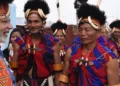
Among them was Rani Gaidinliu of Nagaland, who led a rebellion against the British and, through the Heraka Movement, resisted religious conversion in defence of her faith and cultural identity. In Rajasthan, Govind Guru emerged as a symbol of spiritual awakening, social reform, and resistance against exploitation within the Bhil community.
Bharat’s history remains incomplete without the valorous contributions of tribal heroes such as Rani Durgavati, Tilka Manjhi, Alluri Sitarama Raju, Koram Bhil, Tatya Bhil, and Sidhu–Kanhu Murmu. From north to south, east to west, tribal communities across the nation have risked, and often sacrificed, their lives in the struggle for freedom, the preservation of faith, culture, and environment. The entire nation shall forever remain indebted to these great souls.
Even today, this proud legacy continues through tribal youth who bring glory to Bharat in various fields — such as Mary Kom in boxing, Komalika Bari in archery, and Dilip Tirkey in hockey, among many others.
When the imperialist European powers set out to expand their empires across the world, they unleashed unprecedented massacres upon the indigenous peoples of the lands they invaded. The histories of America, Australia, Africa, and New Zealand are replete with these horrific episodes. To entrench their rule, church missionaries too became complicit in this bloodshed, seeking to eradicate native populations. As a result, the number of indigenous peoples in those regions dwindled drastically over time.
To understand how similar designs were attempted in Bharat , one may recall the declaration made by Richard Temple, who served as Finance Minister of the East India Company and later as Governor of the Bengal and Bombay Presidencies. In a speech delivered before the Baptist Missionary Society in London in 1883, he stated:
“To make British rule permanent, missionaries must concentrate their efforts on the tribal people. These primitive races provide a surface as blank as a white sheet of paper, upon which missionaries can easily imprint their mark.”
Recognising the global need to preserve the identity and existence of indigenous peoples, the United Nations declared 9 August 1994 as the International Day of the World’s Indigenous Peoples.
In Bharat, however, this observance was rebranded—perhaps deliberately—as Adivasi Diwas. Yet it must be remembered that the tribal communities and all other inhabitants of Bharat are, in essence, the original natives of this land. Throughout history, no systemic oppression was ever inflicted upon them; rather, they have been the true custodians and carriers of Bhartiya civilisation and culture. Therefore, within the Bhartiya context, the International Day of the World’s Indigenous Peoples holds limited relevance, as the spirit of indigeneity is inseparable from the nation’s cultural fabric itself.
Efforts are increasingly being made to create new movements within tribal communities aimed at fostering religious conversion and a sense of separatism. In the 1994 C.V.C.I. conference held in Pune, the secretary’s report stated that church organizations were extending support to movements such as the Dalit Liberation Movement, the Tribal Liberation Movement, and campaigns centred on environmental protection.
In Bharat, these movements are being conducted by various groups under different banners—in the name of Dalit rights, tribal rights, women’s empowerment, and the protection of water, forests, land, animals, and the environment—all with the underlying intent of sowing social discord.
Slogans such as “We are descendants of Ravana, not of Rama,” “Mahishasura is our deity,” and “Our religion is separate” reflect the manifestation of this larger conspiracy. The only significant change in recent years is that urban Maoists and self-proclaimed human rights and activist organizations, often influenced by similar ideological leanings, have also become participants in this agenda, successfully establishing international networks to further their cause.
Under the guise of liberation from exploitation, Naxalism has pushed thousands of tribal youth onto the path of violence, thereby impeding the genuine development and progress of the tribal society itself.
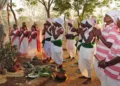
The tribal community, which holds deep and unwavering reverence for nature, is an inseparable part of the vast Sanatan civilisation. Their devotion to nature and their native land is profound. In Sanatan culture, too, nature , water, forests, and land , is regarded as sacred. The worship of rivers as divine mothers like Ganga, the veneration of Tulsi, Banyan, and Peepal trees, and the ritual worship of the earth before auspicious undertakings , all exemplify the reverence for nature inherent in this ancient tradition.
In Sanatan thought, all living beings and all social orders are considered worthy of reverence. For instance, tree worship, Nandi the bull as Bhagwan Shiva’s vehicle, the elephant head of Bhagwan Ganesha, the serpent adorning Lord Shiva, the blue hue of Bhagwan Ram and Lord Krishna, the dark complexion of Lord Venkateshwara of Tirupati, and Mother Kali’s black form, all symbolize the inclusive and all-embracing nature of this culture.
The spirit of oneness and interconnectedness is further reflected in the sacred ties binding various regions of Bharat: Lord Ram’s maternal lineage linked to Chhattisgarh through Mother Kaushalya, Lord Krishna’s consort Rukmini’s association with Manipur and Arunachal Pradesh, the polyandrous tradition among the Jaunsar tribe reminiscent of Draupadi’s marriage to the five Pandavas, the Tharu tribe’s veneration of the sacred soil of Haldighati, and the connection between Maharaja Bhoj of Dhar and the Buksa tribe, these are living threads that weave India into a single cultural fabric.
The tribal culture, often mischaracterised as animistic or primitive, is in fact deeply spiritual, perceiving the One in all and all within the One. Since its development was nurtured through the austerities and meditations of ancient sages, and as their abodes and hermitages were situated in forests (aranya), this tradition came to be known as the Aranya Culture—the culture of the forests. It is this Aranya Culture that the tribal communities have preserved and protected through the ages.
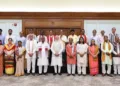
Committed to the upliftment of the tribal community, the Bharatiya Janata Party (BJP) government has established an independent Ministry of Tribal Affairs and a Tribal Commission. Under the leadership of Prime Minister Shri Narendra Modi, provisions have been made for a Minimum Support Price (MSP) for forest produce, as well as financial assistance ranging from Rs 1 lakh to Rs 10 crore under the Stand-Up India Scheme to promote entrepreneurship and self-employment among tribal youth.
The Modi government, in collaboration with various state governments, is also working towards the complete eradication of sickle cell disease, which is prevalent in tribal communities. Within Bharat’s constitutional framework, members of the tribal community now hold prominent positions—most notably, Her Excellency the President of Bharat, Smt. Droupadi Murmu, several Governors, and other high-ranking constitutional office-bearers.
Under the leadership of Prime Minister Narendra Modi and the firm resolve of the Ministry of Home Affairs, Bharat is moving steadily towards becoming a Naxalism-free nation. This transformation is paving the way for the holistic development of tribal regions across the country.
On the occasion of the 150th birth anniversary of Bhagwan Birsa Munda, as we celebrate Janjatiya Gaurav Divas, we honour and remember the immense contributions of the entire tribal community to Bharat’s development.
This celebration calls upon us to extend our affection and solidarity to the tribal society, and to pledge our active participation in their progress and empowerment. It also urges us to stand united in the resolve to build a Naxalism-free Bharat.
We must foster the spirit that our culture is one, and all our great ancestors are shared and revered alike, thereby freeing the tribal community from divisive and destructive conspiracies.
Only through these collective resolutions can the observance of Janjatiya Gaurav Divas attain its true purpose ,and only then will it serve as a fitting tribute to Bhagwan Birsa Munda, the eternal symbol of courage, dignity, and unity.