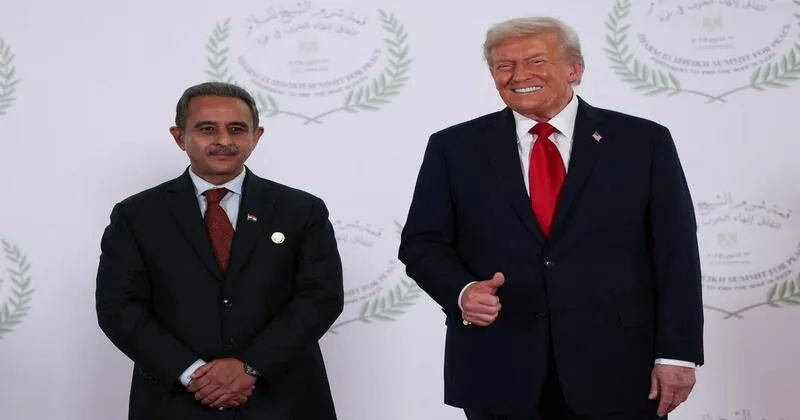
Prime Minister Narendra Modi was invited to the Gaza peace summit at Sharm el-Sheikh in Egypt. Apparently, US President Donald Trump and the President of Egypt Abdel Fattah El-Sisi invited PM Modi to the summit. This invitation reflects the growing importance of India in the path of rapidly changing world-order. The invitation also mirrors the geopolitical prominence asserted to India by the world powers, as they consider New Delhi as a credible, reliable and development-oriented partner.
In every global conflict India has advocated the side of peace, dialogue and diplomacy. This balanced and sensible approach of India makes the world-nations consider New Delhi as a leading power and stakeholder in crucial decision-making circumstances that are intended towards redefining the geopolitical apparatus. India too considers this invitation with great deal of respect and always acts as a responsible global player. Infact, PM Modi welcomed the release of all the hostages. “We welcome the release of all hostages after over two years of captivity. Their freedom stands as a tribute to the courage of their families, the unwavering peace efforts of President Trump and the strong resolve of Prime Minister Netanyahu. We support President Trump’s sincere efforts to bring peace to the region”, wrote Prime Minister Modi on the X social media platform.
We welcome the release of all hostages after over two years of captivity. Their freedom stands as a tribute to the courage of their families, the unwavering peace efforts of President Trump and the strong resolve of Prime Minister Netanyahu. We support President Trump’s sincere…
— Narendra Modi (@narendramodi) October 13, 2025
Despite such reciprocation and appreciation, Prime Minister Narendra Modi decided to not attend the Gaza peace summit at Sharm el-Sheikh. Instead, New Delhi decided to send the Minister of State for the Ministry of External Affairs Kirti Vardhan Singh as the representative of India for the Gaza summit. This diplomatic move by New Delhi is indeed a firm and bold strategic signature that ensures and upholds India’s strategic autonomy. Let us decode, what lies underneath this strategic decision of New Delhi.
India is pro-peace but not pro-Trump
Indian foreign policy always advocates for dialogue and diplomacy, for peace and prosperity. This statement is true, be it in Gaza, Ukraine or any other geopolitical landscape for that matter. However, at this geopolitical juncture when India-US relations are oscillating and going through a rough phase, it is wise for New Delhi to not send the Head of the State for a summit that is hosted by the US President Donald Trump.
US President has escalated a tariff tussle with India by imposing a massive 50 per cent tariffs that includes 25 per cent for importing the Russian oil. The negotiations for a fair, reasonable and balanced trade deal are still underway. Trump has also consistently and illogically accused India for fuelling the Russian war machine by purchasing oil from Moscow. Most importantly, Trump repeatedly has asserted that he has ended the India-Pakistan conflict in May 2025 and had also demanded for the Noble Peace Prize on these lines.
Lately, Trump has ofcourse shown a conciliatory tone towards India. He has quoted PM Modi as a “great friend”. However, the larger picture of New Delhi-Washington ties has been under a tough phase and is witnessing multiple fissures. Thus it would not be ideal for the Head of the State of India to attend a summit hosted by the US President, when the bilateral relations are ruptured and hasn’t reached a conclusive revamp.
If PM Modi had attended the summit, it might have created an awkward moment with the US, as bilateral ties are under strain. It would have probably meant that India acknowledges every tantrum of President Trump or such an inevitable situation might have been araised. For example, even in the summit Trump demanded for Noble Peace Prize and spoke about ending wars including the war between India and Pakistan. Thus, the presence of PM Modi might have been deemed like India’s consent to Trump goals and might have derailed the diplomatic leverage and negotiating momentum of India. In this direction, respecting the invitation, a representative was sent from India.
The peace summit where violent Pakistan is a stakeholder
Another pivotal factor to send a representative from India instead of the Head of the State is, the Pakistan angle. Islamabad as well being invited for the Sharm el-Sheikh peace summit, it would have created a diplomatic jerk or hiccup for India to a greater extent if PM Modi had attended the summit. For example, Pakistan Prime Minister Shehbaz Sharif has uttered that the United States and the Trump administration has ended the ‘nuclear war’ between India and Pakistan. Shehbaz Sharif has yet again nominated President Trump for the Noble Peace Prize. PM Modi attendance to the summit might have made India a witness to these illogical and irrational scenarios. This would have indeed reduced the strategic autonomy and diplomatic firmness of India.
Thus, the firm decision of India with respect to the Gaza peace summit is indeed a bold move to behold India’s strategic autonomy and diplomatic leverage. When the relations with the host of the summit(US) is ruptured, when irrational and terror supporting states such as Pakistan attends a peace summit, it would not be wise for the Head of the State of India to attend.
Thus, New Delhi took a balanced and vigilant stance. It decided to not send the Head of the State. Yet it reciprocated to the invitation by sending a representative. Ultimately, India always champions for peace, prosperity and humanitarian assistance, which is not confined to any one summit. PM Modi has exclaimed at numerous occasions that in any global conflict India takes a firm side, the side of ‘peace’. In this direction, the decision to not attend the peace summit by the Prime Minister is not a missed opportunity, but a firm reassertion that despite supporting for peace and development, India’s foreign policy is rooted in strategic autonomy and sound diplomatic calls.