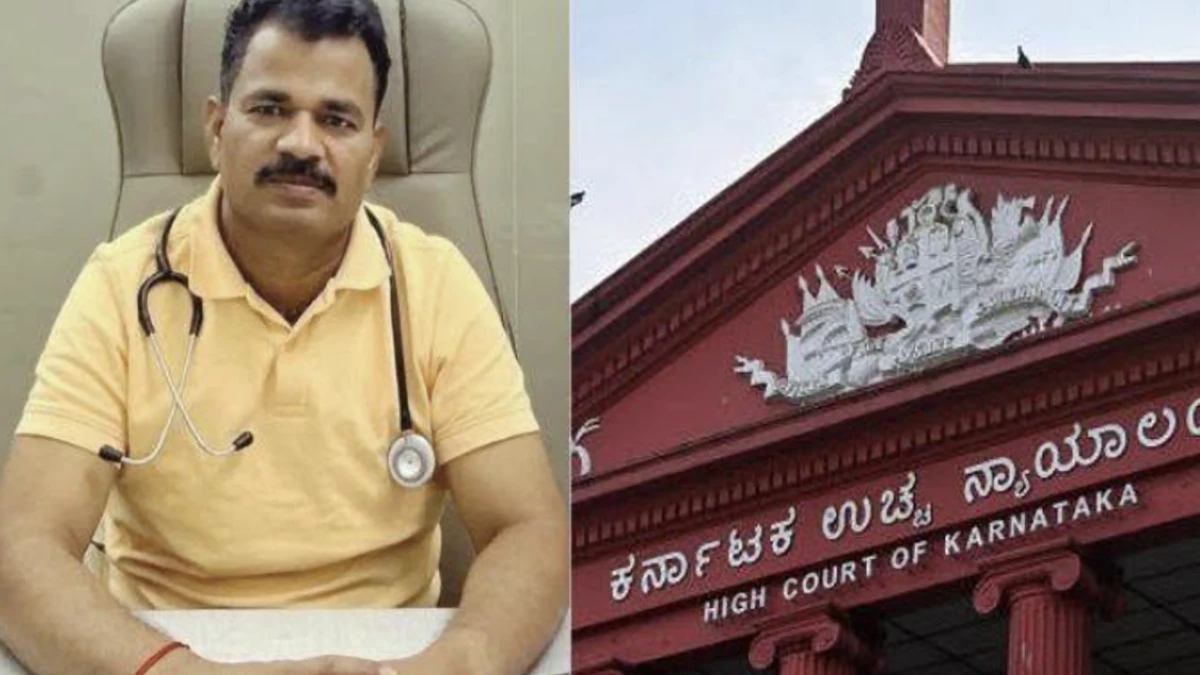
BENGALURU: The Karnataka High Court quashed two first information reports (FIRs) registered against Dr T. Nagendrappa, who alerted the police to the alleged presence of Bangladeshi nationals staying illegally in Bengaluru. The court also directed the state government to constitute district-level committees to address illegal migration within three months.
Justice M. Nagaprasanna passed the order while allowing petitions filed by Nagendrappa seeking to quash criminal cases registered against him at the Bellandur and Varthur police stations. The doctor had also challenged his arrest, alleging that the police had violated procedural safeguards and unlawfully deprived him of his personal liberty.
The court quashed both FIRs and, while considering his plea relating to the legality of his arrest, directed the state government to establish district-level committees to tackle illegal migration. The committees must be constituted within three months of the government receiving a copy of the order. The state has also been directed to submit a compliance report to the High Court Registry.
The case arose after Nagendrappa approached the Bellandur police on July 22, 2026, alleging that six Bangladeshi nationals were residing near the DS-MAX apartment complexes in Bengaluru without passports or visas.
According to the petitioner, the police acted on the information and took the six individuals to the Foreigners Regional Registration Office (FRRO) for proceedings relating to their possible deportation. However, the situation took a different turn when a Bangladeshi woman allegedly filed a complaint against Nagendrappa approximately 15 minutes after he reported the suspected illegal migrants.
The woman accused the doctor of assault, following which the Bellandur police registered a criminal case against him under various provisions of the Bharatiya Nyaya Sanhita (BNS).
Nagendrappa subsequently approached the High Court, challenging the criminal proceedings and seeking the quashing of the FIRs registered against him. He contended that the police had initiated action without adequately verifying the allegations made against him.
The petitioner alleged that the police had registered the case without conducting a preliminary inquiry or arranging for a medical examination of the complainant. He questioned how the complaint was handled and argued that the criminal proceedings initiated against him warranted judicial intervention.
The doctor also challenged his arrest on July 23, 2026, contending that the police had failed to follow the procedures prescribed under the Bharatiya Nagarik Suraksha Sanhita (BNSS).
According to his petition, the police had not issued a notice directing him to appear before them under Section 35(3) of the BNSS before arresting him. He argued that the provision prescribed procedural safeguards that must be followed in the circumstances covered by the law.
Nagendrappa further alleged that the police failed to record the reasons for his arrest in accordance with Section 35(1) of the BNSS. He also questioned whether the arrest memorandum had been properly prepared and whether the grounds for his arrest had been adequately communicated to him.
Contending that these alleged lapses had infringed upon his personal liberty, the petitioner sought relief from the High Court. In addition to challenging the criminal cases, he sought compensation for what he described as an unlawful deprivation of liberty.
After considering his pleas, the High Court quashed the two FIRs registered against him at Bellandur and Varthur police stations. The order provides the doctor relief from the criminal proceedings.
The ruling also addresses the broader administrative question of how suspected cases of illegal migration should be handled. While considering Nagendrappa’s plea on his arrest and personal liberty, the court directed the state government to establish district-level committees to address illegal migration.
The government has been given three months from the date of receiving a copy of the order to constitute the committees. It must subsequently file a compliance report before the High Court Registry, confirming the steps taken to implement the directions.
The proposed committees are expected to provide a district-level mechanism for addressing concerns and information relating to suspected illegal migration. However, the detailed composition, powers, and functioning of the committees will depend on the measures the state government adopts while implementing the court’s order.
The direction places responsibility on the government to take institutional steps rather than leaving the issue to be addressed solely through individual complaints to local police stations. The compliance requirement will also enable the High Court to monitor whether the directions have been implemented within the prescribed period.
