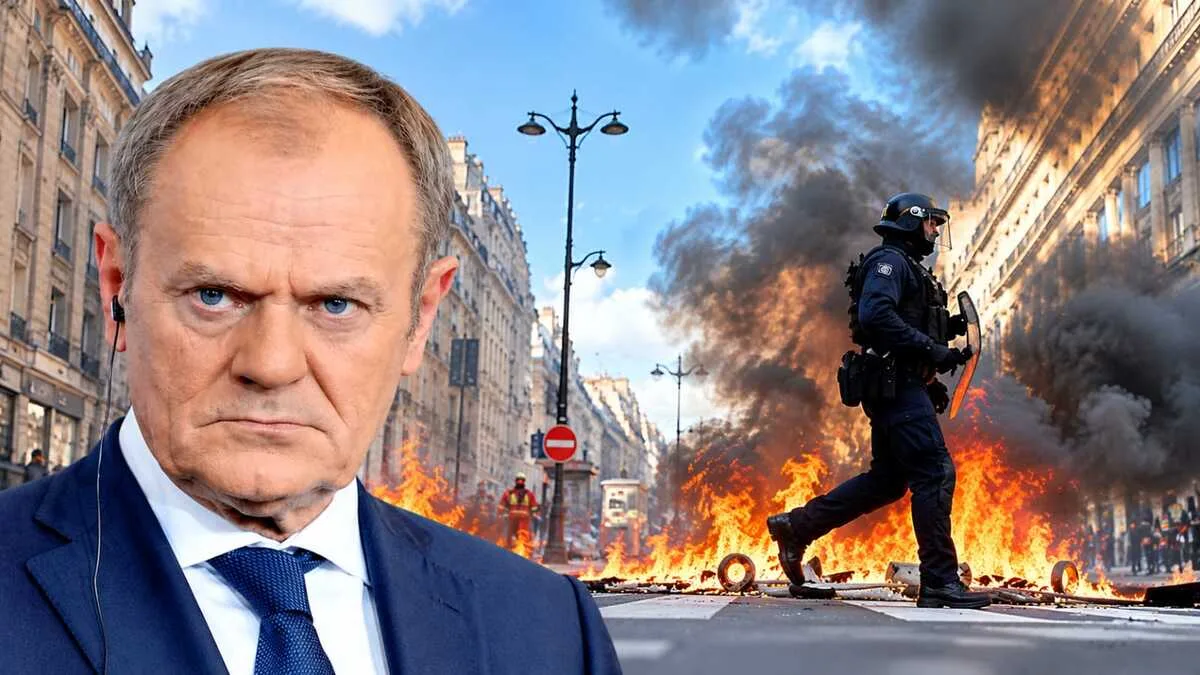
Polish PM Donald Tusk signals a widening divide within the EU over illegal migration, asylum rules and border security
Polish Prime Minister Donald Tusk has declared that Poland will not bear the consequences of other European countries’ migration policies, reaffirming Warsaw’s hardline approach to illegal migration, asylum restrictions and deportations. His October 18 statement on X comes amid intensifying debates across Europe over border security, illegal migrant containment and the future of the continent’s migration framework.
“Poland will not repeat the mistakes of other European countries, nor will it pay for them. We are firmly defending the border against illegal migration, we have our own asylum policy (we do not accept applications), we deport those who break Polish law. On security issues, we will be relentless. That is what I told the leaders of Europe in Brussels”
The statement reinforces Poland’s position that national governments must exercise strict control over their borders and migration policies.
Speaking after a two-day EU leaders’ summit in Brussels on October 16, Tusk claimed that Poland’s approach was gaining support among European governments. He argued that strict border protection, restrictions on asylum and measures to contain irregular migration were increasingly influencing the EU’s migration debate.
“Poland’s perspective and our actions, namely a tough asylum policy, securing the border and, when necessary, using force to stop illegal migrants, are gradually becoming, if not yet a formal European doctrine, then at least a model that most would like to follow, and some already are.”
Tusk said approximately 20 countries supported a tougher approach to illegal migration. He identified himself, Italian Prime Minister Giorgia Meloni and Danish Prime Minister Mette Frederiksen as key figures shaping the debate.
“There are still some countries that hold a different view, Spain and to some extent France, but they are essentially standing alone in that position,” he said.
The debate comes amid growing tensions over illegal migration and public order across Europe. France, Belgium, Italy, Albania and Portugal have witnessed political disputes, riots and unrest linked to various domestic issues, while migration and integration remain contentious issues in several European countries.
Concerns surrounding Europe’s illegal migration have strengthened demands among sections of the political establishment for stricter border controls and tighter asylum rules.
Poland had also urged the European Union to introduce tougher measures following a migration crisis in Ceuta, Spain’s North African exclave. Warsaw proposed making migrants who enter the bloc illegally ineligible for residence rights.
At a special meeting of EU interior ministers on August 4, Poland highlighted its experience of what it describes as weaponised illegal migration from Belarus. Since 2021, Belarus has encouraged and assisted migrants, primarily from Asia and Africa, to attempt irregular crossings into the European Union through Poland’s eastern border.
The Polish government subsequently restricted access to asylum for people crossing irregularly and invested billions in strengthening physical and electronic border barriers. Thousands of soldiers, police officers and border guards have also been deployed along the frontier, with expanded authority to use firearms.
On August 7, Tusk urged Spain to adopt Poland’s approach, warning it to “follow our example if Schengen is to survive”.
Warsaw’s position highlights the growing pressure within the EU to tighten migration controls, strengthen external borders and reconsider existing asylum arrangements.
