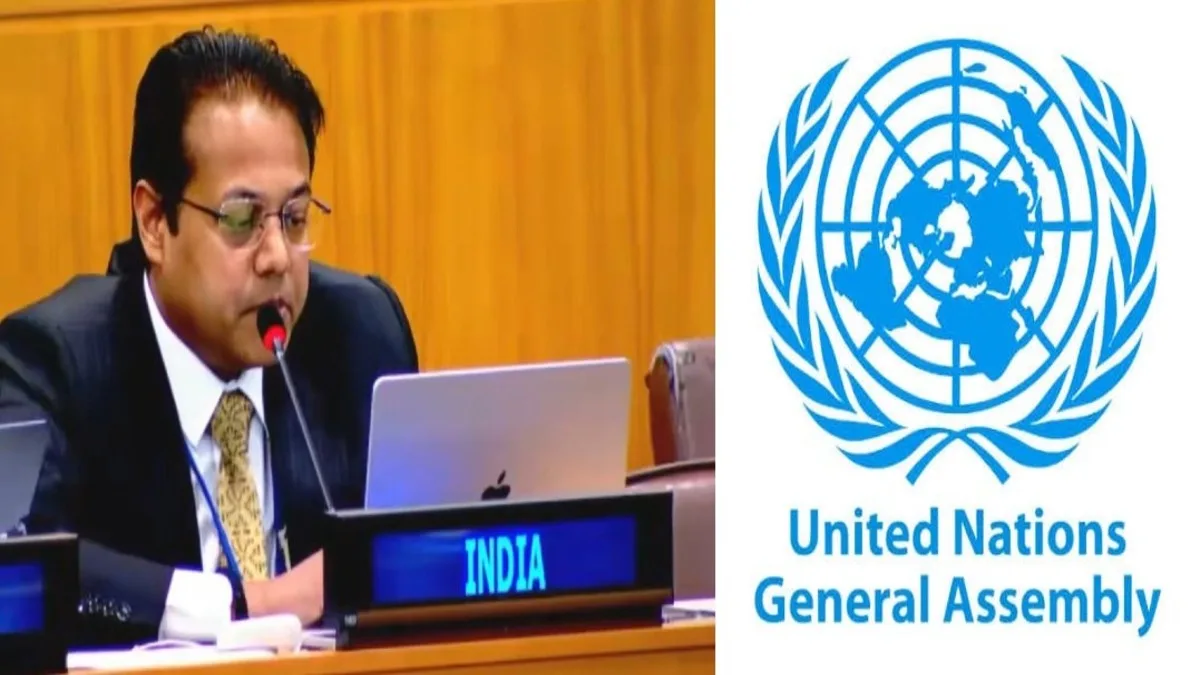
First Secretary Anuj Swarup rebukes UN expert report
NEW YORK: India has strongly rejected a report by the UN Special Rapporteur Gina Romero, which falsely alleged that the young people in the country face retaliation or stigmatisation for discussing mental health and gender justice. Delivering India’s sharp response at the 81st session of the United Nations General Assembly (UNGA) Third Committee, First Secretary Anuj Swarup urged the expert to uphold evidence-based reporting and questioned reliance on anonymous submissions. New Delhi also hailed the constitutional safeguards, credible engagement of the authorities with young protesters and youth participation in national development.
"Precisely the reason the UN has lost credibility"
"Heresy dressed up as UN report"
India hits out at UN over using "anonymous submissions" on so called "youth repression" in India.
Indian diplomat @Anuj_Swarup : pic.twitter.com/FkTpUVO3wO
— Sidhant Sibal (@sidhant) October 17, 2026
India’s First Secretary to the UN, Anuj Swarup, challenged the findings presented by Gina Romero, the UN Special Rapporteur on the rights to freedom of peaceful assembly and of association, during an interactive dialogue at the UNGA Third Committee. Swarup objected to Romero’s assertion that young people in India had reported retaliation or stigmatisation for discussing mental health or gender justice. He argued that the report relied on unnamed submissions without providing sufficient evidence to substantiate its broad claims.
“A sweeping charge against the world’s largest youth population, resting on anonymous and unverified claims, is not evidence. It is hearsay dressed up as a UN report, and my delegation rejects it outright”, Swarup said. He questioned the credibility of drawing conclusions about a country of approximately 1.4 billion people on the basis of anonymous inputs, urging the Special Rapporteur to exercise greater scrutiny and fairness while preparing her reports.
“A mandate holder who relies on anonymous inputs to generalise for 1.4 billion people does a disservice to the very mandate she holds. We urge this Special Rapporteur to verify before she vilifies and to bring the required rigour and fairness in her reports”, he added. Swarup also criticised arbitrary reporting, arguing that such practices undermined the credibility of the United Nations and its institutions.
The key point in the false report was, Romero referring to the Cockroach Janata Party (CJP). Cockroach Party was cited in the report alongside concerns about the treatment of young people. India outrightly rejected the assessment and asked, if the state was repressive how will they allow protestors to question the government, organise demonstrations and engage with senior national leaders. The very fact that the protests, scrutiny of government and engagement with national leaders are allowed, dismantles the fake report of the UN.
“Ironically, the same report notes that young Indians created a satirical political movement. In which repressive State does a satirical youth party question the government, marches on the capital and then sits across the table with senior national leaders?” Swarup asked.
Defending India’s democratic framework, Swarup said freedom of peaceful assembly, association, speech and expression was guaranteed to citizens under Article 19 of the Constitution. He noted that these rights were supported by institutional safeguards, including an independent judiciary, a free press and an empowered National Human Rights Commission(NHRC).
The Indian diplomat further said that the Parliament amended the Public Examinations Act, doubled punishments for paper leaks, undertook an overhaul of the examination system and established fast-track courts in every state to prosecute those involved in examination-related fraud. “This is the true testament of democracy in action. Youth represents our strength and shared future”, Swarup reiterated.
India maintained that the existence of these constitutional protections and institutions was central to assessing the country’s civic space and the ability of citizens, including young people, to express their views. The diplomat’s response placed particular emphasis on the distinction between allegations and verified evidence, arguing that international assessments should reflect the reality of India’s democratic institutions and youth participation.
Romero had raised concerns in posts on X about the treatment of peaceful youth protesters in India, alleging excessive force and arbitrary detention. She also alleged that more than 2,500 protesters had been sent to remote detention centres without legal support, with some facing torture or sexual assault. Her posts further alleged the seizure of phones, deletion of protest-related material and restrictions on internet access. However, Delhi Police, security officials have on multiple ocassions clarified that such allegations are baseless and not backed by evidence.
Highlighting the government’s efforts to involve young people in policymaking, Swarup cited the Viksit Bharat Young Leaders Dialogue, which he said attracted more than five million participants this year. He said that the young people contributed to shaping national priorities through direct engagement with Prime Minister Narendra Modi, while the Prime Minister and several Union ministers continued to interact with youth both in person and through social media.
Citing PM Modi’s emphasis on the role of young people in India’s development, Swarup said that their capabilities and achievements would contribute directly to the country’s progress. New Delhi reiterated that the international human rights reporting must be grounded in verifiable evidence, consistent standards and a fair assessment of the circumstances being examined, otherwise the UN will lose its credibility.
