History remembers some people for one defining achievement. Sometimes, that achievement becomes so enormous that it obscures everything else they did. For Ashok Ji Singhal , that achievement is undoubtedly the Ram Janmabhoomi movement. His name evokes Ayodhya. It evokes the Dharma Sansad, the mobilisation of Sant Samaj, the kar sevaks, the long struggle for the Ram Janmabhoomi and ultimately the construction of the grand Ram Mandir. For a generation that witnessed the movement, Ashok Ji was one of its most prominent faces.
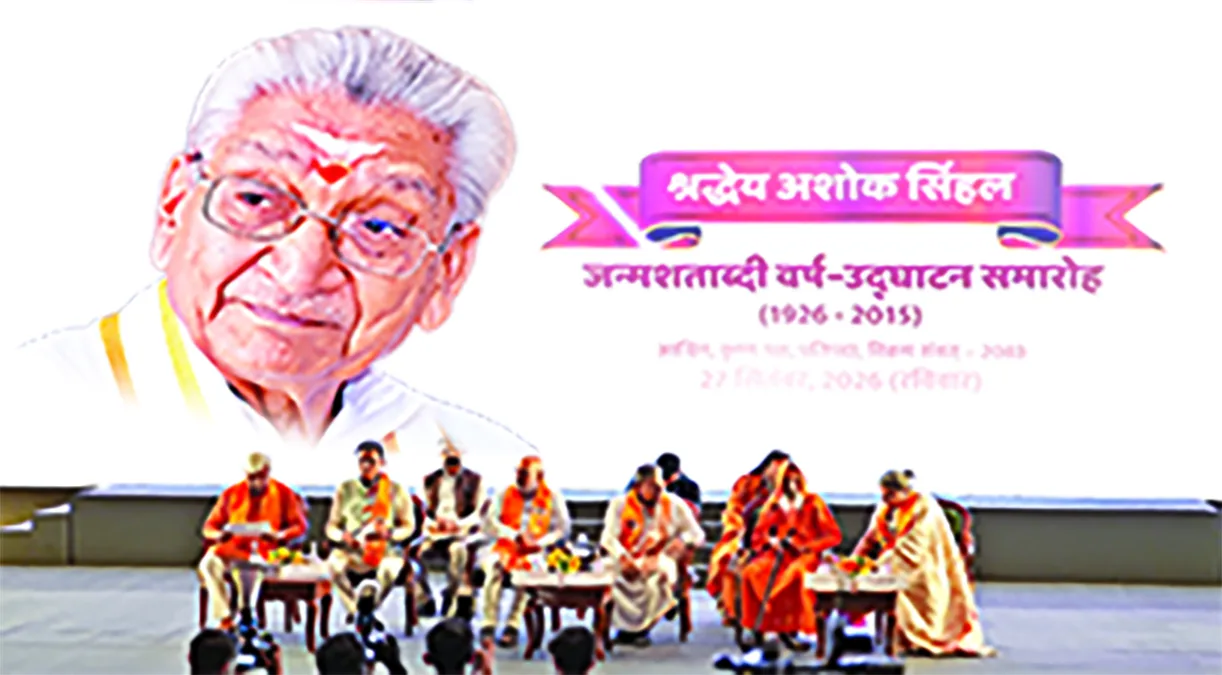
But sitting at Bharat Mandapam in New Delhi for the inauguration of his birth centenary celebrations, I found myself thinking about a somewhat different Ashok Ji. Not merely the leader who helped mobilise millions for Prabhu Sri Ram. But the man who tried to use the service of Ram to build bridges within society. The distinction is important.
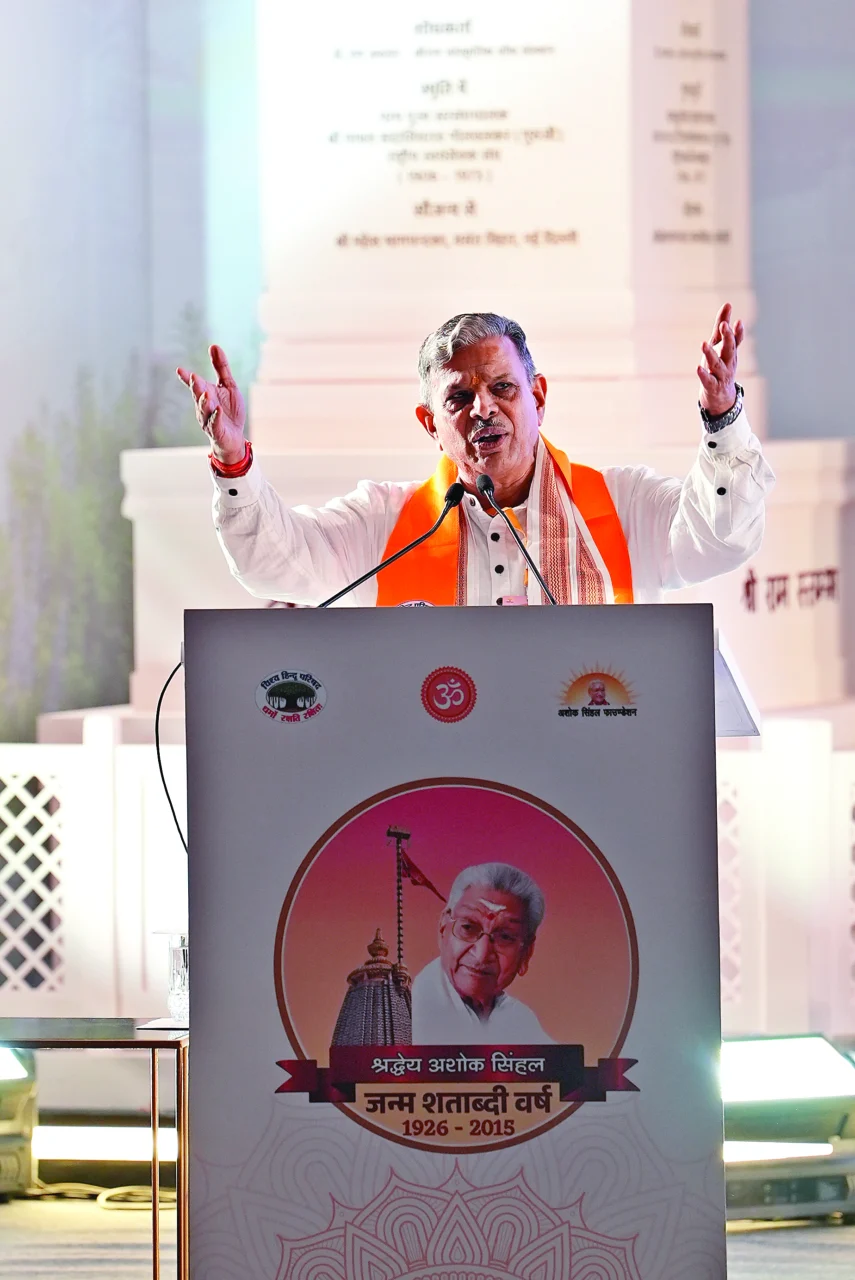
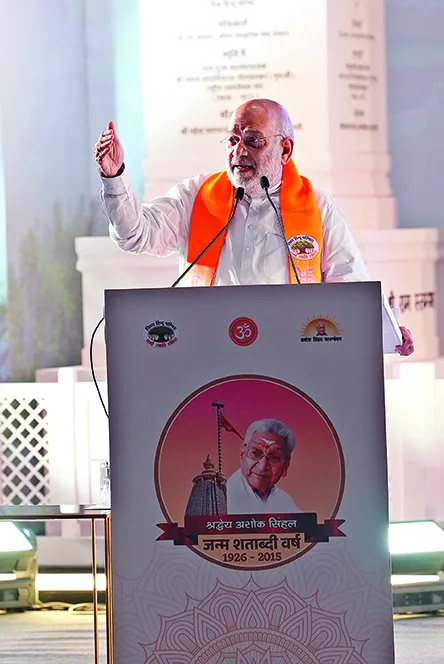
As speaker after speaker remembered him that evening – Union Home Minister Amit Shah, RSS Sarkaryavah Dattatreya Hosabale, Vishwa Hindu Parishad (VHP) president Alok Kumar, Mahamandaleshwar Swami Paramanand Giri Ji and others – a larger picture began to emerge.
Ram Janmabhoomi was central to Ashok Ji Singhal’s life, but his understanding of Ram was not restricted to a mandir. It was connected with social harmony, the marginalised, saints and ordinary workers. It was connected with sewa.
And above all, it was connected with the idea that Hindu society, somewhere by caste, region and social differences, had to rediscover the bonds that held it together.
For me, that became the real story of the evening.
Before Ashok Ji, There Was sri Ram
Even the programme seemed to make this point without saying it outright. It did not begin with speeches about Ashok Ji. It began with the Ramayana. Before the formal programme, Bharat Mandapam’s stage came alive with scenes from the life of Bhagwan Ram – from Ahilya and the breaking of Shiva’s bow to the exile, Shabari, Hanuman and the journey towards Lanka.
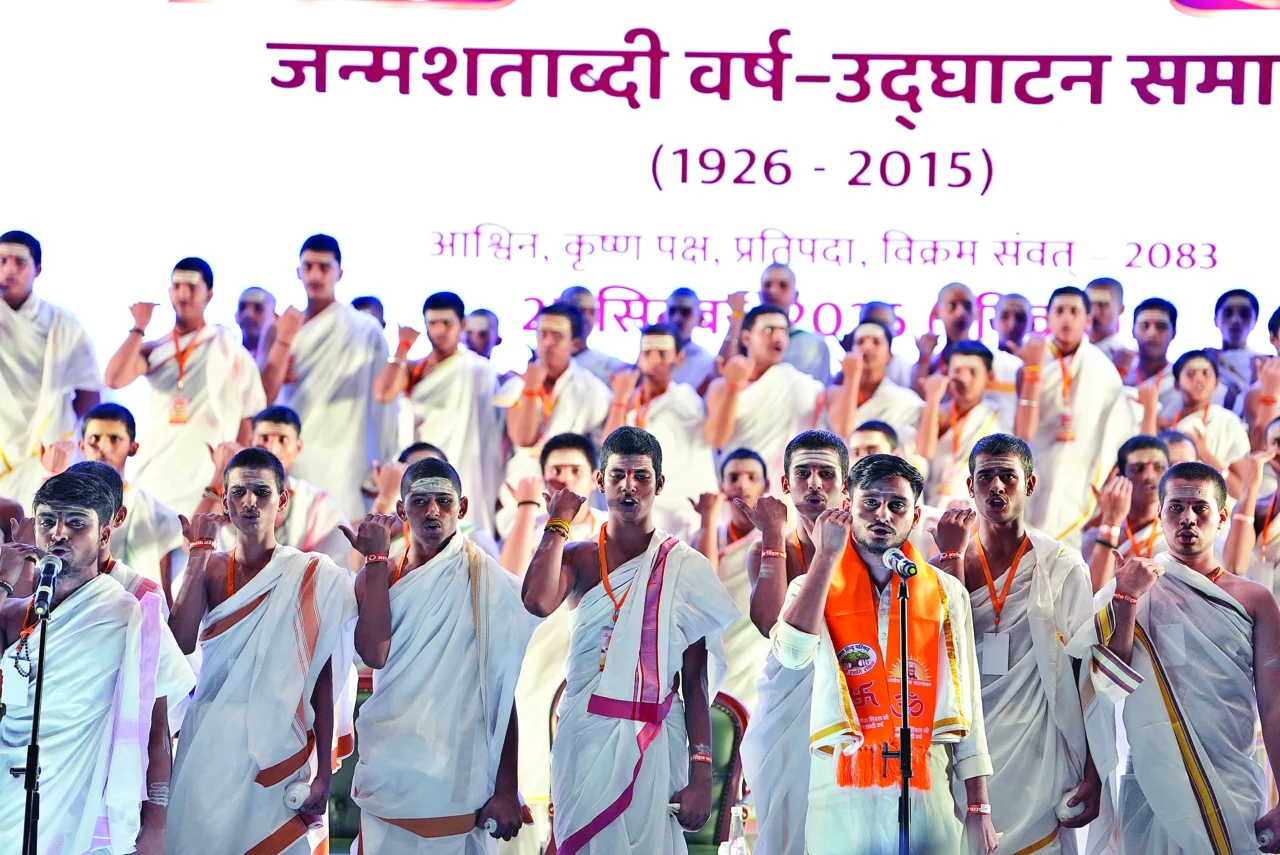
Jai Shri Ram reverberated through the hall. Then came the collective singing of Vande Mataram. After that, 100 young students from three Veda schools in Delhi performed a shankhnaad and recited Vedic mantras. Sitting there, I found the setting itself fascinating.
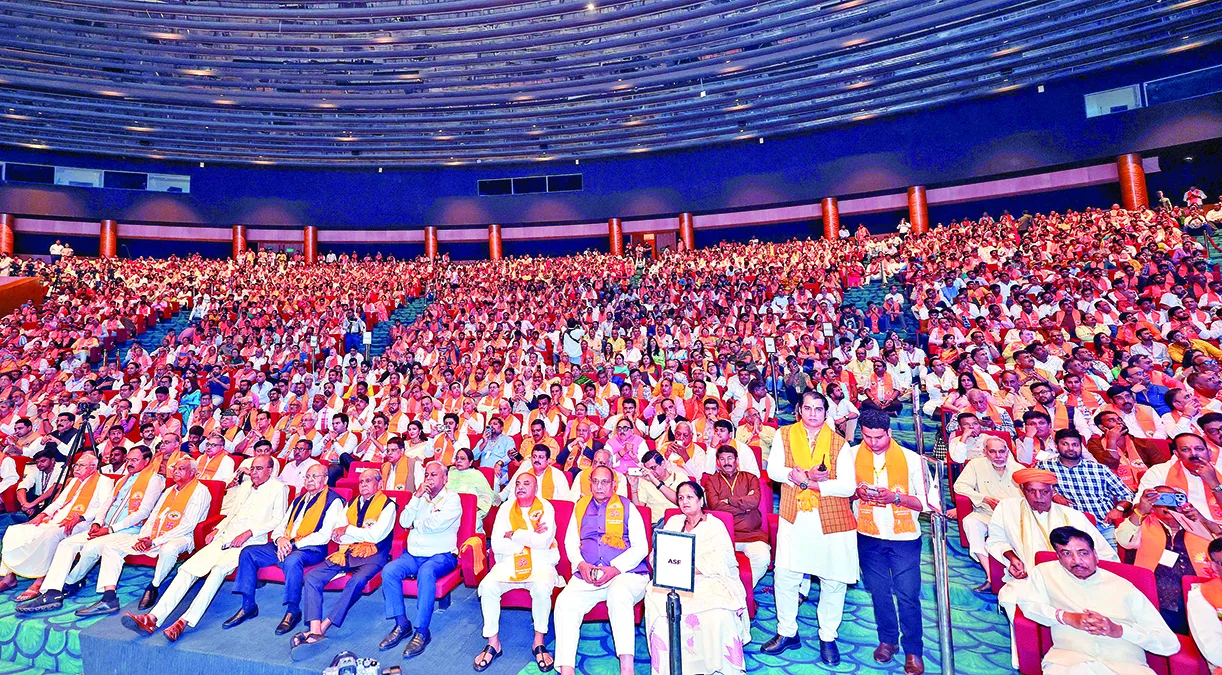
Bharat Mandapam is one of the most modern symbols of contemporary Bharat – a venue associated with the BRICS, G20, international summits, technology, diplomacy and Bharat’s global aspirations.
And here, inside the same complex, were 100 young boys reciting the Vedas. There were saints on the stage. There were conches being blown. There was the Ramayana. And there was a gathering to remember a man whose life’s work had revolved around bringing these civilisational symbols precisely into the centre of Bharat’s public life.
The organisers called the evening an occasion of smaran, sankalp and sewa – remembrance, resolve and service. Those three words would acquire much greater meaning as the evening progressed.
The Ashok Ji Singhal We Know and the One We Often Miss
A film screened during the programme traced Ashok Ji Singhal’s journey from his birth in Agra on September 27, 1926. He came from a prosperous family. His father was a senior Government official. Ashok ji studied Metallurgical Engineering at Banaras Hindu University and was also deeply interested in classical music, receiving training from Pandit Omkarnath Thakur. He could have lived a comfortable professional life. Instead, he became an RSS pracharak.
That decision itself says something about the trajectory his life would take. He worked in different parts of the country, became increasingly involved in organisation-building and eventually assumed responsibilities in the VHP. The documentary naturally focussed on Ram Janmabhoomi – the movement that would eventually make Ashok Ji Singhal a household name.
But it was something else in his journey that caught my attention. The programme recalled the Meenakshipuram conversions of 1981 and the concerns they generated within Hindu organisations. According to the presentation, Ashok Ji Singhal’s response was not simply to look outward and blame those engaged in conversion. He looked inward.
“Ashok Ji Singhal Said What He Believed and Did What He Said”: Yogi Adityanath
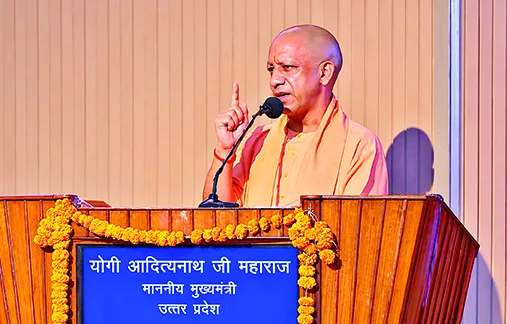
Uttar Pradesh Chief Minister Yogi Adityanath paid tributes to former VHP International President late Ashok Ji Singhal at the inauguration of his birth centenary celebrations in Lucknow, describing his life as one completely dedicated to the nation, Sanatan Dharma and the Ram Janmabhoomi movement.
Recalling Ashok Ji Singhal’s journey from an Engineering graduate of Banaras Hindu University to an RSS Pracharak and VHP leader, Yogi said he gave up the comforts available to him and devoted himself to organising Hindu society. He credited Ashok Ji with bringing saints and different sections of society onto a common platform during the Ram Janmabhoomi movement.
Yogi said Ashok Ji Singhal lived by the resolve, “Ram Kaaj Kinhe Binu Mohi Kahan Vishram,” working relentlessly for the Ram Mandir while also promoting social initiatives, including education in underserved areas.
Reflecting on Ayodhya’s transformation and the construction of the Ram Mandir, Yogi said Ashok Ji Singhal’s dreams had taken visible shape. He described Ashok Ji’s greatest strength as the unity between his words and actions: “He said what he believed and did what he said.”
The argument attributed to him was significant: as long as Hindu society remained divided by untouchability and discrimination, it could not become truly strong. That thought provides an important window into understanding his subsequent work. The challenge, as he saw it, was not simply to defend Hindu society. It was to connect Hindu society.
Ram as a Social Bridge
This is where Ashok Singhal’s story becomes more interesting than the conventional image of a movement leader. Ram became a powerful means of connecting a society divided by geography, caste, language and social hierarchy. And Ashok Ji understood that symbolism.
During the programme, VHP International President Alok Kumar recalled the decision to have Kameshwar Chaupal perform the shilanyas.
That was not merely a ceremonial choice. It carried a social message. At a moment when saints, religious organisations and millions of Hindus were being mobilised around Ram Janmabhoomi, the first stone was associated with a person from a Scheduled Caste community.
The message was difficult to miss. If Ram belongs to all, then the mandir belongs to all. If the movement is for Hindu society, then the society cannot remain divided into compartments of high and low. This was where I began to see the phrase “social bridge builder” in a different light.
A bridge does not eliminate the two banks it connects. It creates a way for them to meet. Ashok Ji Singhal’s organisational politics repeatedly attempted something similar: bring saints and ordinary workers together; bring different castes onto a common platform; bring religious assertion together with social service; bring ancient traditions together with modern organisation.
Ram became the connecting principle
Alok Kumar also shared another fascinating memory. During the years when the Ram Mandir seemed a distant possibility, work had already begun on carving stones. Think about the confidence required for that decision. There was no certainty about when the dispute would be resolved. There was no certainty about when construction could begin. There were political battles, legal proceedings, administrative obstacles and enormous opposition. Yet stones were being prepared. Why? Because Ashok Ji Singhal believed the mandir would be built. That confidence appeared repeatedly in the stories told about him during the programme. It was not the confidence of someone who believed everything would happen quickly. It was the confidence of someone prepared to continue working even when the destination remained far away. And perhaps that distinction explains why he could sustain himself through a movement spanning decades.
Amit Shah recalls his Young Days
When Union Home Minister Amit Shah began speaking, the hall once again erupted with Jai Shri Ram. He encouraged the gathering to say it louder. But the most compelling part of his speech, for me, came not from the slogans or from contemporary politics. It came from memory. Shah recalled meeting Ashok Ji Singhal when he himself was around 15 years old. Singhal was travelling from Ahmedabad to Udaipur, and a luxurious family vehicle had come for him. The young Amit Shah asked why he travelled in such a grand car. Ashok ji laughed.
It belonged to his family. The story was simple, but Shah’s point was larger. He was born into a family where material comfort was readily available. He had an Engineering education. He could have chosen an entirely different life. But he chose the life of an RSS Pracharak.
Years later, Shah recalled visiting him repeatedly at the VHP office in Delhi. There he encountered another image of Ashok Ji Singhal. The nationally recognised leader of a massive movement lived in an extraordinarily small space, where his sleeping arrangements, kitchen, and bathroom were compressed into a modest area.
As I listened to Shah recount this, the word sadaagi – simplicity – suddenly became tangible. We use that word too casually while describing public figures. But a small room is not an adjective. It is evidence of a choice. Ashok Ji Singhal had seen affluence. And then he had chosen austerity.
Shah recalled another aspect of Ashok Ji Singhal that surprised him. Even at an advanced age, despite health problems, Ashok Ji could work for extremely long hours, sometimes 16 hours a day. What was driving him? According to Shah, the answer was a deep conviction regarding Bharat, Sanatan Dharma and its civilisational message. Shah recalled asking Ashok Ji once why he had such an intense commitment to Hindutva. His response, as Shah narrated it, went beyond identity politics. He believed Sanatan Dharma and the knowledge contained in the Vedas and Upanishads had something to offer not only Bharat but humanity.
In his worldview, therefore, strengthening Hindu civilisation was connected with a much larger idea of human welfare. This distinction matters in understanding the man. Ashok Ji Singhal did not appear to regard his work merely as mobilisation against something. He believed he was working for something. And that “something” included Dharma, cultural confidence, social cohesion and sewa.
The Blood on the Gamchha
Then Amit Shah recalled Ashok Ji Singhal, whom most people recognise – the warrior of the Ram Janmabhoomi movement. During one of the movement’s confrontations, Ashok Ji managed to reach the front despite restrictions. A police lathi-charge followed. He was injured. Blood flowed from his head. He wiped it with his gamchha. It is a stark image.
And while Shah spoke, I found myself thinking about the distance between that scene and the Bharat Mandapam Hall in which we were sitting. Then, there were barricades. There were lathis. There were arrests. There were kar sevaks. There was uncertainty over whether the temple would ever be built. Now, there is a Ram Mandir in Ayodhya. The Pran Pratishtha took place on January 22, 2024.
And we were sitting inside one of Bharat’s grandest modern venues discussing the birth centenary of one of the men who had spent decades working towards that outcome. History sometimes produces such contrasts. But it also creates an important problem.
“Ashok Ji Devoted Every Moment of His Life to Dharma & Nation”
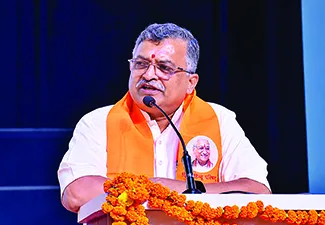
Paying tribute to Ashok Ji Singhal on his birth centenary, VHP leader Milind Parande described him as a driving force behind the Ram Janmabhoomi movement and a leader whose work extended far beyond building the Ram Mandir. Parande said Singhal devoted his life to fulfilling the long-standing aspiration for a Ram Mandir in Ayodhya. Although he did not live to see its completion, Parande credited his efforts with helping mobilise people across caste, community, language and region around the movement.
He also highlighted Ashok Ji Singhal’s work towards social harmony. According to Parande, Singhal challenged discriminatory social practices, supported Vedic education across communities and encouraged initiatives aimed at bringing different sections of Hindu society together. Parande further recalled Ashok Ji’s emphasis on youth mobilisation, seva, Ekal Vidyalayas and cow protection, describing his approach as one of action rather than speeches alone.
Concluding his address, Parande said Ashok Ji devoted “every moment” and “every particle of his existence” to protecting and uplifting Hindutva, Dharma, culture, the nation, and society, and said following his example would be the true tribute to him.
Once the objective has been achieved, does the struggle that preceded it slowly disappear from public memory? Does a generation that sees the completed temple understand the sacrifices and conflicts that preceded it? Amit Shah’s speech addressed this issue directly.
He argued that commemorating figures such as Ashok Ji Singhal was important not merely as an expression of gratitude but because societies need to introduce their own historical personalities to younger generations. If they do not, he argued, an ideological vacuum emerges. For Shah, therefore, the centenary was as much about the future as the past.
He Never Saw the Temple
An irony lies at the heart of Ashok Ji Singhal’s story. The man whose name became synonymous with the Ram Mandir movement did not live to see the temple. He passed away in November 2015. He did not see the Bhoomi Pujan. He did not see the temple rise. He did not witness the Pran Pratishtha. And yet the programme repeatedly suggested that he worked without requiring the assurance that the final victory would come during his lifetime.
That thought affected me more than I expected. We live in an age obsessed with immediate outcomes. We want to see the result of our effort. We want measurable success. We want recognition. We want the photograph of the completed project. But some projects are larger than individual lifetimes. Ashok Ji Singhal worked for something that he would ultimately never see completed. The question then becomes: what makes someone continue? Perhaps the answer came later from Dattatreya Hosabale.
“It Will Happen. We Will Find a Way”
RSS Sarkaryavah Dattatreya Hosabale’s recollections gave us perhaps the most nuanced picture of Ashok Ji Singhal’s temperament. He remembered a man who refused to accept defeat. Ashok Ji’s instinct, he said, was not to ask: “How will this happen?” His instinct was: It will happen. We will find the way. That line stayed with me. Because it explained the stone-carving workshop. It explained the decades of Ram Janmabhoomi mobilisation. It explained the persistence through political setbacks. It explained his ability to bring different religious leaders and social groups together. And it perhaps explained why a man could continue working for a temple he might never personally see. Some people begin with the obstacles and decide whether the destination is possible. Others begin with the destination and then search for a path. Hosabale’s Ashok Ji Singhal belonged to the latter category.
But Hosabale immediately added another dimension. Ashok Ji Singhal, he recalled, could be extremely firm when difficult decisions had to be made. Like a vajra. Yet when he encountered suffering, his heart could become extraordinarily soft. The combination is unusual. Public memory often categorises people very conveniently. A movement leader is “aggressive”. A saint is “compassionate”. An organiser is “disciplined”. A social worker is “sensitive”. But real personalities are more complicated.
Hosabale was describing someone capable of enormous organisational hardness without losing the capacity for personal tenderness. That is important to the idea of social bridge-building. Because organisations can be built through authority. Bridges cannot. Bridges require trust. And trust often emerges from the smaller human interactions that never enter history books.
Hosabale eventually reduced what he had learnt from Ashok Ji Singhal to two qualities: Nirbhayata and vinamrata (Fearlessness and humility). At first glance, they seem almost contradictory. Fearlessness can become aggression. Success can become arrogance. Authority can create distance. But Hosabale’s description was of a man who could take uncompromising positions publicly while remaining personally simple. He then described Ashok Ji as a kind of Triveni Sangam.
A confluence of organisation, struggle and coordination. A confluence of simplicity, hard work and discipline. A confluence of knowledge, devotion and action.I thought it was one of the most apt descriptions of the evening. Because Ashok Singhal’s contribution cannot be understood through one quality.
He was not merely an agitator. He was not merely a religious organiser. He was not merely an RSS pracharak. He was not merely a VHP leader. And he was certainly not merely the public face of a single movement. His effectiveness came from combining several worlds.
Connecting the Sant and the Samaj
Perhaps Ashok Singhal’s greatest organisational ability was his relationship with saints. The Ram Janmabhoomi movement required something that conventional political mobilisation could not provide. It needed spiritual legitimacy and organisational capacity simultaneously. Saints possessed moral and religious authority. Organisations possessed networks and manpower. Ashok Singhal became one of the bridges between the two.
The Dharma Sansad became a crucial institutional expression of this effort. He could communicate with Shankaracharyas, mahants, sadhus and religious leaders from different traditions while simultaneously working with RSS and VHP cadres on the ground.
That ability mattered because Hindu society does not possess a single ecclesiastical structure. There is no single authority that can issue one command to every Hindu tradition. There are sampradayas, akharas, mathas, mandirs, gurus, regional traditions and philosophical schools. To create collective action in such a civilisation requires coordination rather than command. Ashok Ji Singhal understood
this. He built relationships.
And relationships became networks. Networks eventually became movements. Dattatreya Hosabale’s speech also brought another aspect of Ashok Ji Singhal’s work to the forefront: social harmony. The question of caste divisions within Hindu society was not peripheral to the challenge as Ashok Ji understood it. The programme recalled his efforts to bring Valmiki, Ravidas and other communities into wider religious and social initiatives.
The centenary programme itself highlighted worship and havans conducted at Ravidas and Valmiki mandirs. Again, the symbolism matters. A movement for Hindu unity cannot simultaneously ignore divisions among Hindus. The very idea would become self-defeating.
The bridge, therefore, had to be built internally before it could become an expression of collective confidence externally. This is why the symbolism around Kameshwar Chaupal assumes significance in the story of Ram Janmabhoomi. It represented an attempt to make social inclusion part of religious mobilisation. Ram was the common ground.
A Different Side of Ashok Ji Singhal
One of the more interesting stories Hosabale shared concerned Vedic learning. Ashok Ji Singhal had a deep interest in the preservation and propagation of the Vedas. Hosabale recalled a large gathering of Vedic scholars organised at Prayagraj. But another incident was even more striking. He referred to the 1994 Kumbh in Nashik and the question of women reciting the Vedas. There existed a misconception that women did not possess the right to study or recite Vedic texts. According to Hosabale’s account, Ashok Ji consulted saints and scholars and helped facilitate women’s Vedic recitation. It is an aspect of Ashok Ji Singhal’s life that complicates the simplified public image often constructed around him.
The man identified with tradition was not necessarily interested in freezing tradition. He was interested in ensuring its continuity. And continuity sometimes requires removing misconceptions that have accumulated around tradition itself.
Sewa Builds Bridges That Speeches Can’t
The more I listened, the more I realised that sewa was essential to understanding Ashok Ji Singhal’s method. Speeches can mobilise people. Slogans can energise them. Movements can unite them around a cause. But service creates relationships.
There were references to Ekal Vidyalayas, schools, hospitals, Vedic education, cow protection and assistance for economically weaker sections. The Ashok Singhal Foundation’s current activities were also presented, including work connected with education, culture, Vedic learning and camps providing artificial limbs and assistive devices to persons with disabilities in Ayodhya.
These initiatives may never produce an image as impactful as the kar seva. But perhaps they explain how a movement becomes a social ecosystem. The film screened at Bharat Mandapam described Ashok Ji Singhal’s life as one in which service projects became an important instrument of social organisation. That is why I think service of Ram is the right lens through which to understand his social bridge-building. Sewa makes an ideological idea tangible.
Ram Stambh: Building a Bridge Across Geography
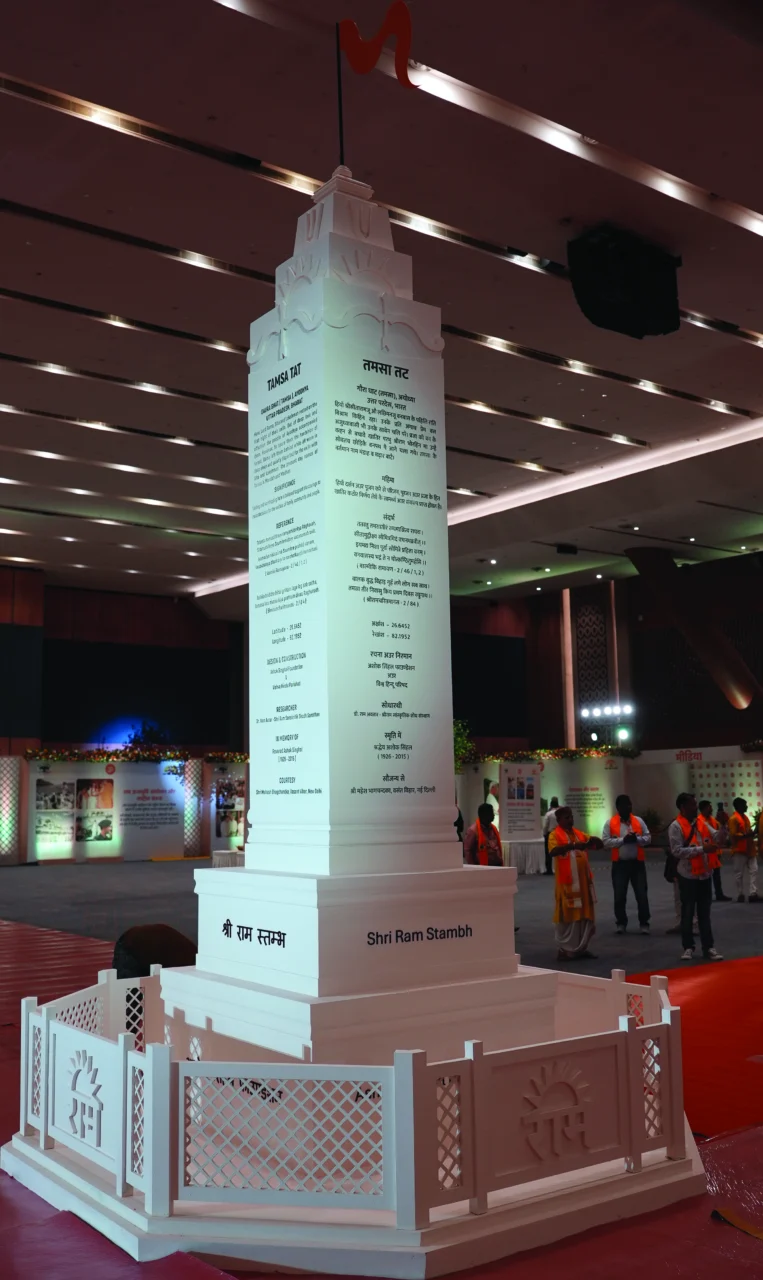
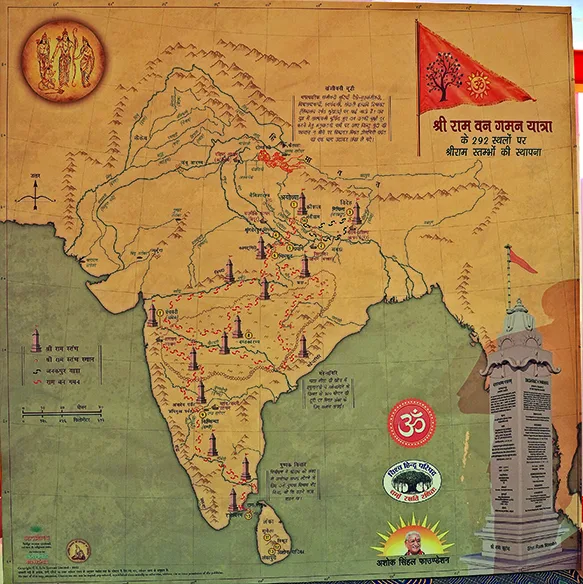
The evening also witnessed a significant initiative associated with Ashok Ji Singhal’s birth centenary celebrations, which is Shri Ram Stambh project, under which 292 pillars are planned at locations connected with Bhagwan Sri Ram’s Van Gaman journey from Ayodhya towards Rameswaram. Eleven of these Stambhs were unveiled on September 27 as part of the centenary celebrations.
The locations were identified following nearly 40 years of research by Dr Ram Avtar Sharma, whose work traced sites associated with Sri Ram’s journey on the basis of the Valmiki Ramayana. Each pillar is intended to carry information about the site’s connection with Ram in Sanskrit, Hindi, English and the relevant local language. But beyond their physical form, I was struck by what the project attempts conceptually.
It turns geography into memory. We often talk about India’s unity in abstract terms. The Ram Stambh project tries to show that unity spatially. Ram travels. And as Ram travels, Ayodhya becomes connected to Janakpur. Forests become connected to kingdoms. North becomes connected to the south. Different communities enter the same narrative. Local memories become part of a civilisational memory.
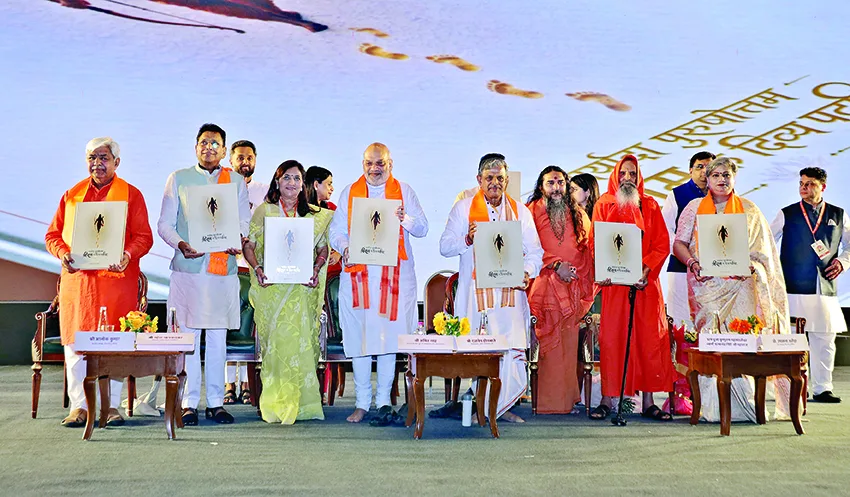
A coffee-table book, Maryada Purushottam Shri Ram Ke Divya Padchinh, documenting this journey was also unveiled during the programme. The presentation described the locations associated with Ram as part of a cultural journey linking communities and sacred sites across the subcontinent.
Once again, the underlying idea was the same: Connect. Perhaps that one word captures Ashok Singhal’s organisational philosophy better than many longer descriptions.
Towards the conclusion of his address, Dattatreya Hosabale made an important transition. The Ram Mandir has been built. But that cannot be the end. He spoke about moving towards the larger ideal associated with Ram Rajya. That shift is important. A mandir is physical. Ram Rajya is ethical. A mandir can be completed. An ideal cannot. It requires continuous work. And perhaps this is the central challenge facing those who invoke Ashok Ji Singhal’s legacy today.
During his lifetime, the objective was extraordinarily clear. Ram Janmabhoomi. Today, the temple stands. So what comes next? The speakers offered different answers, but they repeatedly converged on the same themes: social harmony, cultural confidence, sewa, education, organisation and the transmission of civilisational knowledge to the next generation.
In other words, after building the temple, the challenge is to build society.
“I Am Not Going Anywhere”
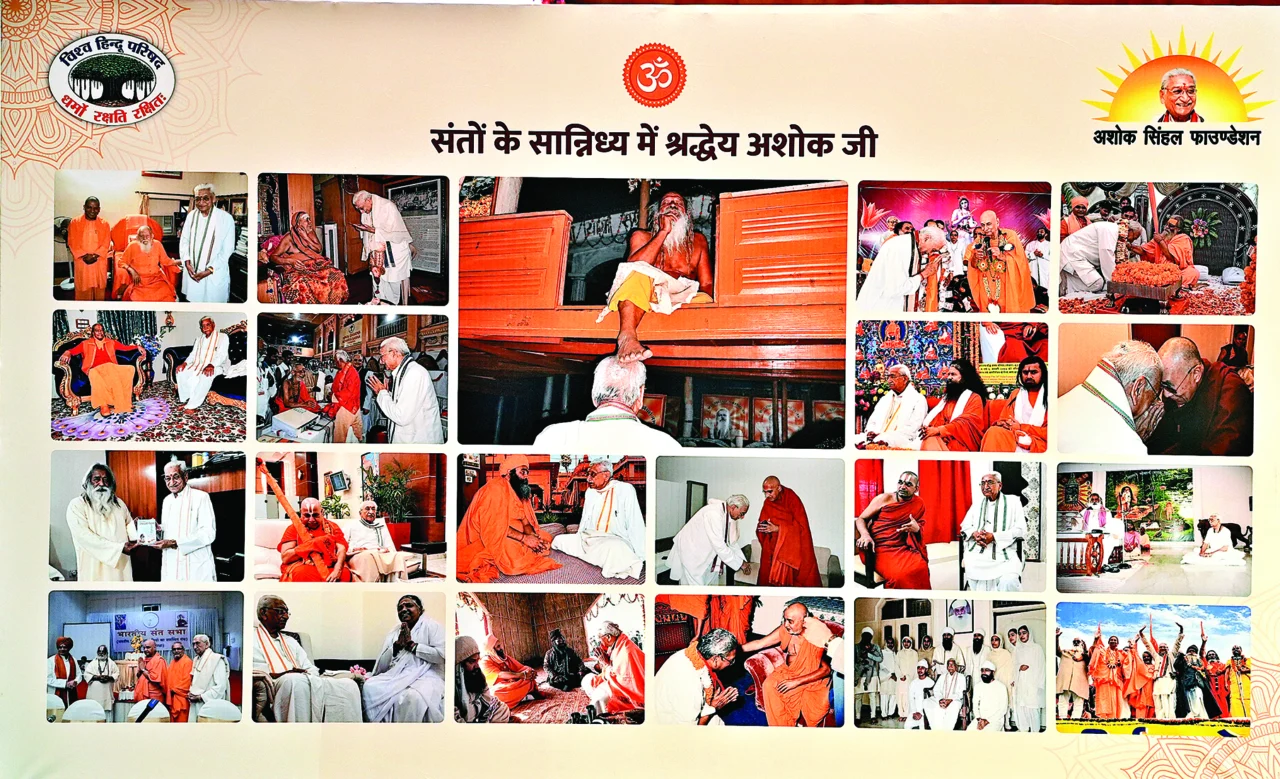
Mahamandaleshwar Swami Paramanand Giri spoke as someone who had known Ashok ji through years of struggle. He emphasised his discipline, sacrifice and complete dedication to the cause he had chosen. But one of the most moving descriptions of him came later through Mahesh Bhagchandka. He recalled an occasion involving Swami Satyamitranand Giri. Ashok Ji was resting in one room and Swami Satyamitranand Ji in another. Bhagchandka went to press the saint’s feet. Swami ji asked him who was in the adjoining room. “Ashok Ji.” The sant corrected him. A great sant is sitting there.
According to recollection, Swami Satyamitranand Ji said that though he himself wore saffron, whenever Ashok Ji Singhal bowed before him, he inwardly felt that he should instead touch Ashok Ji’s feet. I found this anecdote particularly revealing. He never wore the saffron robes of a sannyasi. He wore white. But the life his colleagues described at Bharat Mandapam repeatedly carried the vocabulary of renunciation.
And then came the story that, for me, summed up the evening. Mahesh Bhagchandka recalled Ashok Ji Singhal’s final days. He had been critically ill. He came out of the ICU. The people around him knew the situation was serious, and their faces apparently showed it. Ashok Ji looked at them. Why were they so sad? Then he reportedly told them: “I am not going anywhere. I will go and return. There is so much work to do for Bharat Mata.” A dying man speaking about unfinished work. Not his possessions. Not his achievements. Not even the movement for which the country knew him. Work still remained. There was something deeply consistent about that image. Earlier, Alok Kumar had recalled Ashokn Ji Singhal’s belief that a karmayogi rests only on the funeral pyre.
A Bridge Is Built So Others Can Cross
The metaphor of a bridge is particularly appropriate for Ashok Ji Singhal because a bridge is never built for itself. Its purpose lies in those who cross it. Ashok Ji Singhal spent decades building organisational and social bridges.
But the evening at also suggested something more. For him, the service of Ram could not end with the construction of Ram Mandir. If Ram represented maryada, duty, compassion, harmony and concern for society, then serving Ram also meant carrying those values into society. That may be the more difficult task. Building a mandir, however long the struggle, has a point of completion. Building social harmony does not. A stone can be placed. A structure can be inaugurated. But social divisions have to be addressed generation after generation.
From Smaran to Sewa
The programme had begun by describing the birth centenary as an occasion of smaran, sankalp and sewa. By the time I left Bharat Mandapam, I understood why sewa belonged alongside remembrance and resolve. Without smaran, a society forgets the people who shaped it. Without sankalp, remembrance becomes nostalgia. Without sewa, resolve remains rhetoric. Ashok ji’s public image will perhaps always be dominated by Ayodhya. But the centenary gives us an opportunity to look at the other side of that story. The organiser who worked with saints but also thought about the marginalised. The movement leader who could be firm as a vajra and, according to those who knew him, soft when confronted with another person’s suffering. The man who fought for a temple but invested in schools. The Hindu organiser who understood that Hindu unity could not be built while ignoring divisions within Hindu society. And the Ram Janmabhoomi leader who never actually saw the completed Ram Mandir. There is something almost poetic about that final fact. Ashok Ji Singhal spent decades building a bridge whose other end he never personally reached. Others did. Millions did. The mandir stands today.
Perhaps that is why, sitting at Bharat Mandapam a hundred years after his birth, the question that stayed with me was not merely what Ashok Ji Singhal achieved. It was what he connected. The centenary celebration was ostensibly about looking back at a hundred years.
The task now is not merely to preserve the memory of that struggle, but to ask what the service of Ram means after Ram Mandir. If the answer lies in social harmony, service, cultural confidence and bringing people together, then Ashok Ji Singhal’s work cannot be remembered only through the Mandir at Ayodhya. It has to be remembered through the bridges he tried to build around it. And perhaps that is the most fitting way to remember him at one hundred.