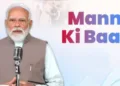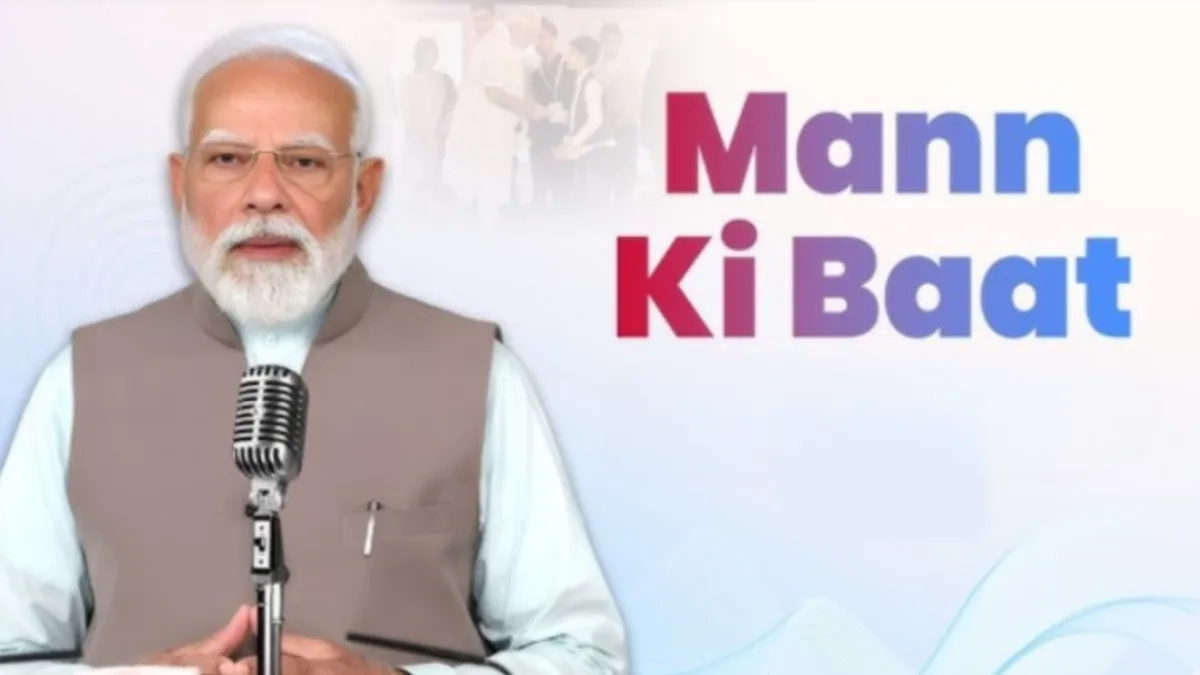
The last Sunday of every month. A familiar voice on the radio. No election rally, no clamor of political slogans. A Prime Minister converses with the nation, and at the heart of this dialogue are often individuals whose identities had never previously extended beyond the boundaries of their own villages, towns, or districts. Launched on Vijayadashami—October 3, 2014—Prime Minister Narendra Modi’s radio program ‘Mann Ki Baat’ completes 12 years on October 3, 2026. By September 30, 2026, the program had completed its 138th episode; the 138th episode was broadcast on September 27, 2026. Through this program, Prime Minister Narendra Modi has brought various subjects—such as education, the environment, water conservation, agriculture, sports, local products, culture, and social service—as well as the efforts of ordinary citizens, to the attention of the general public at a national level.
A distinctive feature of ‘Mann Ki Baat’ is its choice of themes. Prime Minister Narendra Modi often highlights stories that originate not from large institutions, but from individuals, groups, or local communities—such as a farmer’s innovative experiment, the work of a women’s group, a teacher’s initiative, or the years of effort put in by an environmental activist.
When a small initiative became a major story
A suggestion made by Pawan Acharya from Alwar, Rajasthan, during the early years of the program serves as a notable example of this. He appealed to people to buy earthen lamps during Diwali to support the livelihoods of local potters, and the Prime Minister shared his message with the nation. This instance illustrates that suggestions from citizens on ‘Mann Ki Baat’ are not merely heard; they sometimes acquire a broader social significance.
Water conservation has also been a recurring theme of the program. In 2016, Rajasthan’s ancient stepwells and the water self-reliance initiatives underway at the time were highlighted. Prime Minister Narendra Modi emphasized the need to revive traditional water structures in water-scarce regions like Rajasthan and Gujarat. In 2019, the story of two historic stepwells in Jalore came to light; residents of local panchayats restored these stepwells—which were choked with filth and silt—to a functional state through collective labor and financial contributions. This example presented water conservation not just as a government scheme, but as a community responsibility. The mention of Udaipur’s ‘Sultan ki Baavdi’ in 2022 further carries this tradition forward. Upon seeing this historic water structure in a state of neglect, a group of young people resolved to revive it. This blend of centuries-old water heritage and the initiative of the new generation aligns with the broader ethos of ‘Mann Ki Baat’: connecting local heritage with contemporary needs.
From Environment to Public Participation
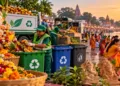
In ‘Mann Ki Baat’, the scope of environmental conservation extends from tree plantation to the preservation of local biodiversity. Jaisalmer, Rajasthan, offers a notable example of this. In the 116th episode (November 2024), the Prime Minister highlighted how a team of women there planted 25,000 saplings in a single hour. The participation of over 5,000 people at a single location was also mentioned. Rajasthan’s identity is defined not only by its deserts and forts but also by its water resources, wildlife, and energy sector. The conservation of endangered birds like the Great Indian Bustard (Godavan) and the state’s renewable energy capacity are subjects through which Rajasthan is becoming an integral part of the national environmental discourse.
Rajasthan has also carved a distinct niche for itself in the agricultural sector. In the 121st episode (2025), the Prime Minister mentioned Jitendra Singh Ranawat, a litchi farmer from Rajasthan. While litchi cultivation is typically associated with Bihar, West Bengal, and Jharkhand, its successful production in Rajasthan has emerged as a prime example of agricultural experimentation and regional innovation.
From Individual to National Identity
Another significant aspect of ‘Mann Ki Baat’ is the focus on digital and local entrepreneurship. In 2022, the story of Setha Singh Rawat from Ajmer was highlighted; during the COVID-19 pandemic, he endeavored to transform his traditional tailoring work into an online business. His initiative, ‘Darji Online’, demonstrates that traditional skills from small towns can successfully integrate with the digital economy. Similarly, by showcasing the experiments of farmers, self-help groups, artisans, and small entrepreneurs, the program gave social and economic context to concepts like ‘Vocal for Local’. In the 131st episode (February 2026), the Prime Minister also appealed to the public to purchase goods from Indian manufacturers and support Indian products.
2026: A Series of New Stories
The 130th episode of 2026 was broadcast on January 25. It highlighted the rejuvenation of the Tamsa River in Azamgarh as an example of public participation. Mention was also made of the efforts by Jagdish Prasad Ahirwar, a beat guard from Panna, to compile information on medicinal plants. The 133rd episode (aired on April 26) and the 134th episode (aired on May 31) also featured topics related to science, energy, the environment, sports, and citizen-led initiatives. The May episode included a conversation with emerging Indian athletes Gurindervir Singh and Animesh Kujur. The program also showcased astronomy clubs and local water conservation efforts to a national audience.
This journey also has a human dimension. The 131st episode, aired in February 2026, highlighted the decision by the parents of Alin Sherin Abraham—a ten-month-old infant from Keralam—to donate her organs following her passing. Such stories underscore the social dimension of the program.
From Radio to the Digital Age
The journey of ‘Mann Ki Baat’ has not been confined to radio alone. Alongside All India Radio and Doordarshan, segments and broadcasts of the program have also been made available via digital media. This illustrates how a traditional medium of communication connects with the era of social media and digital platforms. However, the program cannot be evaluated solely on the basis of its reach. A more significant question is how the civic initiatives discussed in the program reach others and whether they inspire new efforts at the local level.
This lies at the very core of the ‘Mann Ki Baat’ concept: ensuring that good work done in one place serves as an example for another. From the stepwells of Jalore to tree plantation drives in Jaisalmer, and from the earthen lamps of Alwar to litchi cultivation in Rajasthan, local experiences have consistently become part of the national conversation.
Ultimately, nation-building is not a process visible only within the confines of Parliament, ministries, or government offices. It unfolds in the fields, in schools, by the ponds, on sports grounds, and in the homes where families make the decision to donate organs to save another life.
The journey of ‘Mann Ki Baat’ can be viewed through this very lens—as a communication platform where, through the Prime Minister’s voice, the stories of citizens working in different parts of the country reach one another. The significance of these stories lies in the fact that they demonstrate that change does not always originate from large institutions. Often, it begins with the modest effort of a village, a family, a farmer, a young person, or an ordinary citizen; that voice on the radio then elevates that small effort, making it part of a grand national dialogue.