JAMMU: Panun Kashmir observed Balidhan Diwas in Jammu and Bengaluru, holding solemn programmes to commemorate those regarded by the organisation. The special day was organised in memory of martyrs of the Kashmiri Hindu community and to recall the community’s experiences of violence, terrorism, displacement and loss in Kashmir.
In Jammu, the main programme was held at the Manhas Mahasabha Ground, Paloura, on September 14 with the gathering paying homage to members of the Kashmiri Pandit community as well as security personnel and soldiers who lost their lives during periods of violence in J&K.
The programme, hosted by Dr Archana Pandita, Coordinator, Panun Kashmir Yuva, began with the Rashtra Gaan and the National Anthem, during which the gathering stood in respect. This was followed by a Ganesh Stuti recited by Shri Jai Krishan Khar, after which a minute’s silence was observed in memory of the martyrs. The significance of Balidhan Diwas was subsequently outlined, with speakers discussing the historical background of the observance and the importance of preserving the experiences of the community for future generations.
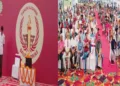
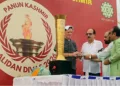
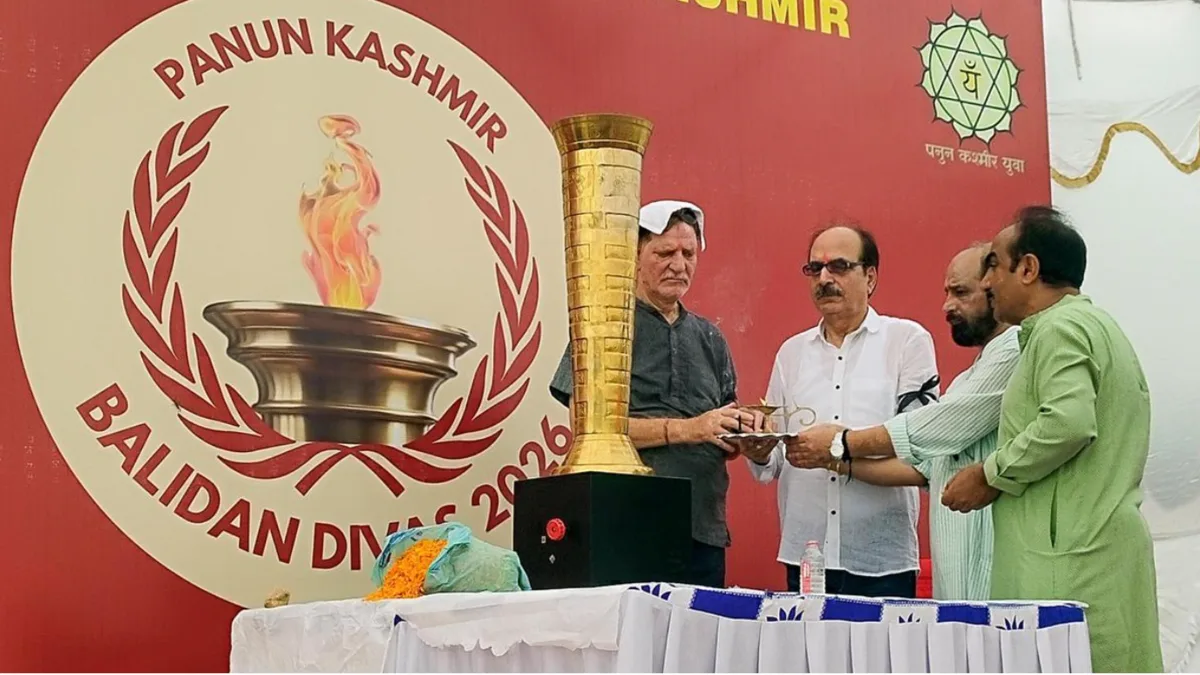
The Veer Jyoti was consecrated and lit by Sanjay Raina, marking the principal ceremonial moment of the programme. The organisers described the flame as a symbol of remembrance and continuity, representing the memory of those who had sacrificed their lives. The Jyoti was later carried in procession from Paloura to Bhadrakali Mandir at Thalwal.
Addressing the gathering, BL Kaul, Organising Secretary, Panun Kashmir, said that Balidhan Diwas provided an opportunity to remember those who had lost their lives and to reflect on the circumstances in which the community had experienced violence and displacement.
Kaul emphasised the importance of ensuring that the history associated with the community was not confined to the recollections of the older generation. He said accounts of individual families, places and events needed to be documented so that younger members of the community could develop a better understanding of their historical background.
Sanjay Raina, Vice Chairman, Panun Kashmir, said Balidhan Diwas was not merely an annual act of remembrance but also an occasion to recognise the sacrifices of individuals whose lives were lost during periods of violence and uncertainty.
Raina said remembrance acquired greater significance when it was accompanied by a conscious effort to preserve the history associated with those who had made the ultimate sacrifice. He said the community needed to ensure that the names, lives and circumstances of those remembered on Balidhan Diwas remained part of its collective historical record.
Col. Ajay Raina, Chairman, JPSM, said that an observance dedicated to martyrs also provided an opportunity to examine the circumstances surrounding their deaths. He said remembrance should be accompanied by efforts to preserve historical records and establish a factual account of events for future generations. Referring to members of the security forces who had lost their lives during periods of violence in Jammu and Kashmir, Raina said their sacrifices too formed an important part of the region’s history and deserved to be remembered.
Tito Ganju, Chairman, Panun Kashmir, placed the observance in the wider historical context of Kashmir and the Kashmiri Pandit community’s long association with the region. Ganju said the history of Kashmir included several periods of political and social upheaval and that the experiences of Kashmiri Pandits during these periods needed to be examined as part of the wider history of the region.
He said Balidhan Diwas was an occasion to remember individuals who had lost their lives and to reflect on the circumstances in which those sacrifices occurred. He stressed the importance of preserving historical records and ensuring that accounts of the past were available to future generations.
Referring to the Veer Jyoti, he said the flame represented continuity of remembrance and provided a means of connecting contemporary generations with people and events that might otherwise gradually recede from collective memory.
Dr. Agnishekhar, Convenor, Panun Kashmir, emphasised the importance of documenting and preserving the history of the Kashmiri Pandit community.
He said considerable material relating to the community’s experiences remained dispersed among families and community organisations. He called for systematic efforts to preserve oral histories, family records and accounts of events so that they could be studied and accessed by future generations.
Agnishekhar also referred to the role of temples and traditional religious institutions in preserving cultural practices and community memory. He said the displacement of a substantial section of the community had created physical distance from many such institutions, making efforts to maintain cultural links particularly important.
The proceedings subsequently moved to the tribute ceremony, with Kanwal Peshin calling upon members of the gathering to offer floral tributes to the martyrs. Participants came forward and paid homage in a solemn atmosphere.
The Veer Jyoti was thereafter taken in procession to Bhadrakali Mandir at Thalwal, marking the second phase of the observance. The procession connected the public commemoration at Paloura with a religious site associated with the Kashmiri Pandit community.
At Bhadrakali Mandir, Kuldeep Raina addressed the gathering and spoke about the role of temples and religious institutions in maintaining cultural continuity.
Raina said temples had historically served not only as places of worship but also as centres of community and cultural life. He emphasised the importance of preserving awareness of these institutions and their place in the history of the Kashmiri Pandit community.
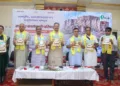
Lakshmi Kaul, CEO, GRIN Publications, announced on the occasion that the publishing house would bring out “Jatividhwans: The Indian Perspective of Genocide”, authored by Sunanda Vashisht, Dr. Dileep Kaul and Tito Ganju, for distribution by Penguin Random House India across South Asia and worldwide.
Kaul said the book sought to place the subject of genocide and the experiences of the Kashmiri Pandit community within an Indian perspective, combining historical examination with the lived experiences of generations affected by trauma, upheaval and displacement.
Describing the publication, Kaul said, “This is not just rhetorical commentary, but a sharp review and analysis of generations of trauma, upheaval and survival. This is your story explained.”
Meanwhile, the Bengaluru branch of Panun Kashmir observed Balidhan Diwas at Suswani Mata Ji Dham, where a Hawan and Shanti Path were organised in memory of those who lost their lives to terrorism during the insurgency in Kashmir after 1990.
People from different walks of life attended the programme and joined in paying tribute to civilians, security personnel and soldiers who made the supreme sacrifice. The gathering remembered the victims and their families and highlighted the importance of preserving their memory and documenting the circumstances surrounding the violence.
Speaking on the occasion, Shri Ravinder Gurtoo, Vice Chairman, Panun Kashmir, said Balidhan Diwas was not merely a day of remembrance but a solemn reminder of the unfinished responsibility towards the victims and their families.
Rajeev Raina, Coordinator, Panun Kashmir Bengaluru, while paying tributes, said the sacrifices of the martyrs would remain part of the community’s collective memory. He said Balidhan Diwas was also a reminder that the events of Kashmir could not be allowed to disappear from historical consciousness.
The Bengaluru programme concluded with prayers for the eternal peace of all martyrs and a reaffirmation of the collective resolve to keep their memory alive and pursue what the organisation described as a peaceful struggle for truth, justice, dignity and a secure future for the displaced Kashmiri Pandit community.