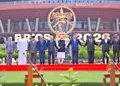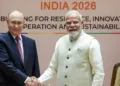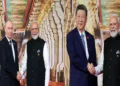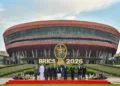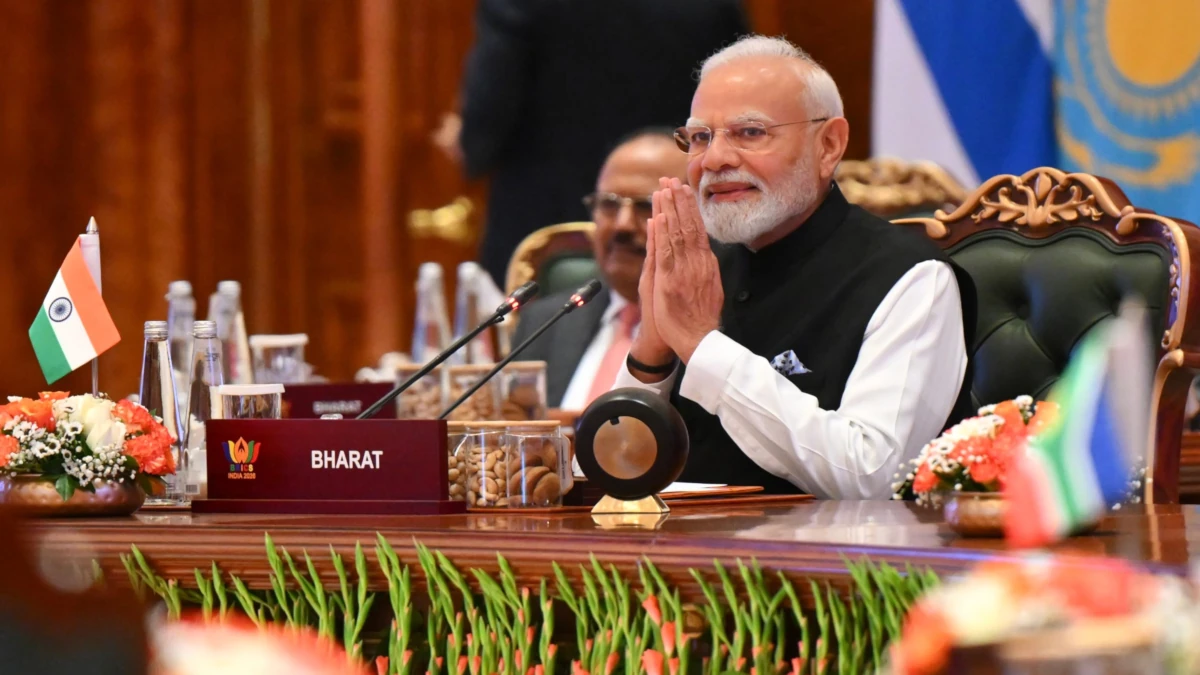
The 18th BRICS Summit-New Delhi Declaration, adopted unanimously on September 12, is a masterstroke of Indian diplomacy under PM Modi’s leadership. Under India’s chairpersonship, PM Modi set the theme “Building for Resilience, Innovation, Cooperation and Stability” for the BRICS Summit 2026 held in New Delhi. The declaration was unanimous, though it was tough to convince Iran and the UAE to agree, and it was another major win for Indian diplomacy. More importantly, the New Delhi 2026 Declaration marks a deliberate ‘strategic makeover’ for BRICS, shifting it from a purely economic, trade-oriented forum.
BRIC started as an informal group of Brazil, Russia, India and China in 2006 and had its first summit in Russia in 2009, after the 2008 global financial crisis. South Africa joined in 2010, and the grouping became BRICS. Six more countries (Egypt, Ethiopia, Iran, UAE, Saudi Arabia, Indonesia) joined between 2024 and 2025; after the expansion, BRICS has 11 members. The grouping has impressive and dominant figures: 49.5 per cent of the world’s population, 40 per cent of global GDP, 26 per cent of global trade, and 35 per cent of crude oil production. BRICS also has 10 partner countries (all admitted in 2025): Belarus, Bolivia, Cuba, Kazakhstan, Malaysia, Nigeria, Thailand, Uganda, Uzbekistan, and Vietnam. The significance of BRICS is evident in the fact that more than 30 countries (including Pakistan and Turkey) are keen to join the grouping.
The first visible change after the New Delhi Declaration is that BRICS now represents a major geopolitical platform, with Russian President Putin calling it even more powerful than the US-led G-7. From a mere growth-oriented coalition, the declaration explicitly frames BRICS as a platform for a more representative, reformed international order. PM Modi described the global order as a pyramid: the base comprises many countries, while a few at the apex make most major global decisions. The declaration elevates BRICS as a vehicle for a just world order, UN reforms, and norms on war, sanctions, terrorism, and regional conflicts. In fact, India scored a major diplomatic victory on terrorism, soon after a successful intervention during the SCO Summit in Bishkek at the beginning of September this year.
The Delhi declaration condemned the Pahalgam terror attack of April 2025 and called for zero tolerance on terrorism, while avoiding naming specific state sponsors. But the message should be loud and clear to Pakistan that any act of terror perpetrated against India is going to be difficult for even China to support. With an explicit stand on terrorism, India has achieved another major diplomatic victory after the Bishkek Declaration during the SCO Summit. During the SCO Summit, PM Modi had called for dismantling the global ecosystem against terrorism. With the Delhi Declaration, India has been able to isolate Pakistan on terrorism diplomatically. With twin achievements in quick succession, India is now recognised as the authentic voice against global terrorism. It is well placed to lead the dismantling of the world’s terror ecosystem.
From a broader security perspective, the Delhi Declaration rejects “unilateral acts of war” and urges protection of seafarers and commercial shipping amid the ongoing West Asia conflict. India exhibited strategic autonomy by indirectly signalling to the US and Israel, while maintaining good relations with both countries. On Gaza, the declaration demands ceasefire implementation, unhindered humanitarian aid and opposes forced displacement, be it in Gaza or South Lebanon. The declaration also reaffirms support for a two-state solution and Palestine’s full UN membership. In short, BRICS took a sharp position on international security and the ongoing conflicts. Yet the Delhi Declaration took extra care not to appear as an overtly anti-Western platform. PM Modi echoed this in his concluding speech.
The declaration also adopted harsher language on unilateralism and sanctions. The declaration condemned unilateral coercive measures (sanctions not authorised by the UN Security Council) as contrary to international law. It also criticised unilateral tariff and non-tariff measures, which are inconsistent with WTO rules. The declaration also sought protection from supply-chain disruption and inequality. Both Russia and Iran face the harshest sanctions from the US and other European nations. President Trump has weaponised tariffs, and most nations, including India, have suffered from the US’s inconsistent trade structure. The ongoing West Asia conflict has heightened the oil crisis, and the BRICS member nations should work towards mutual energy security. The grouping faces a tough task in keeping the chokepoints of the Strait of Hormuz and Bab-el-Mandeb open, given Iran’s precarious position in the ongoing West Asia conflict.
India also used the BRICS platform to build bridges with Iran, expand its strategic partnership with Russia, and cautiously reset India-China relations. President Xi Jinping visited India after a seven-year gap, and India deftly avoided China’s dominance in BRICS affairs. Getting China to condemn the Pahalgam terror attack is no mean diplomatic achievement, given the sensitivities of its ally Pakistan. India thus managed the China factor by emphasising cooperation amid competition. Since India handed over the BRICS chair to China in January 2027, it has maintained a cooperative tone with China on shared Global South priorities, while retaining the freedom to influence the IOR or Indo-Pacific. The opening of the bilateral channel between India and China bodes well for structured negotiations to settle the border dispute.
India can rightfully claim the credit for transforming a diverse BRICS into a coherent grouping, with consensus on most of the reform agenda. The declaration also called for an enhanced role for India and Brazil in UN affairs, a strong signal for permanent membership of the UN Security Council. The declaration’s overall tone called for a revised world order aligned with global realities and a strengthened role in global governance, with a focus on multilateralism. India also emerged as a ‘bridge-builder’ by securing a joint declaration unanimously, despite sharp differences between Iran, Saudi Arabia, and the UAE. Thus, many nations believe India is a credible mediator to end the ongoing Russia-Ukraine war and the West Asia conflict. In diplomatic parlance, a reliable country that can mediate in polarised settings makes India a stronger nation.
India has also sought to deepen strategic autonomy through local currency trade, as proved successful between India and Russia. India has aggressively promoted the UPI/rupee-trade push in recent years. Without mentioning de-dollarisation, India has looked to new partners to diversify its trade. India is also emerging as a major defence export hub. The newly launched document ‘RAKSHA’ gives a fresh impetus to India’s defence diplomacy. India already exports military hardware to about 100 countries, and through trade and defence partnerships, its Global South network has expanded rapidly in recent years. The call for equal Global South participation in future technology, like AI, digital finance, space, cyber, etc., positions India as a voice for the developing countries.
The road ahead for India will be tough. Except China, none of our immediate neighbours is a BRICS member.
There was news of the Bangladesh PM being invited as an observer. So, India may have to manage its neighbours more deftly. India’s immediate HADR to Nepal after the flash floods should serve as a gentle reminder to our neighbours that India alone helps them in a crisis, without expecting any return favours. India also has to check Pakistan in its games, particularly when their Army Chief Asim Munir is the de facto ruler of the nation. India has sought cooperation with China and is likely to proceed ahead towards normalcy with adequate caution. India has to leverage its markets more aggressively with China and also initiate measures to minimise trade imbalance with China.
Successfully hosting the BRICS Summit 2026 in New Delhi is another feather in PM Modi’s cap. PM Modi has firmly established himself as a global statesman of repute. As a result, India is seen as a major power which can influence the global narrative for the good of the world. It is therefore unfortunate that some political opposition in India has tried to downplay the summit’s achievements. Some nitpicking about the only vegetarian menu is also deplorable. India’s foreign policy is above domestic politics. Such a narrow mindset may give the world the impression that India cannot manage its internal politics. For a common Indian, successfully hosting the BRICS Summit is a matter of pride. Such undesirable criticism is also demoralising for thousands of diplomats and other participants who toiled for more than one year to make the event an astounding success.
In the last two years, India has held the chair of the G20 and BRICS, with substantial contributions to the SC as well. The world at large has faced various strains during this period. India has also responded strongly against Pakistan during Operation Sindoor in May last year. The ongoing Russia-Ukraine war and the West Asia conflict have burdened most economies. President Trump’s tariffs have further compounded the economic crisis. Yet India remains the world’s fastest-growing economy, a fact acknowledged by major global agencies. India has now displayed brilliant statecraft by giving BRICS a strategic makeover, in the larger interest of the Global South. BRICS, in its new avatar, is likely to drive multilateral reforms, equitable trade, technology transfer, and, above all, security concerns. Under PM Modi’s leadership, India has reinvigorated BRICS as the go-to strategic platform for promoting peace and prosperity worldwide.